What Happens When You Delay Changing Old Automatic Transmission Fluid Beyond Recommended Intervals
You’re risking serious transmission damage by delaying fluid changes. Old fluid loses viscosity, dropping below the ideal 6–8 cSt at 100°C, reducing lubrication and heat dispersion. Oxidation depletes friction modifiers, accelerating wear. Contaminants clog valve bodies, disrupting hydraulic pressure needed for clutch engagement. Sludge buildup restricts flow, causing rough shifts, slippage, and overheating above 250°F. This leads to warped bands, scored components, and potential failure. Neglect cuts transmission life by up to 50%. Costs can exceed $4,000. Immediate replacement is critical when fluid smells burnt. What happens next could cost you a lot more.
Notable Insights
- Degraded fluid loses viscosity and lubricity, leading to increased internal wear and reduced transmission efficiency.
- Contaminants like metal particles and sludge clog valve body passages, disrupting hydraulic pressure and shift timing.
- Oxidized fluid reduces heat dispersion, causing temperatures to exceed 250°F and accelerating component breakdown.
- Poor lubrication and low hydraulic pressure result in delayed engagement, rough shifts, and clutch slippage.
- Extended neglect can cause complete transmission failure, risking repair costs of $2,500 to $4,500.
Why Skipping Fluid Changes Wrecks Your Transmission
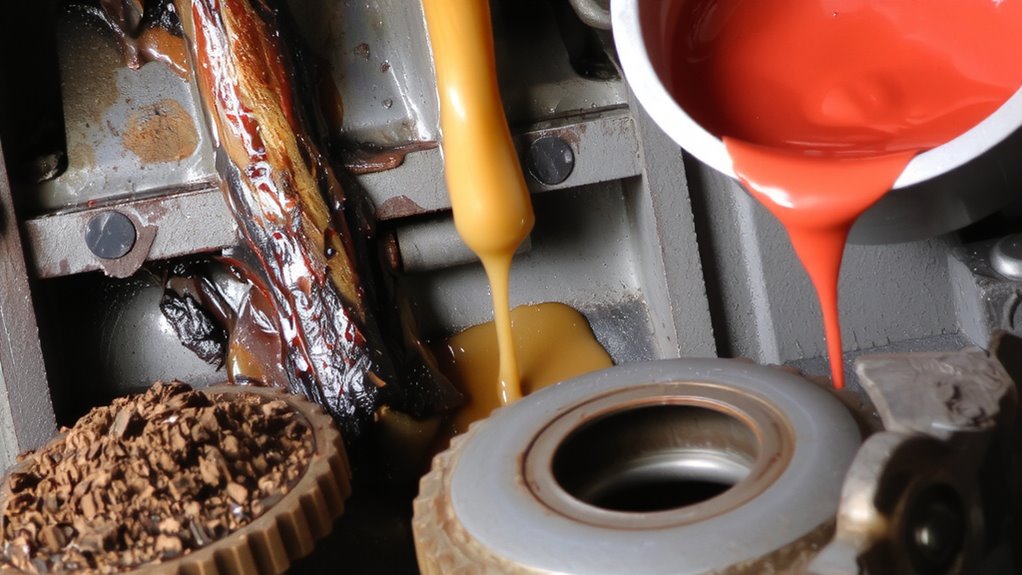
A transmission depends on clean, fresh fluid to operate efficiently, and ignoring fluid changes puts the entire system at risk. Over time, fluid degradation reduces lubricity and heat dispersion, critical for gearshift performance. Contaminants like metal particles and sludge accumulate, impairing hydraulic pressure needed for clutch engagement. Without timely replacement, the fluid loses its ability to maintain consistent viscosity-typically rated between 6–8 cSt at 100°C for most modern automatics. This breakdown accelerates internal corrosion, especially on steel valve bodies and aluminum components, which weakens structural integrity. Corrosion byproducts further clog narrow fluid passages, disrupting signal response from solenoids. Even sealed transmissions require service; most manufacturers recommend changes every 60,000 to 100,000 miles. Skipping maintenance invites wear far beyond normal tolerances-often leading to irreversible damage long before other warning signs appear.
7 Signs You Need New Transmission Fluid Now
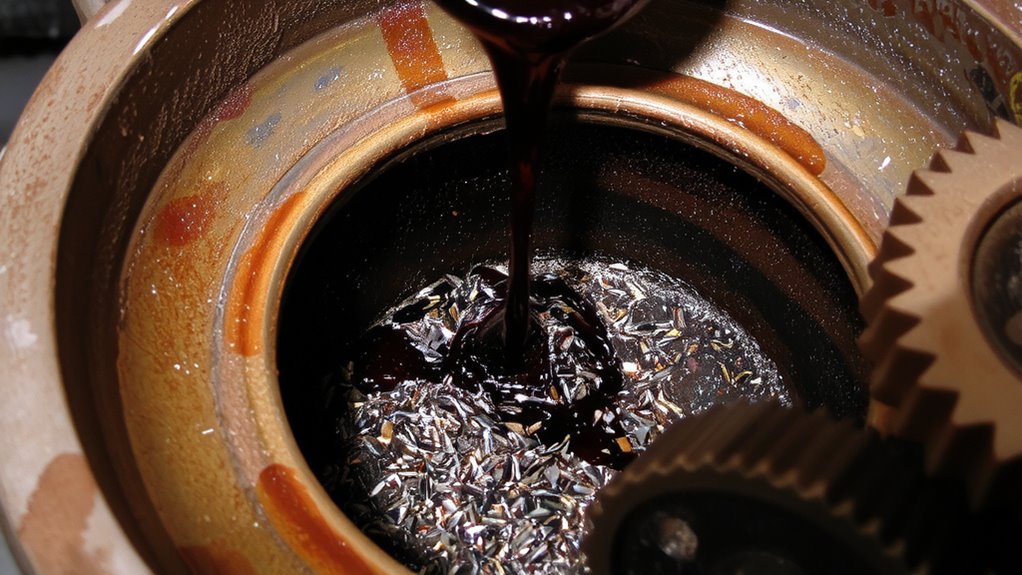
You’re already aware that skipping fluid changes compromises your transmission’s longevity, but now it’s time to recognize when damage is actively happening. A burning smell means the fluid has degraded from high heat, losing its lubricating properties and oxidative stability. This odor indicates varnish and sludge buildup inside the transmission. Delayed engagement-when you shift into drive or reverse and experience a 1- to 2-second pause-is a red flag. It signifies worn internal clutches or contaminated fluid with reduced viscosity and friction-modifying additives. Older fluid lacks the required film strength to maintain hydraulic pressure. You might also notice rough shifting or an illuminated check engine light tied to transmission error codes. These symptoms reflect inadequate fluid performance. Immediate fluid replacement with manufacturer-specified ATF restores proper lubrication, cooling, and hydraulic function. Ignoring them risks complete transmission failure.
How Old Fluid Causes Your Transmission to Overheat
Because transmission fluid degrades over time, its ability to transfer heat diminishes considerably. Old fluid loses its ideal viscosity, reducing cooling efficiency within the transmission. This leads to increased fluid friction, generating excess heat that the compromised lubricant can’t dissipate. Modern automatic transmissions operate best between 175°F and 225°F; sustained temperatures above 250°F accelerate wear. As fluid ages, its thermal breakdown lowers its heat capacity, promoting dangerous heat buildup. Oxidized fluid forms varnish and sludge, coating internal components and insulating them from cooling. This insulation traps heat, further raising internal temperatures. Prolonged overheating can warp clutch plates, degrade seals, and damage solenoids. Without timely fluid changes, heat buildup shortens transmission life by up to 50%. Fresh fluid restores proper viscosity and thermal stability, efficiently moving heat to the radiator. Maintaining clean fluid prevents overheating and preserves transmission performance and longevity.
Why Dirty Fluid Makes Gears Slip and Lag
Transmission slippage isn’t just a symptom-it’s a red flag pointing straight to contaminated fluid. When fluid contamination occurs, debris and oxidized particles clog narrow passageways in the valve body, disrupting hydraulic pressure. Your transmission relies on precise pressure-usually between 50 to 100 psi-to engage gears. Dirty fluid can’t maintain this, causing delayed shifts and slippage. Over time, this poor lubrication increases friction, accelerating gear degradation. Worn clutch packs and warped bands reduce torque transfer efficiency, dropping performance by up to 30%. Think of it like trying to drive on underinflated tires-everything feels sluggish and unresponsive. The fluid’s diminished viscosity and shear stability weaken its ability to protect moving parts. You’ll notice hesitation during acceleration or RPM flare-ups without speed gain. These aren’t minor hiccups-they’re measurable signs of internal decline driven by prolonged fluid contamination and the ongoing cycle of gear degradation.
What Costly Repairs You’re Risking by Waiting
While clean transmission fluid keeps internal components running smoothly, delaying a fluid change invites serious and expensive damage. Fluid contamination accelerates mechanical wear, degrading lubrication and heat dissipation. Contaminants like metal shavings and oxidized particles circulate, scoring valve bodies and clutch packs. Over time, this leads to hardened seals, reduced hydraulic pressure, and inconsistent shift timing. You risk slipping gears, delayed engagement, or complete transmission failure. Internal temperatures can exceed safe limits-exceeding 200°F regularly-which accelerates fluid breakdown. Without proper lubrication, bushings and bearings wear prematurely, increasing internal clearances beyond tolerances. Repairs often require a full rebuild or replacement, costing $2,500 to $4,500. Even flushes can’t reverse existing damage. The transmission’s servo and solenoids are sensitive to debris, risking electronic and hydraulic malfunctions. Put off changes too long, and you’re not just risking performance-you’re compromising the transmission’s operational lifespan.
When to Change Transmission Fluid (And When Not To)
Though automakers often claim their transmissions are filled for life, that doesn’t mean you can ignore fluid maintenance indefinitely. You should change transmission fluid based on fluid age and mileage limits specified in your owner’s manual. Most manufacturers recommend service every 30,000 to 60,000 miles under heavy use, or up to 100,000 miles for normal conditions. Fluid degrades over time, losing viscosity and oxidation resistance, which compromises lubrication and heat dissipation. Dark, burnt-smelling fluid indicates breakdown and demands immediate replacement. Some sealed transmissions don’t require regular changes, especially in vehicles used strictly within factory-rated loads and conditions. If your driving involves towing, stop-and-go traffic, or extreme temperatures, adhere to severe-service intervals. Ignoring fluid age beyond recommended thresholds increases wear and risks costly failure. Follow technical service bulletins and use OEM-specified fluid for correct performance.
On a final note
You risk irreversible damage when delaying transmission fluid changes. Old fluid loses viscosity, dropping from ideal 80–100 cSt to below 50 cSt, reducing lubrication. This leads to increased friction, metal wear, and overheating above 265°F-beyond the safe 175–225°F range. Deposits form, impairing valve body operation. Eventually, solenoids fail, gears slip, and transmission life drops from 150,000 to under 75,000 miles. Change fluid every 60,000 miles unless otherwise specified.