How to Prevent Microfiber Lint Buildup on Ceramic-Coated Surfaces
Use only ceramic-coating-safe microfiber towels made from a 70% polyester and 30% polyamide blend with a minimum 300 GSM weight. These ultra-fine fibers, split to 1/100th the width of a human hair, trap oils and dust without shedding. Wash them separately using mild detergent in warm water (105°F–110°F), avoiding fabric softeners that leave residues. Dry on low heat without dryer sheets. Replace towels when they feel coarse or leave lint, typically after about 300 washes. Use the flip-and-fold drying method: drag once per section, flip to a clean area, and avoid back-and-forth sliding. Finish with a 75/25 lint-free towel or non-woven tool to catch remaining moisture. Inspect under 45-degree directional light to confirm a flawless surface. Proper technique and tool selection guarantee long-term coating protection and a flawless outcome.
Notable Insights
- Use ceramic coating-safe microfiber towels with a 70% polyester, 30% polyamide blend to minimize lint shedding.
- Choose microfiber towels with at least 300 GSM and ultrasonic-cut, laser-sewn edges for superior fiber retention.
- Wash microfiber towels separately using mild detergent, no fabric softeners, and an extra rinse cycle to prevent residue buildup.
- Replace towels when they feel coarse or leave lint, as frayed fibers increase shedding after repeated washes.
- Use the flip-and-fold technique with large, plush towels to reduce surface contact and avoid re-depositing lint.
Choose Microfiber Towels Made for Ceramic Coatings
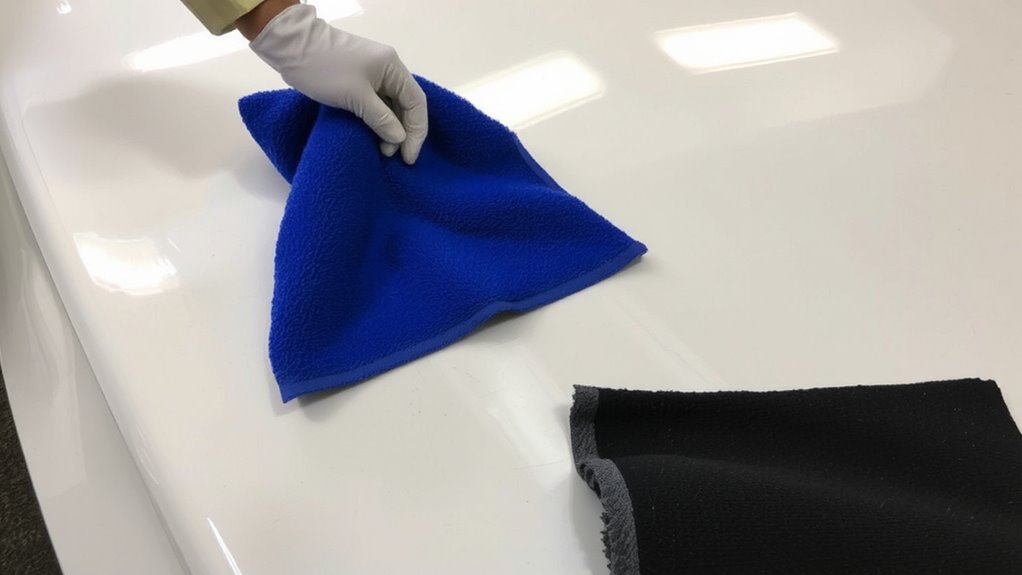
A high-quality microfiber towel designed specifically for ceramic coatings guarantees safe, effective maintenance without compromising the surface. Towel material matters-opt for 70% polyester and 30% polyamide blend with a minimum 300 GSM weight. This composition guarantees lint-free performance and superior absorbency. The fibers are split to 1/100th the width of a human hair, enabling effective pickup of fine dust and oils without scratching. You must use towels labeled “ceramic coating safe” to guarantee coating safety. These undergo ultrasonic cutting and laser-sewn edges to minimize fiber shedding. Avoid general-purpose or low-density microfiber. A proper towel preserves the coating’s hydrophobic properties and gloss retention. Look for OEM-certified options tested against coating erosion under controlled abrasion. Using the correct towel material isn’t optional-it’s essential for long-term coating integrity and surface protection during routine wipe-downs. For trusted performance, consider kits from top-recommended brands featured in the best car microfiber towel kits.
Wash Towels the Right Way to Prevent Contamination
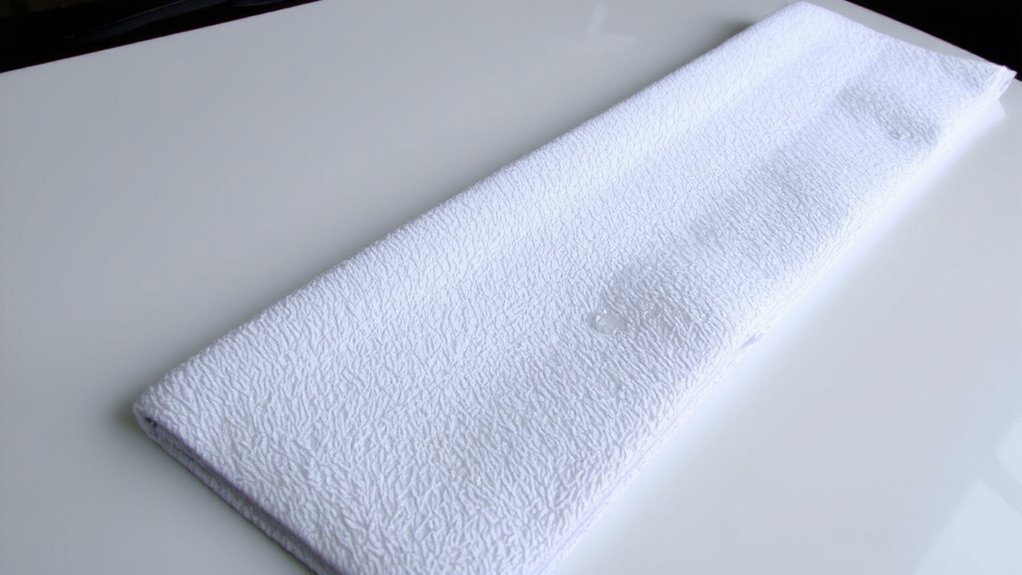
You’ve selected a high-quality microfiber towel designed for ceramic coatings-now protecting that surface means keeping the towel itself clean and free of contaminants. Wash microfiber towels separately from cotton and other fabrics to prevent lint transfer. Use a mild, detergent-only cleaner-avoid products with bleach or fabric softeners. Towel softener effects include residue buildup that reduces absorbency and leaves streaks. Microfiber pores trap oils and debris; residue clogs these spaces permanently. Water hardness impact is critical-minerals in hard water reduce detergent efficiency and deposit scale. Wash in warm water (105°F–110°F) to dissolve contaminants without damaging fibers. Run an extra rinse cycle to remove all soap residue. Dry on low heat; high temps melt synthetic fibers. Never use dryer sheets-they leave a waxy coating. Clean towels guarantee a safe, scratch-free finish every time. Choosing the right best car drying towels can significantly improve drying performance and protect your ceramic coating.
Replace Towels When They Start Leaving Lint
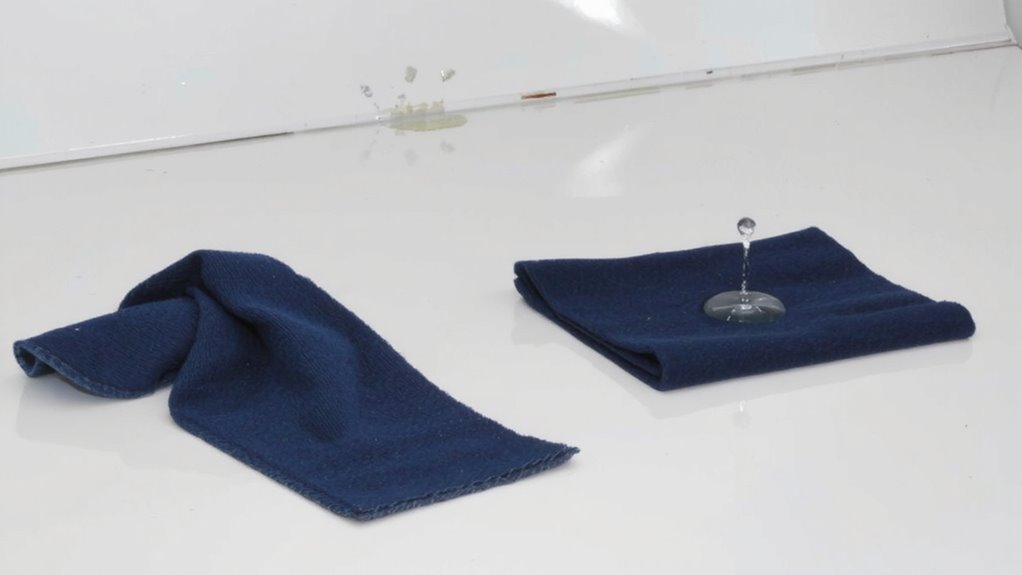
Eventually, even well-maintained microfiber towels degrade and start leaving lint on ceramic-coated surfaces. You’ll notice increased lint frequency during drying, signaling it’s time to replace them. Fresh microfiber has dense, short fibers that trap contaminants; as towel texture becomes rough or frayed, its efficiency drops. A worn towel often feels coarse instead of plush, reducing its ability to glide smoothly. When fibers fray, they shed more-especially after repeated washing. High-quality towels last about 300 washes under proper care, but frequent use shortens lifespan. Inspect your towels monthly. If lint reappears despite correct washing, replacement is necessary. Using degraded towels risks microfiber buildup, compromising the ceramic coating’s finish. New towels should have a tight weave, 300–800 GSM weight, and no loose edges. Replace old ones promptly to maintain a lint-free surface and guarantee peak performance with every dry.
Dry With the Flip-And-Fold Method for a Streak-Free Finish
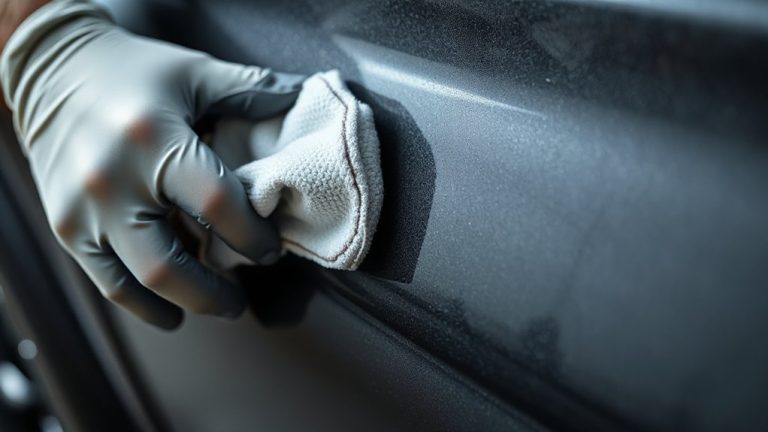
Each use of the flip-and-fold technique reduces streaks and maximizes drying efficiency on ceramic-coated surfaces. You maintain a clean towel texture with every fold, minimizing microfiber lint transfer. This drying technique uses a large, plush 70/30 microfiber towel (at least 16” x 24”) to absorb water evenly. Start at the top of the panel, drag down once, then flip the towel to a dry section-never slide back. Folding divides the towel into eight clean quadrants, ensuring only dry, contaminant-free fabric contacts the surface. Aggressive wiping generates friction, which can push contaminants into the coating; this method eliminates that risk. Proper towel texture prevents marring, while systematic folding prolongs fabric effectiveness. Use light pressure-let the towel’s pile depth and split fibers draw in moisture. Repeat section by section, never double-passing. This precise drying technique preserves hydrophobic properties and delivers a consistently streak-free finish. For optimal results, choose a towel with a 70/30 microfiber blend, known for its superior absorbency and softness.
Use Lint-Free Tools for Final Detailing Touch-Ups
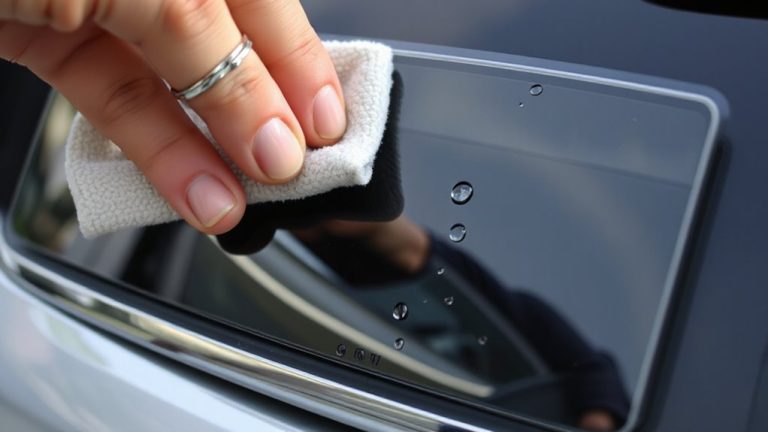
While the flip-and-fold drying method minimizes lint, residual fibers may still cling to ceramic-coated surfaces, especially in high-humidity conditions. For final detailing, use only lint free tools to avoid contamination. High-quality microfiber towels with a 75/25 polyester-to-polyamide blend and 300+ GSM weight reduce fiber shedding by over 90% compared to standard cloths. These towels should have bound edges, not sewn, to eliminate loose threads. A 16” x 24” size offers maximum coverage and control. Touch up with a clean, dry applicator like a non-woven synthetic brush or foam pad rated for sensitive coatings. These tools trap microscopic fibers without scratching. Always inspect under directional light at a 45-degree angle to spot remaining lint. Reusable lint free tools must be washed separately in enzyme-based detergent and air-dried to maintain performance. Avoid fabric softeners. Proper tool selection guarantees a flawless, lint-free finish.
On a final note
Your towel matters. Use only 100% polyester microfiber with a 70/30 split weave and a minimum GSM of 350 for ceramic-safe drying. Wash after every 3–5 uses with unscented detergent; residue attracts lint. Replace towels when snagged or after 50 washes-degraded fibers leave behind particles. Dry using the flip-and-fold method to minimize surface contact. Finish with a 100% cotton detailing swab for grease-free, lint-free edges.