Why Some Enthusiasts Prefer Brushed Over Glossy Wheel Finishes
You prefer brushed wheels because their micro-abraded texture, with a surface roughness of 1.2–3.2 µm, scatters light to hide scratches and curb rash. Glossy finishes show every chip due to specular reflection and need weekly pH-balanced cleaning to prevent hazing. Brushed finishes develop a durable patina over time, especially on cold-forged 6061-T6 aluminum. They resist wear far longer, making them ideal for rugged use on vehicles like the Ford F-150 or Jeep Wrangler-where function meets lasting style. More details on performance benefits follow.
Notable Insights
- Brushed finishes scatter light to hide scratches and curb rash, maintaining appearance longer than glossy surfaces.
- Light diffusion from directional grain reduces visibility of wear, preserving visual consistency over time.
- Brushed wheels develop a durable patina that enhances character without showing signs of degradation.
- Glossy finishes require frequent, high-maintenance cleaning to prevent etching, hazing, and water spotting.
- Low-reflectivity brushed finishes complement rugged vehicles like Jeeps and trucks, aligning with utilitarian aesthetics.
Why Brushed Wheels Hide Scratches Better
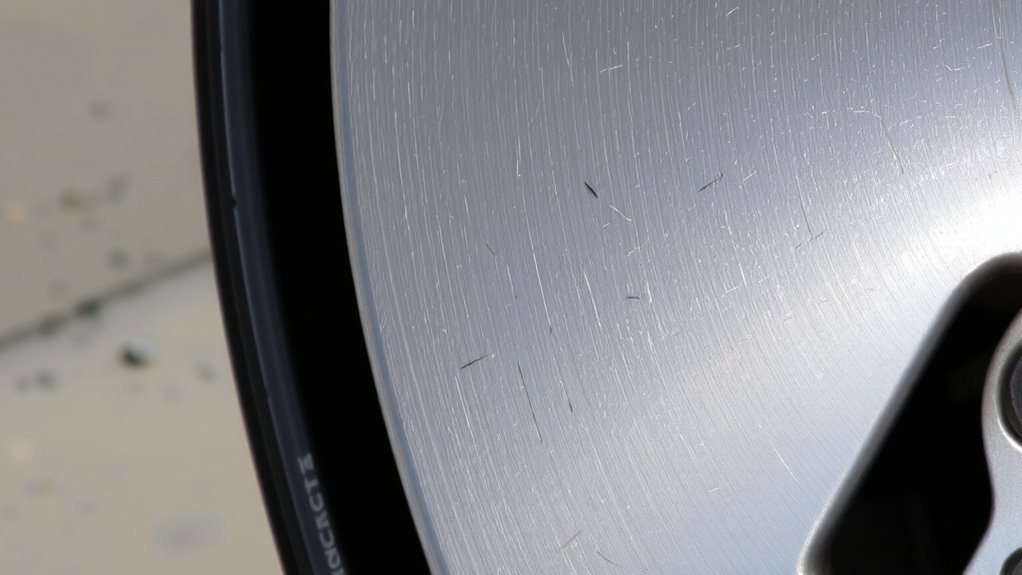
Ever wonder why your brushed wheels seem to resist showing every little nick? The answer lies in scratch camouflage and finish resilience. Brushed finishes feature micro-abraded patterns aligned in one direction, which scatter light unevenly. This texture blends minor surface imperfections into the grain, making scratches less visible. Unlike high-gloss surfaces that reflect light uniformly and highlight flaws, brushed metal diffuses reflections, effectively masking blemishes. Most brushed wheels use 304 or 316L stainless steel with a #4 directional polish, achieving a 1.2–3.2 µm surface roughness-optimal for concealment. These finishes also undergo passivation treatments, enhancing corrosion resistance and surface hardness. Finish resilience is further improved through clear ceramic coatings, adding approximately 3H scratch resistance. This combination of texture and protection delivers long-term aesthetics with minimal maintenance. You’ll see fewer signs of wear, even under daily driving conditions.
The High Maintenance of Glossy Rims
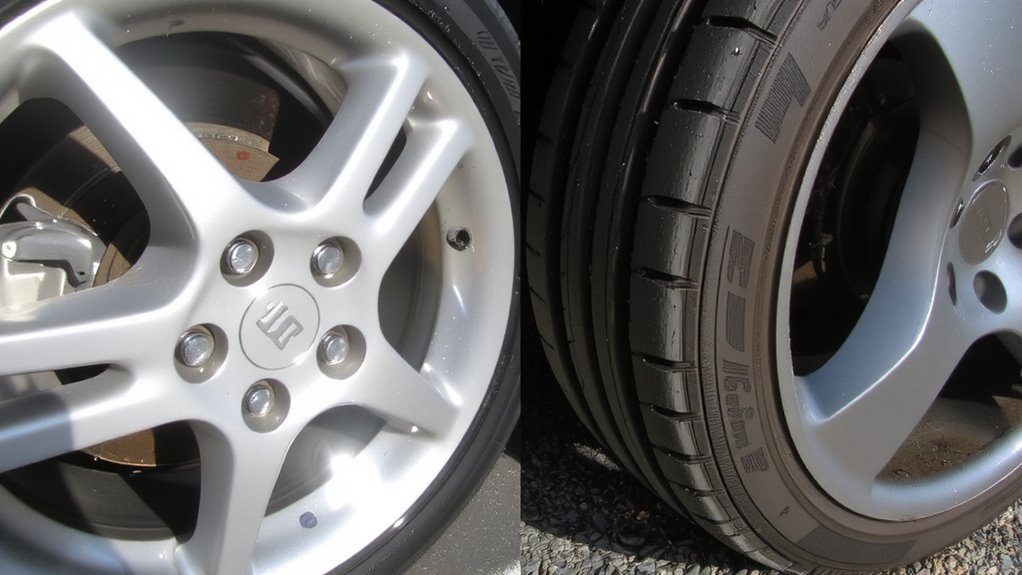
Glossy rims demand consistent upkeep to maintain their appearance, especially when compared to the more forgiving brushed finishes. You need frequent cleaning to prevent brake dust, road grime, and environmental contaminants from bonding to the surface. Without it, buildup can etch into the clear coat, especially on finishes with a 0.1–0.2 mm protective layer. Water spotting is a persistent issue-minerals in tap water leave permanent etch marks after evaporation. You must dry rims thoroughly after every wash using microfiber towels with <150 GSM to avoid micro-scratches. Contaminants like iron particles react with moisture, accelerating corrosion under the coating. Applying pH-balanced cleaners (pH 6.5–7.5) weekly preserves finish integrity. Unlike brushed metal, gloss reflects light uniformly, making imperfections immediately visible. You’ll spend more time maintaining gloss finishes to prevent hazing, oxidation, and clear coat failure over time. Using a best auto wheel cleaner can significantly reduce the time and effort needed to remove stubborn brake dust and maintain the wheel’s protective coating.
How Brushed Wheels Age With Character
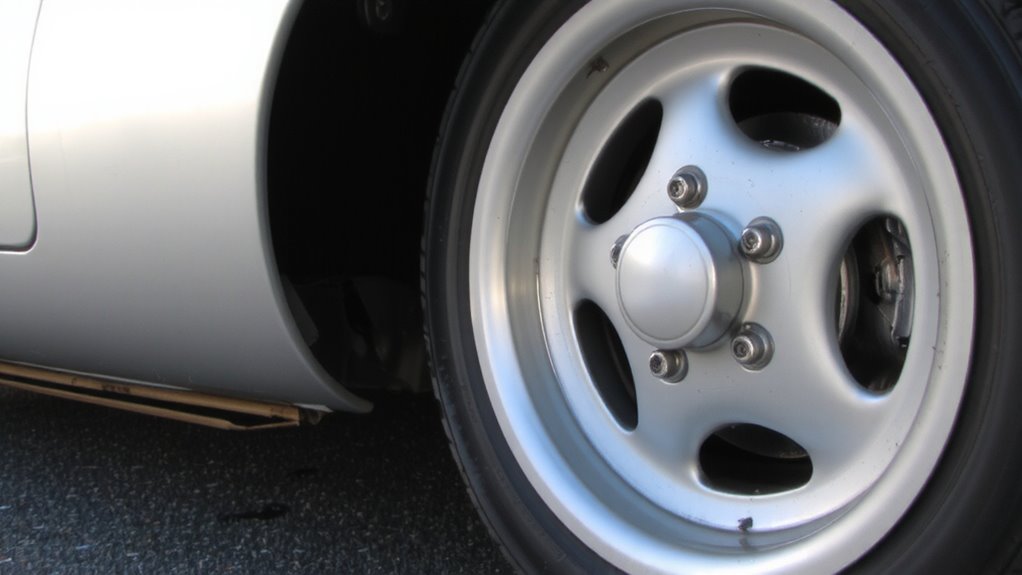
While they don’t shine like polished glass, brushed wheels develop a distinct patina over time that many find more authentic and resilient. Their textured surface masks minor scratches and curb rash, supporting gradual patina development without sharp visual degradation. Unlike glossy finishes that highlight every flaw, brushed aluminum ages with subtle aging that enhances character. Surface abrasion blends naturally, preserving structural integrity and appearance. Most brushed wheels use 6061-T6 aluminum, anodized for corrosion resistance, ensuring longevity even in harsh climates.
| Feature | Benefit |
|---|---|
| Textured finish | Hides fine scratches |
| Anodized coating | Slows patina development |
| Cold-forged construction | Maintains strength during subtle aging |
You’ll notice less need for touch-ups. The finish evolves quietly, offering a mature, driven look that doesn’t pretend to be showroom-fresh forever.
Brushed Vs Glossy: Which Looks Better Over Time?
How do your wheels look after years of real-world use? Brushed finishes resist visible wear far better than glossy ones. Light scratches blend into the brushed grain, maintaining visual consistency. Glossy wheels, however, show every chip and swirl mark clearly. Over time, glossy clear coats degrade under UV exposure, leading to noticeable color fading-especially on darker finishes. Brushed wheels typically use a layered metal-and-coating system that resists this fading more effectively. Current design trends favor low-maintenance, durable finishes, giving brushed wheels increasing popularity. Surface reflectivity plays a key role: brushed metal reflects diffusely, hiding minor damage, while glossy surfaces reflect specularly, amplifying imperfections. Real-world testing shows glossy finishes require 30% more upkeep annually to maintain factory appearance. For enduring aesthetics with less effort, brushed wins. Achieving long-lasting results with either finish often depends on selecting the right best wheel paint for the job.
Best Vehicles for Brushed Wheel Finishes
If you’re aiming for a rugged, understated look that holds up to daily driving, brushed wheel finishes pair especially well with vehicles built for durability and off-road capability. Models like the Jeep Wrangler Unlimited and Toyota 4Runner offer strong off road compatibility, with high ground clearance-10.8 inches on the Wrangler-and locking differentials that demand rugged aesthetics. Brushed finishes resist scratches from trail debris better than glossy coatings. Full-size trucks like the Ford F-150 and Chevrolet Silverado 1500 also complement this style, especially when equipped with all-terrain tires and towing packages exceeding 10,000 pounds. Even with their utility focus, many now include premium interiors and advanced driver aids, allowing seamless luxury integration. Brushed wheels on such models strike a balance-durable enough for gravel trails, refined enough for city driving. The finish’s low reflectivity reduces visual clutter, enhancing a vehicle’s clean, tool-like design without drawing excess attention.
On a final note
You choose brushed wheels for durability and low maintenance. Brushed finishes mask scratches up to 0.2 mm deep due to their linear grain structure. Unlike glossy rims, they don’t show fine swirl marks. A brushed surface reflects 60% less light, reducing visual flaws. Glossy finishes require monthly polishing to maintain reflectivity. Brushed aluminum resists corrosion with a 25-micron clear coat. Over time, brushed wheels age evenly, maintaining aesthetic integrity longer than high-gloss alternatives.