Mastering the Art of Power Steering System Diagnostics and Repair: Identifying and Solving Common Issues That Cause Vehicle Handling Problems
You’re losing steering precision if alignment exceeds ±0.5 degrees or tire imbalance surpasses 0.25 ounce, causing drag and vibration. Check power steering fluid-red or pink means clean; dark fluid or oily spots signal leaks at rack seals or hoses. Whining noises often mean low fluid or air in lines; verify belt tension at 90–110 pounds. Hydraulic systems need 800–1,200 psi pump pressure; electric systems require OBD2 scans for sensor faults. Excess tie rod play or leaking boots indicate rack failure. Further diagnostics reveal deeper system-specific solutions.
Notable Insights
- Misaligned wheels or unbalanced tires cause handling issues; correct camber, caster, toe, and balance tires to within OEM specs for precise steering control.
- Inspect for power steering fluid leaks using a cardboard test, focusing on rack seals, hoses, and pump gaskets to prevent pump damage.
- Diagnose whining noises by checking fluid levels, bleeding air from lines, and verifying drive belt tension is within 90–110 pounds.
- Differentiate hydraulic from electric power steering: use fluid pressure tests for hydraulic, OBD2 scanning for torque sensor or motor faults in EPS.
- Identify failing rack and pinion by steering wander, unexplained alignment shifts, fluid leaks at boots, or more than 0.030 inches of tie rod end play.
What’s Causing Your Steering Wheel to Feel Heavy?
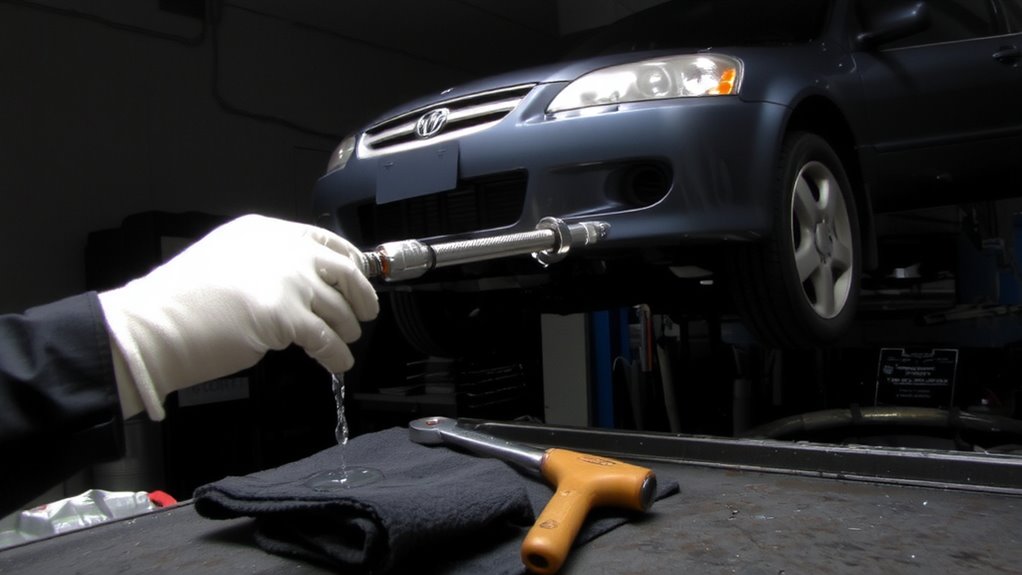
Why does your steering wheel suddenly feel like it’s fighting you? A heavy steering sensation often stems from incorrect steering alignment or poor tire balance. Misaligned wheels create uneven resistance, forcing you to apply constant correction. Factory specifications typically allow alignment deviations within ±0.5 degrees; exceeding this causes noticeable drag. Similarly, unbalanced tires generate lateral vibrations, especially above 45 mph, increasing steering effort. Tire imbalance as little as 0.5 ounce disrupts smooth rotation. You’ll notice stiffness during low-speed turns or wandering on straight roads. These issues strain the power steering system, accelerating wear. Correcting steering alignment to OEM specs-camber, caster, and toe within tolerance-and balancing tires to under 0.25 ounce imbalance restores precision. Proper maintenance guarantees even tire wear and reduces load on steering components. Don’t ignore these fundamentals-alignment and balance directly impact steering effort, safety, and system longevity. Address them first when diagnosing heavy steering.
How to Spot Power Steering Fluid Leaks Fast
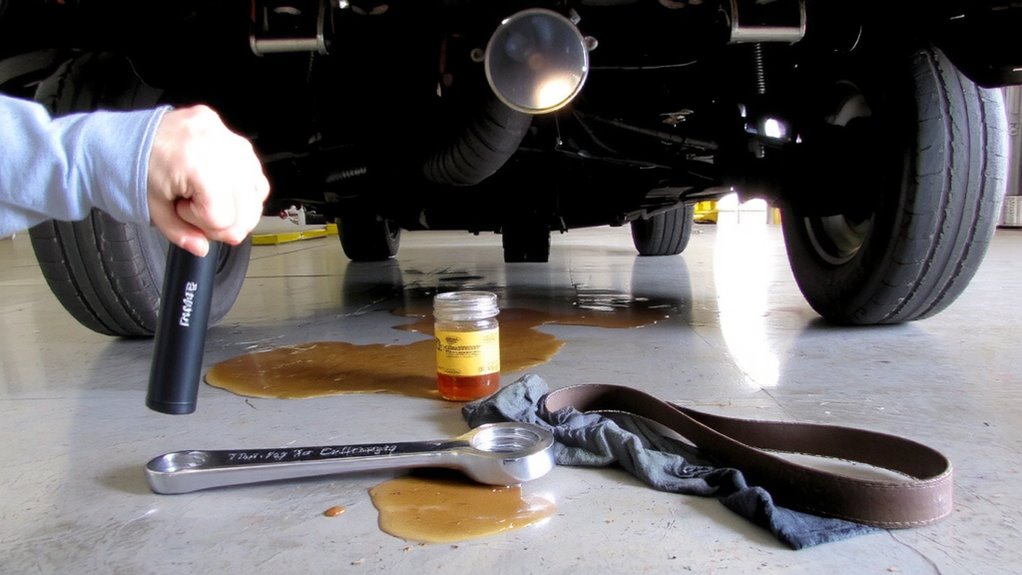
You’ve checked alignment and balanced the tires, but the steering still feels stiff-now it’s time to inspect for power steering fluid leaks. Start by examining the fluid color; fresh power steering fluid is typically red, amber, or pink. If it’s dark brown or smells burnt, the system may be degraded. Check under the vehicle for dampness or puddling. Common leak locations include the steering rack seals, hoses, and the pump gasket. Use a flashlight to trace hoses from the reservoir to the pump and rack. Look for wet spots or oily residue, which indicate a leak. Place a clean cardboard sheet beneath the engine overnight; fluid spots will reveal precise leak location. Most leaks occur at connections or worn O-rings. Early detection prevents pump damage and costly repairs. Address seepage immediately to maintain steering assist and prevent total fluid loss.
Why Your Power Steering Makes Noise: and What to Do
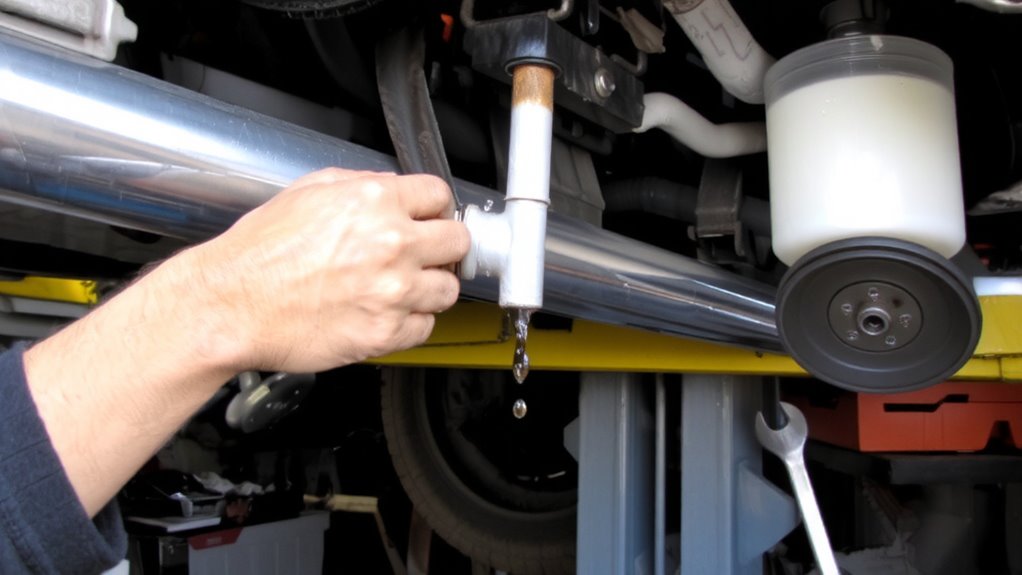
What’s that whining or groaning when you turn the wheel? It’s usually a sign your power steering system is compromised. Low fluid levels are a common culprit-check the reservoir and top off if needed. Air pressure trapped in the lines can also create noise, especially after a fluid change; bleed the system according to manufacturer specs to remove bubbles. Inspect the drive belt-incorrect belt tension leads to squealing, particularly during sharp turns. Use a belt tension gauge; most manufacturers specify 90–110 pounds of force for proper tension. A loose belt slips, reducing pump efficiency. A properly tensioned belt guarantees consistent power steering pump operation. If noise persists after checking fluid, air pressure, and belt tension, the pump bearings or internal valves may be failing. Diagnose methodically: noise often pinpoints the exact component needing service.
Hydraulic vs Electric Power Steering: How to Diagnose Right
While both hydraulic and electric power steering systems deliver assistive force to the steering mechanism, they operate on fundamentally different principles, and diagnosing issues in each requires a tailored approach. Hydraulic systems use pressurized fluid-typically 800 to 1,500 psi-to amplify steering effort, relying on a belt-driven pump. Low fluid or a failing pump degrades steering responsiveness and system efficiency. Electric power steering (EPS) uses a motor connected to the steering column or rack, drawing energy only when needed, improving fuel economy by up to 3%. Diagnose EPS issues using an OBD2 scanner to check for torque sensor or motor controller faults. Poor steering responsiveness in EPS often stems from software glitches or wiring problems. Hydraulic systems demand fluid pressure tests and visual leak inspections. Always verify belt tension and pulley alignment in hydraulic setups. Accurate diagnosis guarantees peak performance and safety.
Test Your Power Steering Pump in 5 Steps
Reliability in steering begins with a fully functional power steering pump, and testing it systematically guarantees accurate diagnosis. Check belt tension first-too loose causes slippage, too tight wears the pump. Use a gauge to measure pump pressure; most systems require 800–1,200 psi under load. Low pressure points to internal wear or valve issues. Follow these steps carefully:
| Step | Action |
|---|---|
| 1 | Inspect belt tension-should deflect 1/2 inch under 10 lbs force |
| 2 | Hook up a pressure gauge to the high-pressure line |
| 3 | Run engine at 1,500 RPM with wheels straight |
| 4 | Record pump pressure and compare to spec |
Accurate readings depend on proper setup. Ignoring belt tension skews pump pressure results. Consistent values confirm pump health; fluctuations suggest failure.
Signs of Rack and Pinion Failure and How to Confirm Them
A failing rack and pinion unit compromises steering precision and safety, so recognizing early symptoms is critical. You may notice steering wander, where the vehicle drifts laterally without input, often requiring constant correction. This is a sign of internal wear in the rack’s bushings or gear teeth, reducing directional stability. Another red flag is an unexplained alignment shift; toe settings change repeatedly despite adjustments, indicating rack misalignment or mounting damage. Inspect for visible fluid leaks at the steering rack boots-power steering fluid escaping means compromised seals. Use a pry bar to check for play: lift the tie rod ends; more than 0.030 inches of movement confirms internal failure. Confirm mounting bolts are tight-loose bolts shift rack position, altering geometry. Worn inner tie rods also contribute to imprecise steering feel. These symptoms, combined with a stiff or notchy steering response, mean replacement is necessary.
Diagnose and Fix Common Electric Power Steering Faults
What happens when your steering feels heavy or unresponsive, but there’s no fluid to check? You’re likely dealing with an electric power steering (EPS) system fault. These systems rely on torque sensors and an electric motor to assist steering. When the steering resists input, first scan for trouble codes using an OBD-II tool. Fault codes often point to sensor miscalibration or a failing motor. Sensor calibration guarantees the system accurately detects steering wheel effort-improper calibration leads to delayed or erratic assistance. Relearn procedures via a scan tool restore correct operation. If the motor fails internally, replacement is necessary. EPS motors typically operate at 12 volts and deliver 80–120 amps under load. A faulty motor won’t produce adequate torque, even with calibration. Replace the unit and recalibrate the sensors. That restores proper steering response and system functionality.
On a final note
You can fix most steering issues with systematic diagnosis. Check fluid levels first-low reservoir volume points to leaks. Inspect hoses for cracks; typical pressure ranges from 800–1,200 psi in hydraulic systems. Listen for whining-worn pumps often exceed 60 dB. Electric systems use torque sensors; scan for fault codes with an OBD-II tool. Confirm rack play-exceeding 0.5 inches indicates wear. Replace seals or components as needed. Proper maintenance guarantees precise steering response and system longevity.