Maximizing Cooling Efficiency in Modern Vehicles: Strategies for Maintaining Optimal Temperatures With Radiators, Coolant and Fans
You keep your engine cool by maintaining ideal coolant mix-use ethylene or propylene glycol with the right additives and a 50/50 water ratio for boiling points up to 129°C. Upgrade to an aerospace-grade aluminum radiator with 16–18 fins per inch and a 30% more efficient serpentine core. Pair it with a dual-speed electric fan that activates at 205°F and fits tightly behind the radiator-any gap over an inch cuts cooling by 25%. Even 25% debris blockage raises temps by 20°F, so clean monthly. Next, discover how precise thermal control sustains peak performance under load.
Notable Insights
- Upgrade to an aerospace-grade aluminum radiator with high fin density for superior heat dissipation and durability.
- Maintain coolant with the correct glycol mix and additives to ensure optimal heat transfer and corrosion protection.
- Use electric cooling fans with PWM control for precise temperature regulation independent of engine speed.
- Prevent radiator blockages by regularly cleaning debris, as even 25% clogging can raise temperatures by 20°F.
- Monitor coolant temperatures closely in stop-and-go traffic, where reduced airflow increases overheating risks.
Watch Temp and Avoid Overheating
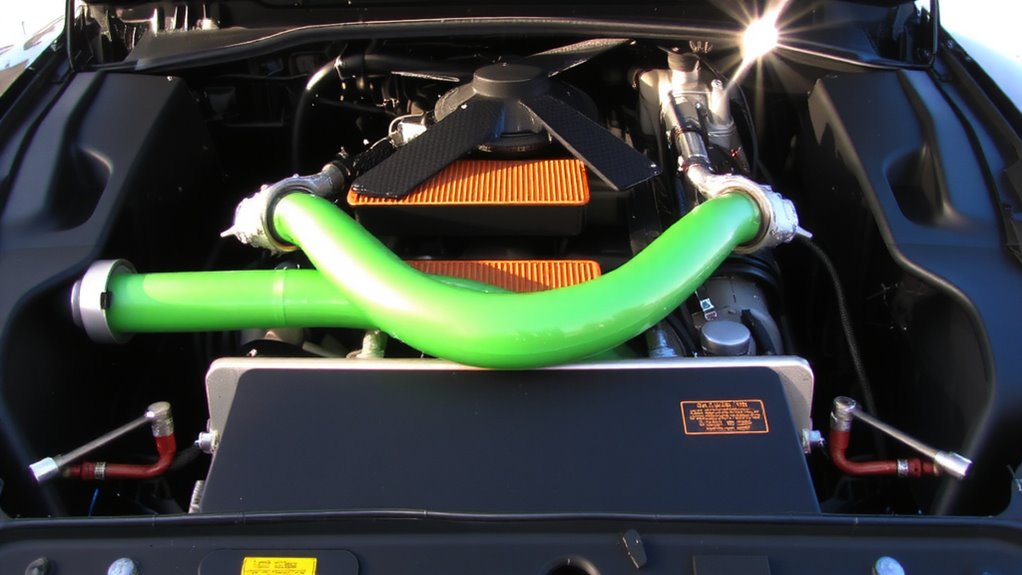
Why does your engine run hotter in stop-and-go traffic? Because airflow drops, reducing radiator efficiency. Your engine load increases during acceleration from stops, generating more heat. Without consistent air movement, even normal engine load can push temperatures higher. Ambient temperature plays a critical role-on 90°F days, cooling capacity drops 15–20% compared to 70°F conditions. Modern thermostats open at 195°F, maintaining ideal internal temps. But if coolant temperature exceeds 220°F continuously, engine components risk warping. Use your dashboard temperature gauge to monitor trends-not just current levels. A rise of more than 20°F above baseline signals trouble. Electric cooling fans activate above 205°F to compensate for low speed. Ignoring these cues risks head gasket failure. Watch the needle. Respond early. Prevent thermal runaway before it stresses seals, hoses, and aluminum housings beyond design limits.
Use the Right Coolant for Maximum Cooling
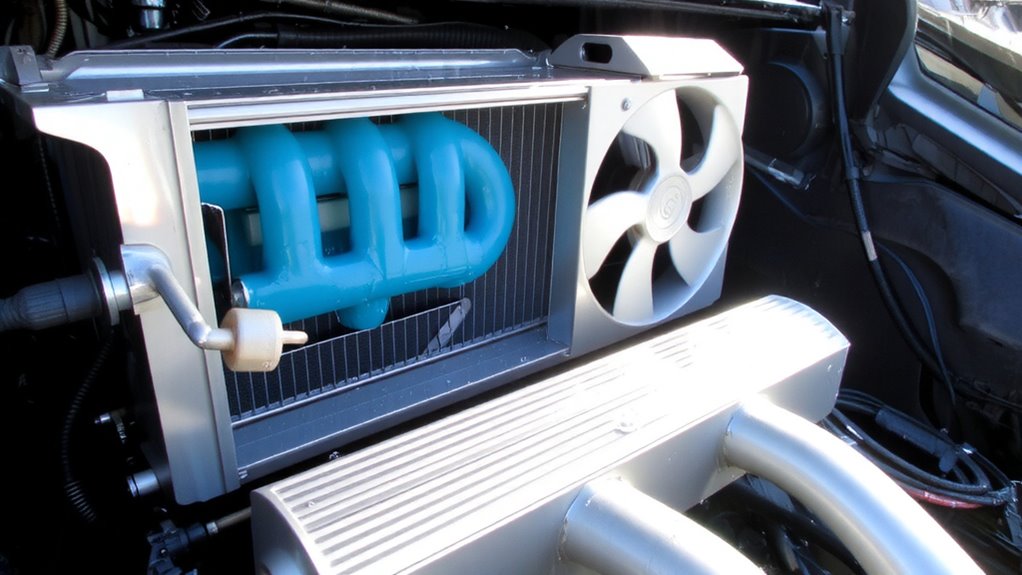
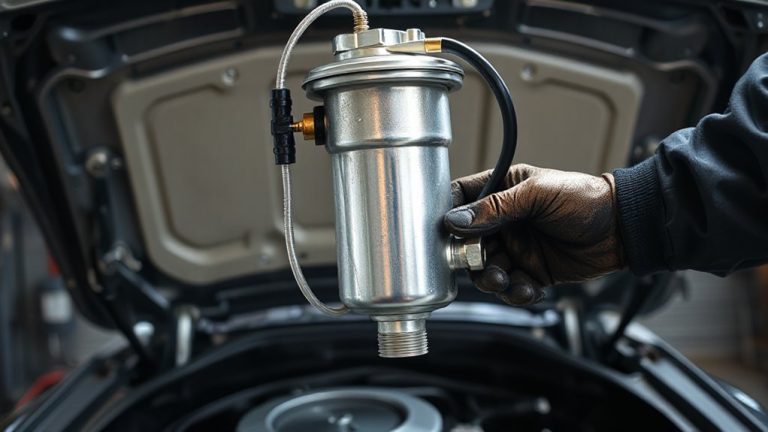
Coolant isn’t just colored water-it’s a precision-engineered fluid critical to your engine’s thermal management. Using the right coolant guarantees maximum heat transfer and long-term protection. Coolant chemistry must match your engine’s materials to prevent corrosion and scaling. Modern engines rely on ethylene or propylene glycol blends with specific additives-using the wrong type risks damage. Temperature stability prevents boiling in summer and freezing in winter, typically rated from -37°C to 129°C. Always follow your manufacturer’s specs for mix ratio and service life. Upgrading your ignition system with best spark plugs for fuel efficiency can further support optimal engine performance and thermal efficiency.
| What Happens | How You Feel |
|---|---|
| Engine seizes from overheating | Helpless and stranded |
| Corrosion clogs radiator tubes | Frustrated by repairs |
| Coolant freezes in cold weather | Panicked at startup |
| Poor heat transfer reduces power | Disappointed in performance |
| Correct coolant extends engine life | Confident and in control |
Upgrade to a High-Performance Radiator
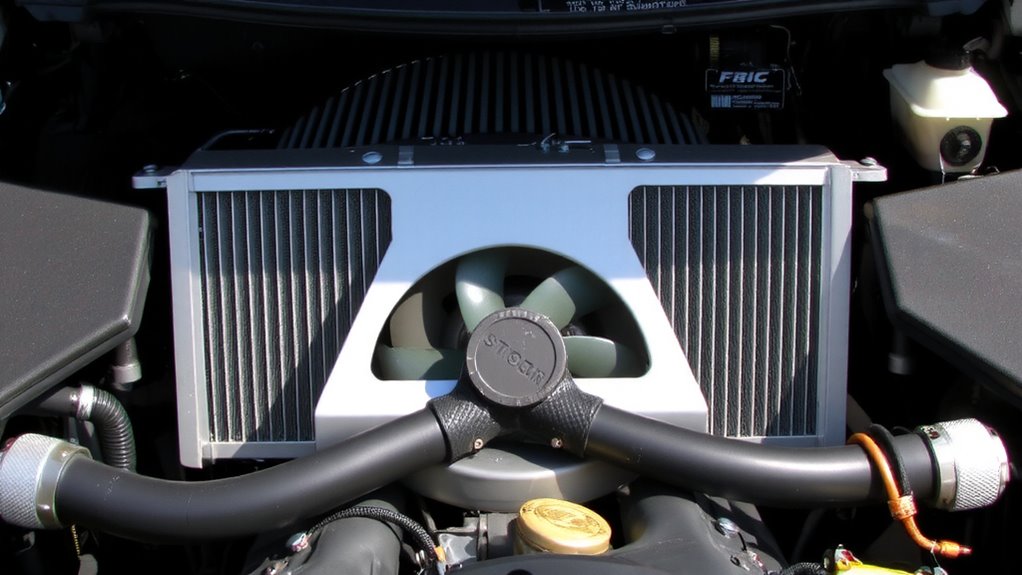
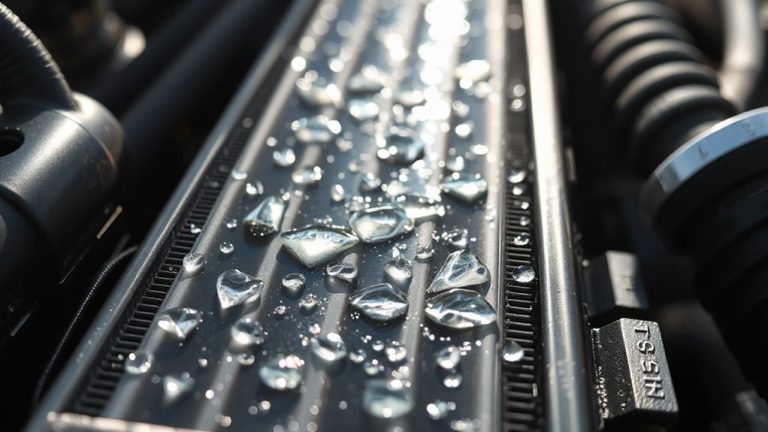
A stock radiator does its job-until it doesn’t. When you push your engine harder, you need a high-performance radiator to keep temperatures under control. Upgraded radiator materials like aerospace-grade aluminum offer better heat transfer and corrosion resistance than standard copper-brass setups. These materials reduce weight while increasing durability, especially under sustained thermal stress. The core design is just as critical. High-performance models use a multi-row, serpentine fin configuration with turbulator strips inside the tubes to maximize coolant turbulence and surface area. This design improves thermal exchange efficiency by up to 30% compared to stock units. Thicker cores with high fin density per inch-typically 16 to 18 fins-enhance airflow utilization. A properly sized upgrade fits your existing shroud and maintains compatibility with your cooling system’s pressure rating, usually 18–22 psi. For reliable options, consider one of the top aftermarket radiators recommended for your vehicle type and performance needs.
Install Efficient Electric Cooling Fans
You’ll get far better cooling control with electric fans than what most stock clutches can deliver. Electric fans activate based on coolant temperature, not engine speed, letting you maintain consistent thermal regulation. Choose fans with proper voltage compatibility-most run on 12V DC, matching standard vehicle systems. Mismatched voltage leads to weak performance or component failure. Opt for dual-speed or PWM-controlled models that adjust output according to cooling demand. Fan placement is critical: mount the fan assembly directly behind the radiator, ensuring a tight seal within the shroud to prevent air recirculation. A gap greater than 1 inch reduces efficiency by up to 25%. Puller fans, which draw air through the radiator, typically cool more effectively than pusher setups. High-flow models move 2,000 to 2,800 CFM, markedly improving heat dissipation under load or at idle.
Keep Your Radiator Clear for Better Airflow
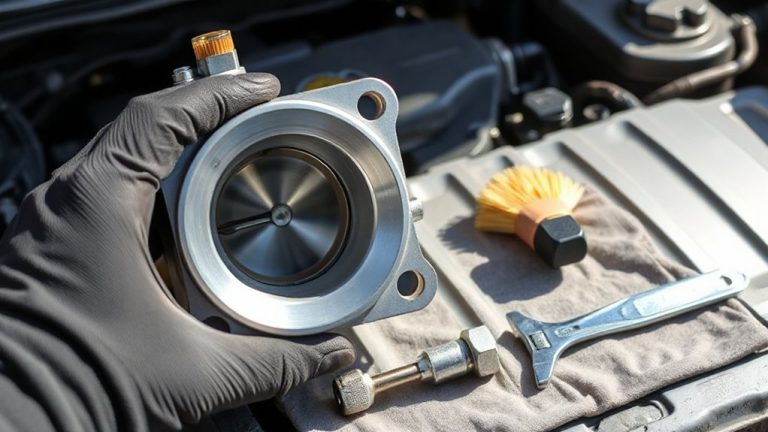
While your radiator can’t function properly if blocked, keeping it clear guarantees maximum airflow and best heat exchange. Airflow obstruction reduces cooling efficiency by up to 40%, leading to overheating. Debris buildup from leaves, bugs, or dirt restricts air movement through the fins, especially at low speeds. You should inspect the radiator monthly, particularly after off-road driving or highway use. Use a soft brush or compressed air to remove debris without damaging the delicate fins. Even a 25% blockage impacts thermal performance, increasing engine temperature and strain on the cooling system.
| Condition | Cooling Efficiency | Engine Temp Rise |
|---|---|---|
| Clean Radiator | 100% | 0°F |
| 25% Blockage | 78% | +20°F |
| 50% Blockage | 62% | +45°F |
| Severe Debris Buildup | <50% | +70°F |
On a final note
You must monitor engine temperature closely to prevent overheating. Modern engines operate ideally between 195°F and 220°F. Use a 50/50 mix of ethylene glycol coolant and distilled water for proper heat transfer and corrosion protection. Upgrade to a 3-row aluminum radiator for increased surface area and faster cooling. Install electric fans with dual 12-inch puller configurations, drawing 30 CFM at 12V, for consistent airflow.