How ABS Brakes Work: Sensors, Pumps & Stopping Distance
You rely on ABS every time you brake hard, and it responds within milliseconds to prevent wheel lockup. Sensors at each wheel monitor rotation up to 100 times per second, sending data to the control module. When imminent lockup is detected, the system modulates brake pressure through hydraulic solenoid valves-pulsing up to 15 times per second. This keeps tires rolling slightly, maintaining traction and steering control. On dry or wet roads, it shortens stopping distance; on snow or gravel, it may not. Firm brake pressure is essential-never pump the pedal. You gain stability, but physics still limits grip. Further details reveal how each component works together under stress.
Notable Insights
- ABS prevents wheel lockup during hard braking by automatically modulating brake pressure up to 15 times per second.
- Wheel speed sensors monitor rotation up to 100 times per second to detect impending lockup.
- The ABS control module processes sensor data and triggers solenoid valves to adjust brake pressure.
- By pulsing brakes rapidly, ABS maintains tire traction and allows steering control during emergency stops.
- Firm, continuous brake pressure is required; pumping the pedal reduces ABS effectiveness.
How ABS Prevents Skids and Keeps You in Control
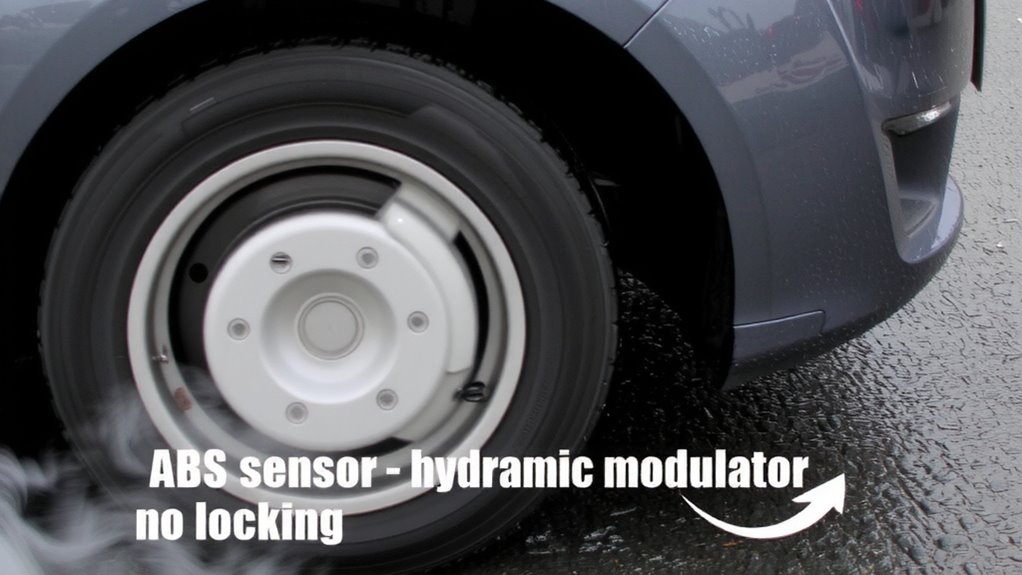
When you slam on the brakes in an emergency, your wheels can lock up, especially on wet or icy roads, but ABS-short for Anti-lock Braking System-stops that from happening. It maintains tire traction by preventing skidding, allowing the wheels to keep rotating slightly during hard stops. This modulation happens up to 15 times per second, depending on road conditions. With tire traction preserved, you retain steering stability when you need it most. ABS uses wheel-speed sensors to detect when a wheel is about to lock. The system then adjusts brake pressure accordingly. Without ABS, locked wheels reduce control and increase stopping distance. On slick surfaces, the difference can be critical. Steering stability means you can actively avoid obstacles instead of sliding uncontrollably. ABS doesn’t shorten stopping distance in all cases, but it dramatically improves controllability. It’s standard on most modern vehicles, operating seamlessly in the background during panic braking scenarios.
How ABS Stops Wheels From Locking in a Panic Brake
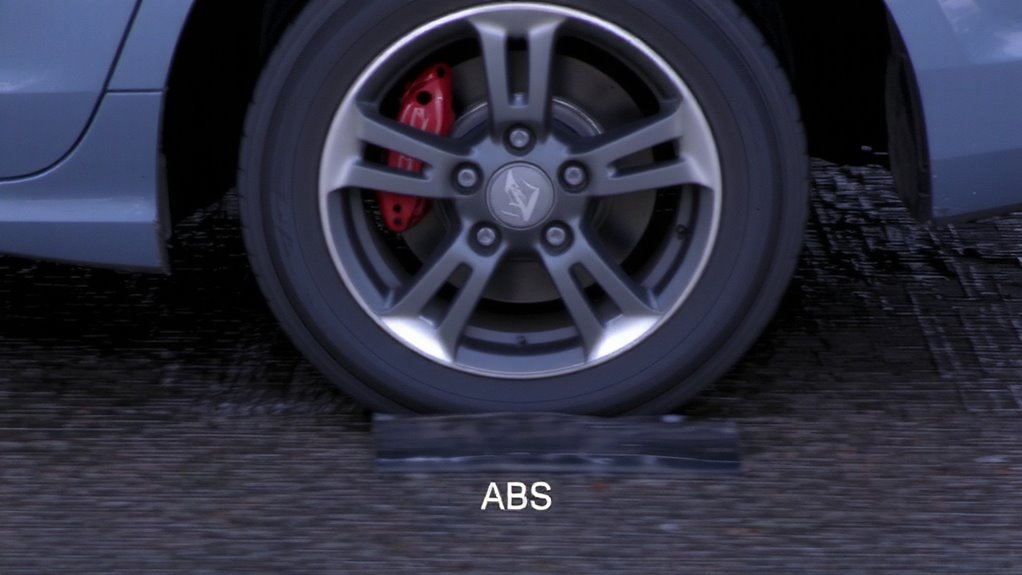
Though you might brake hard in an emergency, ABS keeps your wheels from locking by rapidly modulating brake pressure. Sensors at each wheel monitor rotational speed and send data to the ABS control module up to 100 times per second. When a wheel is about to lock, the system reduces braking force instantly. It does this by adjusting hydraulic pressure in the brake lines using solenoid valves. These valves cycle open and closed multiple times per second, pulsing the brakes. This maintains traction and steering control. The system applies and releases pressure faster than any driver could. Each pulse lasts only milliseconds, preserving momentum while preventing skids. ABS operates only when sudden deceleration is detected. You’ll feel a vibration in the brake pedal-this is normal. Hydraulic pressure stays high enough to slow the car, but not so high that wheels stop turning. Your stopping distance may vary depending on road conditions.
When ABS Shortens Your Stop (And When It Doesn’t)
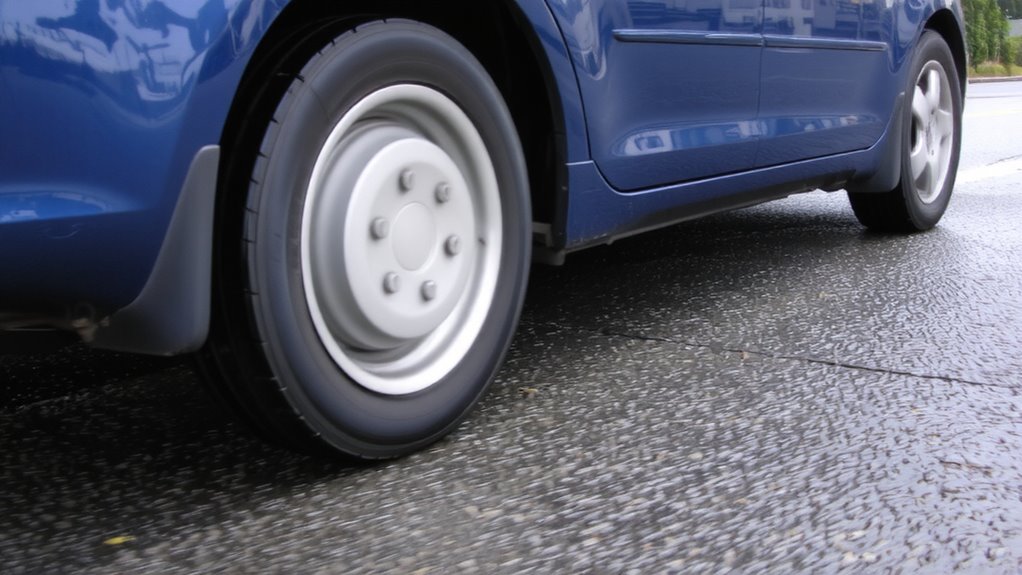
Because road conditions directly affect how ABS performs, you’ll stop faster with the system on some surfaces but not others. On dry or wet pavement, ABS shortens stopping distances by preventing wheel lockup and maintaining steering control. Under these conditions, your tires sustain maximum grip, allowing the system to modulate brake pressure up to 15 times per second. However, on loose surfaces like gravel or packed snow, ABS may extend stopping distance. Tires can dig in slightly without locking, using accumulated material ahead of the tire to help slow the vehicle. With ABS active, this effect is reduced. Your braking technique must adapt: always apply firm, continuous pressure. Do not pump the brake pedal. Though ABS maximizes control, road conditions ultimately determine its effectiveness. Trust the system on pavement, but expect longer stops on loose terrain.
What’s Inside an ABS System: Sensors, Valves, and More
While you press the brake pedal, a network of precision components works behind the scenes to keep your wheels from locking. Wheel speed sensors-mounted at each hub-monitor rotation in real time, sending data to the ABS control module up to 100 times per second. If a wheel begins to decelerate too quickly, indicating imminent lockup, the module activates hydraulic valves in the brake lines. These solenoid valves modulate pressure, pulsing brakes up to 15 times per second to maintain grip. The pump restores pressure after each release, ensuring consistent response. Integrated with traction control and electronic stability systems, ABS shares sensor data to manage wheel slip during acceleration or cornering. All components operate within milliseconds, using thresholds calibrated to tire size, vehicle weight, and road conditions. This seamless coordination allows you to steer during hard braking, turning skids into controlled stops.
When ABS Won’t Save You : And What To Do
ABS won’t prevent every skid, especially when physics overwhelms the system. Even with sensors monitoring wheel speed up to 20 times per second, poor road conditions like ice, gravel, or standing water reduce tire traction beyond what ABS can manage. Your vehicle’s stopping distance increases considerably on slick surfaces, regardless of ABS intervention. Driver reaction plays a critical role-delayed braking or sharp steering inputs can negate ABS effectiveness. The system only assists during hard braking; it can’t correct oversteer or understeer caused by excessive cornering speed. ABS modulates brake pressure at 3 to 15 pulses per second, but it can’t defy inertia. Always maintain safe speeds and increase following distances in adverse conditions. Remember: ABS helps you steer during panic stops, but it won’t compensate for poor judgment. Stay alert and prioritize smooth, proactive driving.
On a final note
You now understand how ABS keeps your wheels rotating during hard braking. ABS uses wheel speed sensors, typically accurate within ±1%, to detect imminent lockup. When sensors signal a skid, the hydraulic control unit modulates brake pressure up to 15 times per second. This prevents skidding and maintains steering control. ABS works best on wet or icy roads but may extend stopping distance on loose gravel.