The Function and Importance of the EGR Valve in Modern Vehicles: Reducing Exhaust Gas Recirculation for Improved Combustion Efficiency
Your EGR valve cuts NOx emissions by rerouting 5% to 15% of exhaust トラffic into the intake manifold, lowering combustion temperatures below 2,500°F. This cooling effect reduces nitrogen oxide formation and minimizes spark knock. It also allows more aggressive ignition timing, improving throttle response and fuel economy by up to 5% on highways. A clean valve maintains peak flow, prevents carbon buildup over 0.08 inches, and guarantees efficient combustion-you’ll see how proper maintenance directly impacts long-term engine health and performance.
Notable Insights
- The EGR valve reduces NOx emissions by recirculating exhaust gases to lower combustion temperatures.
- It improves combustion efficiency by moderating cylinder pressure and enabling optimal ignition timing.
- A clean EGR valve enhances fuel economy by up to 5% under highway driving conditions.
- Proper EGR function prevents engine knocking and stabilizes the combustion process.
- Regular maintenance prevents carbon buildup, ensuring reliable valve operation and emissions compliance.
What the EGR Valve Does and How It Works?
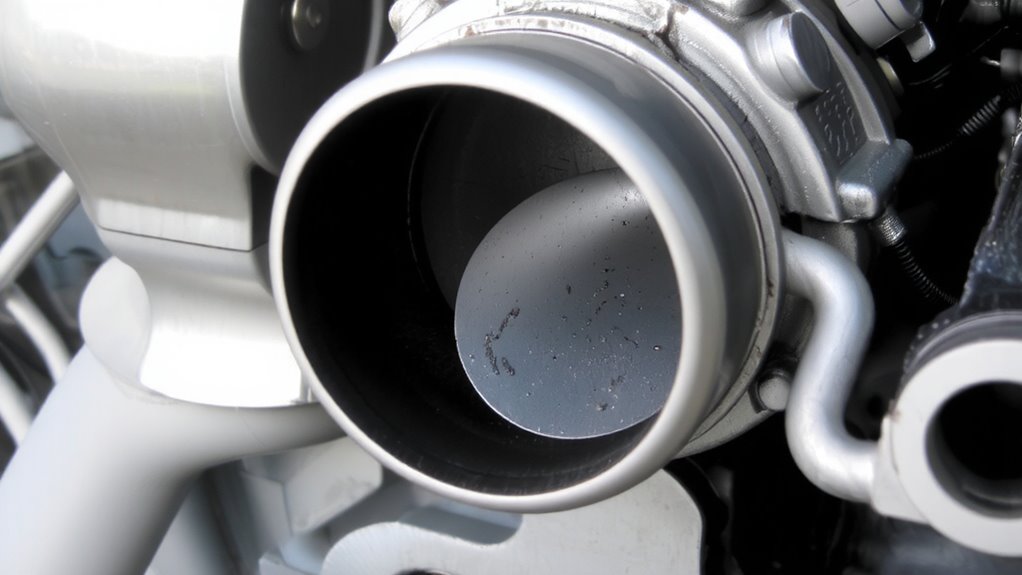
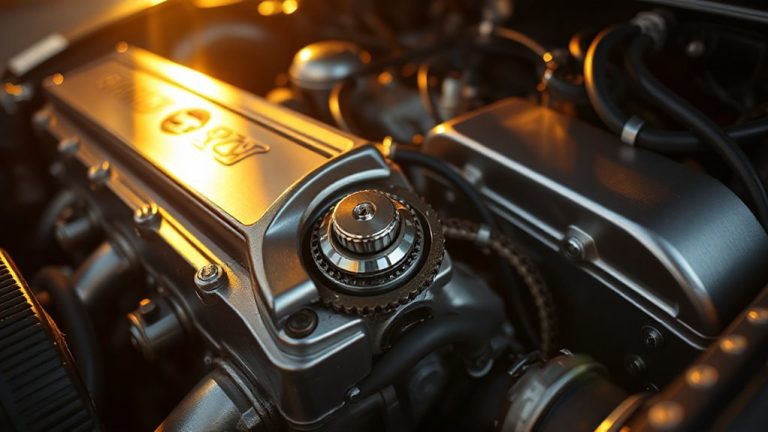
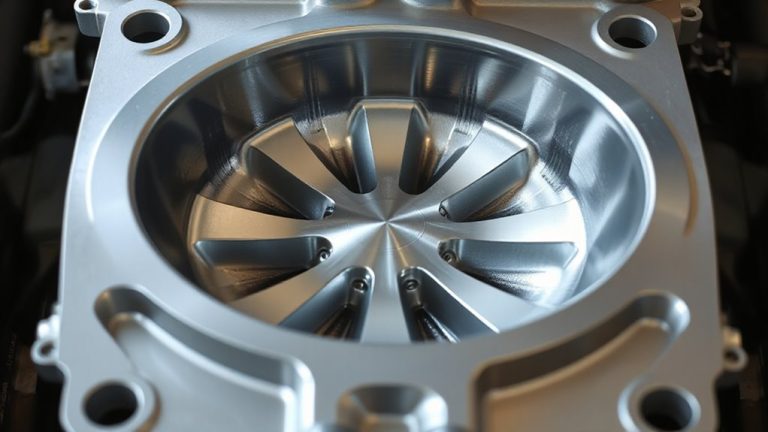
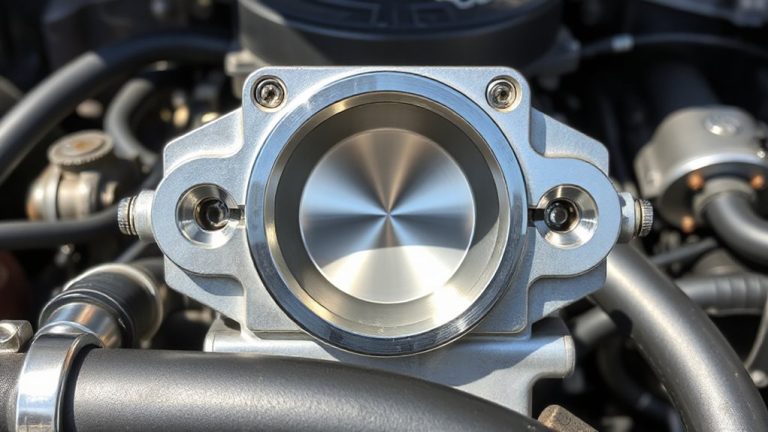
While your engine burns fuel to produce power, the EGR valve plays a critical role in reducing harmful emissions by recirculating a portion of the exhaust gas back into the intake manifold. This process lowers combustion temperatures, reducing nitrogen oxide (NOx) formation. The EGR design balances performance and emissions control through precise flow regulation. Modern systems use electronically controlled valves for accurate response. Valve materials must withstand extreme heat and corrosive gases, so manufacturers typically use hardened stainless steel or nickel-based alloys. These materials resist carbon buildup and thermal degradation over time. The valve opens progressively based on engine load and speed, allowing 5% to 15% exhaust gas recirculation under normal conditions. Proper operation maintains efficiency without sacrificing drivability. You rely on this system every time you drive, even if you never see it working.
Common Signs of EGR Failure
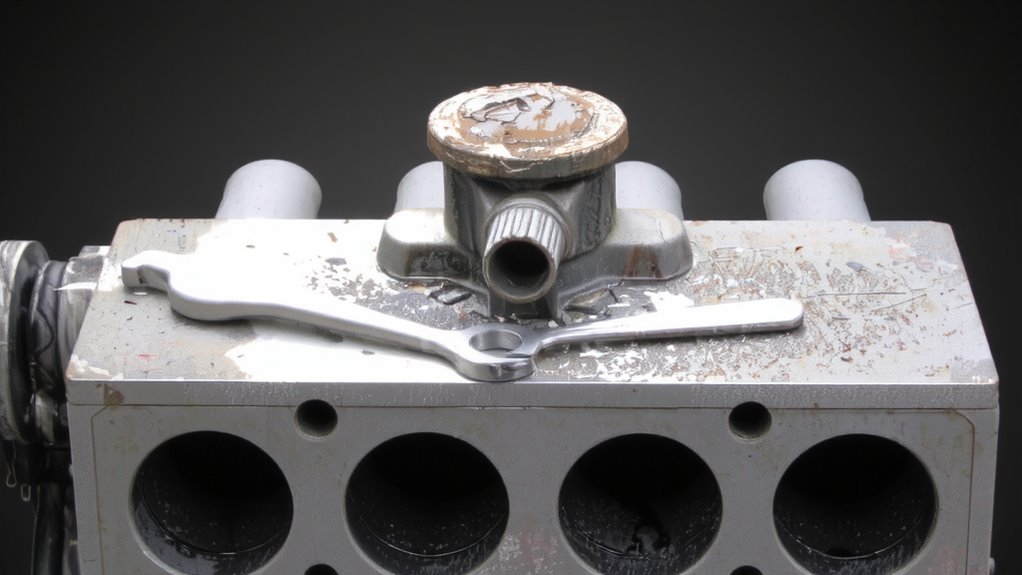
What happens when the EGR system stops working right? You’ll notice rough idling-your engine shakes or stalls at idle because excess NOx raises combustion temperatures. A faulty EGR valve often stays open, disrupting the air-fuel mix. This causes unstable idle RPMs, typically below 600 RPM, and may trigger the check engine light. If the valve clogs shut, you’ll experience poor acceleration due to increased cylinder temperatures and knocking. Retained exhaust gases aren’t cooled and recirculated, reducing combustion efficiency. Sensors detect abnormal pressure readings, commonly outside the 1–3 psi range, alerting the ECU. Unburned fuel increases emissions, failing smog tests. Vacuum leaks or carbon buildup exceeding 0.08 inches in diameter impair valve movement. These mechanical faults compromise engine timing and fuel trim adjustments. Immediate diagnostics are essential to prevent long-term damage.
How a Clean EGR Boosts MPG and Power
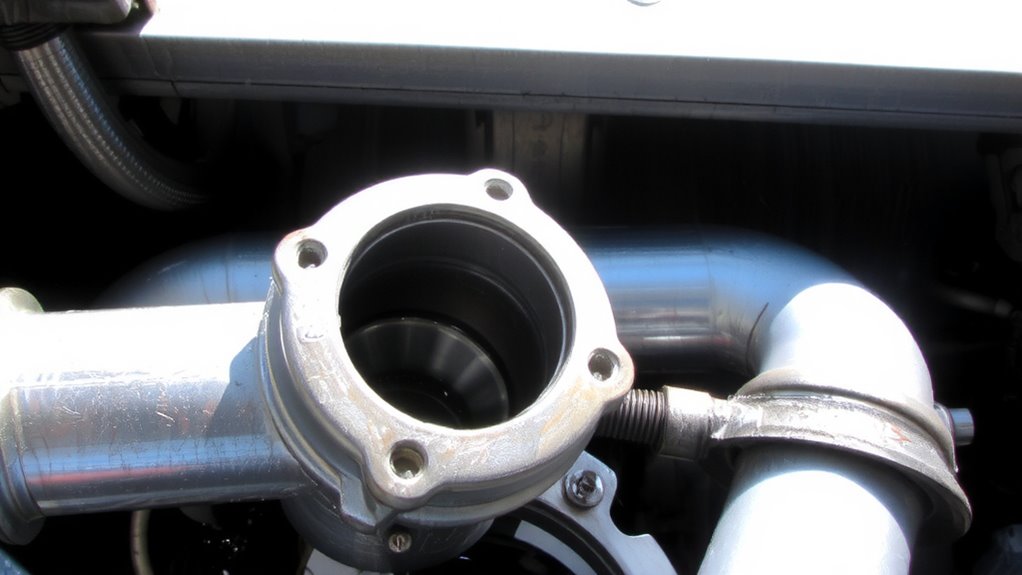
A clean exhaust gas recirculation (EGR) valve is critical for both fuel economy and engine performance. It regulates inert exhaust gases re-entering the combustion chamber, lowering peak temperatures and reducing nitrogen oxide emissions. When functioning properly, it improves combustion efficiency by moderating cylinder pressure and minimizing spark knock. This allows for more aggressive ignition timing, enhancing throttle response and horsepower output. A clogged or sticky EGR disrupts this balance, causing incomplete combustion and reduced efficiency. With ideal EGR operation, drivers typically see a 3–5% improvement in fuel economy under highway conditions. Engine performance also benefits from smoother idle and reduced knocking, particularly under load. Maintaining proper EGR flow guarantees compliance with emissions standards while maximizing both MPG and power.
Easy EGR Maintenance Tips
Since the EGR valve plays a vital role in emissions control and engine efficiency, keeping it clean is easier than you might think. Regular valve inspection every 30,000 miles helps catch carbon buildup early. You can perform basic egr cleaning without removing the valve-just use a precision brush and approved solvent on accessible parts. For heavy deposits, remove the valve and soak it in a dedicated cleaner for no more than 20 minutes to avoid damaging sensors or diaphragms. Reinstall with a new gasket to prevent vacuum leaks. Most modern EGR valves operate within 5–12 volts; verify function with a multimeter or OBD-II scanner. A stuck or sluggish valve disrupts combustion, reducing efficiency. Routine egr cleaning restores flow rates and maintains peak exhaust gas recirculation. Simple maintenance extends component life and supports consistent performance.
Why Lowering NOx Keeps Engines Clean
When combustion temperatures exceed 2,500°F, nitrogen and oxygen in the air combine to form NOx, a harmful emission that not only pollutes the atmosphere but also degrades engine internals over time. By recirculating inert exhaust gases, the EGR valve lowers peak temperatures, reducing NOx production. This also enhances combustion stability and improves thermal efficiency. Cooler combustion prevents carbon buildup, keeping intake valves and chambers cleaner. A clean engine maintains proper airflow and fuel atomization, ensuring consistent performance.
| Factor | Effect of High NOx | Benefit of Lower NOx |
|---|---|---|
| Thermal Efficiency | Decreases due to erratic burning | Improves with stable heat release |
| Combustion Stability | Reduced, causing knocking | Enhanced with uniform flame front |
| Engine Cleanliness | Promotes carbon deposits | Minimizes buildup, extending component life |
On a final note
You rely on your EGR valve to reduce NOx emissions by recirculating 5–10% of exhaust gas back into the combustion chamber. This lowers peak cylinder temperatures from over 2,500°F to around 2,000°F, preventing nitrogen and oxygen from bonding. A properly functioning EGR improves fuel economy by up to 3% and reduces carbon buildup. Keep it clean every 30,000 miles to maintain efficiency.