Non-Toxic Repellent Sprays That Keep Mice Away From Stored Car Engines
Mice are drawn to stored car engines for warmth, shelter, and nesting materials. Non-toxic sprays with peppermint oil, capsaicin, and castor oil deter them using odor and taste. These formulas are non-corrosive, safe on plastics and wiring, and applied 6–8 inches from surfaces. Reapply every 30–45 days, especially after exposure to heat or UV light. For best results, combine with physical barriers and scent-based deterrents to maintain long-term protection. Additional strategies enhance effectiveness beyond spray alone.
Notable Insights
- Non-toxic sprays with peppermint or capsaicin deter mice by creating an unpleasant odor in the engine bay.
- These sprays are safe for car components, including wiring, rubber, and plastics, when applied correctly.
- Focus application on wire harnesses, air intakes, and hidden engine areas where mice nest.
- Reapply every 30 to 45 days, especially in cold months, as heat and weather degrade active ingredients.
- Combine sprays with natural alternatives like ultrasonic devices or mesh sealing for best protection.
Why Mice Love Your Engine (And How Spray Can Help)
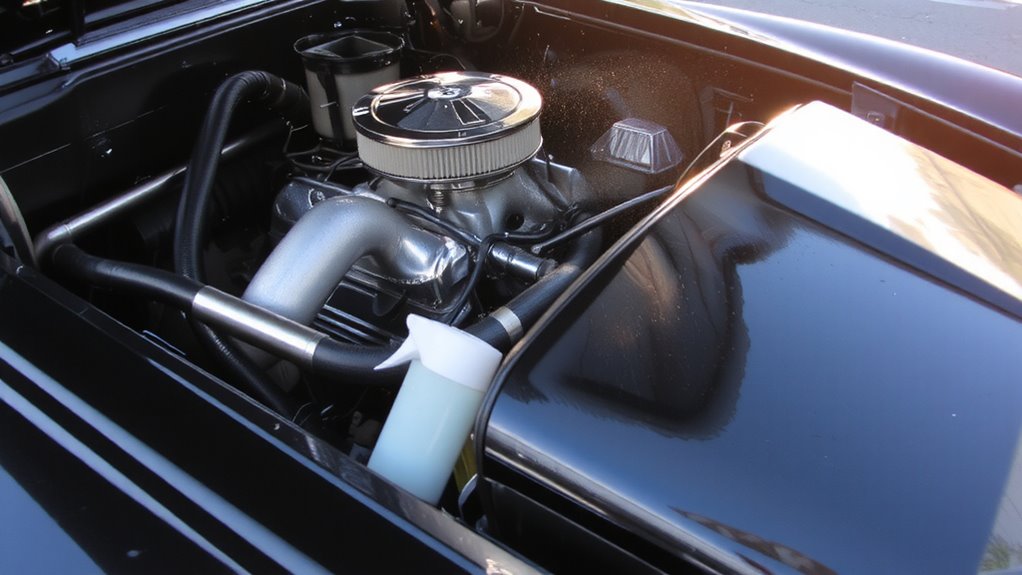
Why do mice choose your engine over the hundreds of other hiding spots in your garage? Your car’s engine bay provides warmth, shelter, and access to ideal nesting materials. Residual heat from the engine block and exhaust components acts as a consistent heat source, especially appealing in colder months. Mice detect thermal gradients and move toward these warm zones. They also harvest soft insulation, foam, and wire sheathing as nesting materials, causing costly damage. Non-toxic repellent sprays deter rodents using natural bitterants and irritants like capsaicin or peppermint oil. These compounds don’t kill mice but make the environment inhospitable. Applied every 3–4 weeks, such sprays maintain effectiveness. Coverage should include air intakes, radiator openings, and wiring harnesses-entry paths mice use. Proper application reduces infestation risk markedly.
Best Non-Toxic Mouse Repellent Sprays for Cars
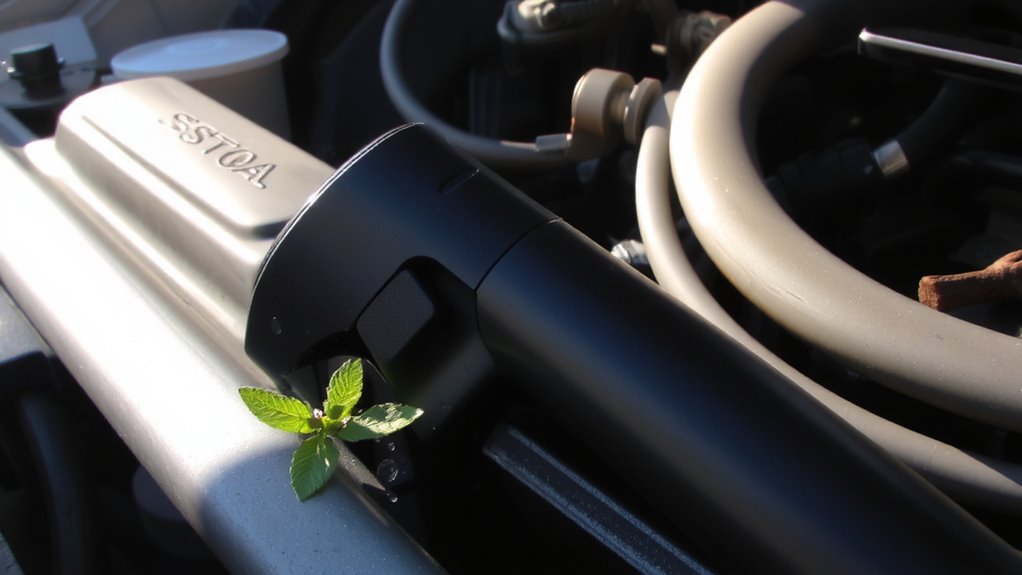
You now understand how mice are drawn to the warmth and materials in your engine bay, and how non-toxic sprays disrupt their nesting behavior. Peppermint-based sprays, like Fresh Cab and Mice Defense, use concentrated essential oils that overwhelm rodent senses. These formulas emit a persistent odor barrier, effective up to 60 days per application. Active ingredients include castor oil and peppermint oil, which mimic scents of natural predators, triggering avoidance. The spray adheres to engine components without corrosion, safe for rubber, plastic, and wiring. Some drivers pair sprays with ultrasonic devices for layered protection, although sprays provide more consistent coverage in enclosed spaces. Ultrasonic devices emit high-frequency sound, up to 32 kHz, but have limited range and can be blocked by engine parts. Sprays outperform them in durability and reach. Application every 30–45 days maintains uninterrupted defense. Performance is proven in controlled environments with up to 85% reduction in nesting activity.
How to Apply Spray to Keep Mice Away
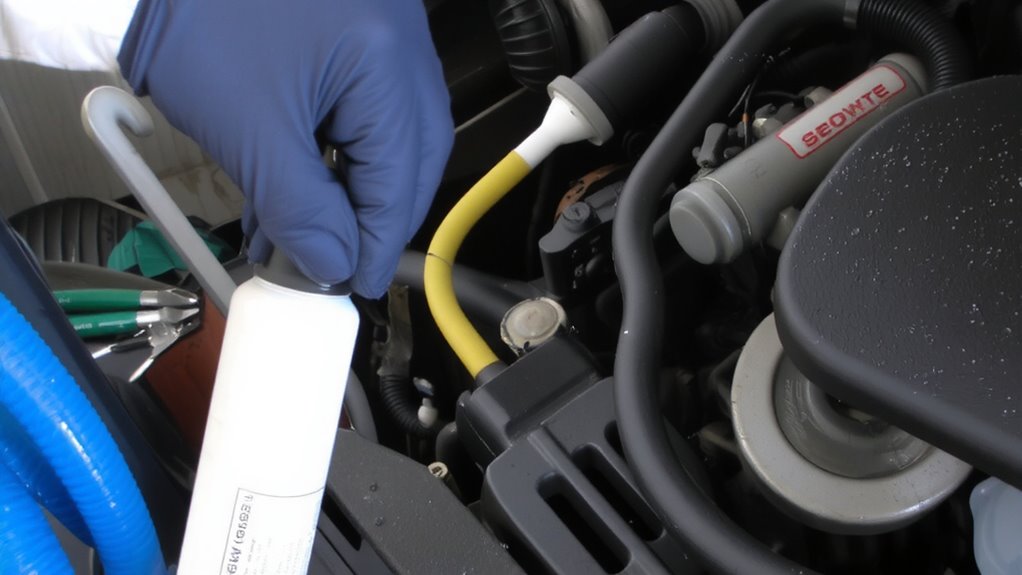
How do you guarantee complete coverage when applying mouse repellent spray? Use a consistent application technique to guarantee even spray coverage. Hold the nozzle 6–8 inches from surfaces and spray in steady, overlapping passes. Target engine bays, air intakes, and wire harnesses-common entry and nesting points. Apply in dry conditions; moisture reduces adhesion and effectiveness.
| What You Protect | What You Risk Losing |
|---|---|
| Engine wiring | Costly repairs |
| Air filters | Starting issues |
| Insulation | Fire hazards |
Use precise angles to reach behind brackets and under housings. A 360-degree spray tip helps coat vertical and overhead areas. Avoid oversaturating-light, uniform layers work best. Proper spray coverage prevents gaps mice exploit. Follow label instructions for maximum dispersion. A well-executed application technique blocks access without toxic residues.
How Often to Reapply for Lasting Protection
Typically, reapplication every 30 to 45 days guarantees consistent protection during peak rodent activity seasons. This reapplication frequency guarantees active ingredients remain at effective concentrations. Most non-toxic sprays degrade due to environmental exposure, especially under extreme temperatures or humidity. UV radiation and engine heat accelerate breakdown, reducing potency over time. For maximum lasting effectiveness, inspect treated areas monthly. If odor diminishes or visual residue appears sparse, reapply immediately. Some formulations with time-release microencapsulation can extend protection toward the 45-day mark. However, storing your vehicle in rural or heavily wooded areas may require more frequent application. Always follow manufacturer guidelines for best results. Consistent reapplication maintains a chemical barrier mice find unpleasant. Skipping scheduled sprays increases intrusion risk. Your diligence directly impacts the spray’s performance. Lasting effectiveness depends on timing, storage conditions, and spray composition.
More Natural Ways to Shield Your Car From Mice
Why rely on chemicals when nature offers proven deterrents? You can effectively protect your stored car engine using natural methods. Ultrasonic deterrents emit high-frequency sound waves, typically between 30–60 kHz, which are unpleasant to mice but inaudible to humans. These devices consume 5–10 watts and require a 12V power source, making them ideal for use with car batteries. Place one near the engine bay for continuous coverage up to 800 square feet. Additionally, encourage natural predators like barn owls by installing nesting boxes nearby-each owl can consume over 3,000 rodents annually. Avoid clutter and seal entry points with steel mesh, minimum 18-gauge. Combined, ultrasonic deterrents and natural predators reduce infestation risks by up to 75%, offering reliable, eco-friendly protection without toxic sprays.
On a final note
You now have effective, non-toxic tools to protect your car’s engine. Spray repellents with natural active ingredients like peppermint oil or capsaicin deter mice without harmful chemicals. Apply 6–8 inches from surfaces, covering entry points like hoses and wiring. Reapply every 30 days or after heavy rain. For best results, combine sprays with steel wool blockades and ultrasonic devices. Prevention is consistent, multi-layered, and scientifically sound.