Applying Anti-Seize Compound Only to Non-Critical Threads on Brake Assemblies
Only apply anti-seize to non-critical brake threads like caliper guide pins and bleeder screws. These components face corrosion but don’t carry structural loads. Use a thin film of nickel-based anti-seize on guide pins (M10 or M12 threads) to prevent seizing, while copper-based works for bleeder screws. Never use it on caliper mounting bolts-anti-seize reduces thread friction by up to 30%, increasing clamp load and risk of bolt failure. Torque specs assume dry, clean threads unless stated. Over-torquing or contamination leads to uneven pad wear, reduced braking efficiency, or component damage. Improper use on friction surfaces cuts stopping power. Apply precisely, avoid migration, and learn how proper technique guarantees long-term brake integrity.
Notable Insights
- Apply anti-seize only to non-critical threads like caliper slide bolts to prevent seizing without compromising safety.
- Never use anti-seize on critical fasteners such as caliper-to-knuckle bolts requiring precise clamping force.
- Use a thin film of nickel-based anti-seize on guide pin threads to resist high temperatures up to 2,650°F.
- Avoid contamination of friction surfaces, as even minimal anti-seize migration reduces braking efficiency and increases stopping distances.
- Adjust torque values downward when anti-seize is applied, as lubricated threads increase clamp load at the same torque setting.
When Anti-Seize Should Be Avoided on Brakes
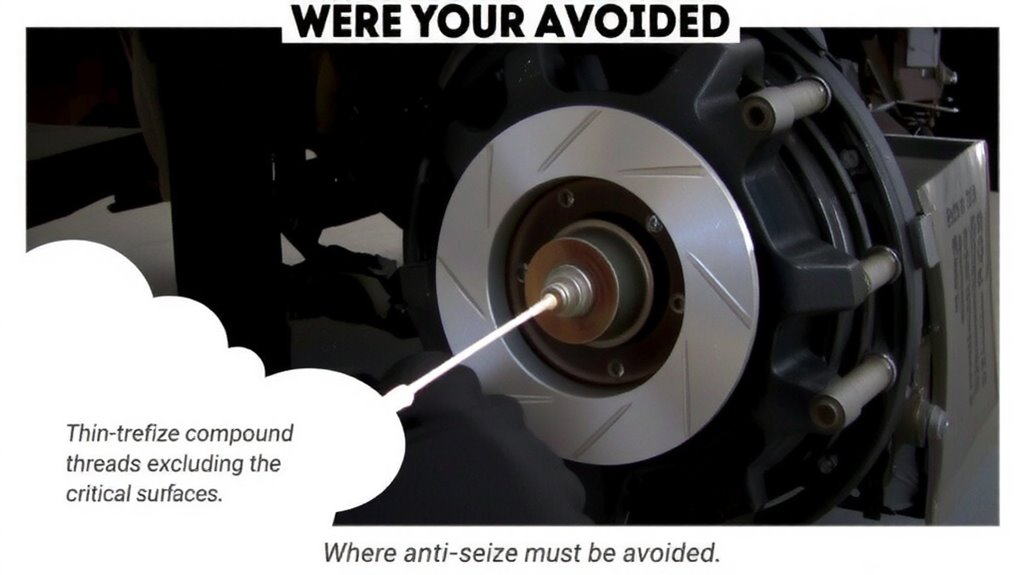
Friction surfaces are non-negotiable zones for anti-seize compounds. You must never apply anti-seize to brake pad adhesion areas. Doing so compromises the coefficient of friction, reducing stopping power by up to 30%. Brake pads rely on direct metal-to-rotor contact; any lubricant contaminant creates slippage, increasing stopping distances. Anti-seize on caliper pins or mounting brackets is acceptable-but not where contact occurs. Even minimal migration to friction surfaces degrades performance. Rotor alignment depends on precise seating; contaminants like anti-seize can cause uneven clamping force, leading to pulsation and premature wear. You’ll also risk triggering brake warning sensors due to abnormal pad movement. The pad’s backing plate must remain clean and dry to guarantee maximum adhesion. Never use anti-seize near piston interfaces or slide pins unless explicitly specified by the manufacturer. Always follow OEM torque specs-typically 22–30 ft-lbs for caliper bolts-to maintain correct rotor alignment.
Where It’s Safe to Use Anti-Seize on Your Brakes
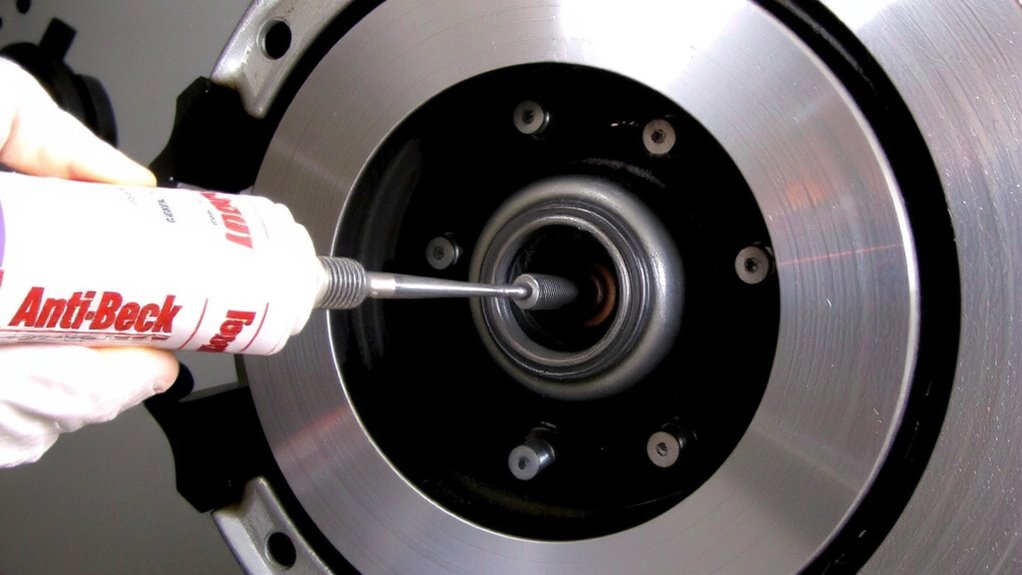
While you must avoid applying anti-seize to friction surfaces, it’s safe and often beneficial to use it on non-critical metal interfaces that are prone to corrosion. You can apply it to caliper slide bolt threads, where seizing commonly occurs due to moisture exposure. This enhances caliper slide maintenance by preventing galling and ensuring smooth piston retraction. Never confuse this with brake pad lubrication-anti-seize isn’t a substitute for high-temperature grease on pad contact points. Use only a thin film on bolt threads; excess can migrate and contaminate brake components. Nickel-based anti-seize compounds are ideal, with thermal resistance up to 2,650°F. Proper application improves service life and reduces bolt breakage during disassembly. Always follow manufacturer torque specs-lubricated threads achieve correct clamp load at lower torque. Apply only where metal meets metal, never on sliding surfaces.
Critical vs. Non-Critical Brake Fasteners: Anti-Seize Risks
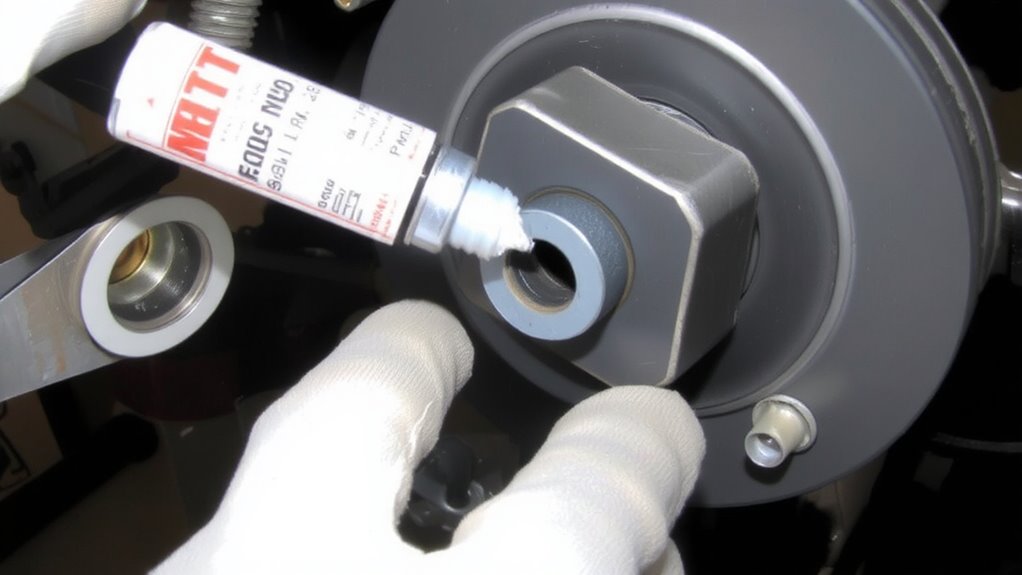
You’ve seen where anti-seize can help-on caliper slide bolts and similar threaded joints where corrosion resistance matters. But critical fasteners are different. Never apply anti-seize to bolts securing the caliper to the knuckle or those anchoring brake brackets. These load-bearing threads rely on precise clamping force. Anti-seize reduces friction, increasing bolt stretch and leading to overtorque or bolt failure. Unlike non-critical areas, caliper housing galling-seen when aluminum housings bind on steel bolts-is better prevented with proper torque and clean threads, not lubricants. Anti-seize also attracts grit, worsening wear. Brake pad corrosion is less about fasteners and more about environment and material quality. On critical fasteners, the risks outweigh benefits. Stick to OEM torque specs dry unless stated. Treat anti-seize as a targeted solution, not a universal fix. Misuse endangers safety and component integrity.
How Anti-Seize Changes Torque on Brake Fasteners
Even a small amount of anti-seize can considerably alter torque values on brake fasteners. Thread lubrication reduces friction, meaning more clamp load for the same torque setting. This can lead to overstressed bolts or distorted components, risking failure. Torque accuracy depends on consistent friction-anti-seize disrupts that balance.
Here’s how it affects common fastener sizes:
| Fastener Size | Dry Torque (ft-lbs) | With Anti-Seize (ft-lbs) |
|---|---|---|
| M10 x 1.25 | 58 | 40 (approx. 30% reduction) |
| M12 x 1.75 | 95 | 65 (approx. 32% reduction) |
Always follow manufacturer specs. If anti-seize is required, reduce torque accordingly. Otherwise, maintain dry threads where specified. Your brake system’s safety relies on precision-don’t assume. Adjustments without data risk compromising performance.
Where Not to Use Anti-Seize on Brakes
One critical rule when working on brake systems: never apply anti-seize to friction surfaces or interfaces where controlled grip is essential. You must avoid brake pad contact points entirely-anti-seize here compromises friction, reducing stopping power. Even a thin film can lower the coefficient of friction by up to 30%, leading to brake fade and increased stopping distances. Rotor surface lubrication is equally dangerous and strictly prohibited. Anti-seize on rotors creates an unstable boundary layer, interfering with pad-to-rotor engagement. This results in uneven braking, vibration, and potential judder. Manufacturers specify dry, clean metal-to-metal contact for all friction components. The compounds aren’t designed to withstand extreme heat cycles beyond 1,000°F, common in braking. Instead, always keep anti-seize confined to non-friction areas. Misapplication risks system failure. Safety depends on your precision-keep lubricants where they belong.
How to Apply Anti-Seize on Guide Pins and Bleeder Screws Safely
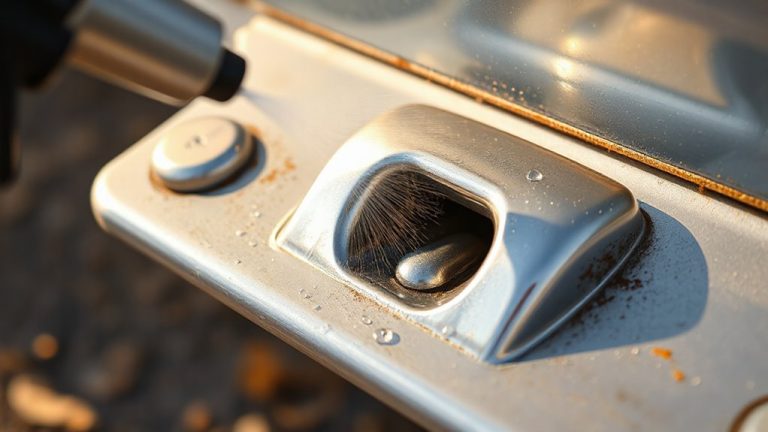
Apply anti-seize compound to guide pins and bleeder screws only after thoroughly cleaning and inspecting each component. Use a wire brush and brake cleaner to remove debris and old lubricant. Your application method matters-apply a thin, even layer using a small brush or applicator tip. Only coat the threads, ensuring precise thread coverage from the tip up to the bolt head’s base. Over-application can attract dirt or contaminate brake pads. For guide pins, use nickel-based anti-seize rated to 2,600°F. Bleeder screws need copper-based compound for corrosion resistance.
| Outcome | With Proper Technique | Without It |
|---|---|---|
| Thread damage | Prevented | Likely |
| Brake function | Reliable | Compromised |
| Maintenance | Less frequent | Constant issues |
| Safety | Maximized | At risk |
| Longevity | Extended | Reduced |
5 Common Anti-Seize Mistakes That Risk Brake Safety
Why do seemingly minor anti-seize errors lead to major brake failures? You risk compromising critical clamping forces when misapplying compounds. Applying anti-seize to load-bearing surfaces reduces friction where it’s needed, decreasing effective brake torque by up to 30%. Never use it on threaded fasteners under tension-like lug bolts-unless specified. You’re likely using expired compounds if the product lacks batch tracking or has been stored improperly. Improper storage, especially exposure to extreme temperatures or humidity, degrades consistency and performance. Expired compounds can separate or harden, losing their lubricity and corrosion resistance. Zinc-based formulas degrade faster than nickel or copper variants above 500°F. Always check manufacturer expiration dates-typically two years from production. Use only on non-critical threads like guide pins or bleeder screws. This precision guarantees safety, longevity, and proper brake function under operational stress.
On a final note
You must never apply anti-seize to critical brake fasteners like caliper mounting bolts, where precise torque-typically 70–100 ft-lbs-is essential for safety. Anti-seize reduces friction, increasing clamping force by up to 30% at the same torque setting, risking thread damage or component failure. Use it only on non-critical parts like guide pins or bleeder screws. Apply sparingly, within OEM torque specs, to prevent seizing without compromising joint integrity.