The Impact of Aftermarket Wheels on Factory Tire Pressure Monitoring
Aftermarket wheels can disrupt your factory TPMS by blocking RF signals at 315 MHz or 433 MHz. Thick aluminum or improper bore design shields sensor transmission. Valve stem holes must measure 10.5mm to 12.5mm for OEM sensor fit. Incorrect seating or inner barrel contact damages sensors. Universal or direct-fit sensors may be needed, programmed to match your ECU’s 11-bit or 29-bit ID. A recalibration drive cycle above 20 mph resets alerts-key steps guarantee accuracy within ±2 PSI. More details follow on sensor compatibility.
Notable Insights
- Aftermarket wheels can block TPMS signals due to metal composition or internal shielding interfering with 315 MHz or 433 MHz frequencies.
- Improper valve stem hole size (not 10.5–12.5 mm) prevents secure fitment of factory TPMS sensors.
- Wheel bore design and inner barrel contour may obstruct sensor installation or cause mounting damage.
- Factory TPMS sensors often don’t fit aftermarket valve configurations, requiring upgraded or direct-fit replacements.
- TPMS system recalibration is required after wheel changes to relearn sensor IDs and prevent dashboard warnings.
How Aftermarket Wheels Disrupt Factory TPMS
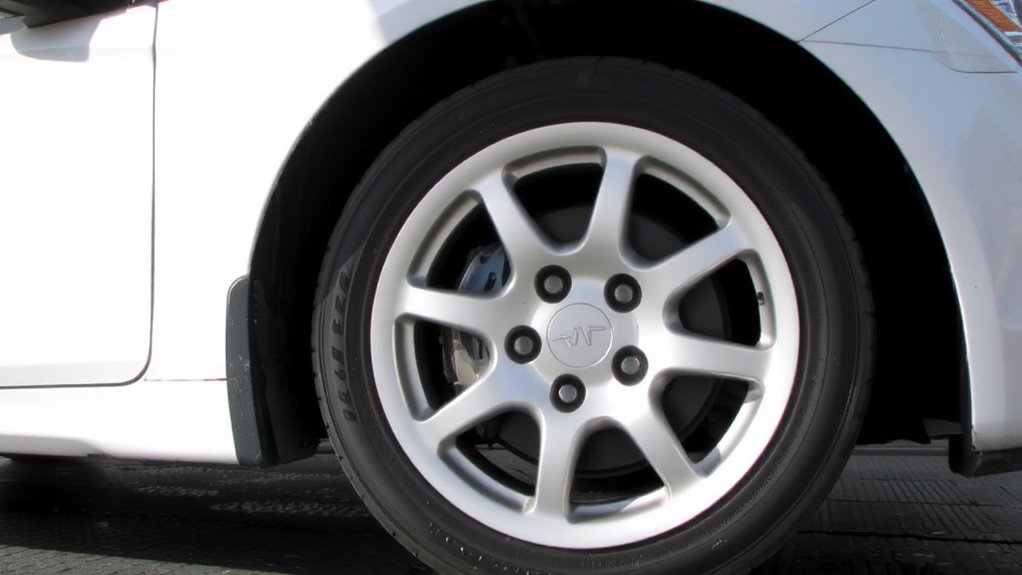
While your vehicle’s factory wheels come equipped with a calibrated tire pressure monitoring system (TPMS), switching to aftermarket wheels can interfere with its operation. Signal interference occurs when the new wheel’s metal composition disrupts RF transmission between sensors and the ECU. Most factory sensors transmit at 315 MHz or 433 MHz; aftermarket wheels with improper bore design or shielding can block these frequencies. Sensor incompatibility arises when replacement wheels lack proper valve stem openings or seat configurations for OEM sensors. Aluminum wheels with integrated valve stems may not accommodate external sensors, leading to inaccurate readings. Steel wheels with rubber valve stems often require retrofitting. Without a direct fit, sensor alignment shifts, delaying alerts. The system requires precise signal reception within ±2 PSI accuracy; disruptions compromise this tolerance. Properly sized sensors and wheel-compatible hardware are essential for maintaining factory-specified monitoring performance and ensuring real-time pressure tracking. Upgrading to reliable Best TPMS Sensors can restore accuracy and compatibility with aftermarket setups.
Can Your Vehicle’s TPMS Read Non-Stock Wheels?
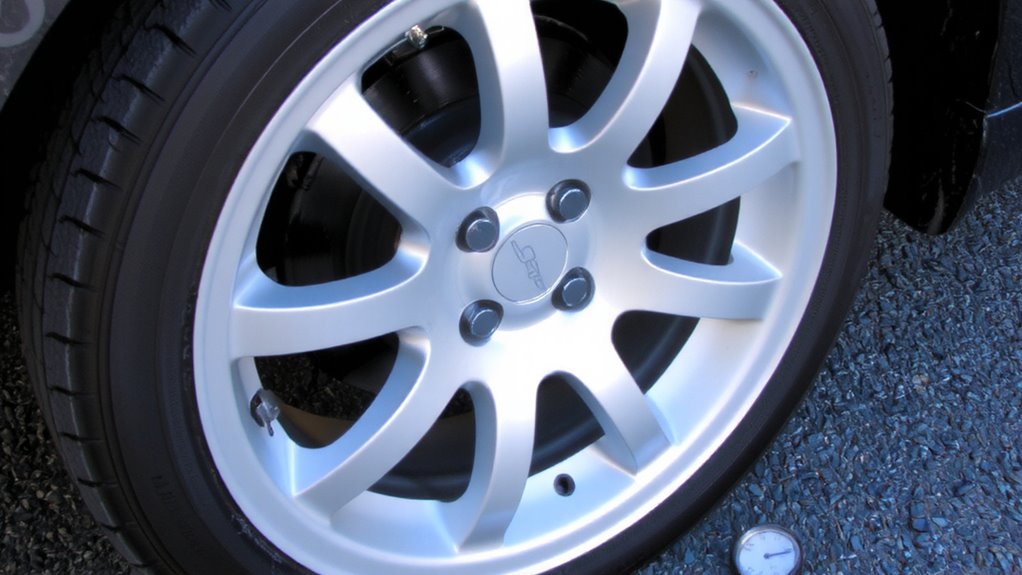
How can you be sure your factory TPMS still works after installing non-stock wheels? Your vehicle’s TPMS relies on precise sensor placement and tire compatibility to function correctly. Aftermarket wheels may not align with the factory sensor mounting style or location, disrupting communication. Most direct TPMS systems use sensors that attach to the valve stem or clamp inside the wheel at a specific depth. If the wheel’s inner barrel contour or valve hole position differs, the sensor won’t seat properly. Mismatched tire compatibility-for example, incorrect bead seat diameter or rim width-can also prevent accurate pressure readings. Even if the tire inflates, the sensor signal might not transmit reliably to your ECU. Without proper sensor placement, your system could display false warnings or fail entirely. Always verify wheel specifications to guarantee they support your existing TPMS configuration before installation.
Pick Wheels That Support TPMS Sensors
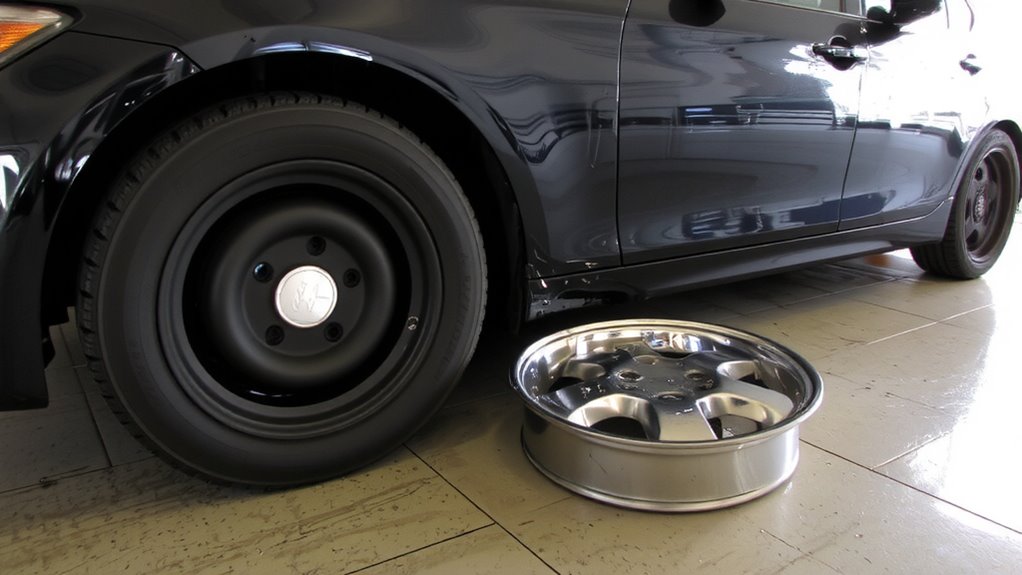
You can keep your factory TPMS working smoothly by choosing aftermarket wheels designed to accommodate OEM sensors. Proper wheel design guarantees the sensor fits securely in the valve hole, typically 10.5mm to 12.5mm in diameter. Many aftermarket wheels use a rubber valve stem setup, which can degrade over time and cause inaccurate readings. Alloy wheels with a cast or machined sensor pocket maintain better long-term reliability. Tire compatibility is critical-verify that the wheel’s inner barrel clears the sensor assembly, preventing damage during mounting. Wheels built to OE specifications retain signal transmission integrity, avoiding interference from metal thickness or shielding. Confirm that the wheel manufacturer lists TPMS compatibility for your vehicle’s make and model. This small detail prevents dashboard errors and maintains safety. A well-chosen wheel preserves system function without requiring sensor replacement.
Upgrade TPMS Sensors for New Wheels
Why risk false alarms or compromised safety when upgrading wheels? You need sensor compatibility with your new aftermarket setup. Factory TPMS sensors often won’t fit after-market wheels due to different valve stem designs or wheel metallurgy. Mismatches cause signal interference, disrupting communication between sensors and your vehicle’s ECU. Direct-fit replacement sensors eliminate this by matching original equipment specifications-typically 315 MHz or 433 MHz frequencies, depending on your make. They include proper sealing materials and torque specs (usually 8 Nm) to prevent leaks. Universal sensors offer flexibility but require precise programming to avoid data errors. Without compatible sensors, you’ll face unreliable pressure readings. Signal interference from improper placement or shielding reduces transmission reliability. Upgrading guarantees accurate, real-time monitoring. It maintains safety and system efficiency-just like stock. Don’t compromise function for style.
Reset & Recalibrate TPMS to Stop Alerts
What good is a properly installed TPMS if the dashboard keeps flashing warnings? You need to reset and recalibrate the system to stop false alerts. After installing aftermarket wheels, tpms compatibility issues often trigger persistent warnings-even with correct tire pressure. Modern vehicles require sensor reprogramming methods to recognize new TPMS sensors. Passive sensors may need auto-relearn procedures via the OBD2 port, while some systems demand a manual drive cycle above 20 mph for 10 minutes to reinitialize. Direct reprogramming often uses manufacturer-specific tools or universal scan tools supporting protocols like CAN 11-bit or 29-bit IDs. Failing to follow precise sensor reprogramming methods leaves the ECU with outdated sensor IDs, causing system errors. Recalibration guarantees each wheel’s unique ID syncs with the vehicle’s ECU. Proper reset restores accuracy, maintains safety compliance, and eliminates nuisance alerts-all critical for long-term performance.
On a final note
Your factory TPMS relies on precise sensor frequencies, typically 315 MHz or 433.92 MHz, to monitor pressure. Aftermarket wheels may block or misalign these signals. Use wheels with TPMS-compatible valve stems and OEM-equivalent sensor positioning. Install high-quality, application-specific sensors-like those from Schrader or Dill-rated for 10–80 psi accuracy. Always reprogram the ECU using a scan tool to guarantee proper calibration and eliminate false alerts.