DIY Guide to Replacing Spark Plugs: A Fundamental Maintenance Task That Can Improve Engine Performance and Fuel Economy in Your Vehicle
You should replace spark plugs every 30,000 to 100,000 miles, depending on type-copper wears out around 30,000; iridium or platinum last beyond 100,000. Worn plugs cause misfires, rough idling, and poor fuel economy due to eroded electrodes or carbon buildup. Use a 5/8-inch or 13/16-inch spark plug socket, gap tool, torque wrench, and dielectric grease. Always check the gap-typically 0.028 to 0.060 inches-and torque to spec, usually 15–20 ft-lbs. There’s more to get right.
Notable Insights
- Replace spark plugs every 30,000 to 100,000 miles depending on type to maintain optimal engine performance.
- Use a gap tool to verify and adjust the spark plug gap to match your engine’s specifications.
- Always install spark plugs by hand first to prevent cross-threading and avoid damaging the cylinder head.
- Torque spark plugs to the manufacturer’s specification using a torque wrench for reliable, safe installation.
- Replace worn or fouled plugs to restore fuel economy, prevent misfires, and ensure smooth engine operation.
When to Replace Your Spark Plugs
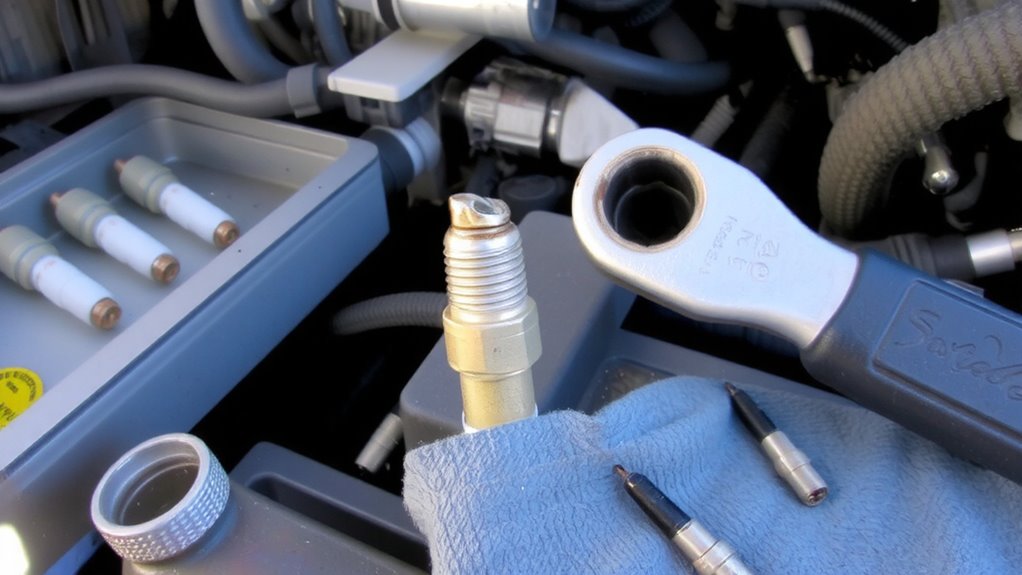
How often should you replace your spark plugs? Most manufacturers recommend replacement every 30,000 to 100,000 miles, depending on plug type. Copper plugs typically last 30,000 miles, while iridium or platinum can exceed 100,000. Ignoring this leads to signs of wear like eroded electrodes or carbon buildup. These reduce spark efficiency and trigger a measurable performance decline. You may notice rough idling, misfires, or reduced fuel economy. Modern engines rely on precise ignition timing; worn plugs disrupt this balance. Voltage demand increases as gaps widen, straining the ignition system. A 0.001-inch wear can raise firing voltage by 500 volts. Persistent issues often trace back to degraded plugs. Monitoring mileage and observing engine behavior helps prevent long-term damage. Replace them proactively-don’t wait for failure. Regular replacement sustains ideal combustion, ensuring reliability and peak engine efficiency across all driving conditions.
What Tools You Need to Change Spark Plugs
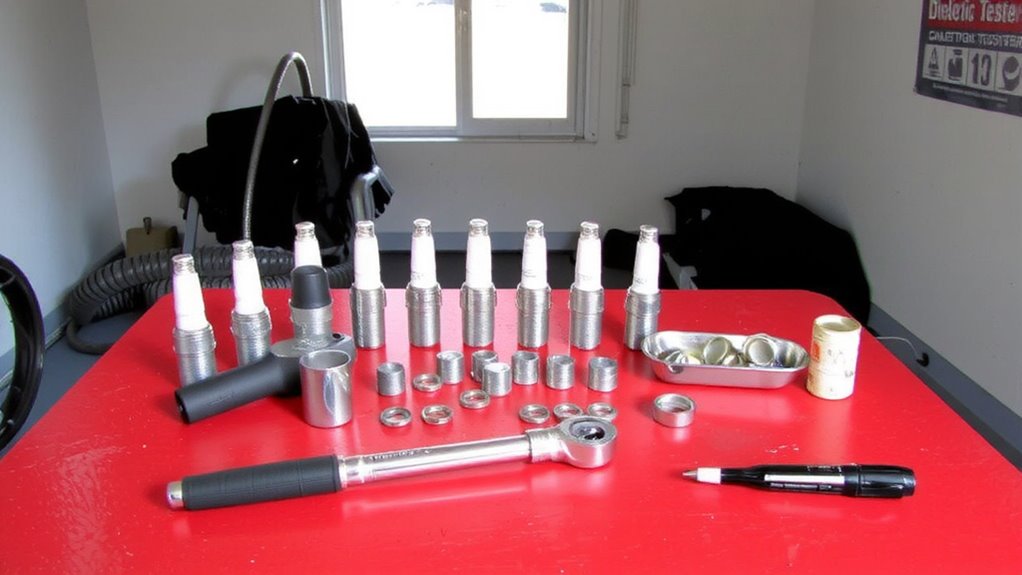
A successful spark plug replacement starts with the right tools-using improper equipment can damage components or lead to incorrect installation. You’ll need specific tools designed for precision and compatibility with your engine. The correct socket size is critical; most spark plugs require a 5/8-inch or 13/16-inch socket, but always verify your vehicle’s specification. A spark plug socket has a rubber insert to grip the plug and prevent damage. Use a torque wrench to tighten plugs to manufacturer specs, avoiding over-tightening. A gap measurement tool guarantees proper electrode spacing-critical for maximum firing. Dielectric grease aids in future removal. For the most reliable results, choose a high-quality spark plug gap tool that allows for precise adjustments and consistent readings.
| Tool | Purpose | Key Detail |
|---|---|---|
| Spark plug socket | Removes and installs plugs | Has rubber insert, check socket size |
| Gap measurement tool | Sets electrode gap | Use wire-style for accuracy |
| Torque wrench | Applies correct tightness | Prevents stripped threads |
| Extension and ratchet | Reaches deep plug wells | Use long extension for coil-on-plug engines |
How to Remove Old Spark Plugs
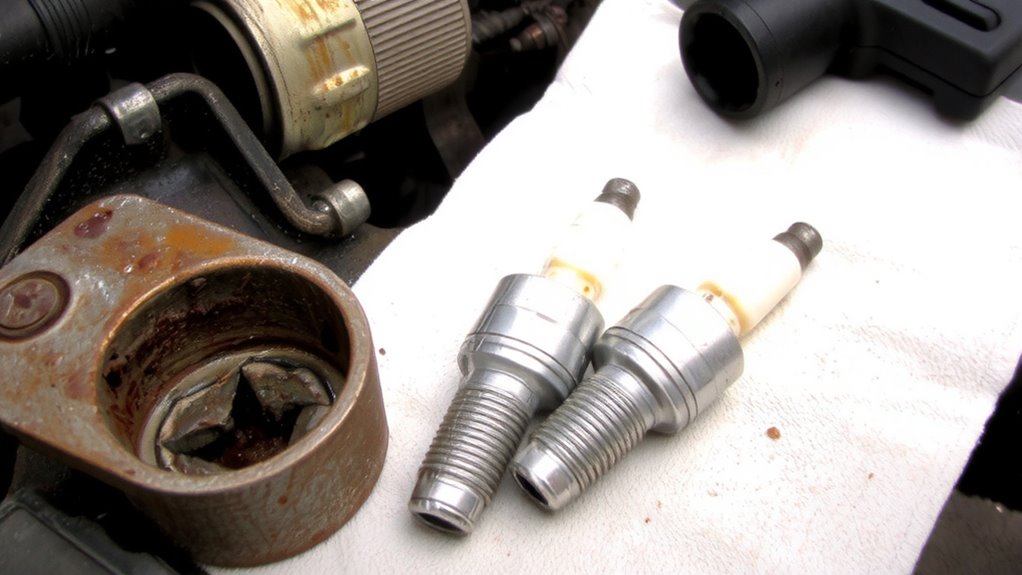
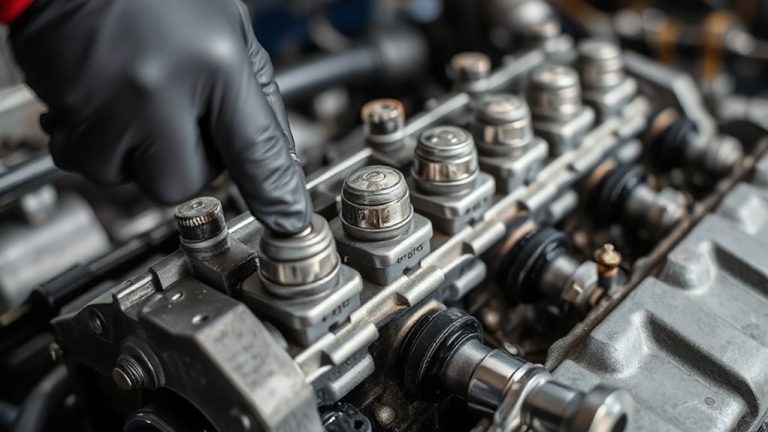
Before you begin removing the old spark plugs, make certain the engine is completely cool to avoid burns and prevent thermal distortion of critical components. Start by disconnecting the negative battery terminal to eliminate electrical hazards. Remove the ignition coils or spark plug wires carefully, labeling each to guarantee correct reconnection. Using a 5/8-inch spark plug socket and ratchet, turn each plug counterclockwise to loosen it. Apply compressed air around the spark plug base to clear debris and prevent contamination of the combustion chamber. Worn or improperly gapped spark plugs often cause spark plug fouling and ignition misfire, reducing fuel economy and engine power. Extract each plug straight to avoid cross-threading the cylinder head. Inspect removed plugs for signs of oil deposits, electrode erosion, or carbon buildup, which indicate underlying engine issues. Proper removal prevents damage to the cylinder head threads and guarantees a clean surface for new plug installation. Upgrading to high-performance Best Spark Plugs for 5.3 Silverado can significantly enhance ignition efficiency and overall engine performance.
Install New Spark Plugs the Right Way
Proper installation guarantees reliable ignition and long-term engine performance. Before inserting each new spark plug, perform gap checking using a wire gauge to confirm the gap matches your engine’s specification-typically between 0.028 and 0.060 inches. An incorrect gap affects combustion efficiency and fuel economy. Next, inspect the cylinder head bore and complete thread cleaning with a compressed air blast to remove debris. Contaminants can damage threads or cause improper seating. Install the spark plug by hand first to avoid cross-threading, guaranteeing it starts straight. Most modern plugs are pre-gapped and feature tapered or gasket seals-torque them to the manufacturer’s spec, usually 15–20 ft-lbs for aluminum heads. Over-tightening strips threads; under-tighting risks poor heat transfer and misfires. Use a torque wrench for precision. This method guarantees ideal electrode temperature and ignitability, supporting peak engine output and emissions control. For the 5.7 Vortec engine, selecting the correct spark plug type is crucial, and many experts recommend the AC Delco Rapidfire plug for optimal performance and longevity.
Avoid These Common Spark Plug Mistakes
Skipping the gap check or ignoring thread prep leads to problems down the road. You risk misfires, poor fuel economy, and costly engine damage. Always verify the electrode gap with a spark plug gauge-most fall between 0.028 and 0.060 inches, depending on your vehicle. Thread damage often stems from improper alignment; use cross threading prevention by starting threads by hand. Never force a plug-it should turn smoothly. Torque wrench accuracy is essential; over-tightening cracks the ceramic, while under-tightening causes heat misfires. Refer to your service manual, but typical values range from 7 to 20 ft-lbs.
| Mistake | Consequence | Prevention Method |
|---|---|---|
| Incorrect gap | Misfires, rough idle | Use a gap tool and gauge |
| Cross threading | Damaged cylinder head | Hand-start plugs only |
| Inaccurate torque | Plug failure, overheating | Use torque wrench, check spec |
| Wrong plug type | Poor combustion | Match heat range and reach |
| Dirty threads | False torque reading | Clean with thread chaser |
On a final note
You’ve completed a critical maintenance task. Replacing spark plugs boosts engine efficiency and fuel economy. Modern platinum or iridium plugs last 100,000 miles; check your manual. Always torque to specification-usually 15–20 ft-lbs-using a calibrated wrench. Improper seating causes misfires. Gap new plugs to your vehicle’s exact requirement, typically 0.028–0.060 inches. Correct installation prevents thread damage. This simple upgrade maintains peak combustion.