How to Wash a Car After Exposure to Volcanic Ash or Dust Storms
Rinse your car immediately with clean, lukewarm water at 40–60 psi to remove airborne ash without scratching paint. Wear an N95 mask, goggles, and nitrile gloves for protection. Use a pH-balanced detergent and microfiber mitt with 300-micron fibers to wash top to bottom. Rinse thoroughly, then dry with a 1600mm loop weave towel to prevent spots. Inspect filters and fluids-early action stops long-term damage. You’ll want to know what comes next.
Notable Insights
- Rinse immediately with clean, lukewarm water to loosen abrasive ash particles before they scratch the paint.
- Wear an N95/P100 mask, goggles, and gloves to protect against harmful alkaline ash and fine particulates.
- Wash with a pH-balanced shampoo using a plush microfiber mitt, working top to bottom to prevent swirls.
- Dry promptly with a clean microfiber towel to avoid water spots; use distilled water for final rinse.
- Inspect undercarriage, lights, and fluids post-wash; clean debris and replace filters if contaminated.
Rinse Immediately After Ash Exposure
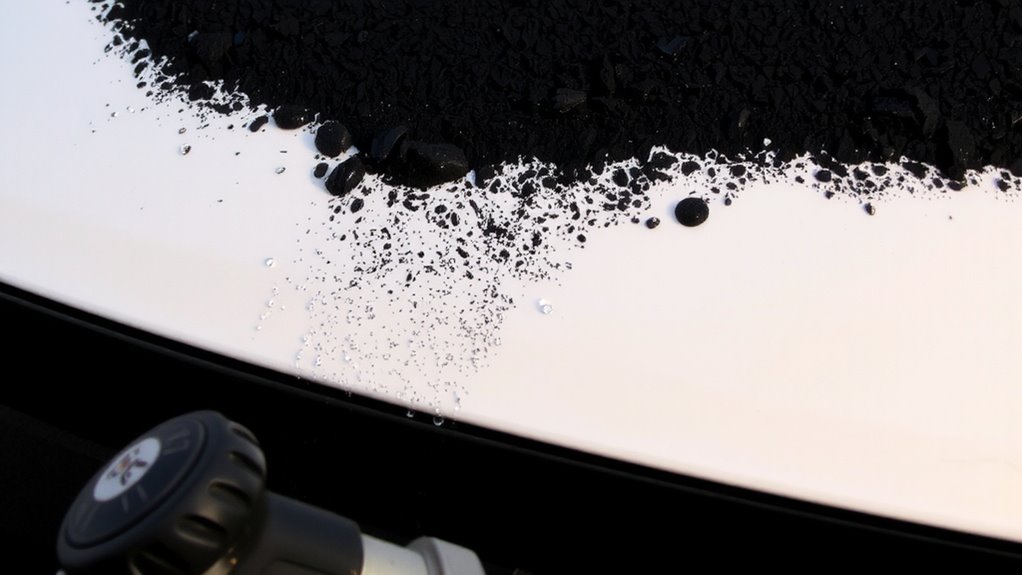
While volcanic ash or dust may look harmless, rinsing your car immediately after exposure is critical to prevent surface damage. Begin with an initial rinse using clean, lukewarm water to loosen particulates. Volcanic ash contains abrasive silica particles, often under 10 microns in diameter, which can scratch clear coats if rubbed. Use a gentle spray at 40–60 psi to avoid forcing debris into the paint. A pressure washer is acceptable if fitted with a 40-degree fan tip and held at least 24 inches from the surface. Do not wipe or scrub before rinsing-dry contact increases marring risk. The initial rinse should last 3–5 minutes, ensuring all horizontal and vertical surfaces are thoroughly wet. Water should sheet off smoothly, indicating dust is suspended. Immediate action minimizes chemical etching from acidic ash compounds like sulfur dioxide. This step is essential before any further cleaning. For optimal results, consider using a pressure washer kit designed specifically for automotive care to maintain consistent pressure and water flow.
Protect Yourself During Cleanup
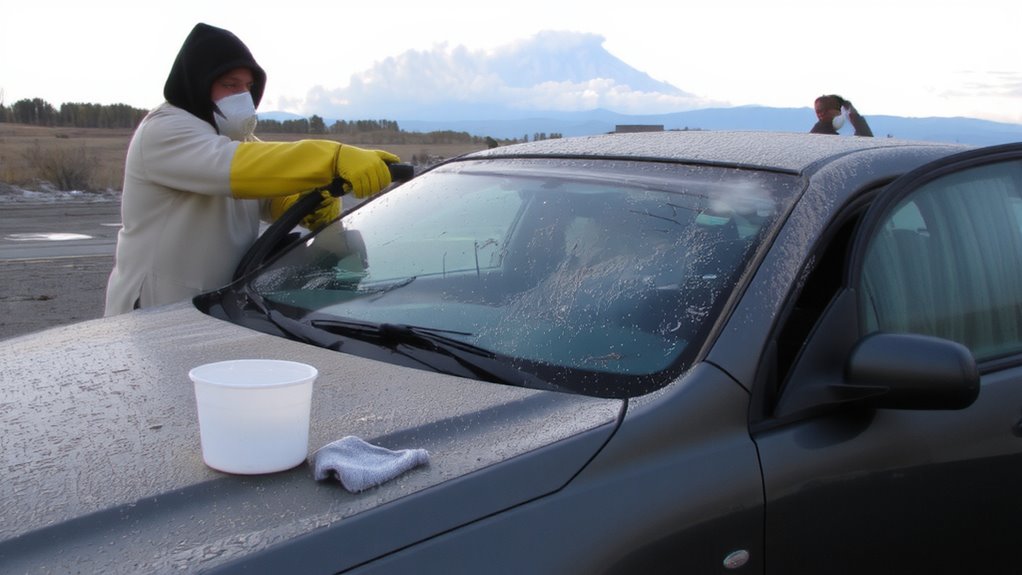
You’ve rinsed the vehicle to suspend abrasive particles, but now focus shifts to your own safety. Wear a properly fitted N95 or P100 respirator mask rated to filter at least 95% of fine particulates; volcanic ash contains silicate compounds that can damage lungs. Use goggles with ANSI Z87.1 certification to shield eyes from microscopic, razor-sharp ash fragments. Avoid cloth or disposable masks not labeled for particulate filtration-many offer negligible protection. Work upwind when possible to reduce inhalation risk. Gloves made of nitrile or neoprene (minimum 0.11 mm thickness) prevent skin irritation from alkaline ash, which can have a pH up to 11. Limit exposure time, especially in high concentrations. Keep children and pets indoors during cleanup. Maintain a clean breathing zone-ash suspended in air can remain hazardous for hours post-storm. Immediate personal protection reduces health risks dramatically.
Wash Without Scratching the Paint
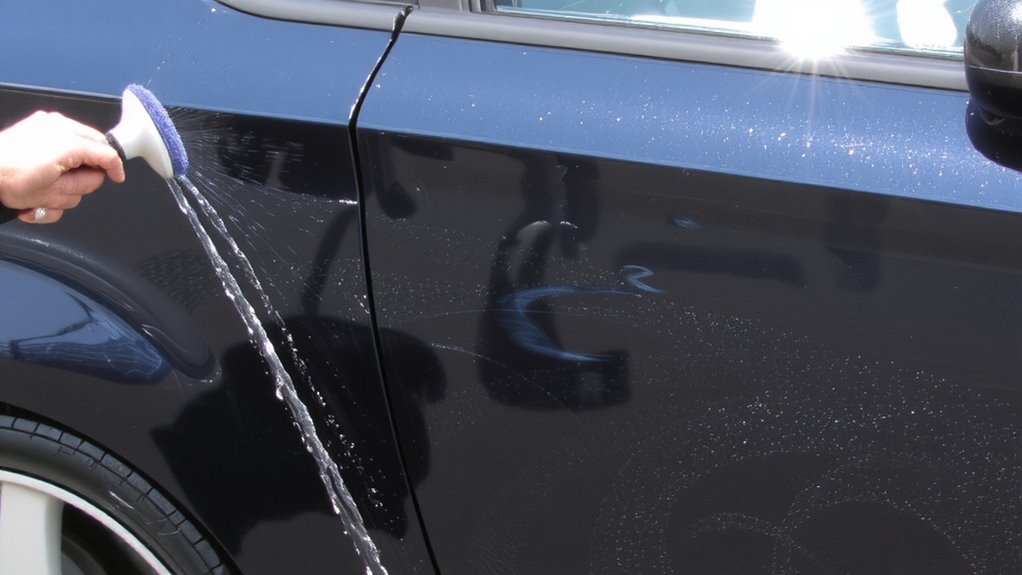
Even though the initial rinse removes loose debris, microscopic ash particles can still cling to the surface and act like sandpaper during washing, so it’s critical to use a method that lifts grit without grinding it into the clear coat. Use a pH-balanced, non-abrasive gentle detergent diluted to manufacturer specs-typically 1 ounce per gallon of water. Apply the solution with a plush microfiber wash mitt with fibers at least 300 microns long to trap particles. Work in straight-line motions, top to bottom, to minimize swirls. Rinse each section before moving to the next to prevent drying. Never use a dry soft cloth or re-dip a soiled mitt. Use a separate, clean mitt for wheels. Maintain suds coverage to lubricate the surface. Change rinse water frequently to avoid reapplying contaminants. This technique guarantees effective cleaning without marring the finish. For maximum pre-wash decontamination, consider using a high-quality foam cannon to safely lift abrasive particles from the paint.
Dry to Prevent Water Spots
After rinsing, immediately dry the vehicle to prevent mineral deposits from forming water spots. Water quality directly impacts spotting risk-hard water contains dissolved calcium and magnesium that crystallize on paint when evaporated. Use distilled or deionized water for final rinsing to minimize residue. Your drying technique is just as critical. Start with a clean, plush microfiber towel, ideally 1600mm loop weave or higher, to maximize absorption without marring. Use straight-line motions, not circles, to reduce visible lint or streaks. Replace towels frequently when they become damp or dirty. For larger surfaces, a water-fed pole with a squeegee tip reduces contact and speeds drying. Never allow water to air-dry, especially in sunlight, which accelerates mineral deposition. Effective drying combines proper materials, sequence, and timing to protect finish integrity. For optimal results, choose best microfiber towels for car care that are specifically designed for delicate surfaces and superior water absorption.
Clean the Engine Air Intake and Filters
Because volcanic ash and dust storms leave behind fine particulates that infiltrate engine systems, cleaning the air intake and filters is essential to maintain performance and prevent internal damage. You must perform a thorough engine inspection to identify ash buildup in the intake ducts and around the filter housing. Ash particles are abrasive and can compromise air quality, reducing combustion efficiency. Use compressed air or a soft brush to gently remove debris from reusable filters; avoid washing them with water unless specified by the manufacturer. Check the air filter’s condition-if it’s clogged or damaged, plan to replace it soon. Restricted airflow from contaminated filters can decrease fuel economy by up to 10%. Maintaining clean intake components guarantees peak engine breathing and protects sensitive internal parts from wear. This step supports long-term reliability and maximum operational performance under harsh environmental conditions.
Change Air Filters and Check Fluids
You’ll want to replace your air filter now if it’s been compromised by volcanic ash or dust storm debris-don’t risk engine damage for the sake of a $20 part. Poor cabin air quality isn’t just uncomfortable; it can strain your HVAC system and expose you to harmful particulates. Check and replace the cabin air filter to restore clean airflow. Fluid contamination risks are real-fine silicate particles can infiltrate engine oil, coolant, and brake fluid, accelerating wear. Inspect each reservoir for grit or cloudiness. Flush fluids if contamination is suspected.
| System | Component | Inspection Tip |
|---|---|---|
| Engine | Oil | Check for abrasives; change if gritty |
| Cooling | Coolant | Look for sediment; flush if needed |
| Braking | Brake fluid | Test moisture content; replace if cloudy |
| Cabin | Air filter | Replace if discolored or clogged |
Do Post-Storm Maintenance Now
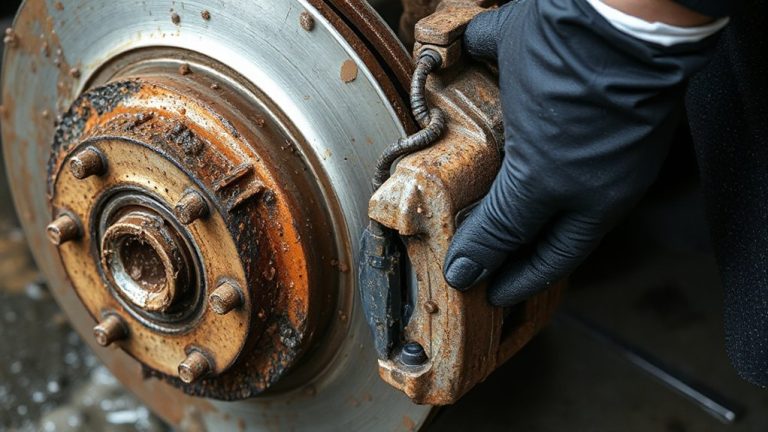
While the storm’s aftermath may seem quiet, hidden damage could already be accelerating wear across critical systems. You must act now to prevent long-term harm. Inspect undercarriage thoroughly-ash and grit retain moisture, promoting rust on steel components, especially near brake lines and suspension mounts. Use a pressure washer at 1,500–2,000 psi to remove packed debris without damaging surfaces. Check lighting systems for obscured lenses or moisture intrusion; even minor residue on headlights reduces beam intensity by up to 30%, compromising nighttime visibility. Replace any corroded wiring connectors immediately. Examine wheel wells and door jambs for trapped particles that abrade paint over time. Perform these checks within 72 hours post-storm to limit environmental degradation. Immediate post-storm maintenance safeguards maximum system longevity and prevents costly repairs.
On a final note
You must act quickly after ash exposure to prevent surface damage. Volcanic ash contains abrasive silicates up to 7 on the Mohs hardness scale, which can scratch paint during wiping. Always pre-rinse with distilled water at 40–60 psi to lift particulates. Use pH-neutral car wash soap diluted 5:1 with deionized water. Dry with a microfiber cloth rated below 0.5 oz/yd² to avoid water spotting. Replace engine air filters if ash loading exceeds 0.005 lb/ft³.