Creating a Proper Storage Environment for Vintage and Antique Vehicles
Store your vintage vehicle in a sealed, non-porous concrete-floored metal building with at least two hourly air exchanges. Keep humidity below 50% using desiccant dehumidifiers and monitor with hygrometers. Fill the fuel tank with stabilizer, charge the battery fully, and use a smart maintainer. Elevate the car on jack stands and inflate tires 5–10 psi above spec. Apply wax protectants, use breathable covers, and seal entry points. UV-protect windows and place VCI packs in enclosed areas-details on maintaining long-term readiness follow.
Notable Insights
- Store vehicles in an enclosed metal building with sealed concrete floors to prevent moisture and temperature fluctuations.
- Maintain relative humidity below 50% using dehumidifiers and monitor with hygrometers to prevent rust and corrosion.
- Fill the fuel tank with stabilized gasoline and maintain the battery using a smart charger with float mode.
- Elevate the vehicle on jack stands and inflate tires 5–10 psi above spec to prevent flat spots and dry rot.
- Protect the interior with UV-blocking film, opaque covers, and pest deterrents like sealed vents and repellent pouches.
Choose the Right Storage Location for Your Classic Car
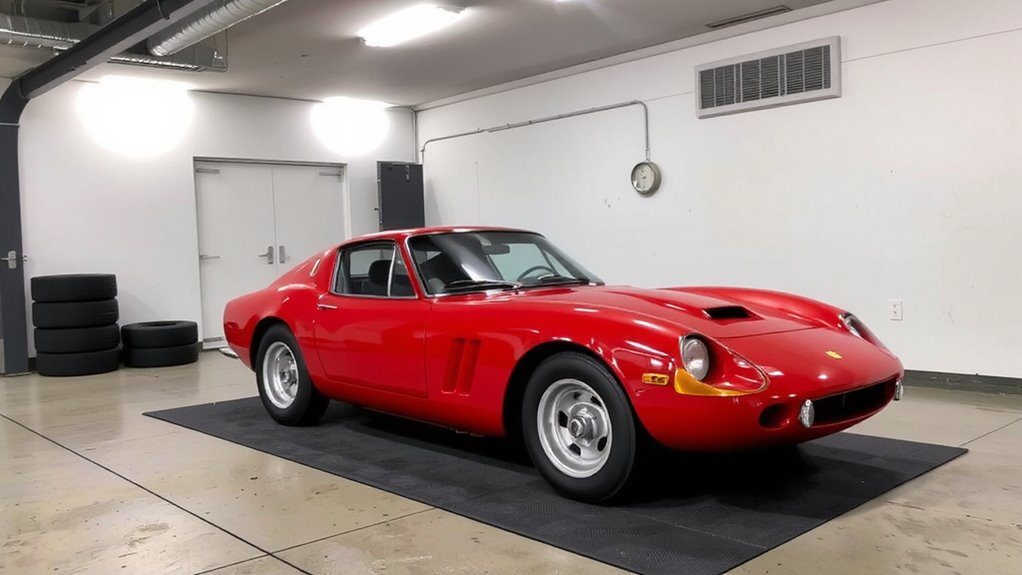
While choosing any available garage might seem convenient, selecting the right storage location for your classic car demands careful evaluation of environmental and structural factors. The floor type must be non-porous and crack-resistant, like sealed concrete, to prevent moisture absorption and oil penetration. Unsealed surfaces encourage rust and degrade tires over time. Ventilation quality is equally critical-aim for at least two air exchanges per hour. Passive vents or electric exhaust systems maintain airflow, reducing mold and condensation. Relative humidity should stay below 55%; use a hygrometer to monitor levels. Avoid attics or basements with fluctuating temperatures. Enclosed metal buildings offer better protection than open shelters. Guarantee the space is rodent-resistant with no gaps larger than ¼ inch. A tightly controlled environment prevents corrosion and preserves finishes. Climate-controlled units set between 60–70°F with stable humidity provide ideal long-term protection for vintage vehicles. For consistent temperature maintenance, consider installing a best garage heater suitable for your space size and insulation level.
Prepare Your Vintage Vehicle for Long-Term Storage
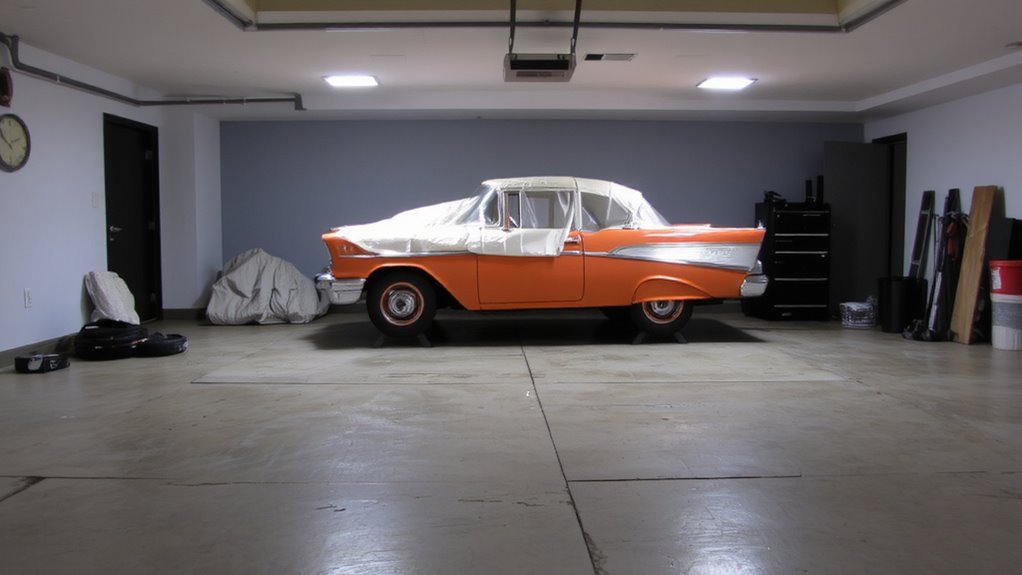
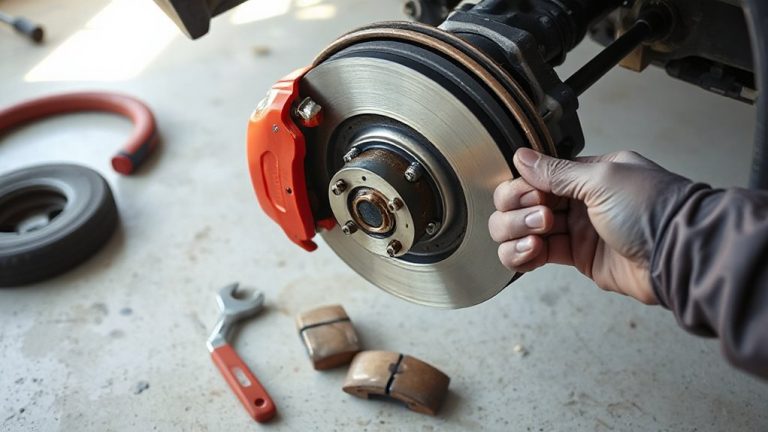
You’ve secured a stable, climate-controlled storage space with sealed concrete floors and proper ventilation-now it’s time to get your vintage vehicle ready for long-term storage. Start with engine preservation: fill the fuel tank and add a fuel stabilizer to prevent phase separation and gum formation. Remove the battery, charge it fully, and store it on a maintenance charger. Disconnecting electrical loads prevents parasitic drain. For tire insulation, elevate the vehicle on jack stands or use tire savers rated for at least 1,000 pounds per corner. This prevents flat-spotting and reduces sidewall stress. Inflate tires to 5–10 psi above recommended cold pressure to offset cold-temperature loss. Cover the entire vehicle with a breathable, non-abrasive cover to block dust while allowing moisture vapor transmission. Lubricate door seals and hinges with dielectric grease to prevent sticking. These steps guarantee mechanical integrity and reduce degradation during storage.
Stop Rust: Control Humidity and Protect Metal
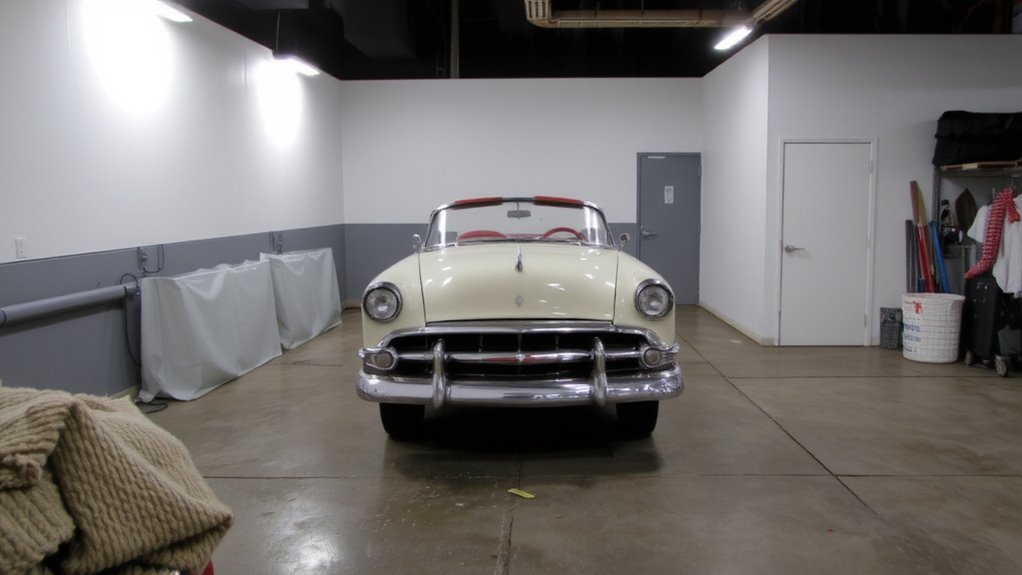
Because metal corrosion accelerates rapidly in damp environments, maintaining low humidity is essential to protecting vintage vehicles during storage. You must dehumidify storage spaces to keep relative humidity below 50%. Moisture in the air reacts with iron in steel, forming iron oxide-rust-that weakens structural integrity. Use a desiccant dehumidifier or climate-controlled system to maintain stable, dry conditions. Place hygrometers near the vehicle to monitor levels accurately. Condensation, even in small amounts, can initiate corrosion within days. To further defend against degradation, you should seal metal surfaces with corrosion-inhibiting coatings like wax-based protectants or vapor-phase inhibitors (VCI). These create a moisture-resistant barrier at the molecular level. Apply evenly on frames, suspension components, and undercarriages. For enclosed areas like doors and rocker panels, use VCI-emitting packs. Proper sealing and consistent dehumidification prevent electrochemical reactions, preserving metal integrity over months or years of inactivity.
Shield the Interior From Sunlight and Pests
Sunlight and pests pose distinct but equally damaging threats to a vintage vehicle’s interior, even when rust is under control. Prolonged UV exposure fades dashboards, cracks leather, and degrades trim. Use UV protection film on windows-opt for a clear, 1.5-mil polyester film with 99% UVA/UVB blockage. Install opaque interior covers to shield surfaces completely. For pest barriers, seal entry points larger than 1/4 inch with steel wool and silicone caulk. Place rodent repellent pouches containing natural botanical oils-like peppermint or citronella-under seats and in glove compartments. Deploy reusable snap-shut traps around the storage perimeter every 10 feet. Avoid poison baits to prevent hidden carcasses. Guarantee all vents and exhaust openings have 16-gauge aluminum mesh screens, 1/8-inch gaps, to block insects and nesting animals. These proactive steps preserve materials and avoid costly restoration down the line.
Maintain Battery Charge and Fluid Condition
Even when stored long-term, your vintage vehicle’s battery and fluids remain vulnerable to degradation that can compromise starting ability and internal components. Connect a smart battery maintainer delivering 1.5 to 2.4 amps with automatic float mode to prevent overcharging. For long inactivity, use battery desulfation chargers that apply pulse technology to break down lead sulfate crystals, restoring up to 85% of lost capacity in lead-acid units. Check electrolyte levels every 90 days if the battery is non-sealed. Test all fluids-coolant, brake, transmission, and engine oil-before storage using litmus strips or refractometers for pH and contamination levels. Fluid testing confirms inhibitors haven’t broken down, preventing internal corrosion. Use only manufacturer-specified fluids when topping off. Confirm coolant concentration maintains a 50/50 glycol-water ratio for maximum freeze and boil protection. Maintain fuel with a minimum 10,000-hour oxidation stability additive to reduce varnish buildup. Consider using cold weather batteries if storing in unheated environments to ensure reliable starting in low temperatures.
Inspect Monthly to Keep Your Classic Show-Ready
Regularly inspecting your vintage vehicle every month guarantees it stays in peak condition and ready for show appearances. Early detection of wear or deterioration prevents costly damage and guarantees reliability. Pay close attention to tire pressure and upholstery care, both critical for appearance and function. Underinflated tires deform over time, while correct pressure preserves sidewall integrity. Upholstery care prevents cracking and fading, especially in vehicles with leather or vinyl interiors exposed to temperature shifts. Proper car storage solutions help maintain a stable environment that minimizes moisture and temperature fluctuations, further protecting your investment.
| Inspection Item | Recommended Action |
|---|---|
| Tire pressure | Check with gauge; maintain manufacturer PSI |
| Upholstery care | Clean with pH-balanced solution; condition quarterly |
| Fluid levels | Verify brake, coolant, and oil levels |
| Battery charge | Test voltage; keep above 12.4V |
| Lighting and signals | Operate all lights; replace dim bulbs |
On a final note
You must store your vintage vehicle in a climate-controlled environment with humidity below 50% to prevent corrosion. Use a breathable car cover and elevate tires to avoid flat spots. Charge the battery monthly with a 1.5-amp trickle charger. Change fluids annually, including brake, coolant, and engine oil. Inspect monthly for pests, leaks, or condensation. Park on epoxy-coated concrete to resist moisture wicking. These steps guarantee mechanical integrity and preserve resale value.