Maximizing Cooling System Effectiveness Through Regular Maintenance and Upgrades: Tips for Keeping Your Car’s Radiator and Cooling Components in Top Condition
Check your coolant level monthly when the engine’s cold, guaranteeing it reaches the reservoir’s full mark. Use a 50/50 mix of antifreeze and distilled water for protection down to -34°F and boil-over resistance up to 265°F. Flush the system every 30,000 miles using a pressurized reverse-flush kit to remove debris. Inspect hoses for cracks or soft spots, replacing any over five years old. Test system pressure with a hand pump rated to your cap’s specification-typically 13–18 psi-to catch leaks early. Choose the correct coolant type by chemistry, not color; OAT (orange) and IAT (green) aren’t interchangeable. Verify compatibility with aluminum heads and plastic composites to prevent corrosion or seal damage. Install an aluminum radiator with a dual-pass, 3-row core for up to 40% better heat dissipation. Upgrade to high-flow electric fans rated at 2,000+ CFM and silicone hoses that withstand 30 psi without cracking. These steps guarantee long-term thermal stability and system integrity. You’ll discover even more ways to protect your engine with a closer look at component-specific best practices.
Notable Insights
- Check coolant level and condition regularly when the engine is cold, ensuring it is clear, bright, and at the proper pH.
- Flush the radiator every 30,000 miles or as recommended to remove debris and maintain efficient coolant flow.
- Inspect for cooling system leaks monthly using a pressure test and examine hoses, connections, and components for damage.
- Use the correct coolant type specified by the manufacturer to prevent corrosion and ensure compatibility with engine materials.
- Upgrade to high-performance components like aluminum radiators, electric fans, and silicone hoses for improved thermal efficiency.
Check Your Coolant Level and Condition
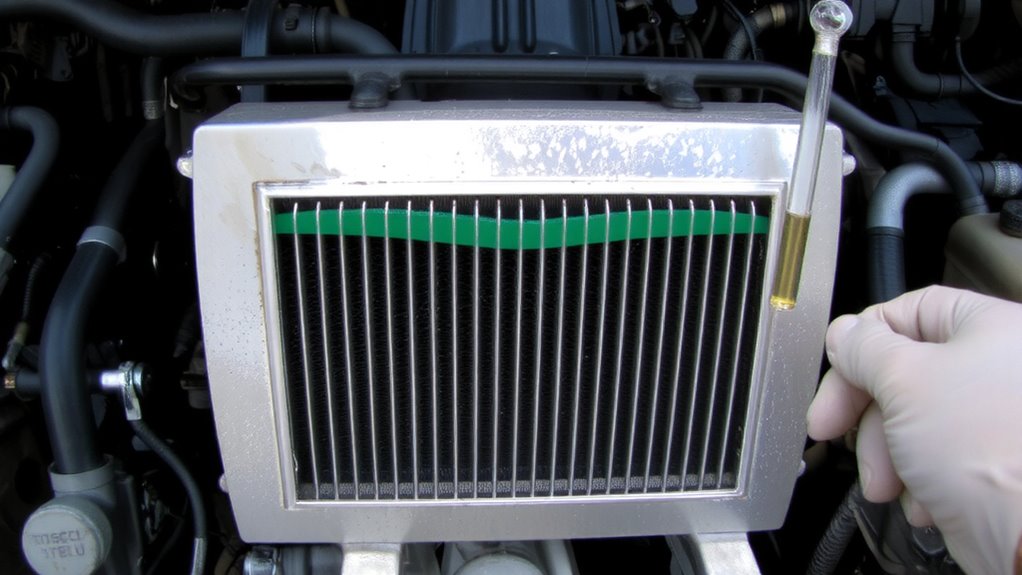
Coolant is the lifeblood of your cooling system, and checking it should be your first move. You must inspect the coolant level when the engine is cold, ensuring it reaches the “full” mark on the reservoir, typically marked with min/max lines. The coolant color indicates its type and condition-green for ethylene glycol, orange or red for organic acid technology (OAT). Any change in coolant color, such as rust-brown or milky hues, signals contamination. Look for contamination signs like floating debris, oil slicks, or sludge in the reservoir. These indicate internal leaks or degraded fluid. Coolant should remain clear and bright. A pH level below 7.0 means it’s acidic and corrosive, risking component damage. Replace coolant meeting these conditions immediately. Proper coolant maintains a 50/50 mix of antifreeze and distilled water, ensuring freeze protection down to -34°F and boil-over resistance up to 265°F.
Flush Your Radiator the Right Way
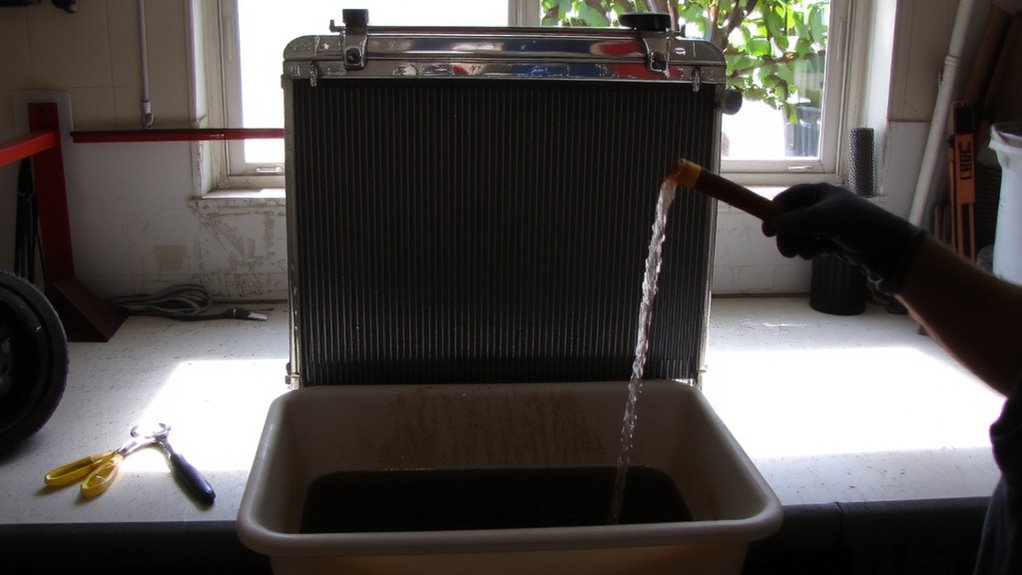
Why let built-up sludge and old coolant compromise your engine’s efficiency? Flushing your radiator properly maintains ideal heat transfer and prevents internal corrosion. Perform radiator cleaning every 30,000 miles or as specified in your owner’s manual-typically 2 to 3 years. Use a pressurized flush kit to reverse-flush the system, removing debris that degrades coolant flow. This process restores thermal efficiency and protects the water pump and thermostat. Always inspect hoses during service. Conduct a thorough hose inspection for cracks, bulges, or soft spots, especially at clamped ends. Replace any that show wear or have exceeded five years of service life. Verify hose inner lining integrity-collapsing liners restrict coolant circulation. Use OEM-specified coolant mix ratios, usually a 50/50 blend of ethylene glycol and deionized water, ensuring freeze protection and anti-corrosion properties. A cooling system pressure test after servicing can confirm integrity, and using a cooling system tester helps detect leaks and pressure inconsistencies early.
Find Cooling System Leaks Early
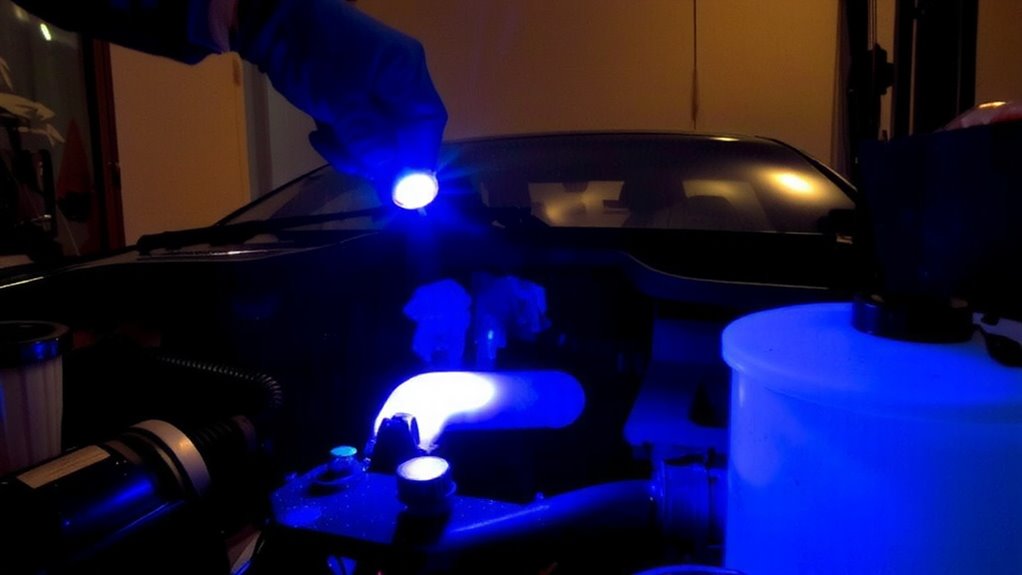
A clean system won’t stay effective if leaks go undetected. Even small drips can reduce coolant levels enough to impair heat dissipation, risking engine overheating. Perform a visual inspection monthly. Check for wet spots, crusty residue, or puddles under the car-common signs near hoses, the radiator, water pump, and heater core. Look closely at connections and seams where vibration and thermal cycling weaken seals. If you suspect a leak but see nothing obvious, conduct a pressure test. Use a hand-operated pressure tester that matches your radiator cap’s rating, typically 13–18 psi. Pump the system to its rated pressure; a drop indicates a leak. This test can reveal internal or hidden leaks a visual inspection might miss. Early detection prevents costly damage. For minor leaks, consider using a durable epoxy repair solution like JB Weld for radiators.
Choose the Right Coolant for Your Engine
While your engine’s cooling system relies on proper maintenance, it can still fail if you’re using the wrong type of coolant. Coolant isn’t one-size-fits-all-different engines require specific formulations. The coolant color indicates its chemical type, not performance level. For example, orange usually means OAT (organic acid technology), while green often signals IAT (inorganic acid technology). Choosing by color alone is misleading. You need to verify additive compatibility with your engine’s materials. Aluminum heads, copper radiators, and plastic reservoirs react differently to various additives. Mismatched coolant can cause corrosion, scale buildup, or degraded seals. Always consult your owner’s manual for the manufacturer’s recommended specification, such as ASTM D3306 or D4985. Using the correct coolant guarantees thermal stability, freeze protection down to -34°C (-30°F), and long-term system integrity. For optimal performance, consider selecting one of the best coolants based on your vehicle’s specific requirements.
Boost Cooling Efficiency With Upgraded Parts
Performance begins with precision. Upgrading your cooling system with performance parts enhances efficiency and reliability. Performance upgrades like aluminum radiators reduce weight by up to 40% compared to stock copper-brass units while improving thermal conductivity. These radiators often feature dual-pass designs and 2-row or 3-row cores, increasing coolant exposure time and surface area for better heat dissipation. Pair them with high-flow electric fans that deliver 2,000+ CFM for superior airflow refinement. Electric fans activate based on temperature sensors, maintaining ideal coolant levels without sapping engine power. Installing a shimmed or adjustable thermostat guarantees faster, more accurate coolant flow control. Flexible silicone hoses resist cracking and handle higher pressures-up to 30 psi-without leaks. Together, these components maintain peak operating temperatures, especially under load. Airflow refinement isn’t just about adding parts-it’s about integrating them to work as a unified system. Every element must align for maximum cooling efficiency.
Prevent Overheating in Tough Driving Conditions
When you’re pushing your vehicle through stop-and-go traffic or crawling up a steep mountain grade, heat builds fast and the cooling system bears the brunt of the stress. You must monitor coolant temperature closely under heavy loads or prolonged highway driving. Sustained high engine temps can exceed radiator capacity, especially in older systems. Heavy loads increase thermal output by up to 30%, demanding peak cooling efficiency. Make sure your radiator has a minimum 1.3 bar (19 psi) pressure cap to raise the coolant’s boiling point. Electric fans should engage at 200–210°F (93–99°C) for maximum airflow during slow conditions. On long highway driving, maintain steady speeds to reduce thermal spikes. Use a 50/50 ethylene glycol mix to protect against boil-over and corrosion. Upgraded thermostats with 180–195°F (82–91°C) ratings help regulate flow under pressure. These measures keep your engine in the safe zone, even under extreme demand.
On a final note
You maintain peak cooling performance by staying proactive. Regular coolant checks prevent corrosion and maintain ideal heat transfer. Flush your radiator every 30,000 miles using a 50/50 mix of ethylene glycol and deionized water. Pressure-test the system at 15 psi to catch leaks early. Upgrade to an aluminum radiator with 2-row, 1-inch tube cores for 25% better dissipation. Use OEM-specified coolant to protect seals and sensors.