The Role of the Exhaust Manifold in Modern Engines: How It Collects Waste Gases From Each Cylinder to Facilitate Efficient Engine Operation
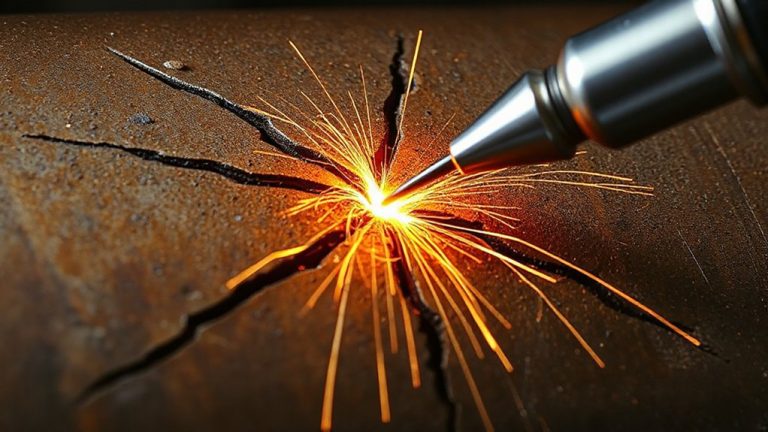
You collect exhaust gases from each cylinder through precision-cast runners designed to withstand up to 1,600°F. Made from cast iron, stainless steel, or Inconel, the manifold channels hot gases into a single outlet while resisting thermal cracking. Equal-length runners balance pulse timing, reducing backpressure by up to 15%. This improves scavenging, engine efficiency, and turbo response. Modern designs integrate with turbochargers and catalytic converters, optimizing flow and emissions. Upcoming advancements further refine how waste energy shapes performance.
Notable Insights
- Collects exhaust gases from each cylinder post-combustion to route them efficiently out of the engine.
- Uses high-temperature materials like stainless steel or Inconel to withstand extreme heat and pressure.
- Employs optimized runner design to manage exhaust pulses and reduce interference between cylinders.
- Enhances engine efficiency by reducing backpressure and improving exhaust scavenging.
- Integrates with emissions systems by delivering hot, consistent gas flow to the catalytic converter.
What Is an Exhaust Manifold and How Does It Work?
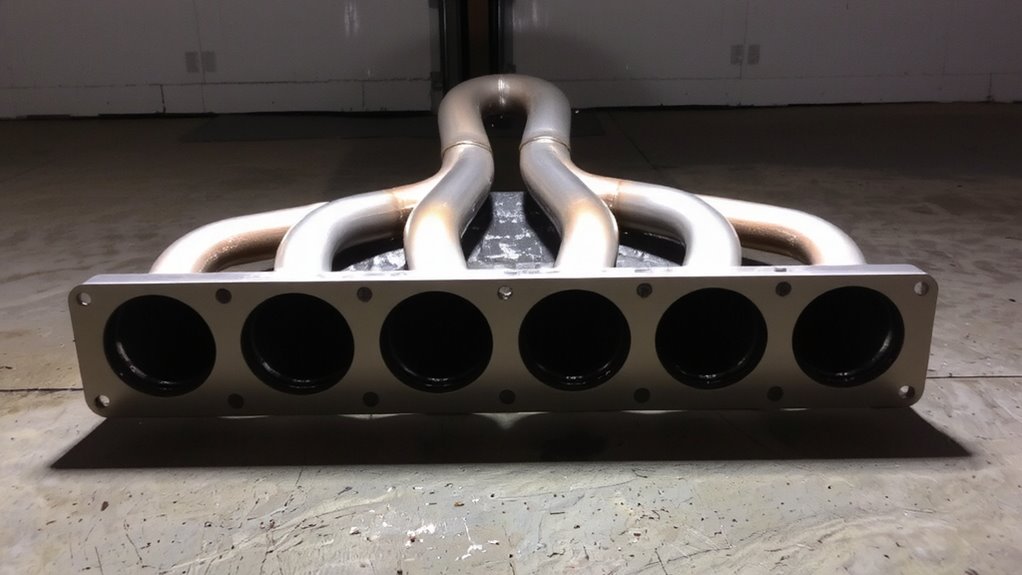
Heat and exhaust gases. You’re dealing with extreme conditions the moment combustion ends in each cylinder. The exhaust manifold collects these hot gases, channeling them into a single outlet. It withstands temperatures up to 1,600°F, typically constructed from cast iron or stainless steel for durability. As cylinder pressure spikes during exhaust stroke, the manifold must resist deformation and cracking. Each runner in the manifold is engineered to minimize backpressure, optimizing exhaust flow from multiple cylinders. Proper design balances pulse energy and scavenging, improving engine efficiency. Uneven exhaust flow can cause pressure interference, reducing performance. Tubular headers offer improved flow dynamics, but most OEMs use compact one-piece manifolds. The component directly impacts emissions, fuel economy, and turbo response if present. Sealing is critical-gaskets or integrated seals prevent leaks. You rely on consistent thermal conductivity and structural integrity for long-term operation.
Directing Exhaust From Cylinders
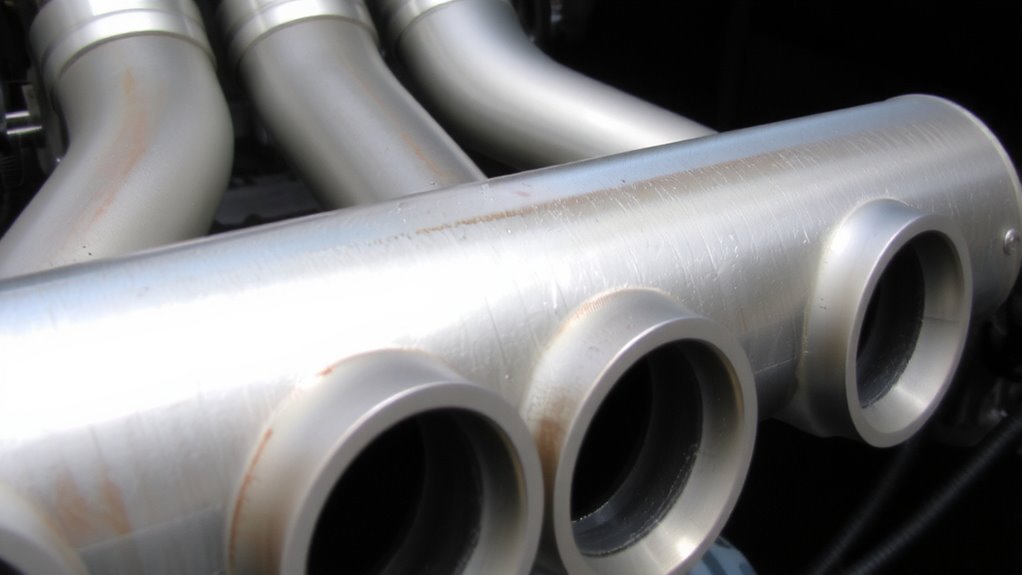
Exhaust pulses. You route them from each cylinder through precisely sized runners in the manifold. These pulses travel at high speed, and their timing matters. With proper pulse tuning, you position each exhaust outlet so pressure waves don’t interfere. Instead, they create low-pressure zones that enhance exhaust scavenging. This process effectively pulls the next cylinder’s exhaust gases out, improving flow efficiency. Pulse tuning relies on runner length and diameter-typically 1.25 to 1.75 inches in diameter, varying by engine size. Equal-length runners maintain consistent pulse timing, critical in performance engines. You’ll see this in tuned headers, where scavenging gains can increase horsepower by up to 15%. The manifold’s geometry guarantees minimal backpressure while maximizing energy recovery. Efficient pulse management reduces heat buildup and improves volumetric efficiency. You’re not just moving gas-you’re orchestrating pressure waves to boost engine breathing and overall output.
Exhaust Manifold Materials and Design
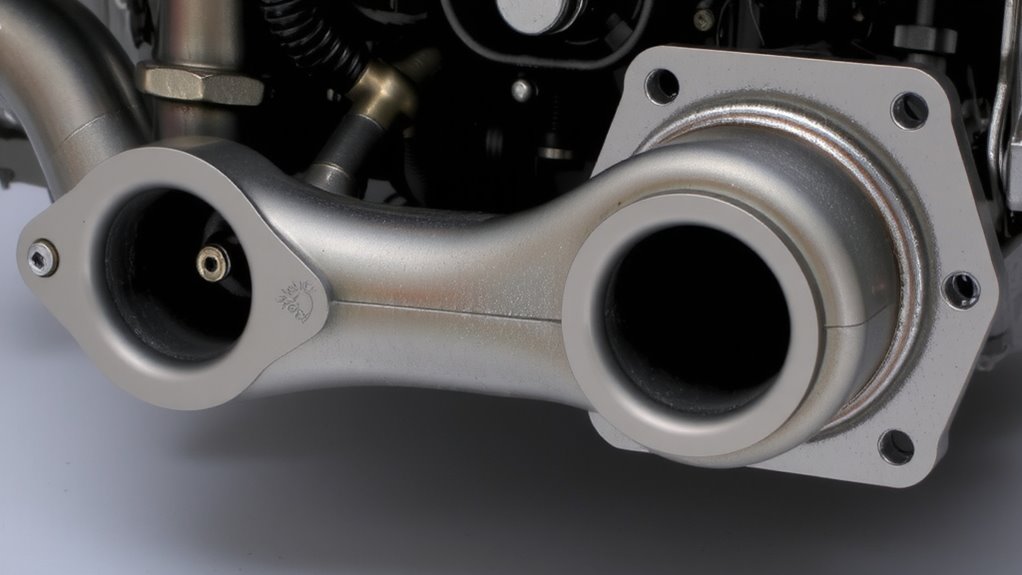
Durability starts with material choice. You need cast iron for its heat resistance and low cost, or stainless steel for better thermal expansion control. Modern performance engines often use Inconel, a nickel-chrome alloy, to handle extreme exhaust temperatures.
| Material | Emotional Impact |
|---|---|
| Cast Iron | Feels rugged but heavy; you trade weight for reliability |
| Stainless Steel | Gives confidence; resists cracking under thermal expansion |
| Inconel | Inspires trust; handles heat resistance like no other |
You design exhaust manifolds to minimize thermal expansion stress through flex joints and engineered bends. Wall thickness averages 4–6 mm in cast units, thinner in fabricated ones. Uniform flange thickness-typically 12 mm-prevents warping. You rely on precise material properties to maintain integrity, ensuring long-term structural performance under cyclic heating up to 950°C.
How Exhaust Manifolds Improve Efficiency
While you might not think about it during your daily drive, the shape and layout of the exhaust manifold play a direct role in how efficiently your engine breathes. Backpressure reduction is critical-restrictive manifolds increase backpressure, robbing power and efficiency. Modern designs use equal-length runners to balance exhaust pulses, minimizing interference between cylinders. Flow optimization guarantees gases exit quickly and smoothly. Tubular headers, often with 1.5 to 2-inch primary tubes, improve scavenging by maintaining pulse energy. Compact, cast-iron manifolds may limit flow but save space and cost. Performance applications favor stainless steel headers for superior thermal and flow properties. The merge collector design further enhances velocity, reducing turbulence. Proper gasket alignment and flange thickness-typically 0.5 to 0.75 inches-prevent leaks. These features collectively lower exhaust gas temperature and improve volumetric efficiency, helping your engine produce more power using less fuel.
Exhaust Manifolds and Emissions Control
How do your engine’s early emissions get managed before reaching the catalytic converter? Your exhaust manifold plays a critical role by using exhaust scavenging to pull spent gases out efficiently. This process reduces overlap interference, helping maintain fresh charge intake. Thermal insulation keeps gases hot, ensuring they reach the converter quickly, where they’re treated effectively.
| Function | Benefit |
|---|---|
| Exhaust scavenging | Enhances airflow, reduces backpressure |
| Thermal insulation | Preserves heat, promotes light-off speed |
| Gas flow consolidation | Delivers uniform stream to catalytic converter |
Effective emission control starts right at the manifold. By minimizing heat loss and optimizing pulse timing, your engine meets strict emissions standards. You rely on precise engineering to balance performance and cleanliness-every time you start the engine, these systems work together seamlessly, unseen but essential.
From Cast Iron to Integrated Turbo Manifolds
You’ve likely noticed modern engines producing more power while meeting tighter emissions standards, and a big part of that progress comes from how exhaust systems are designed. The shift from cast iron to integrated turbo manifolds marks a key material evolution in engine design. Cast iron was durable but heavy and slow to heat. Modern manifolds use lightweight cast steel or Inconel alloys, reducing mass by up to 30%. This improves thermal efficiency by containing exhaust heat, speeding up turbo spool. Integrated turbo manifolds position the turbocharger directly on the cylinder head, shortening exhaust paths. Shorter paths increase exhaust pulse energy, boosting turbo response by as much as 15% at low RPM. They also reduce engine complexity and improve packaging. These advances support better fuel economy and lower emissions. Material evolution and thermal efficiency are central to modern performance and compliance.
On a final note
You rely on the exhaust manifold to collect high-pressure exhaust gases from each cylinder efficiently. It operates under temperatures exceeding 1,000°F. Made from cast iron or stainless steel, modern versions integrate directly with turbochargers. This design minimizes energy loss, improves scavenging, and boosts engine efficiency. Precision-engineered runners equalize backpressure. The manifold also routes gases toward the catalytic converter, aiding emissions control.