How to Install and Maintain Carbon Monoxide Detectors in Automotive Workshops
Install CO detectors 5 to 6 feet high, within 5 to 20 feet of exhaust sources but at least 5 feet from vents or doors to avoid dead air. Use industrial electrochemical sensors with UL 2034 certification, 85 dB alarms, and 5–7 year lifespan. Test monthly, replace backup batteries every six months, and calibrate annually. Replace units after 5–7 years. Alarms should trigger at 70 ppm within 90 minutes. Know the response steps when it activates-there’s more to guarantee full safety.
Notable Insights
- Install CO detectors at 5 to 6 feet high, within 5 to 20 feet of potential CO sources like vehicle exhausts.
- Place one detector per 1,000 square feet, spaced no more than 30 feet apart for full coverage.
- Use industrial-grade electrochemical sensors with UL 2034 certification, rated for temperatures 40°F–100°F.
- Test detectors monthly, replace backup batteries every six months, and calibrate sensors annually.
- Replace detectors every 5 to 7 years and evacuate immediately if alarm sounds, ventilating until CO drops below 30 ppm.
Why CO Is a Silent Killer in Your Workshop
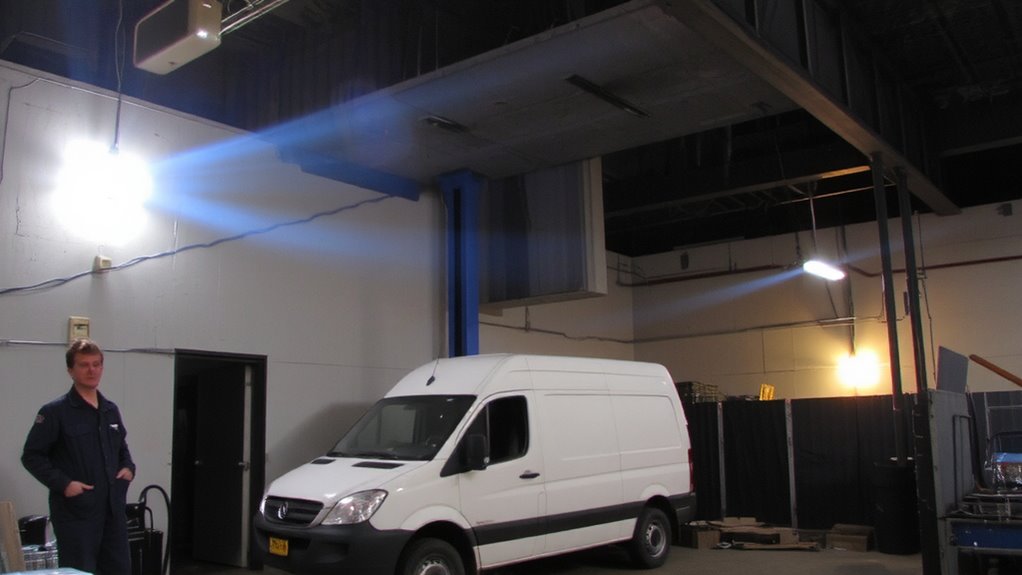
While you’re focused on repairs, carbon monoxide (CO) can build up unnoticed-odorless, colorless, and potentially deadly within minutes. This invisible threat forms when fuels like gasoline, propane, or natural gas burn incompletely in engines or heaters. You’re at risk because CO binds to hemoglobin 240 times more readily than oxygen, reducing blood oxygen levels. Symptoms like dizziness or nausea indicate acute health risks, but they’re often mistaken for fatigue. Prolonged exposure to concentrations above 50 ppm can impair judgment; OSHA’s permissible exposure limit is 50 ppm averaged over 8 hours. At 400 ppm, CO causes life-threatening symptoms within an hour. Without detection, lethal concentrations can accumulate rapidly in poorly ventilated bays. Protection isn’t optional-CO is a silent killer because you can’t see, smell, or taste it. Immediate detection is critical, making continuous monitoring essential in any auto workshop environment where combustion occurs.
Where to Place CO Detectors for Best Coverage
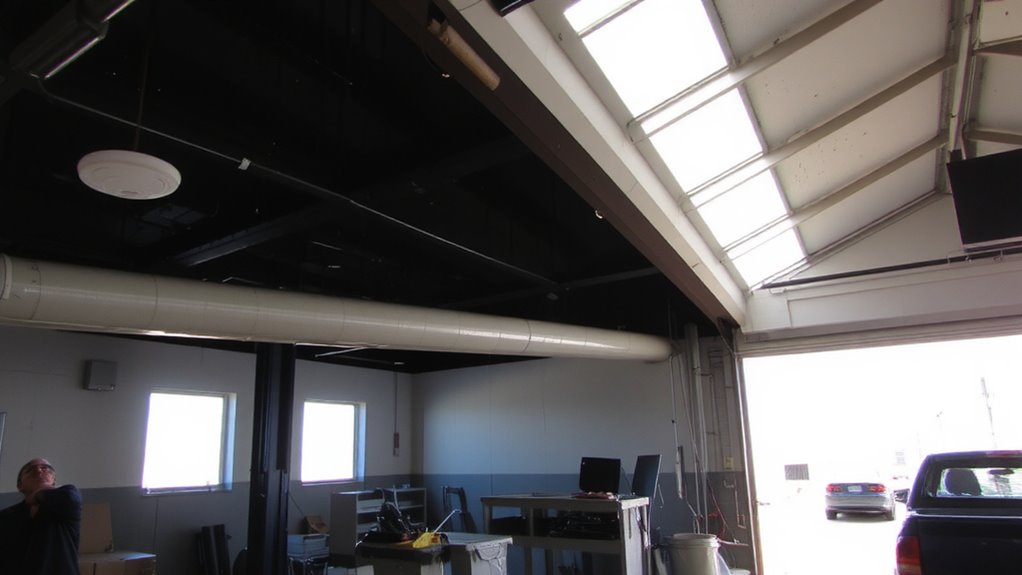
You can’t detect carbon monoxide with your senses, but a properly placed detector can. Sensor placement is critical for early threat detection. Install detectors within 5 to 20 feet of potential CO sources, like vehicle exhaust points or running engines. Mount units on walls or ceilings at a height of 5 to 6 feet, avoiding corners or obstructions that limit airflow. Place at least one detector per 1,000 square feet of workshop space, ensuring full coverage. Avoid dead air spaces near vents or fans. For maximum safety, enable alarm integration with your workshop’s central monitoring or ventilation system. Integrated alarms trigger automatic shutdowns or exhaust activation, reducing exposure risk. Test each detector monthly and calibrate annually. Proper sensor placement and alarm integration create a responsive defense against CO buildup, providing reliable, life-saving protection in high-risk environments.
Choose the Best CO Detector for Your Workshop
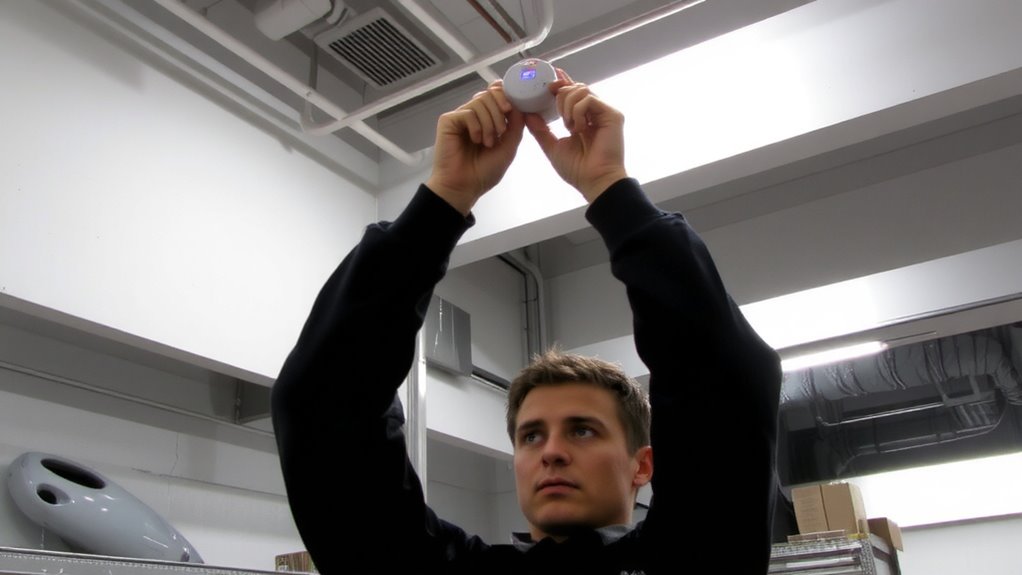
What separates a reliable carbon monoxide detector from one that falls short in your workshop? Sensor sensitivity and alarm durability are critical. You need a detector with electrochemical sensors that respond to CO concentrations as low as 30 ppm, triggering alarms at 70 ppm within 60–90 minutes. Look for units rated for industrial environments-those with an operating temperature range of 40°F to 100°F and humidity tolerance up to 95% non-condensing. Alarm durability means a sound output of at least 85 decibels at 10 feet, ensuring it’s heard over shop noise. Choose detectors with a 5- to 7-year sensor life and UL 2034 certification. Avoid residential models; they lack the rugged design your workshop demands. A well-built detector withstands vibration, dust, and temperature swings without false alarms or failure. Pick one built for real workshop conditions.
Install CO Detectors Correctly in 5 Steps
Since carbon monoxide is odorless and colorless, proper detector placement is your first line of defense against undetected exposure. Begin by mounting detectors at breathing level, about 5 feet off the floor, since CO mixes evenly in air. Guarantee correct positioning-at least 5 feet from fuel-burning equipment to avoid false alarms. Install one detector per 5,000 square feet of workshop space, but never more than 30 feet apart for reliable coverage. Place units away from vents, windows, or doors to maintain peak sensitivity. Avoid dead air spaces near corners or beams where airflow is limited. Hardwire detectors with battery backup for continuous operation. Each unit should comply with UL 2034 safety standards and trigger an alarm at 70 ppm over 1–4 hours. Correct installation ensures fast, accurate detection.
Test and Replace: Your CO Detector Maintenance Schedule
A properly installed carbon monoxide detector won’t protect anyone if it’s not functioning correctly. You must test it monthly using the test button to verify alarm functionality and signal response. Most units require battery replacement every six months-use lithium batteries for longer life and stable voltage output. Even hardwired units have backup batteries that need timely replacement. Sensor calibration is critical; electrochemical sensors degrade over time and require recalibration every 12 months or as specified by the manufacturer. Improper calibration leads to false readings or failure to detect CO at dangerous levels (as low as 30 ppm). Replace detectors every five to seven years, as sensors lose accuracy with age. Manufacturer guidelines outline exact intervals and compatible components. Follow them precisely to guarantee workplace safety and regulatory compliance.
What to Do When the CO Alarm Sounds?
When the carbon monoxide alarm sounds, treat it as an immediate health hazard-CO is odorless, colorless, and potentially fatal. Initiate emergency response protocols without delay. Evacuation procedures require all personnel to exit the workshop quickly and calmly. Do not assume the alarm is false; even low-level CO exposure (as little as 50 ppm over 8 hours) can cause dizziness and nausea. Once outside, account for all team members and prevent re-entry. Use a secondary CO meter with a digital readout to verify ambient levels before allowing reoccupation. Ventilate the space fully-open doors and activate exhaust systems. Shut down combustion engines and fuel-burning equipment immediately. Confirm detector power source integrity and reset only after CO levels drop below 30 ppm. Regularly test alarms to guarantee peak sensitivity and response accuracy within ±5 ppm tolerance.
On a final note
You must treat CO detectors as critical safety equipment. Units with electrochemical sensors offer precise detection at 70 ppm within 60–240 minutes, per UL 2034 standards. Mount detectors 5 feet above floor level, away from vents. Test monthly; replace sensors every 5–7 years. A properly maintained detector operates within ±3% accuracy. Never ignore an 85 dB alarm-evacuate and ventilate. Your workshop’s safety depends on consistent compliance.