How to Select the Right Cold Air Intake System for Your High-Performance Street Car
Choose a cold air intake that matches your make, model, and engine size exactly-use OEM part numbers or fit guides to confirm. Pick a conical cotton gauze filter for up to 30% more airflow and 50,000-mile service intervals. Verify CARB EO approval for street legality in regulated states. Use a sealed heat shield to block engine bay heat and draw cooler air from the front. Opt for mandrel-bent aluminum or silicone tubing with smooth interiors to reduce turbulence and increase airflow by up to 20%. Proper installation with secure clamps prevents leaks, while dyno tuning maximizes gains through accurate fuel mapping-explore further to access peak system potential.
Notable Insights
- Verify compatibility with your car’s make, model, and engine size using OEM part numbers or fitment guides.
- Choose a high-flow filter like conical cotton gauze for up to 30% more airflow than stock paper filters.
- Ensure the intake has a CARB EO number for legal street use in emissions-regulated states.
- Select a system with a sealed heat shield to block engine heat and draw in cooler outside air.
- Use mandrel-bent aluminum or reinforced silicone tubing to minimize turbulence and maximize airflow.
Pick the Right Cold Air Intake for Your Car
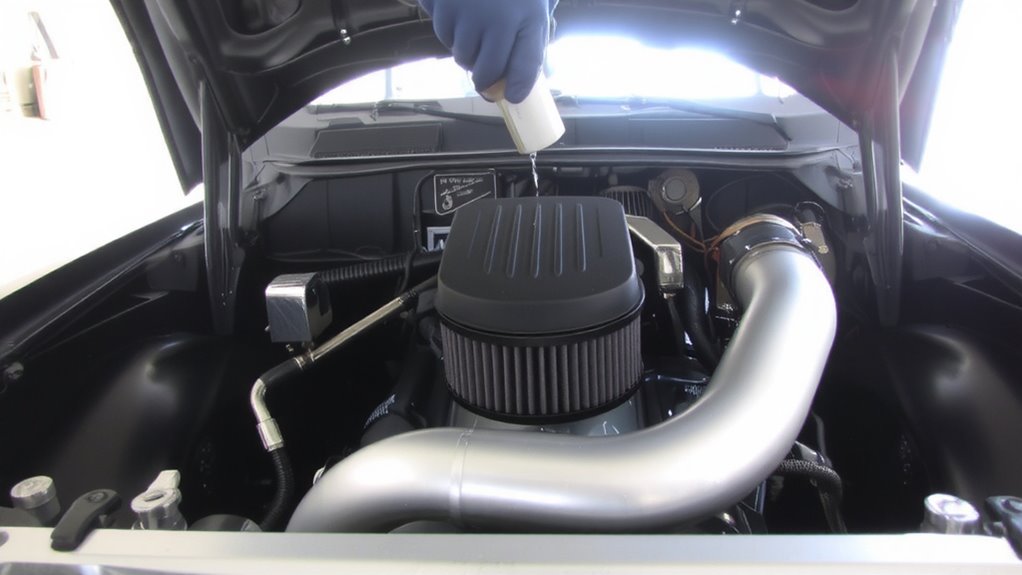
How do you know which cold air intake fits your car? Start by confirming engine compatibility-your intake must match your vehicle’s make, model, and engine size. A mismatched unit disrupts airflow efficiency and can trigger check engine lights or reduce performance. Manufacturers design intakes for specific engine bays, so verify fitment using OEM part numbers or fit guides. Airflow efficiency depends on proper ducting diameter-typically 3 to 4 inches-aligned with your throttle body. Tapered silicone elbows and mandrel-bent tubes reduce turbulence, increasing usable horsepower by up to 8%. Aftermarket intakes often reposition the filter into the fender well, drawing cooler, denser air. That improves combustion efficiency. Always check mass airflow (MAF) sensor placement-some systems integrate it, others don’t. Your choice directly affects engine tuning and long-term reliability. For the 5.7L Hemi Ram 1500, selecting a properly designed cold air intake can significantly enhance throttle response and overall engine performance.
Choose a Cold Air Intake With the Best Filter Type
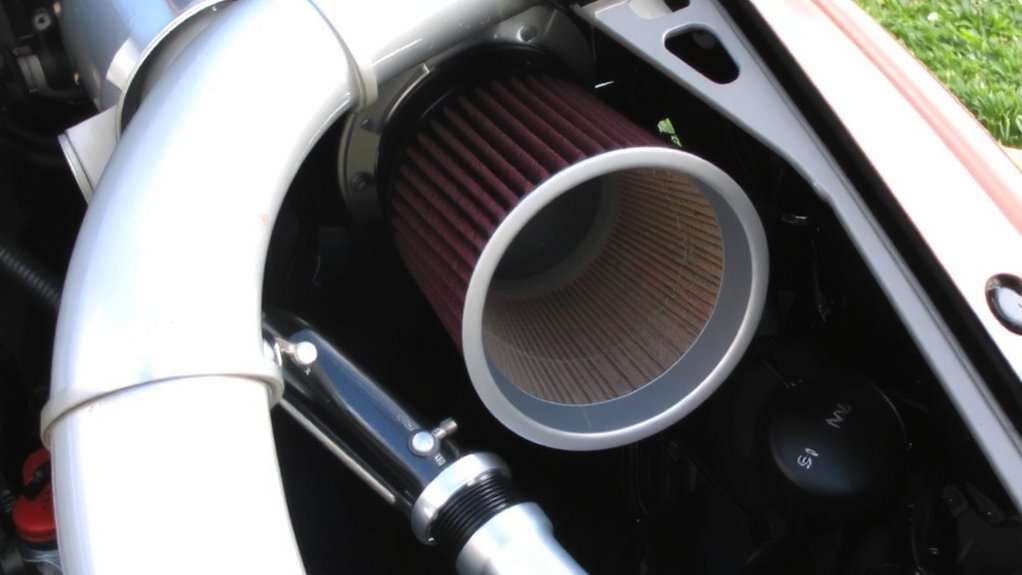
A good cold air intake starts with the filter-your engine’s first line of defense against debris and contaminants. You need a high-performance filter that balances airflow efficiency and filter longevity. Most top intakes use conical cotton gauze filters, which offer superior airflow-up to 30% more than stock paper filters-thanks to their layered media and oiled surface. These filters trap particles as small as 5 microns while maintaining low restriction. Synthetic dry filters are another option, lasting longer and requiring no oiling, but they may sacrifice slight airflow efficiency. Look for filters with pleated media; more pleats mean greater surface area-typically 80 to 100 square inches-extending service intervals. A quality filter lasts 50,000 miles between cleanings, ensuring consistent performance. Your choice directly impacts engine protection and power output. Choose based on material, design, and proven filtration data. For top-performing options, consider Best Cone Air Filters that combine durability, filtration efficiency, and ease of maintenance.
Ensure Your Cold Air Intake Is Street-Legal
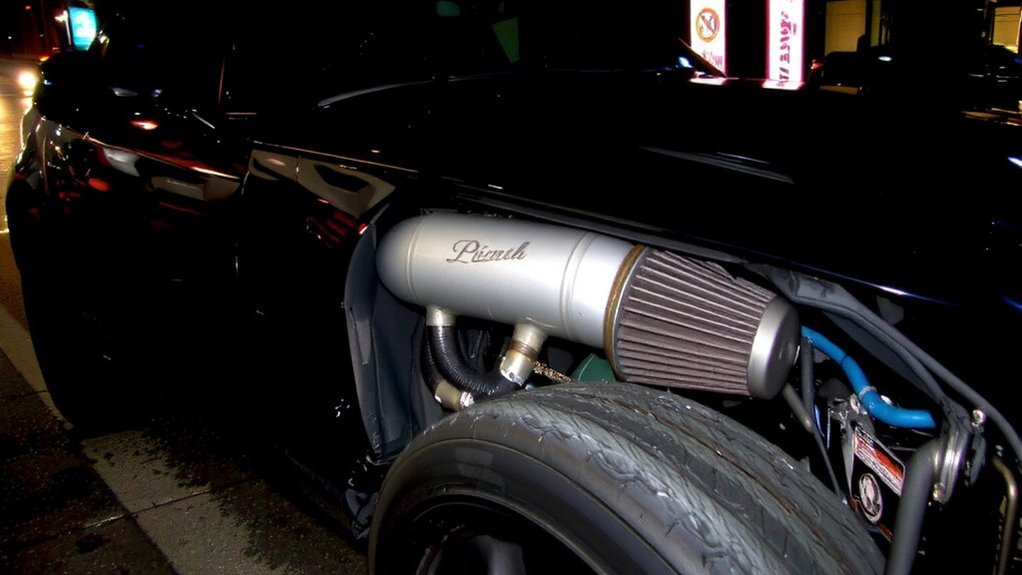
Not every cold air intake you can buy is legal for street use, even if it fits your engine perfectly and has a high-flow filter. You need to confirm emissions compliance before installation. Many states, especially those following California Air Resources Board (CARB) regulations, require legal certification for aftermarket parts. A street-legal intake will have a CARB Executive Order (EO) number, proving it meets strict emissions standards. Without this certification, your vehicle may fail emissions testing or result in fines. Certified intakes are tested for proper air-fuel balance and evaporative control, ensuring they don’t increase harmful pollutants. Look for the EO number on the product label or manufacturer’s website. Never assume fitment implies legality. Even high-performance systems must meet federal and state requirements to remain street-legal. Choosing a certified intake protects your investment and keeps you compliant. For reliable options, check out the top picks in our buying guide.
Block Heat With a Proper Cold Air Intake Shield
Since engine bays get hot, especially under load, drawing in cooler outside air makes a measurable difference in performance. A proper cold air intake shield is essential for effective heat isolation. It blocks radiant engine heat from entering the intake system. The shield must fit tightly around the air filter, creating a sealed barrier between hot underhood air and the incoming charge. Good designs use molded plastic or aluminum with foam gaskets to guarantee complete air sealing. This setup forces the system to draw only from the cooler air in front of or beside the radiator. Without it, heat soak reduces density, hurting power. Factory airboxes do this well, but many aftermarket intakes skip proper shielding. Look for kits that include a sealed enclosure with ducting to fresh air. Effective heat isolation can drop intake temps by 30°F or more, improving combustion efficiency. Always verify the shield maintains air sealing over bumps and during hard cornering.
Use High-Flow, Heat-Resistant Intake Materials
You’ll want to choose intake tubing made from high-flow, heat-resistant materials to maintain consistent performance under real-world driving conditions. High-quality systems use mandrel-bent aluminum or reinforced silicone composite tubing. These materials resist underhood heat soak, preserving airflow efficiency during extended driving. Aluminum tubing typically has a thermal conductivity of 205 W/m·K, minimizing heat transfer into the intake charge. Reinforced silicone can withstand temperatures up to 500°F, offering superior material durability. Smooth interior walls reduce turbulence, boosting airflow by up to 20% over stock plastic intakes. Look for CFD-tested designs that guarantee laminar flow. Avoid stamped steel or thin plastic-they restrict airflow efficiency and degrade over time. Quality flanges and couplings must seal tightly to prevent boost leaks. Material durability directly impacts long-term performance. Choose components that meet OEM+ specifications for fit and thermal resistance.
Install Right and Tune for Power
A cold air intake only delivers peak performance when installed correctly and paired with an engine tune. You must secure all clamps and couplings tightly to prevent air leaks that disrupt airflow and sensor readings. Even minor leaks can cause lean conditions or trigger check engine lights. After installation, perform dyno tuning to measure horsepower, torque, and air-fuel ratios under real load conditions. This data guides precise adjustments to ignition timing and airflow calibration. You also need updated fuel mapping to match the increased air volume your engine now ingests. Without it, fuel delivery lags, reducing power and risking detonation. Modern engine control units use MAF sensor data to adjust fuel trim; altered airflow demands recalibration. Proper tuning maintains ideal combustion, maximizing gains from the cold air intake. Skipping this step wastes potential-dyno tuning and accurate fuel mapping reveal real performance.
Compare Top Cold Air Intake Brands and Kits
What sets top-tier cold air intake systems apart? Superior materials, precise engineering, and measurable gains in kit performance. A smart brand comparison reveals differences in filtration efficiency, heat shielding, and dyno-verified power increases. You need a system that delivers cooler, denser air with minimal restriction.
| Brand | Max HP Gain (Avg) |
|---|---|
| K&N Engineering | +12 hp |
| aFe Power | +15 hp |
| Borla | +14 hp |
K&N uses cotton gauze filters with oiled media, offering reusable convenience. aFe integrates mandrel-bent aluminum tubes for smooth airflow. Borla emphasizes aerospace-grade components and acoustically tuned intake tubes. Each kit includes vehicle-specific fittings and requires no ECU tuning. You’ll gain throttle response and mid-range torque. Focus on fitment accuracy and airflow metrics-these determine real-world kit performance. Choose based on verified data, not hype.
On a final note
Choose a cold air intake that fits your engine’s airflow needs and local emissions rules. Look for a reusable conical air filter with high-flow cotton gauze media, typically rated for 98–99% filtration efficiency. Use mandrel-bent, 3-inch aluminum tubing to reduce restriction. Confirm CARB EO number compliance for street use. Shield the filter from engine heat. Always recalibrate your ECU after installation to maximize gains of 8–14 hp at the wheels.