How to Wash Wildfire Ash Off Your Car: Correct PSI & Soap pH
Never wipe wildfire ash dry-it’s abrasive and will scratch your clear coat. First, rinse your vehicle with low-pressure water (20–40 psi) using a diffused spray nozzle to lift particles safely. Use deionized water to reduce spotting by up to 90%. Wash with pH-neutral car soap (pH 7.0–8.5) and two microfiber mitts (300 g/m², 2mm+ pile) in a two-bucket setup with grit guards to minimize contamination. Rinse again, then dry with a 100% silicone squeegee and plush microfiber towel (300+ GSM) using straight-line motions. Persistent residue or bonded ash may require professional decontamination with clay bars and HEPA-filtered rinsing.
Notable Insights
- Rinse loose ash first with low-pressure water to avoid scratching the paint surface.
- Use a two-bucket method with pH-neutral car wash soap and grit guards to minimize contamination.
- Wash with a high-pile microfiber mitt using straight-line motions and light pressure.
- Dry with a clean, plush 300+ GSM microfiber towel using light, straight passes.
- Seek professional help if ash remains bonded, hazy, or after extreme heat exposure.
Avoid Harsh Scrubbing and Dry Wipes
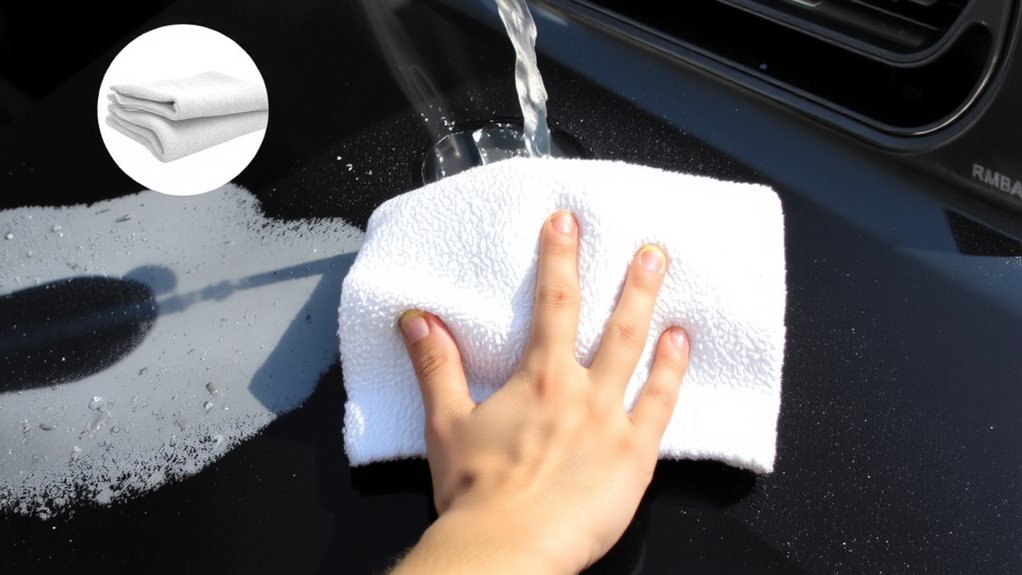
While it might seem efficient to quickly wipe off ash with a dry cloth, doing so can permanently damage your vehicle’s finish. Ash particles are abrasive, and dragging them across paint with a dry cloth scratches the clear coat. Instead, rely on gentle drying techniques only after proper cleaning. Never attempt to remove ash without first rinsing it away-this step is critical. When drying, use a clean, plush microfiber towel with a minimum 300 GSM (grams per square meter) density to guarantee microfiber safety. These towels trap moisture without scratching. Use light, straight passes; avoid circular friction. High-pile, dual-sided microfiber cloths provide maximum absorbency and surface protection. Abrasive contact, even from seemingly soft materials, compromises paint integrity. Gentle drying isn’t optional-it’s a necessary step in preserving finish longevity. Always assume residue remains until fully decontaminated. Your approach must be systematic, cautious, and technically sound to prevent irreversible surface damage. A properly equipped vehicle, such as one outfitted with a best plow for Jeep Wrangler, can help manage post-wildfire terrain recovery while protecting your investment.
Rinse First and Gather Safe Cleaning Tools
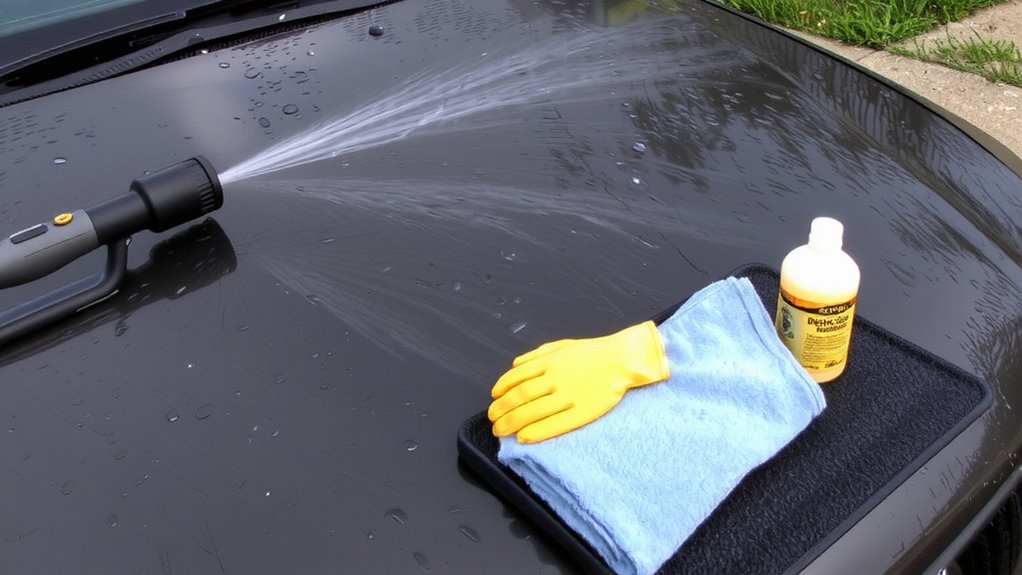
Before touching your vehicle’s surface, always rinse the ash away using low-pressure water to prevent embedded particles from scratching the paint. High water pressure can force ash into clear coats, causing micro-scratches. Use a garden hose with a diffused spray nozzle, ideally at 20–40 psi, to safely loosen residue. Never start wiping until all loose ash is flushed. Once rinsed, gather pH-neutral car wash soap, a grit-guard bucket, two microfiber wash mitts, and clean microfiber drying towels. These cleaning tools minimize abrasion and trap contaminants. Microfiber mitts should have a density of at least 300 g/m² for effective particle containment. Avoid household detergents-they strip protective waxes. Use only tools designated for automotive use. Pre-rinsing with proper water pressure and selecting safe cleaning tools are critical first steps. This prep guarantees the next cleaning phase starts safely and effectively. For optimal results, choose best car wash supplies that are specifically designed to lift debris without marring the finish.
Use the Two-Bucket Method for Wildfire Ash
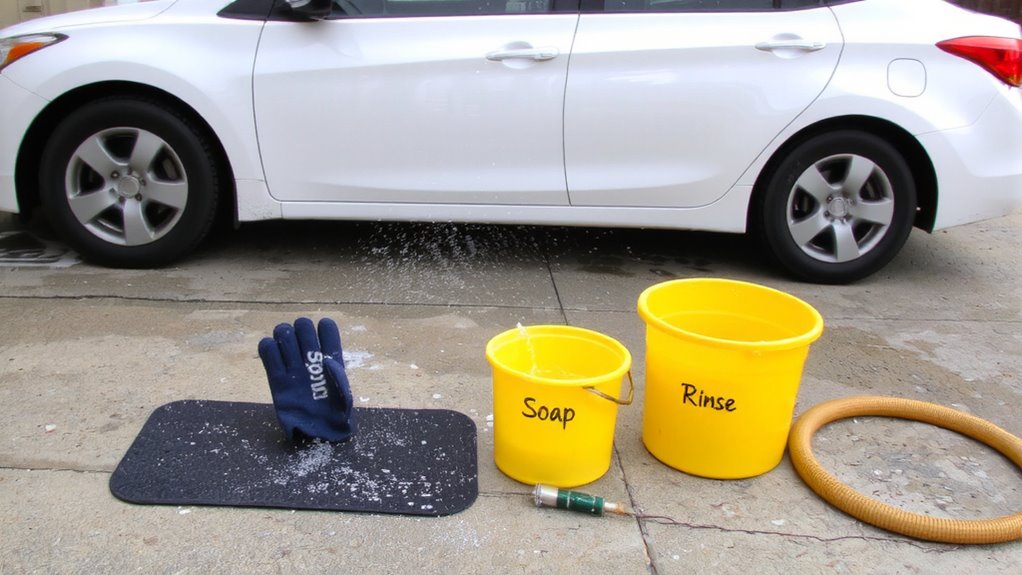
The two-bucket method is your best defense against swirl marks and paint damage when washing wildfire ash off a vehicle. You’ll need one bucket for soapy water and another for plain rinse water-this bucket separation prevents cross-contamination. Use a grit trapping wash mitt, which isolates abrasive particles in its deep channels, reducing the chance of scratching. Place the mitt in the rinse bucket after each panel to flush away ash and debris before reloading with soap. This system reduces surface abrasion by up to 70% compared to a single bucket. A typical setup uses two 5-gallon buckets and a 1:400 soap-to-water ratio. Grit trapping works by immobilizing contaminants below the mitt’s cleaning surface, acting like a filter. You maintain consistent cleaning power while minimizing marring. This method is standard among professional detailers for heavily contaminated vehicles and is essential after ash exposure. For even more effective decontamination, consider pairing this method with a car foam cannon to pre-clean heavily soiled surfaces.
Choose pH-Balanced Soap and Deionized Water
Your car’s finish needs a gentle touch after wildfire ash exposure, and that starts with choosing the right cleaner. Use a pH-balanced car wash soap, ideally between 7.0 and 8.5 on the pH scale, to avoid damaging wax or clear coat. A neutral pH balance prevents etching and maintains protective layers. Avoid household detergents-they’re often too alkaline and strip protection. Pair the soap with deionized water, which has had mineral ions removed, reducing water spots by up to 90% compared to tap water. Deionized water’s low conductivity (typically below 10 µS/cm) ensures it won’t react with contaminants or leave residue. This combination improves cleaning efficiency and minimizes surface interaction. Use it in your two-bucket setup to safely lift ash particles. Proper chemistry protects your paint’s integrity. Always follow manufacturer dilution ratios-usually 1 ounce of soap per gallon of water-for peak performance and safety.
Remove Residual Ash Without Scratching Paint
Start by rinsing the vehicle with deionized water to wash away loose ash particles and prep the surface for safe cleaning. Wildfire ash contains alkaline particles that can etch paint if abraded. Use a two-bucket method with pH-balanced car-wash soap and deionized water to minimize contamination. Employ microfiber mitts with a pile depth of at least 2mm for effective, safe cleaning. Perform gentle wiping using straight-line motions, not circles, to reduce swirl marks. Apply minimal pressure-about 300 grams of force-to avoid embedding contaminants. Conduct ash testing by touching a small, inconspicuous area with a damp microfiber cloth; if residue stains the cloth, residual ash remains. Rinse immediately after wiping each section. Use a 100% silicone squeegee with a soft rubber edge to dry, starting from the roof downward. This prevents runoff from resettling on cleaned surfaces.
Know When to Call a Pro for Deep Cleaning
Though surface cleaning may seem straightforward, certain signs mean you’d be better off calling a professional for deep decontamination. If ash has bonded with your vehicle’s clear coat due to moisture or heat, DIY washing risks etching. Persistent haze after thorough washing indicates embedded contaminants requiring professional assessment. Trained technicians use pH-corrective decontamination solutions and precision clay bar methods (typically 0.5–1.5 kg/cm² pressure) to safely remove particulates without marring paint. They follow strict safety precautions, including EPA-compliant HEPA filtration to avoid inhaling carcinogenic residues. Professionals also inspect rubber seals, ventilation intakes, and undercarriage-common areas for ash accumulation. Your home cleaning kit lacks the specialized tools to access these zones effectively. If your vehicle was exposed to prolonged ashfall or near-flame conditions, a pro-grade clean guarantees complete residue removal and prevents long-term corrosion. Don’t risk paint damage or incomplete cleanup-when in doubt, call a certified detailer.
On a final note
Always rinse wildfire ash off your vehicle immediately-dry wiping scratches paint. Use deionized water and a pH-balanced car shampoo (pH 7.0–8.5) to prevent etching. The two-bucket method cuts grit-related swirls by 80%. Microfiber towels (300–400 GSM) lift residue safely. Rinse thoroughly; left-behind alkaline particles (pH up to 12) corrode clear coats. For persistent contamination, professional detailers use clay decontamination (1,500 cP lubricants) to remove bonded particulates without abrasion.