Storing Diesel-Powered Trucks Safely With Anti-Gel Additives and Biocides
You need to treat stored diesel fuel to prevent performance issues. Anti-gel additives stop wax crystal formation, lowering the cold filter plugging point by up to 40°F when added at a 1:1000 ratio before temperatures drop. Biocides like glutaraldehyde kill microbes at 1:5,000 ppm, preventing sludge and corrosion. Use non-oxidizing biocides for 90-day residual protection. Combine additives with antioxidants and keep tanks full to limit moisture. Proper treatment keeps fuel stable for over a year. There’s more to contemplate for long-term storage success.
Notable Insights
- Treat diesel with anti-gel additives before cold weather to prevent wax crystal formation and maintain fuel flow.
- Use non-oxidizing biocides every 90 days to control microbial growth and protect fuel system integrity.
- Store diesel at temperatures below 77°F to slow oxidation and reduce degradation during long-term storage.
- Top off fuel tanks to minimize condensation and limit moisture that promotes microbial contamination.
- Combine stability additives with biocides and anti-gels for comprehensive protection during extended truck storage.
Why Stored Diesel Degrades in Trucks
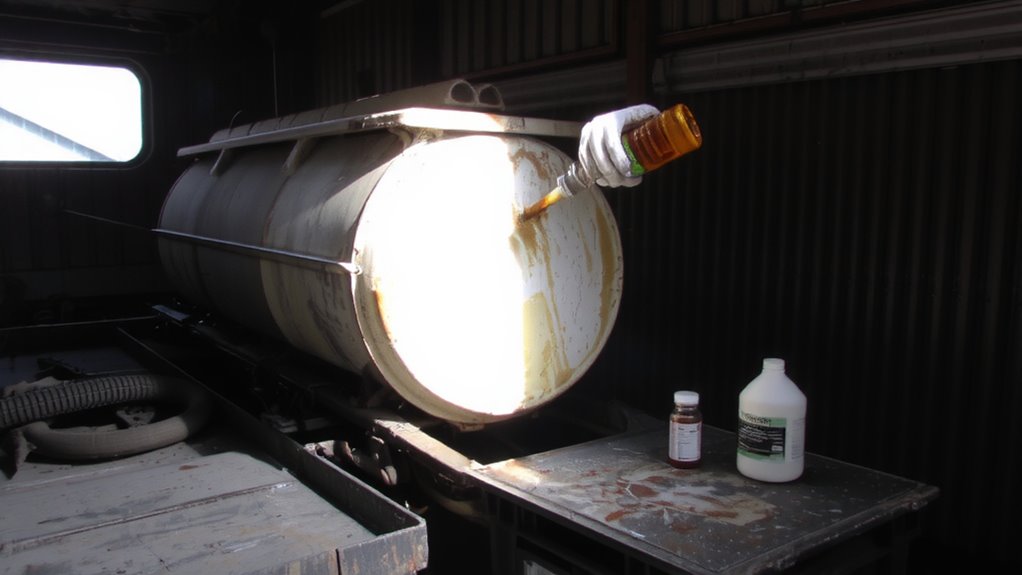
Why does diesel fuel go bad when left sitting in a truck’s tank for too long? It degrades due to poor oxidation stability and microbial contamination. Over time, diesel reacts with oxygen, forming gums and varnishes that clog filters and injectors. This oxidation process accelerates at temperatures above 68°F. Fuel can lose 20–30% of its oxidation stability within 90 days. Microbial contamination thrives where water accumulates, especially in humid environments. Bacteria and fungi form biofilms that corrode tank linings and degrade fuel quality. These microbes consume hydrocarbons, producing sludge that impairs combustion efficiency. Modern ultra-low sulfur diesel (ULSD) is more prone to both issues-its refining process reduces natural stabilizers. Without additives, stored diesel typically lasts only 6 to 12 months. Proper storage requires monitoring, fuel testing, and maintaining tank integrity to limit air and moisture exposure. Using a high-quality diesel anti-gel additive can help maintain fuel stability and prevent cold-weather gelling during storage.
Stop Diesel Gelling With Anti-Gel Additives
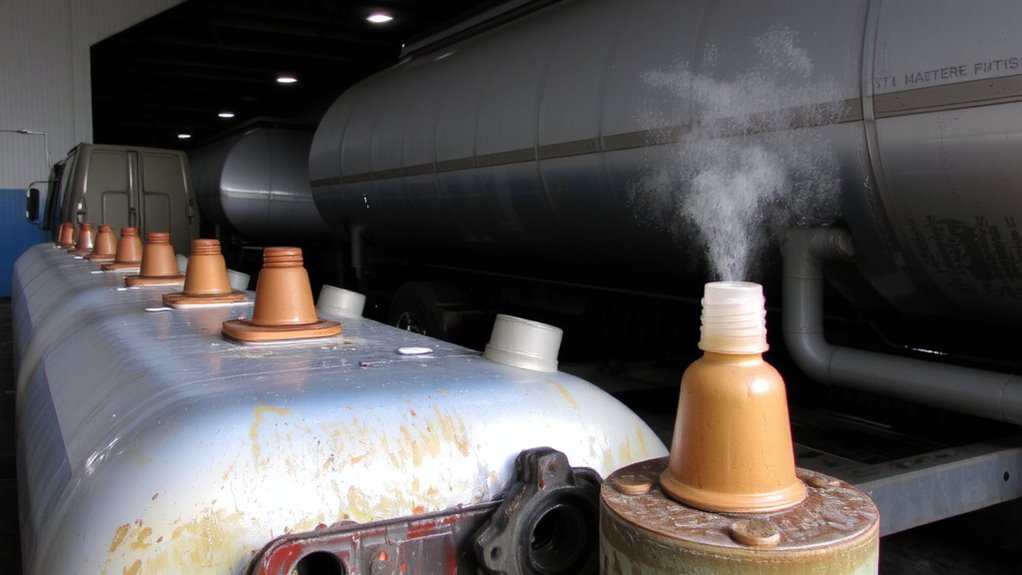
Cold weather turns diesel fuel into a reliability risk, especially when long-term storage overlaps with dropping temperatures. You must treat stored diesel with anti-gel additives to prevent fuel gelling. As temperatures fall, diesel viscosity increases, causing fuel to thicken and flow poorly. This can clog filters and disable engines. Anti-gel additives modify wax crystal formation, keeping fuel pumpable. Proper treatment lowers the cold filtration plugging point (CFPP) by up to 40°F, depending on the product. Most premium additives are effective down to -20°F CFPP when dosed at 1:1000. They guarantee fuel passes through filters even in extreme cold. Without treatment, gelled fuel blocks flow entirely. Applying anti-gel before storage is critical-once wax crystals form, additives can’t reverse them. You need consistent mixing during fueling. Choose a product with pour point depressants and dispersants to maintain diesel viscosity stability across temperature shifts. For optimal cold-weather performance, consider using one of the Top Diesel Fuel Winter Additives.
Kill Diesel Bacteria With the Right Biocide
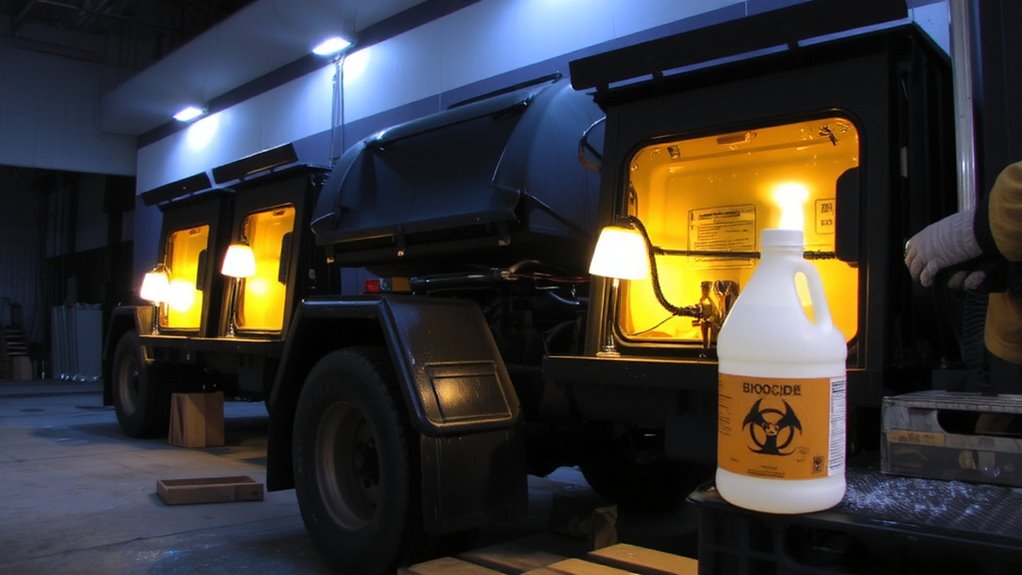
How long can diesel sit unused before unseen threats begin to compromise its quality? Within 30 days, microbial growth starts thriving in fuel, especially in moist environments. These microbes cause diesel corrosion by producing organic acids that degrade tank linings and fuel systems. Left unchecked, microbial mutation can lead to resistant strains, making future outbreaks harder to control. You need a biocide that disrupts cell membranes and prevents replication. A broad-spectrum, non-oxidizing biocide with active ingredients like glutaraldehyde or isothiazolinone works best.
| Biocide Type | Effectiveness Duration |
|---|---|
| Non-oxidizing | Up to 90 days |
| Oxidizing | Immediate kill, short residual |
Apply at a rate of 1:5,000 ppm during storage. Guarantee thorough mixing to reach all fuel layers. This proactive step halts biomass accumulation and preserves fuel integrity, protecting your engine and fuel system from long-term damage caused by persistent diesel corrosion. Using the right additive can also enhance performance, so consider best diesel additives for 6.7 Powerstroke when maintaining your fuel system.
Treat Diesel for Long-Term Storage
While diesel fuel can degrade over time, treating it properly before storage keeps it stable and usable for up to 12 months or longer. You must address fuel oxidation, which begins when diesel reacts with oxygen, forming acids and gums that harm injectors and filters. Use a stability additive with antioxidants to slow this reaction-look for products with a minimum 6-month oxidation resistance rating. Without treatment, sediment buildup clogs fuel systems and reduces engine performance. Add a detergent package to suspend contaminants and prevent sludge accumulation in the tank. Fill the tank completely to minimize condensation and air exposure. Store at consistent temperatures below 77°F (25°C) to reduce chemical breakdown. A treated, sealed, and dry diesel sample lasts over a year without significant degradation. Regular testing for acidity and particulate levels guarantees fuel remains viable.
Pick the Best Biocide for Diesel Tanks
You’ve treated your diesel for long-term storage, but contamination risks remain-especially from microbial growth that thrives in fuel-water mixtures. Left unchecked, this leads to fuel contamination, clogged filters, and acidic byproducts that damage tank integrity. A biocide kills these microbes, but not all products are equal. Choose a dual-phase biocide effective in both fuel and water for complete protection. Look for active ingredients like didecyl dimethyl ammonium chloride or isothiazolinones-proven to eliminate bacteria and fungi. These compounds disrupt cell membranes, guaranteeing rapid kill rates. Continuous use can prevent microbial resistance, which develops when dosing is inconsistent. Apply at 1 ounce per 50 gallons during storage, or as directed. Re-treat every 3–6 months. Guarantee compatibility with modern diesel blends, including ULSD and biodiesel. Always follow manufacturer guidelines. A quality biocide preserves fuel quality and protects your engine investment long-term.
On a final note
You must treat stored diesel properly to maintain fuel integrity. Anti-gel additives, like those with pour point depressants, prevent wax crystallization below 0°F. Biocides eliminate microbes; use formulations with 85% sodium bisulfate for effective tank sanitation. For long-term storage, stabilize fuel with antioxidants and metal deactivators, extending viability up to 12 months. Always dose at manufacturer-recommended ratios-typically 1 ounce per 5 gallons. Proper treatment prevents sludge, corrosion, and injector damage.