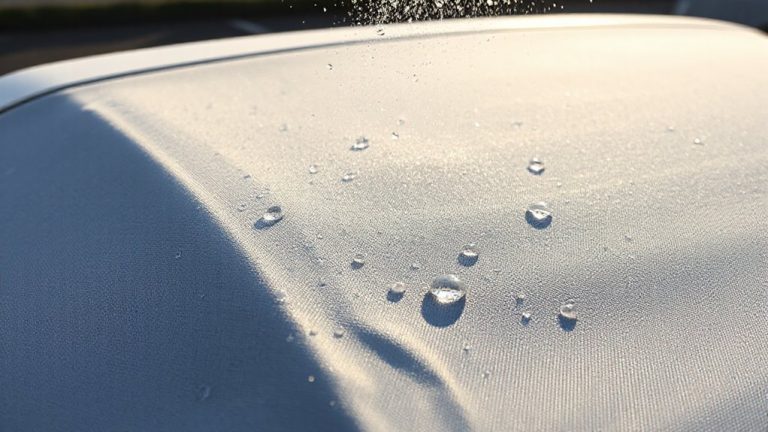
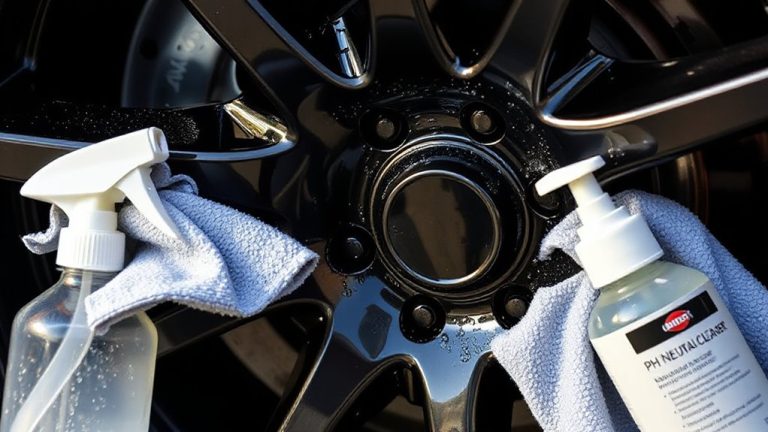
How to Prevent Swirl Marks When Drying Ceramic-Coated Black Cars
Use a 300–400 gsm microfiber towel with a 70/30 polyester-nylon blend to safely dry your ceramic-coated black car. Choose deep plush or waffle weave textures and overlock-edged borders to reduce friction. Pair it with a pH-neutral drying aid-apply 5–10 sprays per panel to sheet water and prevent sticking. Dry in straight lines with light pressure, one 2 ft² section at a time. You’ll keep the surface protected and learn how to maintain flawless results over time.
Notable Insights
- Use a 300–400 gsm, 70/30 polyester-nylon microfiber towel with split fibers to minimize friction and prevent swirls.
- Apply a pH-neutral, rinse-safe drying lubricant to reduce surface tension and allow water to sheet off smoothly.
- Dry in straight-line motions with light pressure, one 2 ft² section at a time, to avoid cross-contamination and scratches.
- Work in shaded areas and avoid direct sunlight to prevent heat-induced water spotting and premature drying.
- Wash and store microfiber towels properly using fragrance-free detergent and sealed containers to maintain cleanliness.
Choose the Best Towel for Ceramic-Coated Black Cars
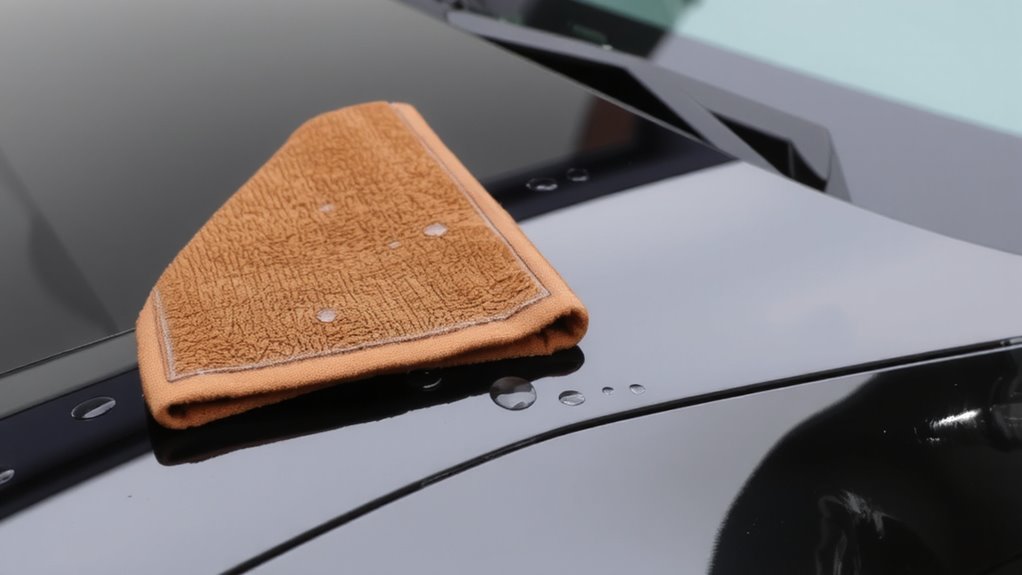
Choosing the right microfiber towel is critical when maintaining a ceramic-coated black car, as improper materials can compromise the coating or cause fine scratches. Towel thickness matters-opt for 300–400 grams per square meter (gsm) for ideal density and absorbency without excess bulk. Too thin, and the towel won’t trap debris; too thick, and it may drag trapped particles across the surface. Material softness is equally important-select 70/30 polyester-nylon blend with deep plush or waffle weave for minimal friction. These fibers reduce the risk of marring delicate coatings. High-quality towels use ultra-fine, split fibers to wick water efficiently. Always verify that the towel is labeled as “swirl-free” and specifically designed for coated surfaces. Avoid towels with stitched edges-opt for overlock or ultrasonic cutting to prevent thread snagging. For optimal results, consider a towel from a top-rated drying towel list to ensure performance and safety on sensitive finishes.
Apply a Safe Drying Aid for Maximum Lubrication
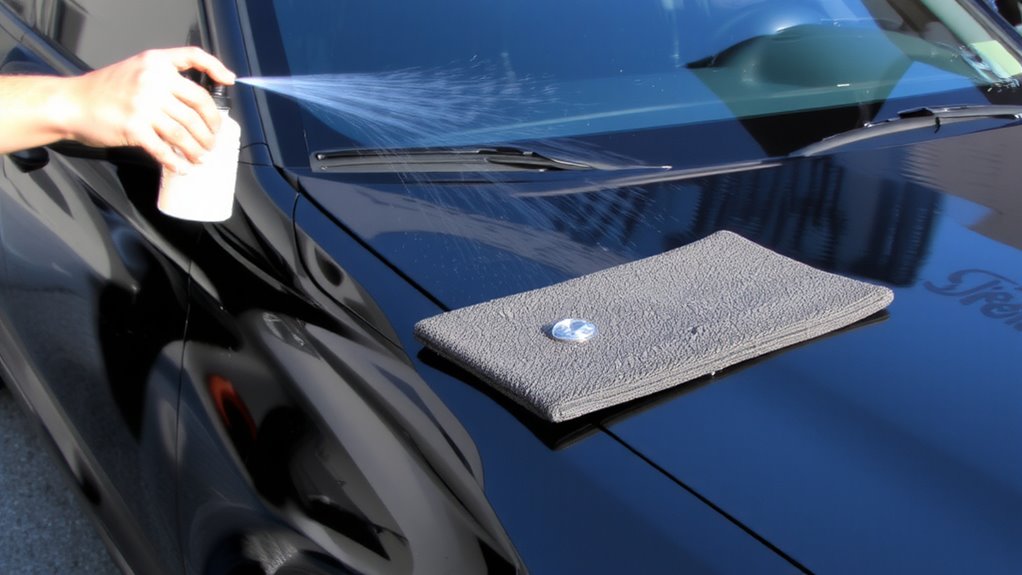
While drying your ceramic-coated car, applying a safe drying aid considerably reduces the risk of introducing swirl marks by enhancing lubrication between the towel and paint surface. Drying aids lower surface tension, allowing water to sheet off smoothly instead of beading. This minimizes drying friction, which is a leading cause of micro-scratches on dark finishes. Use a rinse-safe drying lubricant with a pH-neutral formula-typically between 6.5 and 7.5-to preserve your ceramic coating’s integrity. Apply 5–10 sprays per panel before towel-drying. These solutions often contain distilled water, surfactants, and light polymers that enhance slip without residue. Unlike household soaps, they’re engineered to avoid coating breakdown. High-quality drying aids reduce contact resistance by up to 40%, making the towel glide effortlessly. This guarantees efficient water removal while maintaining your coating’s hydrophobic properties and long-term performance. For best results, choose a best car shampoo that complements your drying process and maintains the cleanliness and protection of your vehicle’s finish.
Dry Your Black Car Without Swirls: Step by Step
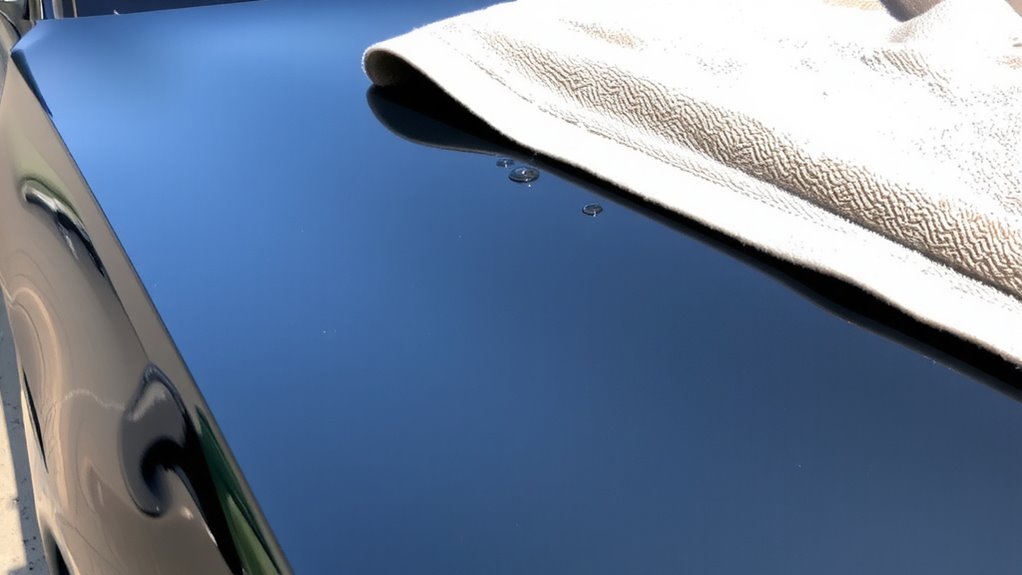
If you’ve just washed your black, ceramic-coated car, drying it correctly is critical to avoid fine scratches. Start by gently removing excess water with a clean, microfiber drying towel-ideally 70/30 polyester-rayon blend, 360 GSM, and at least 16”x24”. Use light pressure and soft, straight-line motions; never wipe in circles. Apply a dedicated drying aid before toweling to enhance lubricity and reduce friction. Avoid air drying, as evaporating water leaves mineral deposits and creates micro-etching risks on dark paint. Work in shaded areas to minimize heat exposure, which accelerates water spotting and can compromise the ceramic layer’s surface energy. Dry one section at a time-no larger than 2 ft²-to prevent droplet drying. Use a second, dry towel to wick away residual moisture along panel edges. Keep towels clean and replace them when damp or dirty. For best results, consider investing in a high-quality car microfiber towel kit, which typically includes multiple towels optimized for different drying tasks and paint sensitivities. This method preserves your coating’s integrity and prevents swirls effectively.
Skip These 5 Drying Mistakes on Dark Paint
Often, improper drying techniques undo the protection your ceramic coating provides-especially on dark paint where defects are more visible. Using harsh chemicals degrades the coating’s surface energy, reducing its hydrophobic properties and leaving a residue that attracts contaminants. Never wipe your car under direct sunlight; surface temperatures above 140°F accelerate water spotting and hinder even drying. Avoid rough microfiber towels with pile heights under 3mm-these lack sufficient absorbency and increase friction. Don’t use old cotton towels; their coarse fibers embed contaminants that create micro-scratches. Applying excessive pressure during drying compromises the coating’s thickness, measurable with a digital coating gauge. Instead, use clean, plush microfiber drying aids with split fibers for capillary action. Glide them gently over the surface using overlapping passes. Proper technique preserves both gloss and coating integrity.
Wash and Store Your Drying Towels Correctly
A clean drying towel starts with proper washing and storage. You must maintain storage hygiene to prevent contamination that leads to swirls. Wash towels after every use in cold water with a fragrance-free detergent-no fabric softener, ever. They leave residues that degrade absorption and scratch coatings. Dry them on low heat to preserve microfiber integrity.
Towel folding matters: always fold clean, dry towels to minimize surface contact and keep them ready for scratch-free drying.
| Towel State | Folding Method | Storage Container |
|---|---|---|
| Clean & Dry | Quarter-fold | Sealed bin |
| Used | Not folded | Separate laundry bag |
| Washing | Unfolded | Mesh laundry bag |
| Drying | Hanging | Dryer rack |
Use dedicated, labeled bins for storage hygiene.
Why Black Cars Show Swirls (And How to Prevent Them)
Why do swirl marks seem to appear out of nowhere on black cars? It’s not magic-it’s physics. Black paint shows swirls more because of light reflection. The dark surface acts like a mirror, highlighting every microscopic defect. Your car’s paint depth matters too. Modern vehicles have thinner clear coats-often just 80–120 microns-making them prone to visible abrasions. Swirls scatter light, creating web-like patterns you can’t miss. Ceramic coating protects, but it can’t hide existing defects. To prevent them, avoid rough towels or improper drying techniques. Use only clean, plush microfiber towels with a pile height of at least 300 g/m². Dry in straight lines, not circles. Reduce pressure-excessive force cuts through the coating over time. Proper maintenance preserves both coating integrity and paint depth.
On a final note
Dry your ceramic-coated black car with a 70/30 polyester-rayon microfiber towel, 16 oz/yd² density, to prevent swirls. Use a dedicated drying aid with silicone-free lubricants for a slick surface. Apply in straight-line motions, not circles, to avoid visible marring. Always wash towels with unscented detergent, air dry, and store sealed. Avoid bleach, fabric softener, and high heat. Swirls show easiest on dark surfaces due to light diffraction; precision matters.