How to Care for Black Painted Alloy Wheels to Prevent Fading
You must clean your black painted alloy wheels weekly with a pH-neutral cleaner to preserve their 0.5 to 1.0 mil clear coat. Avoid acidic products and abrasive tools that cause micro-scratches. Rinse with low-pressure water below 1,200 psi and dry with a microfiber towel. Apply a silica-based coating every six months for UV and heat protection up to 600°F. Consistent care prevents oxidation, etching, and fading-there’s a smarter way to maintain long-term wheel integrity.
Notable Insights
- Wash weekly with pH-neutral cleaner to remove brake dust and road contaminants that accelerate fading.
- Use soft-bristle brushes and microfiber towels to avoid micro-scratches during cleaning.
- Apply a silica-based ceramic coating every six months to shield against UV damage and thermal cycling.
- Rinse with low-pressure water under 1,200 psi to prevent clear coat and seal damage.
- Park in shade or use wheel covers to minimize UV exposure and slow photo-oxidative degradation.
Why Black Painted Alloy Wheels Fade
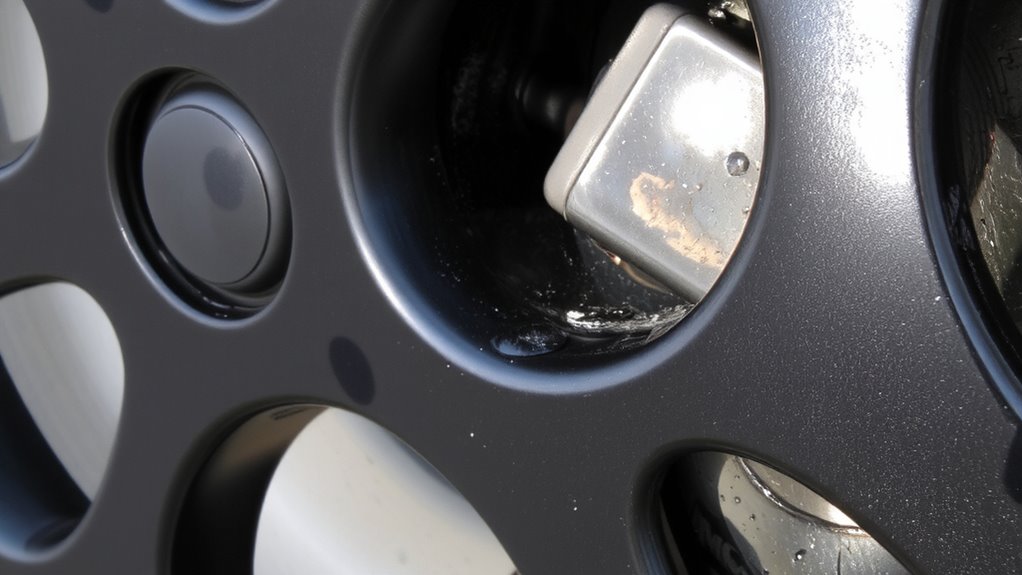
While exposure to environmental elements plays a major role, it’s the combination of UV radiation, road chemicals, and thermal cycling that gradually breaks down the clear coat over black painted alloy wheels. UV rays degrade polymer chains in the clear coat, reducing its thickness by up to 5 microns annually. Chemical exposure from brake dust, road salts, and industrial pollutants accelerates oxidation, etching into the surface. You face increased risk when driving in urban or winter climates where corrosive agents are common. Heat expansion occurs as wheels reach temperatures over 150°F during braking, causing the metal and coating to expand at different rates. This repeated stress creates microfractures, allowing moisture and contaminants to penetrate. Over time, this leads to hazing, discoloration, and eventual clear coat failure. The result? Your black finish fades, losing gloss and depth. Prevention relies on understanding these forces, not just cleaning.
How to Clean Black Alloy Wheels Safely
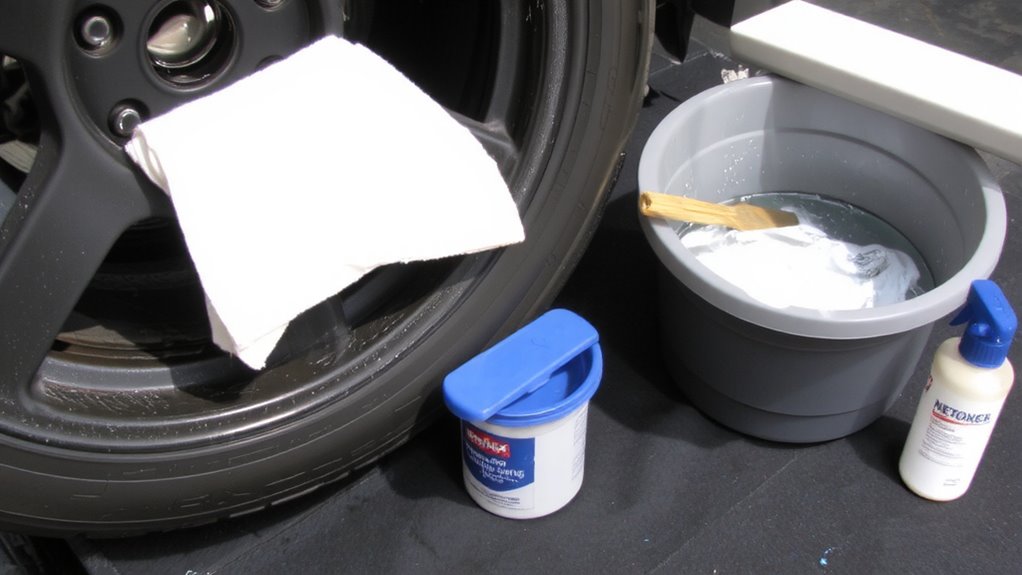
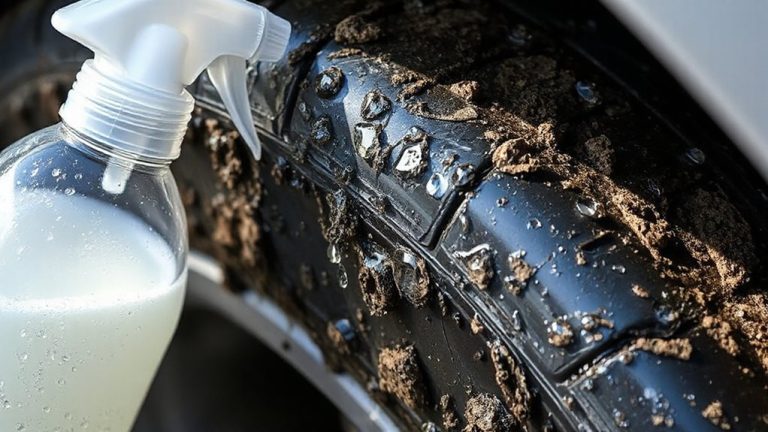
Start with a pH-neutral wheel cleaner to avoid damaging the delicate clear coat on your black alloy wheels. These coatings are typically 0.5 to 1.0 mil thick and degrade under acidic or alkaline solutions. Spray the cleaner evenly, let it dwell for 2–3 minutes, then agitate gently with a soft-bristle brush. Avoid steel wool or abrasive pads-they create micro-scratches that compromise the finish. Rinse thoroughly with low-pressure water to prevent spotting. For wheels with curb rash or light oxidation, consider wheel restoration methods like color-matched touch-up paint or professional refinishing. Never skip rinsing, as residue accelerates clear coat failure. After cleaning, dry with a microfiber towel to prevent watermarks. Finish polishing isn’t always needed after washing but helps maintain luster during restoration. Use a non-abrasive polish designed for clear-coated alloys. Regular maintenance prevents buildup, preserving both appearance and structural integrity. For optimal results, choose a cleaner specifically formulated for black wheels, such as one of the top picks for black wheels.
Best Cleaners for Black Painted Wheels
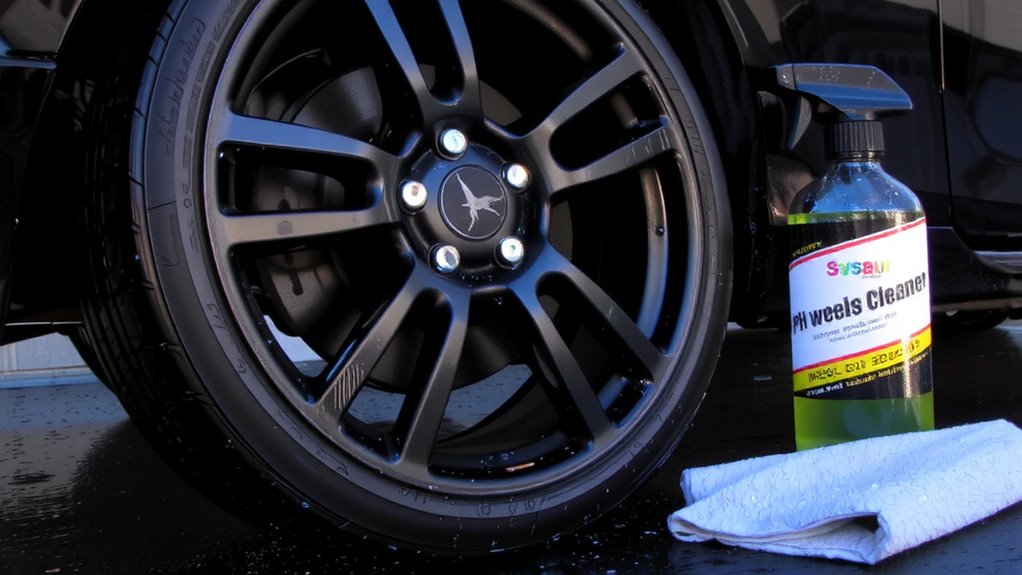
Because the clear coat on black painted alloy wheels is especially vulnerable to chemical degradation, choosing the right cleaner is critical for long-term protection. You must avoid abrasive polishes and harsh degreasers, which strip protective layers and accelerate fading. Instead, opt for pH-balanced, non-caustic formulas specifically designed for coated finishes. Based on performance and formulation, the best black rim cleaners effectively remove contaminants without compromising the wheel’s protective coating.
| Product Type | Recommended Use |
|---|---|
| pH-neutral wheel cleaner | Safe for daily use; maintains clear coat integrity |
| Non-acidic brake dust remover | Dissolves grime without etching surfaces |
| Water-based degreaser | Effective yet gentle on protective sealants |
| Polymer-infused wash solution | Enhances hydrophobic properties |
| Clay-friendly detailing spray | Prepares surface without micro-scratches |
These cleaners preserve finish depth and sheen. Always verify compatibility with your wheel’s coating. Using improper products-even occasionally-can compromise performance and appearance over time.
How Often to Wash to Prevent Fading
You’ve picked the right cleaner-now protect your investment by washing at the right frequency. Maintain a weekly washing schedule to prevent grime buildup that accelerates fading. Contaminants like brake dust and road salt bond to black paint, creating hotspots for oxidation. A consistent wheel frequency of once every seven days removes these before they etch the finish. In harsh conditions-coastal areas or winter roads-increase to twice weekly. Use pH-neutral soap and a soft microfiber mitt to preserve clear coat integrity. Avoid high-pressure washes above 1,200 psi, which can force water past seals. Rinse thoroughly at 40–60°C to dissolve oily residues without thermal shock. Immediate cleaning after exposure reduces chemical dwell time. Follow this regimen to maintain luster and prolong refinishing intervals. Proper washing schedule adherence cuts long-term maintenance costs by up to 30%. For optimal results, include a dedicated wheel cleaning kit in your routine to ensure thorough removal of stubborn brake dust and contaminants.
Protect Black Wheels From UV Damage
While sunlight enhances the deep gloss of black painted alloy wheels, prolonged UV exposure degrades the clear coat through photo-oxidative breakdown. You need effective UV protection to prevent this damage. Modern wheel coatings with UV inhibitors absorb and scatter harmful rays, reducing degradation by up to 70%. Look for products offering a UV protection rating of at least UPF 50+. These sealants form a sacrificial layer, shielding the paint from solar radiation. High-quality ceramic coatings also provide superior heat resistance, withstanding temperatures up to 600°F. This heat resistance prevents micro-cracking and reduces thermal stress on the clear coat. Apply a silica-based coating every six months for continuous defense. It bonds molecularly with the surface, creating a durable, transparent barrier. Parking in shade or using wheel covers adds extra protection. Consistent use of UV-resistant products maintains finish integrity and extends the life of your wheels.
Mistakes That Ruin Black Alloy Finish
Neglecting UV protection opens the door to more than just fading-it sets the stage for avoidable errors that permanently damage your black alloy finish. Using abrasive cleaners etches the clear coat, reducing its thickness from a factory-standard 50–75 microns to under 25, compromising protection. You accelerate wear by ignoring braking friction residues; the iron particles embed into the surface, causing pitting if not removed with a pH-neutral wheel cleaner. Applying improper polish generates heat, softening the clear coat and making it vulnerable to cracking. Curb contact, even at low speeds, chips the finish at impact points, exposing the bare aluminum to oxidation. Avoid driving too close to curbs-maintain at least 6 inches clearance. Never use household detergents; they strip protective layers. Regular inspections reveal early damage, letting you address issues before they spread. Prevention is cheaper than refinishing.
On a final note
You must maintain black painted alloy wheels with precision. Use pH-neutral cleaners-never acid-based or abrasive compounds-to avoid clear coat degradation. Wash every 7 to 10 days to limit brake dust corrosion. Apply ceramic coatings with 9H hardness rating for UV and chemical resistance. Avoid high-pressure rinses above 1,200 psi to prevent paint lifting. These steps guarantee long-term finish integrity and fade resistance.