How to Match Speaker Efficiency to Hybrid Vehicle Electrical Systems
You need high-efficiency speakers to match your hybrid’s limited electrical system. Use 90+ dB sensitivity drivers-like 95 dB models that need just 0.3 watt for 90 dB output-so they produce strong sound with minimal power. This reduces strain when the engine cycles off. Pair them with a hybrid-compatible amplifier drawing under 50 amps. Match 4-ohm speakers to your system’s nominal impedance to avoid overloading. There’s more on optimizing performance under real driving conditions.
Notable Insights
- Choose speakers with 90+ dB sensitivity to maximize volume while minimizing power draw from the hybrid electrical system.
- Higher speaker efficiency reduces strain on the 12-volt system during engine-off or idle-stop conditions.
- Match 4-ohm speakers to hybrid vehicles’ OEM electrical systems to maintain stable impedance and prevent amplifier overload.
- Use low-power, hybrid-rated amplifiers that draw under 50 amps and deliver efficient, stable output.
- Test system performance in real-world driving to ensure consistent sound without exceeding current or voltage limits.
Understand How Hybrids Limit Your Stereo’s Power
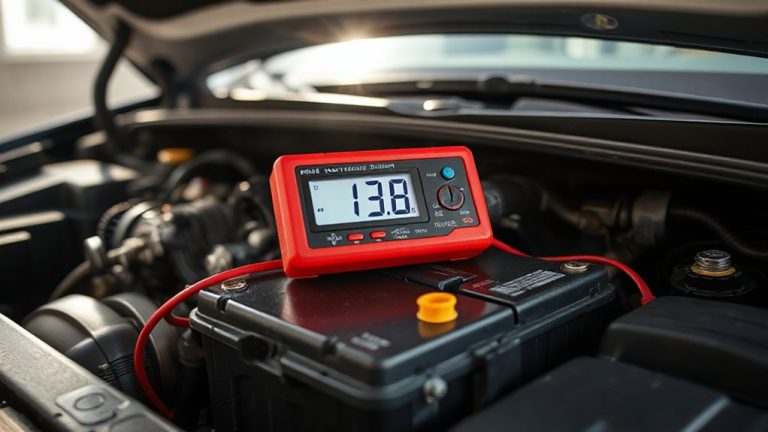
While traditional vehicles rely on consistently running internal combustion engines to power electrical systems, hybrid vehicles use a combination of gasoline engines and electric motors that can shut off during idle or low-speed driving, directly affecting available power for your stereo. This intermittent engine operation limits consistent voltage supply, requiring you to prioritize battery conservation. Most hybrids provide only 12 volts, like conventional cars, but power delivery is less stable when the engine is off. You must guarantee system compatibility between your head unit, amplifier, and speakers to avoid overloading the electrical system. Inefficient speakers demand higher amplifier output, increasing current draw. This strains the vehicle’s auxiliary battery and may trigger low-voltage warnings. Design your audio system with low-impedance stability and moderate power requirements to maintain efficiency. Prioritize components rated for 12V operation with minimal peak surges.
Use 90+ dB Speakers to Reduce Electrical Load
Every decibel counts when you’re powering a stereo in a hybrid vehicle, and choosing speakers with a sensitivity rating of 90 dB or higher can markedly reduce the strain on your 12-volt electrical system. High efficiency speakers deliver more sound per watt, meaning you get louder audio without demanding extra power. This low draw design is essential for preserving battery life and avoiding alternator overload. Speakers with 90+ dB sensitivity require less amplifier output, which conserves energy and maintains system stability. Below is a comparison of common speaker efficiencies:
| Sensitivity (dB) | Power Needed for 90 dB Output | Electrical Load |
|---|---|---|
| 85 | 3.2 watts | High |
| 88 | 1.6 watts | Moderate |
| 90 | 1.0 watt | Low |
| 92 | 0.6 watt | Very Low |
| 95 | 0.3 watt | Minimal |
High efficiency equals low draw-critical for hybrid compatibility.
Pair With a Low-Power Amplifier Designed for Hybrids
Since your hybrid’s electrical system can’t handle excessive loads, pairing high-efficiency speakers with a low-power amplifier designed specifically for hybrid vehicles makes perfect sense. These amplifiers typically draw less than 50 amps, reducing strain on the 12-volt system. They use advanced signal processing to optimize audio quality without increasing power demands. Built-in thermal management systems prevent overheating during extended use, even in compact engine compartments with limited airflow. Many hybrid-rated amps deliver 45–60 watts RMS per channel at 4 ohms, aligning well with 90+ dB speakers. Efficiency ratings often exceed 75%, minimizing energy loss as heat. Their compact housings fit tightly in space-constrained hybrids. You’ll notice cleaner sound and consistent performance because the amp maintains signal integrity under variable load conditions. Unlike high-output amplifiers, these units won’t trigger voltage warnings. Properly matched, they extend battery life and support reliable operation without modifying your vehicle’s electrical architecture.
Match Speaker Impedance to Prevent System Overload
If your hybrid’s audio system isn’t properly impedance-matched, you risk overloading the electrical circuit and damaging components. An impedance mismatch forces the amplifier to deliver more current than designed, increasing heat and stress. Most hybrid vehicles use 4-ohm nominal speaker systems; pairing them with 2-ohm speakers drops total impedance, demanding excessive power. This overloads OEM amplifiers not built for low-impedance loads. Matching 4-ohm speakers guarantees stable operation and activates built-in power protection circuits. These systems monitor output and reduce signal if unsafe conditions occur. Without proper matching, even efficient speakers strain the electrical architecture. Always verify speaker impedance before installation. Use multimeters to test real-world impedance, not just rely on labels. A correct match maintains voltage regulation, prevents clipping, and preserves audio integrity. Impedance alignment isn’t optional-it’s essential for system longevity and consistent performance across all driving modes.
Balance Volume and Clarity Without Draining the Battery
Though power efficiency matters in every aspect of a hybrid vehicle’s design, it’s especially critical when tuning the audio system for balanced volume and clarity. You need volume consistency across all cabin zones, which efficient speakers deliver without excessive wattage. High-efficiency drivers (88–92 dB/W/m) require less amplifier power, reducing strain on the 12V system. This efficiency preserves battery life while maintaining audio precision, even at highway speeds. Use speakers with flat frequency response (±2 dB from 80 Hz–15 kHz) to guarantee accurate sound reproduction. Match sensitivity ratings across front and rear channels to prevent hotspots. Lower power demands mean smaller amplifiers, saving space and energy. Efficient designs minimize distortion at mid-level volumes, enhancing intelligibility. Think of it like fuel economy-more output per watt means longer playback without compromise. Balancing clarity and volume isn’t about loudness; it’s about smart, sustainable performance tuned to your hybrid’s electrical limits.
Test Your Setup for Real-World Driving Efficiency
You’ve selected high-efficiency speakers with ideal sensitivity and flat frequency response-now verify they perform under real driving conditions. Real world testing guarantees your audio system maintains clarity and output without overloading the hybrid vehicle’s electrical system. Drive in varied environments: city streets, highways, and rural roads to simulate typical usage. Monitor amplifier current draw; efficient setups should draw under 10 amps at moderate volume. Test at 60 mph highway speeds, when wind and road noise peak, to evaluate if speakers compensate without distortion. Use a sound pressure meter: aim for 85–90 dB at ear level, indicating sufficient loudness. Verify consistent frequency reproduction using test tones from 50 Hz to 15 kHz. Real world testing reveals performance gaps specs alone can’t predict. Proper evaluation under diverse driving conditions guarantees reliability, efficiency, and audio fidelity. This process confirms your system delivers excellent sound without taxing the hybrid’s electrical load.
On a final note
You need efficient speakers to match your hybrid’s electrical limits. Choose 90+ dB sensitivity models to maximize output per watt. Pair them with a low-current amplifier, like a Class D unit drawing under 10 amps at full load. Use 4-ohm speakers to match most hybrid head units and prevent voltage drops. This setup delivers clear sound at 85–95 dB at cruising volume without straining the 12-volt system.