Disconnect & Reconnect a Car Battery Safely: 10mm Wrench Guide
Always disconnect the negative terminal first-it’s grounded to the chassis, and removing it breaks the circuit, preventing sparks. Use a 10mm wrench and insulated tools to loosen the black negative cable, then the red positive. Clean terminals with a brass brush if corroded. Reconnect positive first, then negative, tightening to 5–8 Nm. After connecting, turn the ignition on and wait 5–10 minutes for modules to reset. A full system check guarantees no fault codes remain-there’s more to get right for long-term performance.
Notable Insights
- Always disconnect the negative terminal first to break the circuit and reduce the risk of short-circuiting.
- Use insulated tools and wear protective eyewear and gloves to guard against sparks and acid exposure.
- Clean terminals with a baking soda solution or dedicated cleaner to remove corrosion before reconnection.
- Reconnect the positive terminal first, then the negative, ensuring correct polarity to prevent electronic damage.
- After reconnecting, turn the ignition on and wait 5–10 minutes for vehicle modules to recalibrate before starting.
Disconnect the Negative Terminal First: Here’s Why
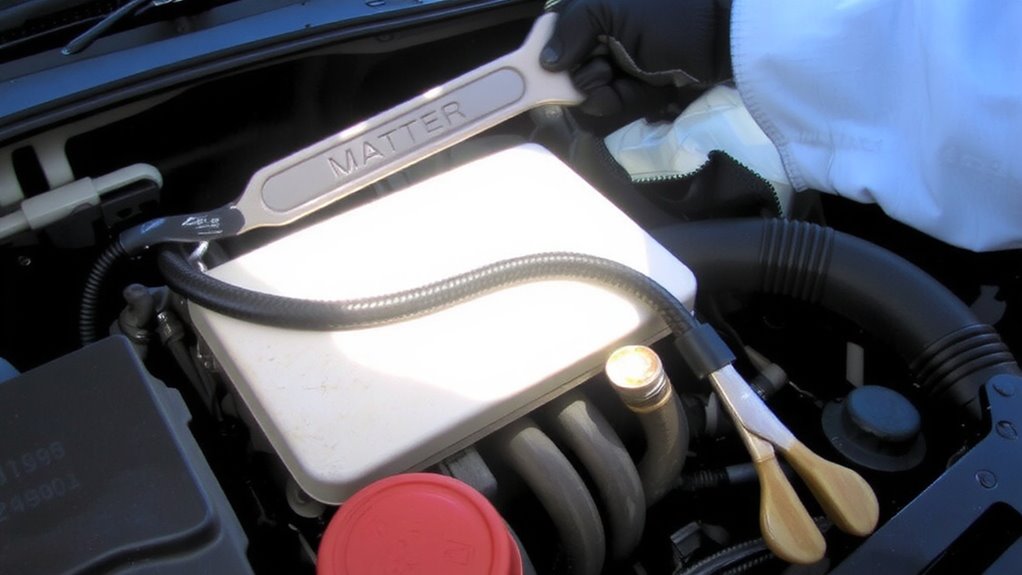
While it might seem like a small detail, disconnecting the negative terminal first is a critical safety step you should never skip. The negative terminal connects to your car’s chassis, completing the circuit. If you disconnect the positive first, your wrench could bridge the connection between positive and any metal part, causing dangerous electrical shorts. Removing the negative first breaks the circuit, minimizing risk. Battery corrosion often builds up around terminals, creating conductive paths that increase short-circuit potential. Corrosion, typically white or greenish, stems from hydrogen gas and electrolyte leakage. Even minor buildup can facilitate current leakage. Always inspect for corrosion before handling. Clean it with a baking soda mix if needed. For more effective results, consider using a dedicated car battery terminal cleaner to thoroughly remove stubborn corrosion and ensure optimal electrical contact. Use a 10mm wrench for most vehicles-the standard terminal bolt size. Following this procedure protects sensitive electronics and prevents sparks near the battery, where hydrogen fumes may accumulate.
Gather These Tools Before You Start

A well-stocked toolkit makes battery service safer and faster. You’ll need basic hand tools: a 10mm and an 8mm wrench, or a combo spanner set, to loosen battery terminals. Many modern vehicles use SAE sizes, but metric is more common. A terminal cleaner brush with brass bristles guarantees corrosion removal without damaging lead posts. Always wear safety gloves made of nitrile or neoprene-they resist acid exposure and improve grip. Pair them with ANSI Z87.1-rated protective eyewear to shield against sparks or battery acid. Insulated tools reduce the risk of short-circuiting. Include a battery terminal protector spray and a wire brush for post-cleaning. Store tools in a dedicated container. Having everything ready prevents mid-job delays. A clean, organized setup improves accuracy. Use a torque wrench if specifications require precise re-tightening, usually 5–8 Nm for most terminals. A high-quality tool set ensures you have all the necessary components in one durable, easily accessible kit.
How to Safely Disconnect Your Car Battery
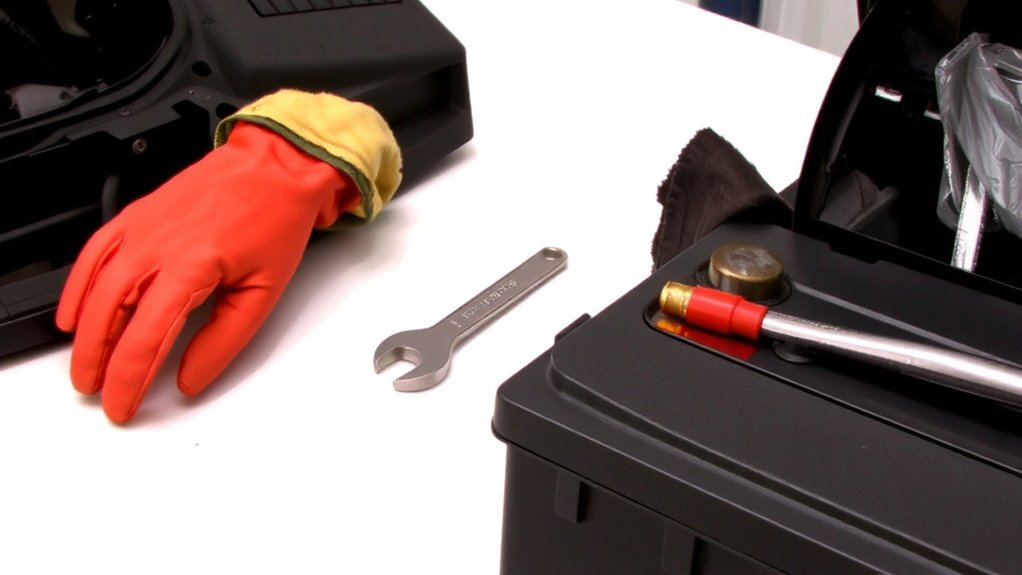
You’ve gathered the necessary tools and protective gear, so now you’re ready to begin removing your car battery. Always disconnect the negative terminal first to reduce the risk of electrical shorts. The negative cable connects to the chassis, and removing it first breaks the circuit, preventing current flow. Use a wrench to loosen the nut, then gently lift the cable off. Inspect for battery corrosion-white or green crusty deposits-around the terminals. Corrosion increases resistance and can impair starting. Clean it with a baking soda solution if needed. Then disconnect the positive terminal using the same method. Secure both cables away from the battery. Most automotive batteries are 12-volt lead-acid types, so mishandling can cause sparks or short circuits. Handle with care. Using a dedicated battery disconnect tool can simplify this process and enhance safety by providing a secure, insulated connection point.
Reconnect the Battery in the Right Order
Once the battery maintenance or replacement is complete, reconnecting the battery in the correct sequence minimizes the risk of electrical surges and potential damage to onboard systems. Always reconnect the positive terminal first, then the negative. This order reduces the chance of short circuits. Guarantee battery polarity is correct-reversing it can fry sensitive electronics like the ECU. Positive terminals are usually marked with a “+” and coded red; the negative is “−” and black. Before securing, inspect for terminal corrosion. Clean any white or green buildup with a wire brush and baking soda solution. Corrosion increases resistance and reduces conductivity, leading to poor starts or voltage drops. Tighten connections snugly using a wrench-typically 5–8 Nm torque. A loose terminal causes arcing. Finally, verify secure fitment to maintain consistent power flow.
Reset and Test Systems After Reconnection
With the battery securely reconnected and terminals properly tightened, it’s time to restore and verify system functionality. Turn the ignition to the “on” position without starting the engine; this initiates a system reboot, allowing onboard computers to recalibrate. Many modern vehicles reset fuel trims, idle settings, and transmission shift points during this process. Wait 5–10 minutes to guarantee all modules, including the PCM and BCM, complete their initialization. Start the engine and verify normal operation-check dash lights, power accessories, and HVAC performance. For thorough verification, perform a diagnostic scan using an OBD2 scanner to confirm no stored codes or soft faults exist. The scan detects subtle communication errors or sensor anomalies that might not trigger a check engine light. A successful scan ensures peak efficiency and emissions compliance. Retest under load if issues are detected.
On a final note
You’ve disconnected and reconnected your car battery correctly. Always disconnect the negative terminal first to prevent short circuits. Use a 10mm wrench for lead-acid batteries with SAE posts. Reconnect positive then negative in clean, tight connections. Reset onboard systems-clock, radio, ECU-especially after prolonged disconnection. Voltage should read 12.6V across terminals when fully charged. A poor connection can cause 0.3V or more drop, leading to starting issues. Test with a multimeter for accuracy.