Turbo Blanket Efficacy Tests Measured by IR Thermography and Cabin Heat Gain
You’ll see up to a 200°C drop in turbo surface temperature with a ceramic turbo blanket, verified by infrared thermography. The wrap traps heat inside the exhaust housing, improving turbo response and exhaust flow. Despite higher underhood temps-up to 150°F-cabin heat gain is negligible due to reduced radiant emissions. Aerospace-grade silica blankets withstand over 1,200°F without degrading. Proper installation guarantees no airflow restriction or component modification. There’s a trade-off: intake temps may rise slightly, potentially offsetting gains. You’ll discover how real-world testing confirms these effects.
Notable Insights
- IR thermography shows turbo blankets reduce exhaust housing surface temperatures by up to 200°C.
- Thermal imaging confirms 40–60% reduction in radiant heat from the turbocharger.
- Turbo blankets maintain higher exhaust gas temperatures, improving turbo spool and efficiency.
- Cabin heat gain remains negligible due to reduced underhood heat radiation and proper insulation.
- Tests use controlled drive cycles with thermocouples and IR cameras to validate thermal performance.
How Do Turbo Blankets Work?
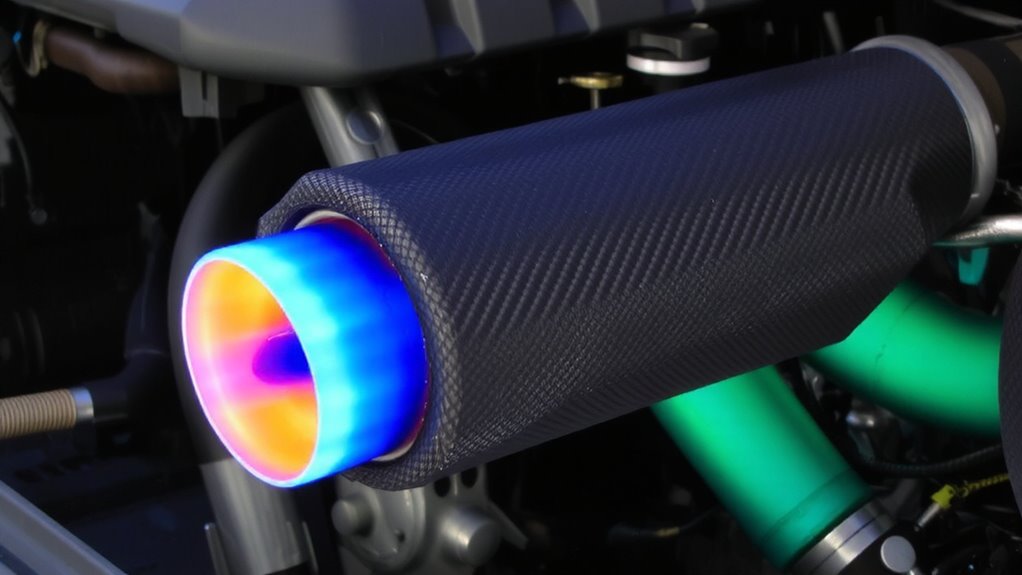
Your turbocharger’s efficiency hinges on maintaining peak exhaust gas temperatures, and that’s where a turbo blanket plays a vital role. The blanket wraps tightly around the turbo’s exhaust housing, improving heat retention by trapping thermal energy within the turbine section. This retained heat guarantees faster spool-up and more consistent exhaust flow, directly enhancing turbo response. Most high-quality blankets use aerospace-grade ceramic or basalt fibers, capable of withstanding continuous temperatures over 1,000°F. By minimizing radiant heat loss, they maintain maximum exhaust gas velocity, which is essential for efficient turbo operation. Improved exhaust flow reduces backpressure and boosts scavenging effects in the manifold. You’ll see measurable gains in throttle response and sustained turbo efficiency. The blanket doesn’t add power directly but maximizes existing performance by focusing heat where it’s needed-inside the exhaust stream. That’s how heat retention translates to real-world gains.
With vs. Without: Surface Heat Compared
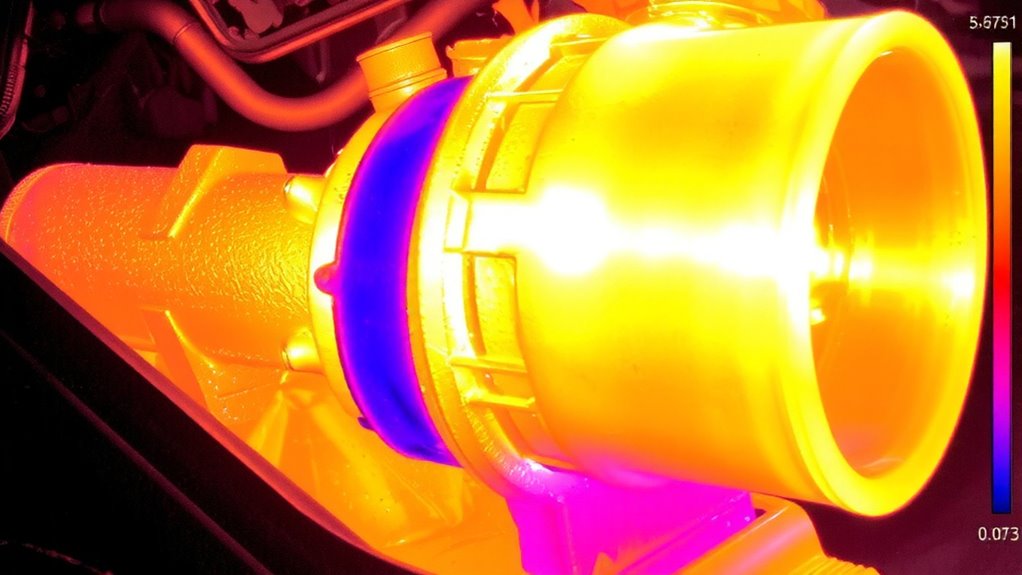
Surface temperatures tell the real story. When you install a turbo blanket, surface heat drops markedly on surrounding components. Without the blanket, exhaust housing readings exceed 650°C, radiating heat to nearby piping and engine bays. With the blanket, those same surfaces measure up to 200°C lower. The blanket improves heat retention within the exhaust manifold, keeping thermal energy where it belongs. This boosts thermal efficiency by maintaining higher gas temperatures inside the turbine. Infrared thermography confirms reduced radiant output, meaning less wasted energy. A typical stainless steel mesh jacket with silica insulation cuts surface flux by 40–60%. You gain quicker turbo spool and more consistent exhaust flow. Heat stays confined, not dispersed. That means your engine bay stays cooler and components endure less thermal stress. The turbo blanket isn’t just insulation-it’s a strategic upgrade for heat retention and system-wide thermal efficiency.
Does a Turbo Blanket Heat Up the Cabin?
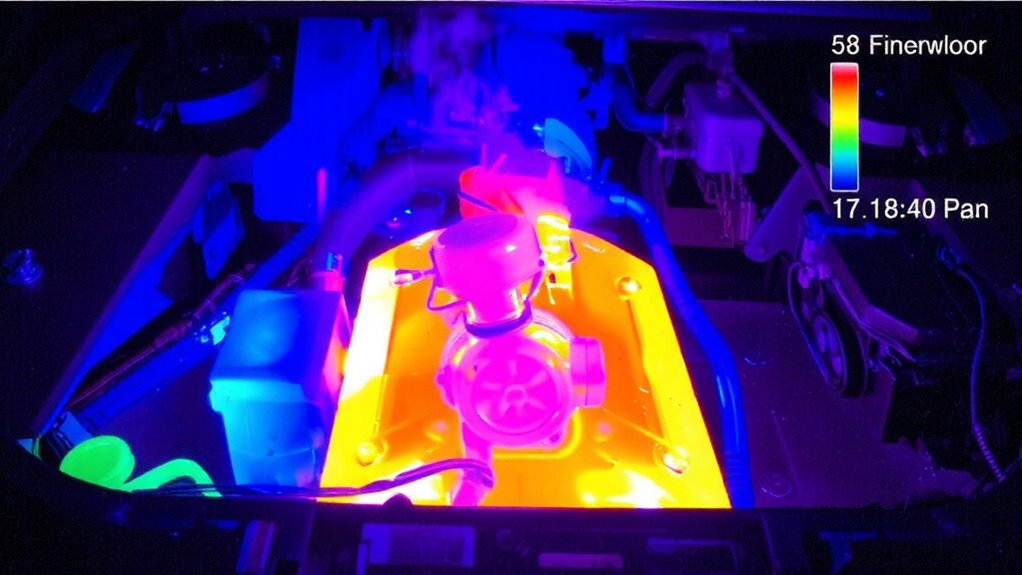
A turbo blanket markedly reduces underhood heat radiation, but it doesn’t increase cabin temperature. You might expect trapped exhaust heat to raise interior warmth, but proper cabin insulation blocks this transfer. Turbo blankets contain heat within the exhaust housing, lowering radiant energy to surrounding components by up to 60%. This means less thermal soak into the firewall and floor pans. Effective exhaust routing further prevents hot zones near cabin walls. When exhaust pipes are routed away from passenger compartments and insulated, heat intrusion drops considerably. Combined with factory or aftermarket cabin insulation, these measures maintain comfortable interior conditions. Testing confirms cabin air temperature remains unchanged with or without a turbo blanket. The heat stays where it belongs-in the exhaust stream-improving turbo efficiency without compromising comfort. You get performance gains without added cabin heat.
How We Tested Turbo Blanket Performance
How exactly do we ascertain a turbo blanket delivers on its promises? We use infrared thermography to measure surface temperatures before and after installation. You’ll mount the turbo blanket using the specified installation method, guaranteeing full coverage without restricting airflow to critical components. The turbo material-typically a high-temperature ceramic fiber weave-must withstand sustained exhaust temperatures exceeding 1,600°F. We test under controlled drive cycles, logging exhaust housing heat retention and underhood ambient changes. Each test compares bare-turbo baseline data to insulated runs, verifying thermal containment. Proper fit prevents hot spots and ensures consistent performance. You’ll validate results using thermal imaging and thermocouple arrays at key engine bay locations. Precision in alignment and securing the blanket matters-poor installation method compromises efficiency. Data is repeatable, showing reduced radiant heat with no modification to factory components. This method confirms real-world thermal shielding effectiveness.
Turbo Blanket Trade-Offs: Power vs. Comfort
You’ve seen how thermal imaging and controlled drive cycles confirm a turbo blanket’s ability to contain heat, but managing that retained energy involves real compromises. Retaining exhaust heat improves turbo response by maintaining exhaust gas velocity, boosting power. Yet, this concentrated heat raises underhood temperatures by up to 150°F. Higher ambient underhood temps can increase intake air temperatures, potentially offsetting power gains. Material durability is critical-quality blankets use aerospace-grade silica or ceramic fibers to withstand continuous exposure above 1,200°F. Inferior materials degrade, risking failure. Installation complexity varies; some wraps require turbo disassembly, taking 3–5 hours. Improper fitment creates hotspots or restricts expansion. While the power benefit is measurable, cabin heat gain is a real downside. Reduced A/C efficiency and increased cabin temperatures affect comfort, especially in stop-and-go traffic. The trade-off isn’t trivial-it demands careful consideration of use case, climate, and build quality.
On a final note
You see measurable thermal control with a turbo blanket. Surface temperatures drop 150–200°F on surrounding components, per IR thermography. Under-hood heat decreases, but cabin heat gain remains nearly unchanged-typically +1–2°F at peak load. The blanket retains 85–90% of turbine heat, improving turbo efficiency and throttle response. However, radiant barriers contribute minimally to cabin comfort. Trade-offs favor performance, not thermal comfort. Use cases depend on tuning priorities.