Understanding the Function of the Exhaust Manifold Gasket in Modern Engines: How It Prevents Oil and Coolant Leaks While Maintaining Proper Engine Operation
Your exhaust manifold gasket seals the joint between the cylinder head and manifold, handling temperatures over 1,300°F and pressures from combustion. It’s made of layered steel or graphite, typically 0.040 to 0.125 inches thick, maintaining alignment and preventing exhaust leaks. While it doesn’t directly control oil or coolant, a failed seal disrupts pressure balance, potentially forcing fluids past compromised seals. Thermal cycling and vibration degrade its integrity over time, reducing engine efficiency. Proper torque and surface prep during installation extend its life, often up to 100,000 miles. A well-maintained gasket supports overall engine sealing-keep it intact, and you’ll avoid cascading failures.
Notable Insights
- The exhaust manifold gasket seals high-pressure exhaust gases between the manifold and cylinder head to maintain engine efficiency.
- It prevents indirect oil and coolant leaks by maintaining proper sealing pressure near adjacent fluid passages and engine components.
- Made of heat-resistant materials, it withstands temperatures over 1,300°F to avoid degradation under extreme thermal cycling.
- A failed gasket disrupts backpressure and scavenging, reducing power and triggering the check engine light via O2 sensor errors.
- Proper installation and thermal management preserve gasket integrity, preventing leaks and supporting long-term engine performance.
What Is an Exhaust Manifold Gasket?
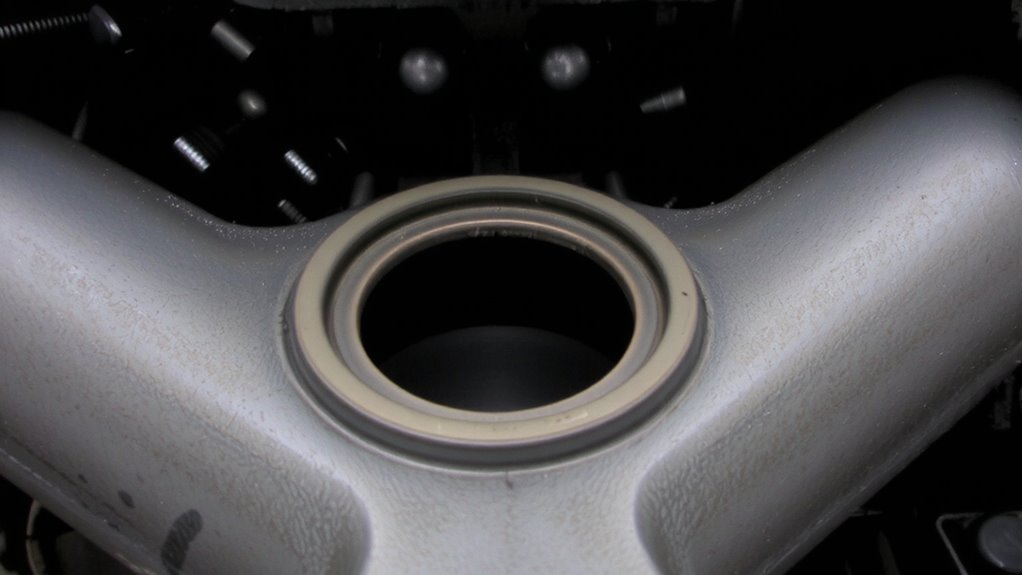
An exhaust manifold gasket is a critical seal in your engine’s exhaust system. It sits between the exhaust manifold and the cylinder head, ensuring exhaust flow remains contained and properly directed. You rely on this seal to maintain engine efficiency and prevent leaks. The gasket materials are chosen for high-temperature resistance-typically layered steel, graphite, or composite alloys-able to withstand temperatures exceeding 1,300°F. These materials provide durability under thermal cycling and mechanical stress. A well-made gasket maintains integrity across engine vibrations and pressure fluctuations. It precisely aligns bolt holes and port openings, usually with a thickness of 0.040 to 0.125 inches, depending on engine design. Proper sealing supports ideal exhaust flow, aiding turbo responsiveness and emissions control. You’ll find these gaskets in both gasoline and diesel engines, designed to match OEM specifications. Their performance directly affects engine backpressure and scavenging efficiency. For reliable performance, consider choosing one of the best exhaust manifold gaskets based on material quality and fitment accuracy.
Symptoms of a Failing Exhaust Gasket
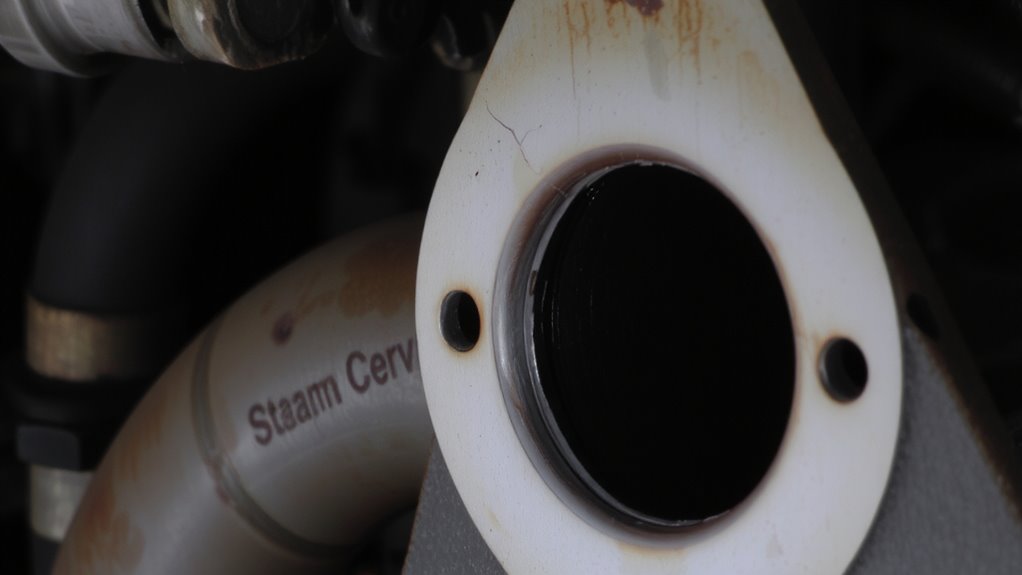
Ever noticed a hissing or tapping noise coming from your engine? That could be your exhaust manifold gasket failing. A damaged gasket disrupts the seal between the manifold and cylinder head, leading to exhaust noise and backpressure issues. Left unaddressed, performance drops and fuel efficiency suffers.
| Symptom | Technical Explanation |
|---|---|
| Hissing sound | Escaping exhaust gases at high pressure |
| Increased exhaust noise | Leaks amplify engine and exhaust tone |
| Reduced power | Loss of backpressure affects scavenging efficiency |
| Check engine light | O2 sensor detects abnormal exhaust flow |
| Fuel economy drop | ECU compensates for lean conditions |
You’ll often hear the exhaust noise change during acceleration. Backpressure issues alter exhaust gas velocity, reducing engine efficiency. Leaks near sensors can trigger false readings, causing incorrect fuel trim. Over time, this leads to poor combustion and higher emissions. Early detection prevents further damage.
Can a Bad Gasket Cause Oil or Coolant Leaks?
Could a failing exhaust manifold gasket really lead to oil or coolant leaks? Not directly, but its failure compromises critical engine sealing. The gasket maintains a tight seal between the cylinder head and exhaust manifold, ensuring exhaust pressure stays contained during the combustion cycle. If the seal breaks, high-pressure exhaust gases can escape, creating vacuum imbalances and disrupting engine backpressure. While this won’t spew coolant or oil from the gasket itself, the pressure fluctuations and irregular flow dynamics may force oil or coolant past their own seals nearby. Cracks in the manifold or cylinder head, worsened by exhaust leaks, can intersect coolant or oil passages. Ultimately, a bad gasket doesn’t leak coolant or oil directly but enables conditions that lead to secondary leaks. Proper sealing sustains ideal combustion cycle efficiency and prevents cascading failures.
How Heat and Vibration Ruin the Gasket
While built to withstand extreme conditions, the exhaust manifold gasket degrades over time because it’s constantly exposed to intense heat cycles and engine vibration. Thermal stress occurs as temperatures swing from ambient to over 1,000°F during operation. These rapid changes cause materials to expand and contract, weakening the gasket’s integrity. You’ll often see micro-cracks form in the sealing layers, especially in older composite or graphite-based designs. Mechanical fatigue sets in due to constant engine vibration, typically at frequencies between 30–60 Hz. This shaking stresses bolted joints and erodes the gasket’s ability to maintain clamping force. Modern multi-layer steel (MLS) gaskets resist this better, with spring-like layers absorbing some movement. Still, prolonged exposure compromises even high-grade materials. Over time, warping of the manifold or cylinder head worsens the gap sealing, reducing efficiency and increasing emissions. Heat and vibration don’t act alone-they accelerate each other’s damage over thousands of cycles.
Exhaust Manifold Gasket: When to Replace It?
The constant exposure to extreme heat and vibration eventually compromises the exhaust manifold gasket’s ability to maintain a reliable seal, and that’s when replacement becomes necessary. You’ll notice performance drops when exhaust backpressure escapes due to leaks, reducing engine efficiency and increasing emissions. Sustained thermal cycling-repeated expansion and contraction-warp the manifold and degrade gasket material over time. Cracks or warping at the mounting flange, often visible around bolts, confirm failure. Modern multi-layer steel (MLS) gaskets typically last 100,000 miles under normal conditions, but frequent short trips or towing accelerate wear. A sulfur-like odor, hissing noise at startup, or check engine light with O2 sensor codes signals trouble. Ignoring it stresses the catalytic converter and raises exhaust temperatures by 100°F or more. Replacing the gasket restores sealing integrity, ensuring proper exhaust flow and emissions control.
How to Prevent Early Gasket Failure
Often, preventing early exhaust manifold gasket failure starts with mindful driving habits and proper maintenance. You can greatly extend gasket life by choosing the right material selection and applying precise installation techniques. Always use OEM-specified gaskets designed for your engine’s temperature and pressure ratings. Poor torque application or warped flanges cause premature leaks.
| Factor | Best Practice |
|---|---|
| Material Selection | Multi-layer steel (MLS) for turbo engines |
| Installation Torque | 9–12 ft-lbs in a crisscross pattern |
| Surface Prep | Clean with wire brush, no residue |
| Gasket Sealant | Use only if specified by manufacturer |
| Thermal Cycling | Allow warm-up before heavy load |
Correct installation techniques prevent stress cracks. Avoid abrupt cooldowns. High-quality gaskets withstand 800°F+ exhaust temps. Proper care guarantees reliable sealing and prevents premature exhaust leaks.
Can a Leaking Gasket Damage Your Engine?
What happens when a leaking exhaust manifold gasket goes unchecked? It can seriously damage your engine. A compromised gasket allows exhaust gases to escape, disrupting ideal backpressure and causing performance loss. You’ll notice reduced power, poor fuel economy, and sluggish acceleration. Escaping hot gases also increase underhood temperatures, contributing to engine overheating. Prolonged exposure to excess heat degrades nearby components like sensors, wiring, and hoses. Modern engines rely on precise air-fuel ratios; a leak introduces false oxygen readings, forcing the ECU to miscalculate fuel delivery. This leads to lean conditions, raising combustion temperatures and risking piston or valve damage. Left unrepaired, warping of the manifold or cylinder head may occur due to thermal stress. The gasket typically operates under 15–30 psi and temperatures exceeding 1,000°F. Failure here doesn’t just cause noise-it undermines engine integrity, efficiency, and longevity.
On a final note
You rely on the exhaust manifold gasket to seal high-pressure exhaust gases at temperatures up to 1,600°F. It prevents leaks between the manifold and cylinder head. A failed gasket won’t directly cause oil or coolant leaks, as it doesn’t seal those fluids. However, exhaust leaks can disrupt engine sensors and cause overheating. Persistent leaks lead to warped components or catalyst damage. Replace the gasket at first sign of exhaust noise or misfires. Use OEM-specified torque-typically 18–22 ft-lbs-for proper seating.