Recommended Tools for Removing Seized Brake Hardware Without Damaging Knuckles
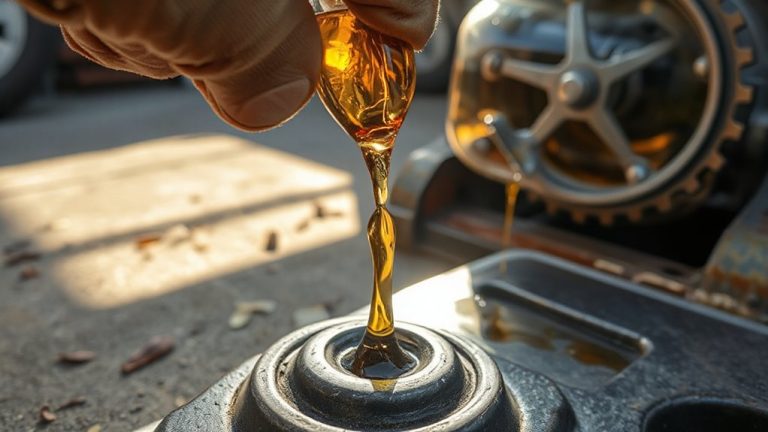
Use a ½-inch drive impact wrench with up to 1,000 ft-lbs of peak torque to loosen seized brake bolts safely. Pair it with anti-round sockets made from chrome molybdenum steel to prevent slippage on corroded fasteners. Apply PB Blaster or Kroil penetrating fluid, allowing at least 15 minutes soak time. Wear impact-rated gloves with TPU knuckle protection. Heat stubborn bolts evenly to 400°F–600°F using a MAP gas torch. You’ll find the full strategy for tackling even the most frozen hardware just ahead.
Notable Insights
- Use an impact wrench with ½-inch drive and matching hex sockets to break loose seized brake hardware efficiently.
- Apply Kroil or PB Blaster penetrating fluid for at least 15 minutes to dissolve corrosion bonds effectively.
- Choose anti-round sockets made from chrome molybdenum steel to prevent fastener slippage and damage.
- Apply controlled heat with a propane torch to expand seized bolts and break rust seals safely.
- Wear impact-rated gloves with knuckle protection to shield hands during high-torque removal operations.
Use Impact Tools to Break Free Seized Brake Hardware
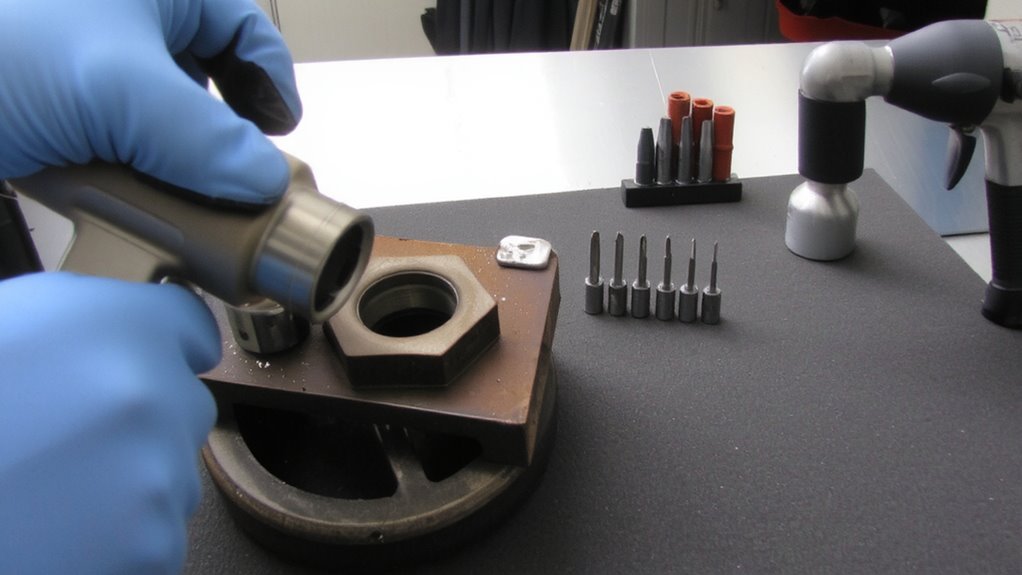
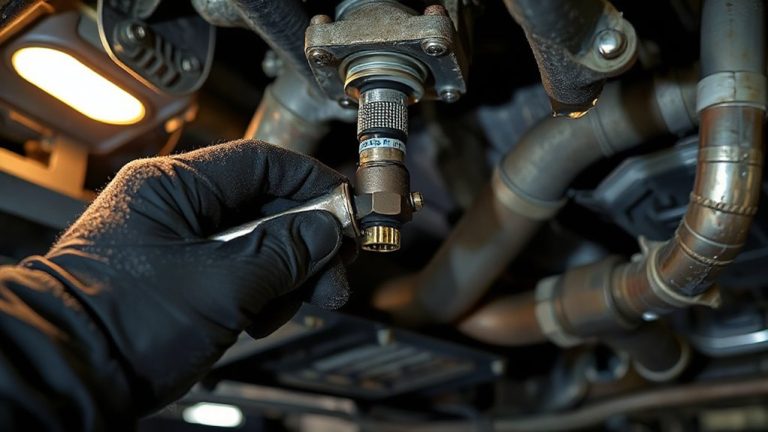
When dealing with rusted or corroded brake components, start by reaching for an impact tool to deliver sudden, high-torque force that can break loose stubborn fasteners. Impact techniques rely on rapid bursts of rotational energy, making them ideal for overcoming seized hardware without damaging surrounding parts. A quality pneumatic or electric impact wrench generates up to 1,000 ft-lbs of peak torque, far exceeding manual ratchets. Torque methods using controlled impulse force reduce the risk of shearing bolts. Most ½-inch drive impact tools operate at 180–270 rpm with an anvil mechanism that converts compressed air or motor power into instantaneous torque. Use hex bits or socket adapters sized precisely to the fastener-typically 10mm to 14mm for brake caliper bolts. The sudden jolt disrupts corrosion bonds while preserving knuckle integrity. Always direct the tool in the correct loosening direction and brace the component securely. Proper impact application increases success where steady torque fails.
Pick the Best Penetrating Fluid for Stubborn Bolts
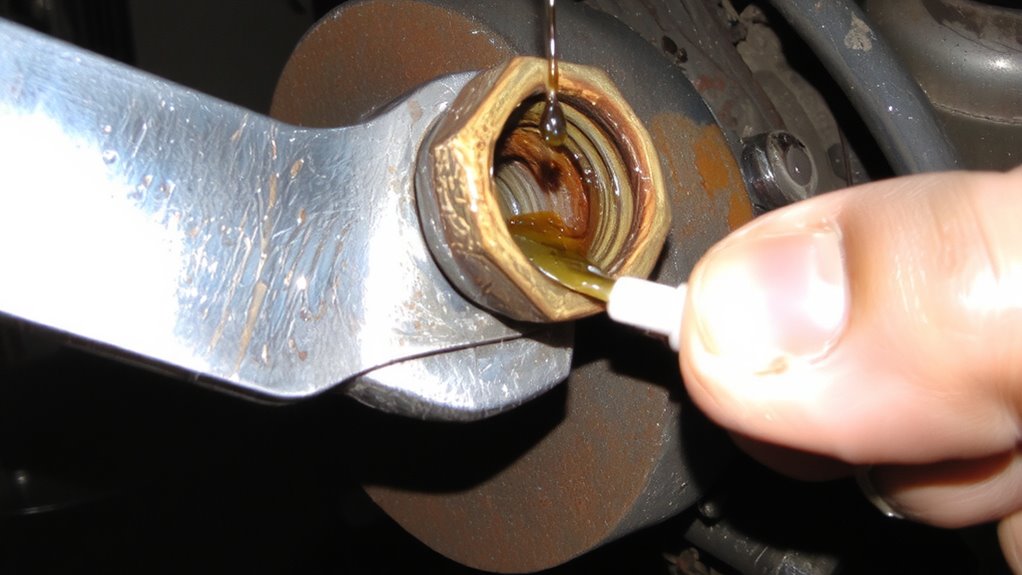
Many factors determine how well a penetrating fluid will free a seized brake bolt, and choosing the right one can save you hours of frustration. Effective chemical penetration depends on low surface tension and high capillary action, allowing the fluid to creep into tight, rusted threads. You’ll want a formula with acetone or dimethyl ether as a carrier, as these solvents reduce viscosity and improve deep penetration. Fluid comparison tests show that products like PB Blaster and Kroil outperform generic WD-40 in breaking adhesive corrosion bonds. Kroil, for instance, has a vapor pressure of 4.2 mmHg at 20°C, enhancing its ability to migrate under pressure. Apply the fluid gradually, letting it soak for at least 15 minutes-or longer overnight for extreme cases. Reapplication improves results. Superior chemical penetration reduces the need for excessive force, protecting surrounding components from damage during removal.
Try Anti-Round Sockets to Avoid Damaging Fasteners
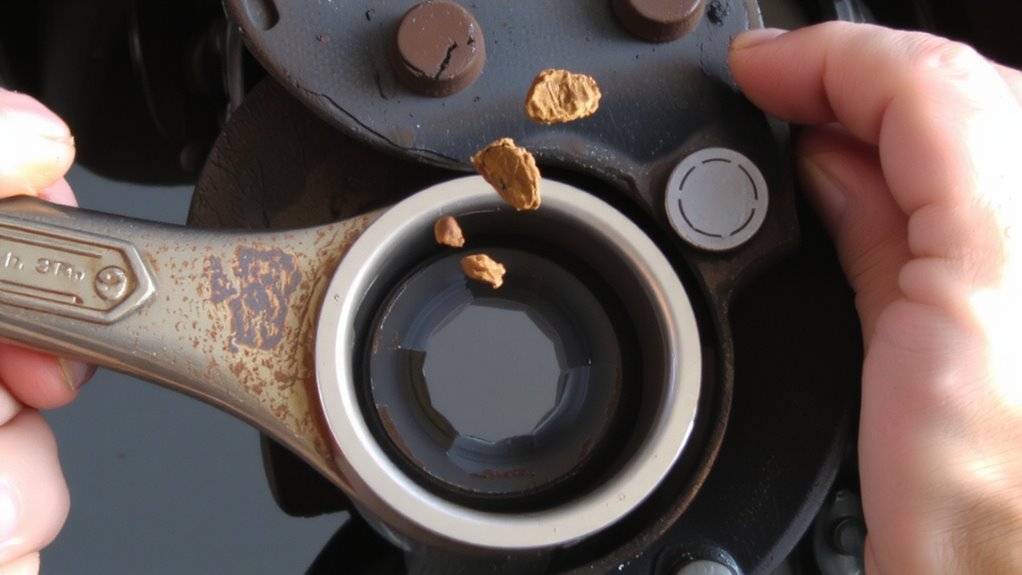
An anti-round socket could be your best defense against stripped or rounded brake hardware. Socket selection is critical when dealing with stubborn fasteners under high torque. These sockets feature a 12-point, low-profile design with a reverse taper that grips the flat edges of bolts and nuts, not the corners. This design distributes force evenly, reducing slippage. Anti-round sockets often include a nylon ring or teeth that bite into the fastener as torque increases, enhancing grip. They’re typically made from chrome molybdenum steel for durability and resistance to deformation. For brake hardware, sizes between 10mm and 18mm are most useful. Fastener preservation improves markedly compared to standard sockets, especially on rusted or corroded parts. Using them with a breaker bar or impact wrench enhances effectiveness. Proper fit and material strength prevent cam-out, protecting both tool and component. Choose quality over cost-precision matters.
Remove Seized Parts Safely With Controlled Heat
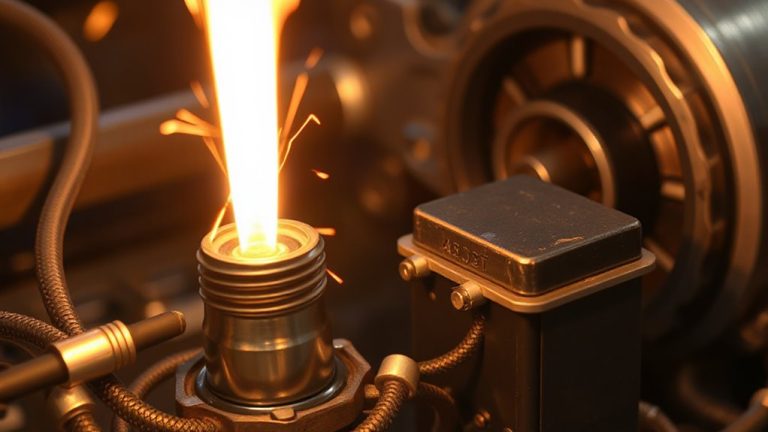
If you’re dealing with a fastener that refuses to budge despite high torque, applying controlled heat may be the solution. Thermal expansion breaks stubborn corrosion bonds by increasing the bolt’s diameter faster than the surrounding material. Use a propane or MAP gas torch to heat the fastener evenly, focusing on the nut or bolt head for 30 to 60 seconds. Avoid open flames near rubber or plastic. Controlled oxidation occurs at temperatures above 400°F, weakening rust without warping components. Never quench hot metal with penetrating oil-wait until it cools slightly, then apply. Heat cycles work best when repeated two or three times. Always wear heat-resistant gloves and safety glasses. A digital infrared thermometer helps maintain temperatures between 400°F and 600°F, ensuring effectiveness without damage. This method preserves threads and surrounding parts, increasing the chance of successful disassembly.
Shield Knuckles From Removal Damage
Your safety glove’s reinforced knuckle guard stands as the final barrier between blunt trauma and tender bone during stubborn brake hardware removal. Always wear impact-rated gloves to protect knuckles from hammer blows and slipping tools. High-density thermoplastic polyurethane (TPU) guards absorb shocks up to 20 joules, meeting EN 388:2016 standards. Pair gloves with proper technique-keep fingers clear and use tools with secure grips. To preserve integrity of both hand and hardware, apply force along the tool’s axis, not laterally.
| Feature | Benefit |
|---|---|
| TPU Knuckle Guard | Reduces impact injury risk |
| Breathable Spandex Back | Enhances dexterity and comfort |
| Silicone Palm Grip | Prevents tool slippage under torque |
These measures guarantee you protect knuckles while maintaining control and preserving the integrity of your repair.
Decide When to Replace Seized Brake Hardware
You’ve protected your hands with impact-rated gloves, but now it’s time to decide whether to salvage or replace seized brake hardware. If corrosion exceeds 50% of a bolt’s thread depth, replacement is mandatory. Seized caliper guide pins compromise caliper slide maintenance, leading to uneven brake pad replacement wear. Inspect for pitting, galling, or扭曲-common failure signs. OEM specs typically allow no more than 0.002” runout on slides; beyond that, function degrades. Reusing damaged hardware risks bolt breakage or misalignment, increasing drag and heat. After repeated brake pad replacement cycles, old hardware fatigues-spring clips lose tension, typically below 70% of original force. Always replace hardware showing plastic deformation. Corrosion-resistant coatings like zinc flake or Dacromet improve longevity. When in doubt, swap it out-new hardware costs less than a comeback. Safe braking depends on it.
Fix Seized Caliper Brackets Without Cracking Knuckles
While corrosion and heat cycles often weld caliper brackets into immobility, the right tools and techniques can free them without brute force. Start with brake pad extraction to expose the bracket mounting points fully. Apply a high-quality penetrating oil like PB Blaster, letting it soak for 20 minutes. Use an impact wrench with a 3/8-inch drive and 14mm socket for stubborn bolts. For caliper slide repair, clean guide pin bores with a wire brush and ream out rust with a drill bit sized to 8.5mm. Always inspect bracket alignment-misalignment by more than 0.5mm causes uneven pad wear.
| Tool | Purpose | Specs |
|---|---|---|
| Penetrating Oil | Loosen rusted bolts | 15-minute soak time |
| Impact Wrench | Remove seized hardware | 3/8″ drive, 200 ft-lbs torque |
| Caliper Hanger | Support system | Holds up to 10 lbs |
| Slide Pin Tool | Aid caliper slide repair | Fits 8–10mm pins |
| C-Clamp | Compress pistons | 4-inch throat depth |
On a final note
You now have the right tools and techniques to remove seized brake hardware safely. Use a 3/8-inch impact wrench with 300 ft-lbs torque to break stubborn bolts free. Apply penetrating fluid with low viscosity, like PB Blaster, for maximum capillary action. Anti-round sockets grip six flats precisely, reducing rounding risk. Apply controlled heat with a propane torch at 600°F to expand metal without warping knuckles. Replace hardware showing thread damage or stretch beyond 0.003 inches.