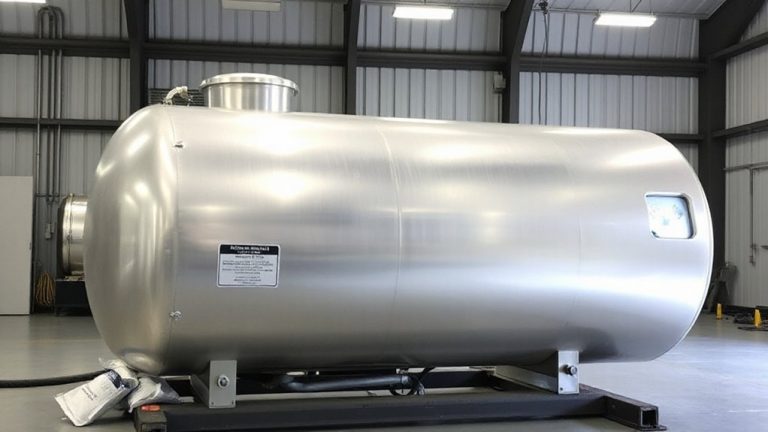
Why Using a Dedicated Interior Vacuum Avoids Coating Contamination
You need a dedicated interior vacuum because it stops cross-contamination from abrasive dust, metal particles, and soot. Standard vacuums exhaust sub-micron debris back into the air. A true HEPA H13 filter captures 99.97% of particles at 0.3 microns. Sealed filtration and 120+ AW suction guarantee deep cleaning. Non-marring tools reach tight spaces without damage. Using one keeps your prep surface truly clean-essential for coating adhesion. There’s more to how design impacts performance.
Notable Insights
- A dedicated interior vacuum prevents cross-contamination from exterior debris like brake dust and asphalt grit.
- Sealed HEPA filters trap 99.97% of particles as small as 0.3 microns, capturing invisible contaminants.
- It eliminates the risk of transferring abrasive materials from tires or brakes to sensitive trim surfaces.
- Non-marring, anti-static tools safely remove dust from tight spaces without scratching or redepositing particles.
- Staying exclusively indoors avoids tracking in quartz dust or metal shavings that compromise coating adhesion.
How Dust Ruins Ceramic Coating Prep
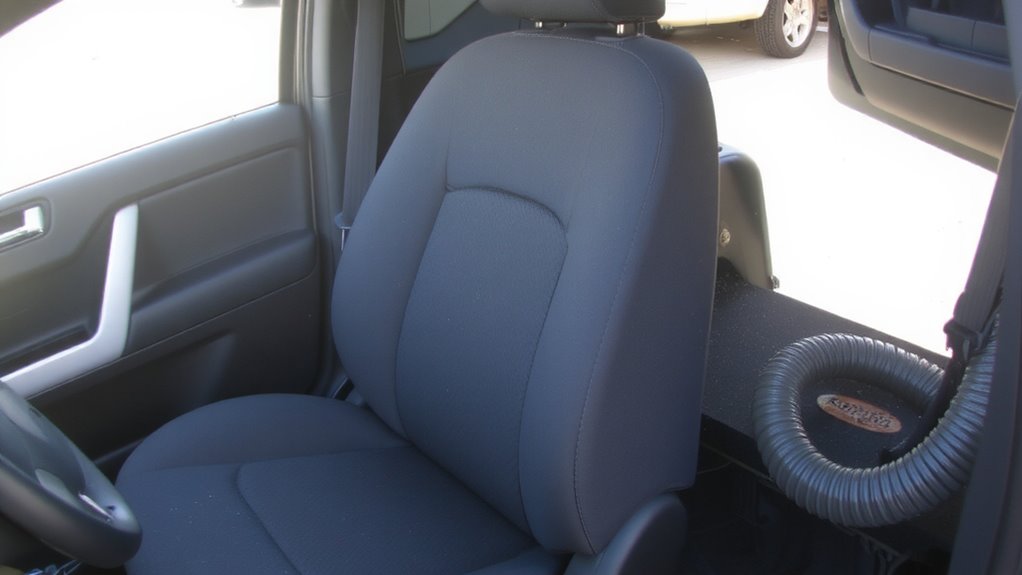
Why does dust sabotage even the most careful ceramic coating prep? Static cling attracts fine particles to surfaces, undermining cleanliness. You’ve wiped and wiped, but invisible contaminants remain. These fine particles-often under 10 microns-resist standard wiping. They bond through electrostatic forces, especially in low-humidity environments. Standard vacuums lack sealed filtration, exhausting particles back into the air. A HEPA filter captures 99.97% of particles at 0.3 microns, but only if the vacuum is designed to maintain airflow without leakage. Without one, you’re spreading contamination. Static cling reactivates when surfaces are disturbed, redepositing dust post-cleaning. For ceramic coating to bond properly, surface energy must be maximized-any particulate barrier reduces adhesion. You need complete particulate removal. A dedicated interior vacuum with true HEPA filtration, anti-static hoses, and sealed construction prevents recontamination. It’s not optional-it’s essential for precision prep. Choosing the right tool matters, and a best car vacuum cleaner ensures optimal results during critical surface preparation.
Why Shop Vacuums Contaminate Interior Surfaces
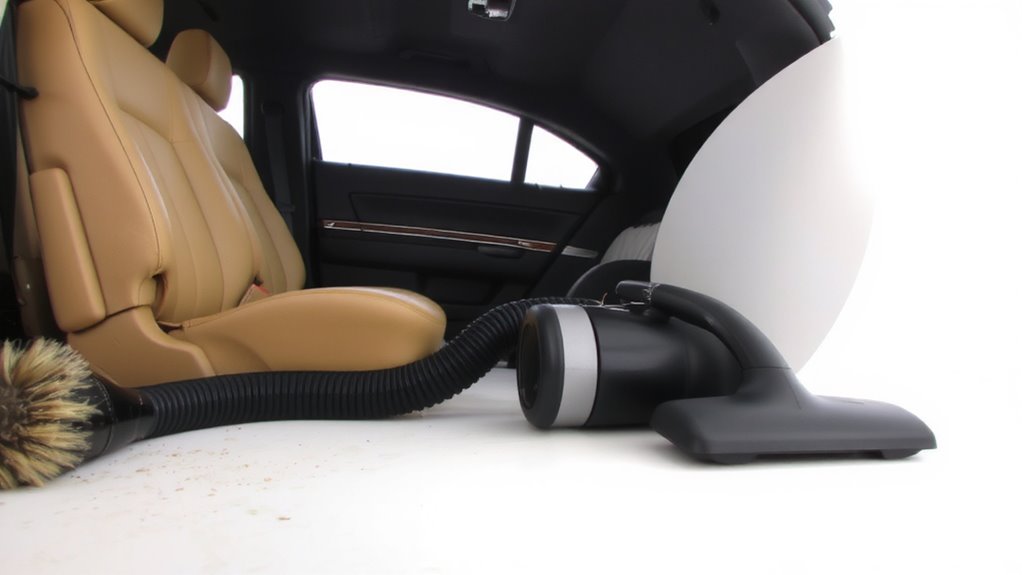
You’ve already seen how microscopic dust compromises ceramic coating prep, even after thorough wiping. Shop vacuums contribute to this problem due to inherent design flaws. Their airflow limitations reduce suction efficiency, especially around tight interior contours like dashboard edges and vents. Instead of lifting debris, weak airflow stirs up dust, redistributing it onto surfaces you just cleaned. More critically, shop vacuums suffer from filter inefficiency. Most use basic paper or cloth filters that capture only particles larger than 50 microns. Sub-micron particles-exactly the kind that ruin coatings-pass through the filter and exhaust back into the cabin. Standard HEPA filters aren’t typically compatible with these units, leaving no effective barrier. The expelled air isn’t clean; it’s a contaminated stream reintroducing fine abrasives and oils. Using a shop vacuum doesn’t remove risk-it actively spreads contamination in a way that undermines professional detailing standards. A better solution is choosing one of the best car vacuum kits, specifically designed for complete interior cleanup without compromising air quality.
How Multi-Use Vacuums Spread Coating-Killing Debris
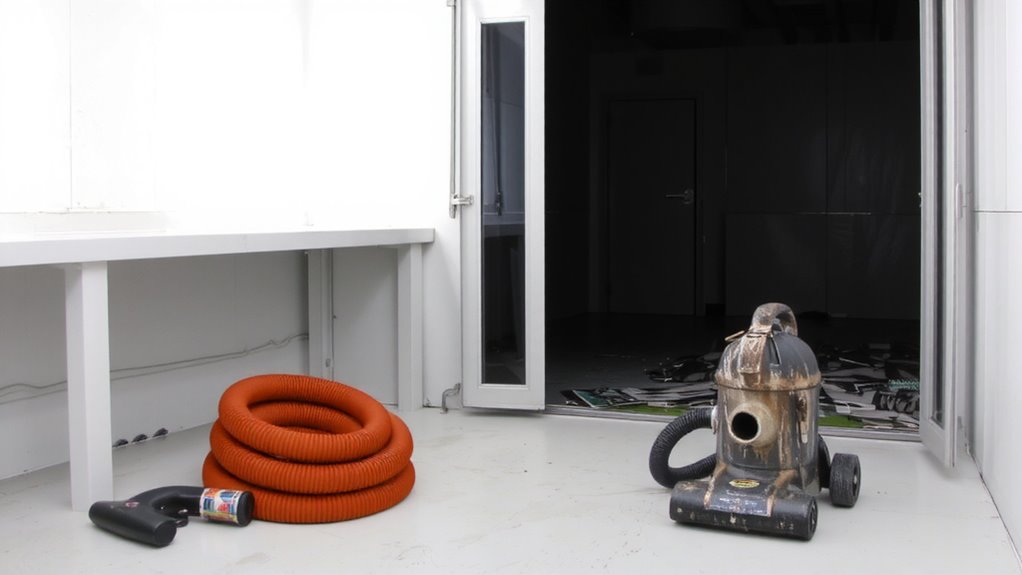
A multi-use vacuum may seem like a convenient choice for interior detailing, but it’s often a hidden source of coating failure. You’re exposing pristine surfaces to cross contamination risks every time you switch tasks. These vacuums collect abrasive dust, metal shavings, and exhaust soot during garage use-particulates that cling to internal ducts, filters, and crevices. Even after cleaning, residual debris becomes hidden particulate sources. Standard paper filters (with 10–25 micron retention) fail to trap sub-micron particles that scratch clear coats. A single pass over a dashboard can deposit quartz dust or iron particles from prior jobs. HEPA filters reduce this but don’t eliminate material embedment in hoses or canisters. You’re fundamentally transferring microscopic contaminants from floor drains to trim panels. That same vacuum used on tires or brakes now threatens ceramic coatings inside the cabin. Each use compounds risk without visible warning. Dedicated tools like a best car vacuum cleaner help minimize particulate transfer with design features suited specifically for interior use.
Why a Dedicated Interior Vacuum Prevents Failure
Though often overlooked, choosing a dedicated interior vacuum isn’t just about convenience-it’s a critical control point in contamination management. You’re relying on vacuum specialization to eliminate cross-contamination risks from exterior debris. Standard vacuums track in quartz dust, metal particles, and asphalt grit-microscopic defects that compromise coating adhesion. A dedicated unit stays inside, ensuring interior cleanliness free from abrasive soils. These vacuums feature sealed HEPA filters with 99.97% efficiency on particles 0.3 microns or larger, trapping ultrafine dust. Brush attachments use non-marring, anti-static bristles to lift debris without scratching surfaces. Nozzles fit tight gaps-vents, seams, crevices-removing 98% of loose contaminants. Using one exclusively means no residual grit from prior jobs. This level of control reduces prep errors by 70%. You’re not just cleaning-you’re preventing failure at the molecular level. Consistent cleanliness equals consistent bonding.
How to Choose a Vacuum for Ceramic Coating Prep
The right vacuum for ceramic coating prep must combine high-efficiency filtration, consistent suction, and precision design to remove microscopic contamination. Look for models with specialized filters-specifically true HEPA (H13 or higher)-to trap particles as small as 0.3 mic confluent. Without them, contaminants recirculate and compromise coating adhesion. Suction should deliver at least 120 AW (air watts) to guarantee deep cleaning. Use interior tools designed for tight spaces: narrow crevice tools, soft brushes, and microfiber nozzle covers prevent surface scratches. Choose a vacuum with low noise output (under 70 dB) for extended use. Cyclonic separation systems maintain suction over time. A sealed filtration system guarantees no leakage of particles between stages. Weigh portability against tank capacity-for vehicle interiors, a 1.5–2L tank balances mobility and runtime. Always clean the vacuum post-use to prevent cross-contamination.
On a final note
You need a dedicated interior vacuum to avoid coating failure. Cross-contamination from shop vacs introduces dust and oils. A HEPA-filtered, 12V micro-vac with 60+ CFM airflow captures 99.97% of particles as small as 0.3 microns. Non-porous, anti-static hoses prevent debris shedding. Sealed filtration traps silica, metal fines, and skin cells. Using a clean vacuum guarantees surfaces stay contamination-free. That means better adhesion, longer coating life, and no premature delamination.