Evaluating Brake Line Routing Clearance From Suspension Components During Lift Kit Install
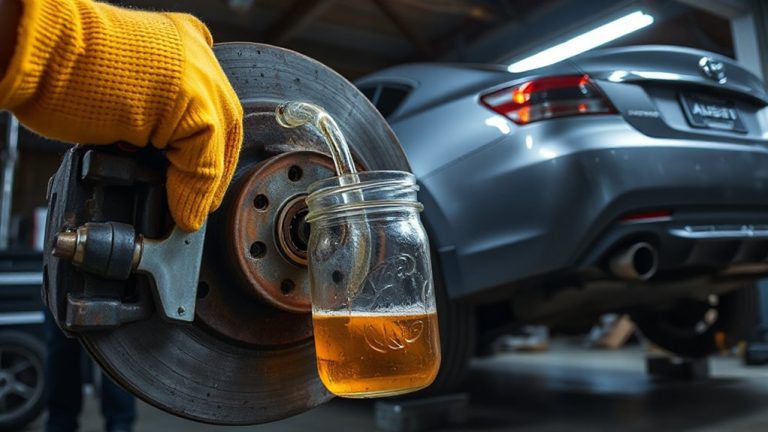
You must evaluate brake line clearance after a lift to prevent damage. Factory hoses stretch beyond their 30° design limit, risking rupture. At full compression, check for kinks, especially near calipers and hard-line junctions. Guarantee at least 1/2 inch clearance from moving suspension parts. Stainless steel braided lines handle angular stress better. Lifts over 2 inches often need extended hoses-typically 6 to 12 inches longer-to maintain safe flex and routing. Proper fitment prevents leaks, failure, and loss of braking under stress. Further inspection reveals how lift height alters dynamic strain on every connection point.
Notable Insights
- Inspect brake line clearance at full suspension compression, ensuring at least 1/2 inch from moving suspension components.
- Verify brake hoses do not kink at full droop or compression, especially after lifts over 2 inches.
- Confirm factory brake lines are not overextended or strained due to altered suspension geometry post-lift.
- Use extended stainless-steel-braided lines when needed to maintain proper routing and prevent tension.
- Secure lines with brackets or zip ties to prevent rubbing against sharp edges or vibrating components.
Why Lift Kits Risk Your Brake Lines
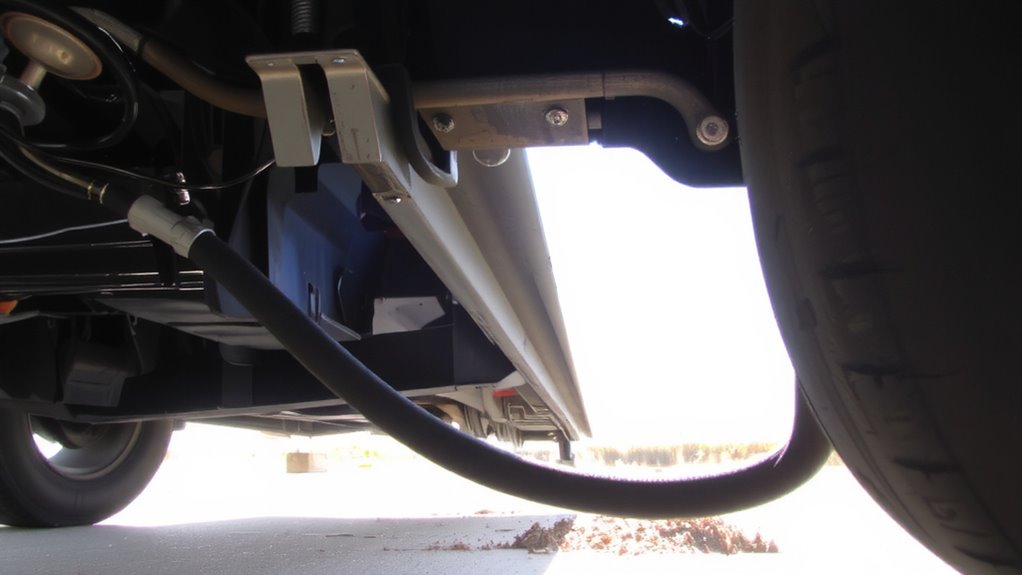
When you install a lift kit, the increased suspension travel and altered geometry can put unexpected strain on your brake lines. Factory brake lines aren’t designed for extended flex or angular shifts, increasing vulnerability. As the wheel moves through its new range, the line bends beyond spec, risking fatigue failure. Brake line corrosion accelerates when lifted, especially on older vehicles-exposed metal sections trap moisture and road salts. Elevated ride height also changes airflow, reducing cooling efficiency. This means more heat exposure near calipers and rotors, degrading rubber hoses faster. Stainless steel braided lines resist abrasion and expand less under pressure. They also withstand heat better. But even these can fail if improperly routed. Always inspect length, flexibility, and positioning post-lift. Use protective sleeves where contact or sharp bends occur. Safe braking depends on it.
Where Brake Lines Get Stressed After Lifting
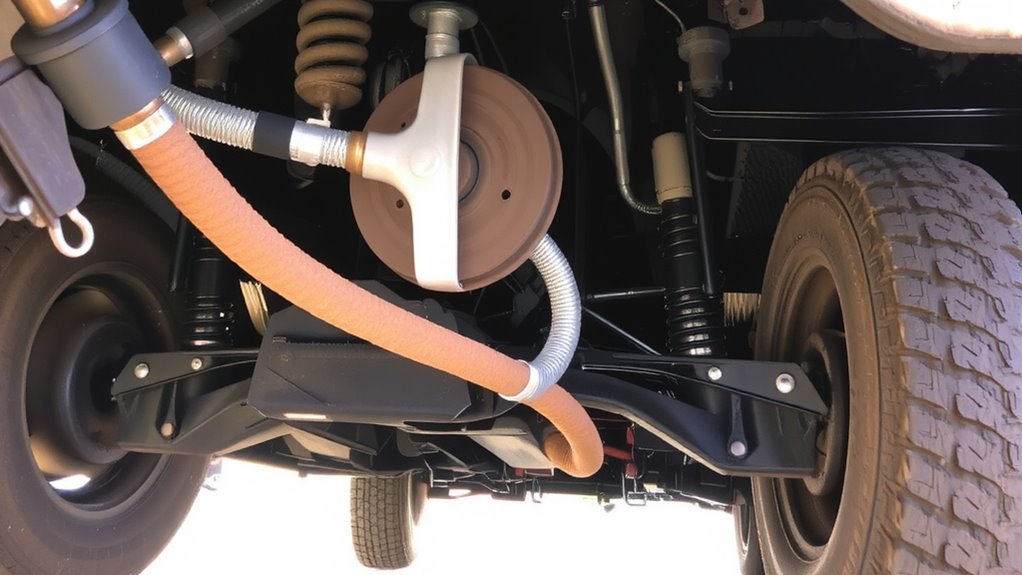
The weakest links in your brake system often hide in plain sight-specifically at the flex points where metal meets motion. When you lift your vehicle, factory brake hoses no longer align with revised suspension geometry. This misalignment creates excessive strain at mounting points and bends. You’ll often see brake line kinking near the caliper or hard line junction, especially during full compression. Kinks restrict fluid flow and can lead to spongy pedal feel or total brake failure. Hose material fatigue also accelerates as rubber compounds stretch beyond design limits. Most OEM hoses allow only 30 degrees of articulation-after a 3-inch lift, angles can exceed 45 degrees. After repeated stress cycles, microfractures form in the inner liner, weakening integrity. Extended flexing causes abrasion against brackets or knuckles, wearing through protective sheathing. Without inspection, compromised hoses leak or burst under pressure. Upgrade to extended braided stainless lines rated for high articulation to maintain safety and performance.
How Lift Height Changes Suspension Movement
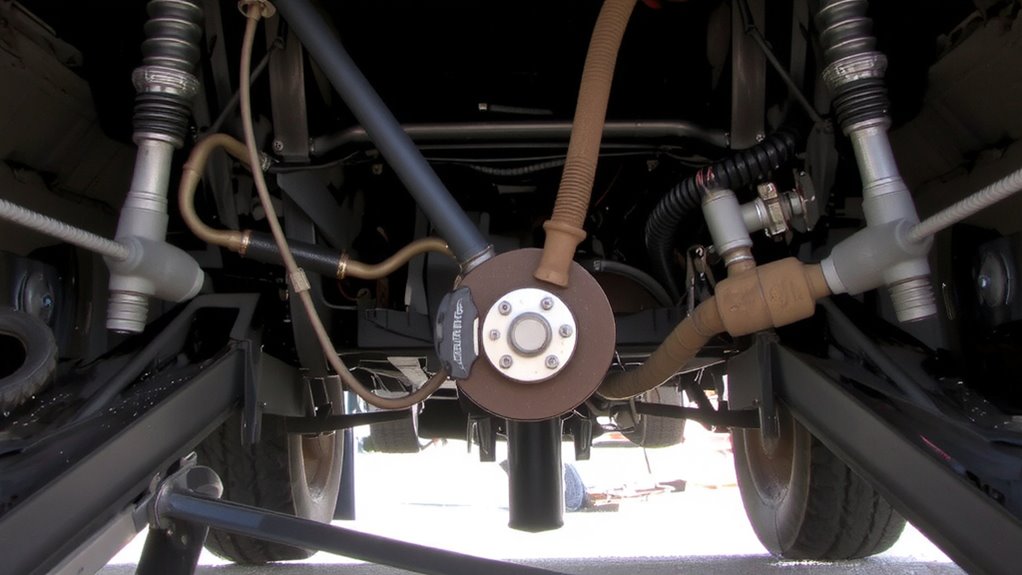
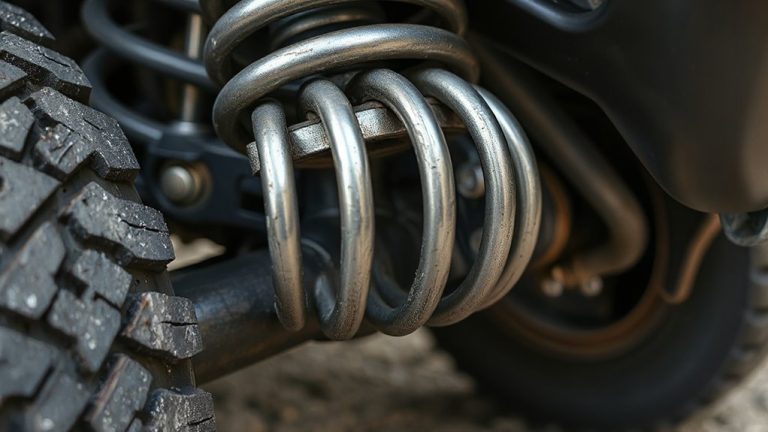
Though lift height may seem like a simple modification, it fundamentally alters how your suspension operates through its range of motion. Raising your vehicle changes suspension geometry, shifting control arm angles and pivot points beyond factory specifications. These shifts affect travel dynamics, increasing articulation in some cases while reducing effective range in others. As the suspension cycles, components move along altered arcs, creating new stress points. The greater the lift, the more pronounced these changes become-especially in lifts over 3 inches. Control arms may bind, and bushings experience uneven loading, affecting overall travel dynamics. These alterations also impact brake line tension, as mounting points relocate vertically and horizontally. Even minor geometry deviations can lead to premature wear or component failure. Understanding these changes helps predict how parts like brake lines will behave under real-world conditions. Proper evaluation guarantees long-term reliability and safety.
Test Your Brake Lines at Full Compression
How do you know your brake lines won’t fail the first time you hit a pothole? You test them at full suspension compression. Jack up the axle until the suspension compresses completely. This mimics the maximum upward travel your vehicle experiences on hard impacts. Inspect each brake line closely during this test. Look for signs of strain, stretching, or rubbing. Check for brake line kinking, especially near bends or mounting points-kinks restrict fluid flow and weaken the line. Verify there’s no suspension interference, meaning no contact between the brake lines and control arms, knuckles, or brackets. Even slight contact can wear through the line over time. Maintain at least 1/2 inch clearance from all moving parts. Use zip ties or brackets to secure lines if needed. This simple check prevents hydraulic failure and guarantees reliable braking under real-world conditions.
When You Need Extended Brake Lines
Unless your lift kit is under 2 inches, you’ll likely need extended brake lines. Factory brake lines aren’t designed for increased suspension travel and can fail under tension. Extended lines eliminate stretch and reduce the risk of bursting. You must match the brake line material to your vehicle’s specs-common types include stainless-steel-braided hoses and OEM rubber. Stainless steel offers better durability and resistance to expansion under pressure. Use line routing tools to guarantee a clean, snag-free path away from moving suspension parts. Proper tools help maintain consistent bend radii and prevent kinking. Incorrect routing can lead to rubbing, wear, and eventual leaks. Extended brake lines typically add 6 to 12 inches of length, depending on lift height. Always verify fitment with the suspension at full droop and compression.
On a final note
You must inspect brake line clearance after installing a lift kit. Even a 2-inch lift alters suspension geometry, increasing axle travel by up to 30%. At full compression, standard brake lines can stretch beyond their 15% elongation limit, risking rupture. Use extended stainless steel braided lines rated for 3,000+ PSI. Verify 1 inch minimum clearance between lines and control arms throughout full suspension cycle. Neglecting this risks catastrophic brake failure.