Testing Ground Strap Integrity Between Engine and Chassis
You can test your engine-to-chassis ground strap with a multimeter. Set it to measure resistance (Ω) and check for continuity. A good strap shows less than 0.1 Ω. Higher values mean corrosion or damage. For a voltage drop test, run the engine and switch the meter to DC volts. Place one probe on the engine block, the other on the chassis side of the strap. A reading under 0.2 volts is acceptable. Bad results suggest cleaning or replacement-especially if you’re seeing electrical issues. There’s more to get right if you want a lasting fix.
Notable Insights
- Disconnect the battery and inspect the ground strap for corrosion or physical damage before testing.
- Use a multimeter in resistance mode to measure continuity; a reading below 0.1 Ω indicates good integrity.
- Perform a voltage drop test with the engine running; less than 0.2 volts confirms proper grounding.
- Clean both strap ends and mounting points to bare metal to ensure accurate test results.
- Reconnect the battery only after verifying secure attachment and low resistance at both ends.
What a Bad Ground Strap Can Do to Your Car
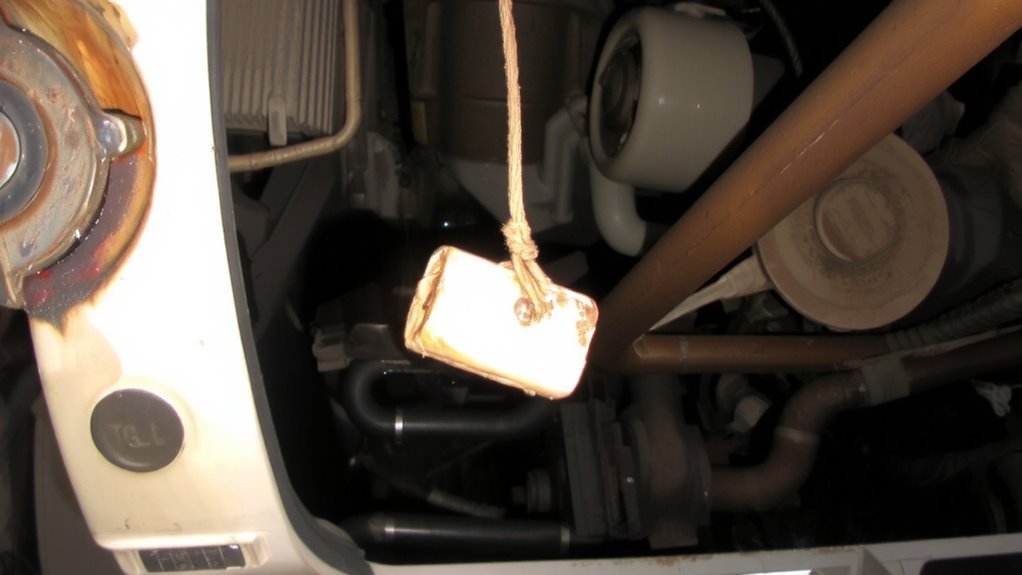
While a failing ground strap might seem minor, it can disrupt your car’s entire electrical system. You’re risking electrical interference that corrupts sensor signals, leading to poor fuel metering or rough idling. Without a solid path to ground, current seeks alternate routes, often through sensitive electronics. This causes voltage spikes exceeding 15 volts-well above the nominal 12.6-volt system tolerance. These spikes can degrade or destroy ECUs, radios, and instrument clusters over time. A compromised strap increases resistance; readings above 0.2 ohms indicate failure. Factory straps typically handle 50+ amps, but corrosion or fraying reduces effective amperage capacity by over 70%. You’ll notice flickering lights, erratic gauge behavior, or intermittent stalling-symptoms too often misdiagnosed. The engine may struggle to communicate with chassis modules due to noisy, unstable return paths. Proper grounding guarantees signal integrity and protects high-impedance circuits. Your car’s electrical health relies on this simple yet critical component.
Find the Ground Strap in Your Engine Bay
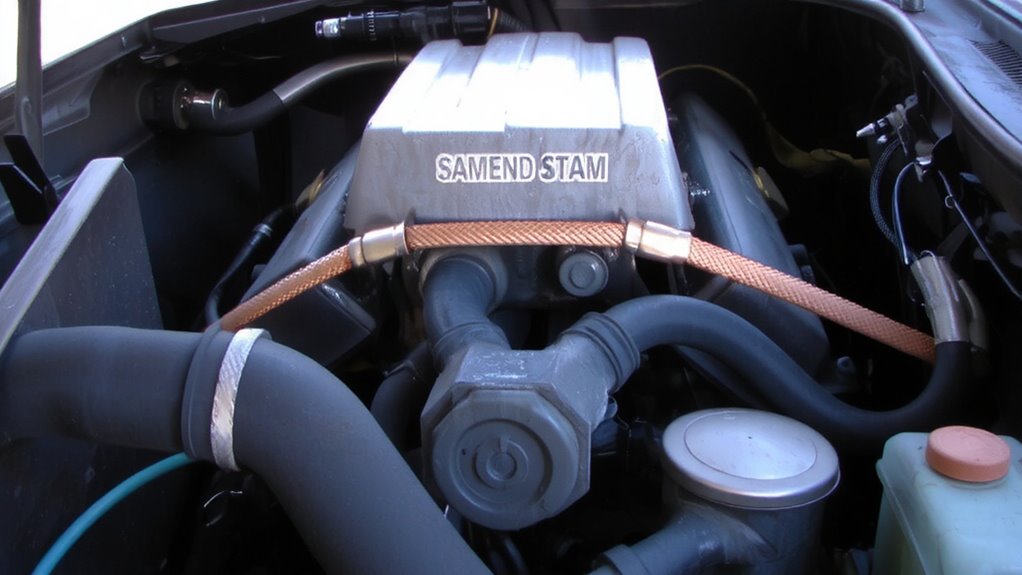
A solid electrical connection starts with knowing where to look-your ground strap is typically bolted between the engine block and the chassis, often near the battery or transmission. Its exact engine location varies by model, but it’s commonly found on the firewall side or adjacent to the starter. Most ground straps are flat, braided copper strips, 3/8 to 1/2 inch wide, with rubberized insulation on parts. Check strap visibility carefully; grime, oil, or tight clearances can obscure it. Use a flashlight and mirror if needed. The strap connects via 10mm or 13mm bolts, secured to clean, unpainted metal surfaces. Proper attachment guarantees minimal resistance. If the strap is hidden behind components, note routing paths from the engine to chassis. Limited strap visibility doesn’t mean it’s absent-trace metal-to-metal connections. Always verify both ends are firmly anchored before testing.
How to Test a Ground Strap With a Multimeter
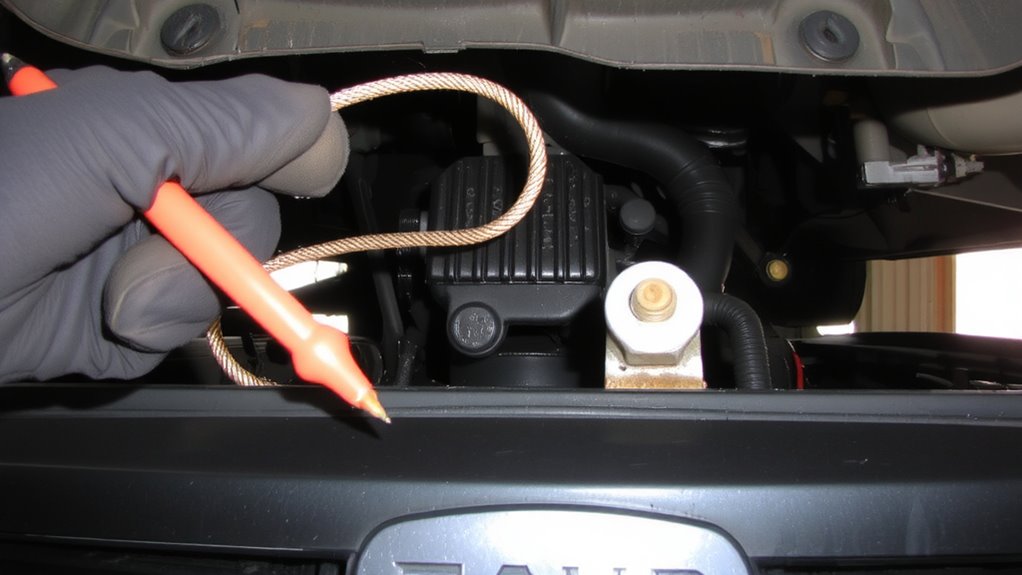
If you’ve already located the ground strap, it’s time to verify its conductivity using a multimeter set to measure resistance in ohms (Ω). Perform a continuity check by placing one probe on each end of the strap. A reading below 0.1 Ω indicates solid conductivity and proper function. Higher resistance suggests corrosion or damage. For a voltage drop test, start the engine and switch the multimeter to DC volts. Place one probe on the engine block and the other on the chassis connection point. You should see less than 0.2 volts under idle. Excessive voltage drop disrupts grounding and can cause electrical issues. A failed continuity check or high voltage drop means the ground strap isn’t performing. Reliable grounding guarantees stable voltage for sensors and electronics. Always test with the engine off for resistance and running for voltage. This dual-method approach gives accurate, actionable results. Using a top-rated car multimeter ensures precise readings and long-term durability in automotive diagnostics.
Clean a Corroded Ground Strap in 5 Minutes
One quick five-minute cleaning can restore near-new conductivity to a corroded ground strap. Begin by disconnecting the strap from both the engine and chassis to guarantee safety and accuracy. Surface rust reduces electrical continuity and can lead to poor grounding, increasing the risk of electrical interference in sensitive circuits. Use a wire brush or fine-grit sandpaper (80–120 grit) to scrub both ends and the entire strap surface. Remove all visible corrosion until shiny metal is exposed. Wipe with a cloth dampened with isopropyl alcohol to eliminate residue. Reattach the strap tightly using clean, dry fasteners. A properly cleaned strap restores low-resistance paths-typically under 0.1 ohms-critical for stable voltage. This quick maintenance prevents erratic sensor readings and guarantees efficient current return, maintaining peak performance in your vehicle’s electrical system.
Replace a Broken Ground Strap Yourself
You can handle a broken ground strap replacement without needing a mechanic-just a few tools and about 15 minutes. This DIY repair restores electrical continuity between your engine and chassis, ensuring peak performance. Begin by disconnecting the battery-both negative and positive terminals-to follow essential safety precautions. Remove the old strap using a wrench or socket set, typically 10mm or 13mm. Inspect mounting points for corrosion; clean them with a wire brush. Choose a replacement strap matching the original length-usually 12 to 18 inches-and gauge (4 AWG is standard). Secure both ends tightly to unpainted metal surfaces. Proper contact reduces resistance, maintaining a stable ground. A good strap handles up to 200 amps, preventing voltage drops. Reconnect the battery and verify connections. This fix enhances reliability, much like replacing a worn seatbelt-it’s simple but critical.
On a final note
A faulty ground strap disrupts electrical continuity, causing voltage drops and erratic sensor readings. Use a multimeter to measure resistance: a good strap reads less than 0.1 ohms. Clean corrosion with a wire brush and apply dielectric grease. Replace damaged straps with OEM-spec units-typically 40–50 mm wide braided copper, rated for 200+ amps. Proper attachment guarantees stable engine-to-chassis bonding, maintaining peak electrical system performance.