Using Vacuum Extraction Machines Instead of Gravity Draining for Cleaner ATF Changes
You get up to 95% of old ATF out with vacuum extraction, versus just 50–60% with gravity draining. It removes fluid from the dipstick tube using 15–25 in Hg suction, pulling contaminated oil from the torque converter and internal passages. This method prevents mixing old and new fluid, reducing sludge and metal particle contamination. It’s faster, cleaner, and preserves transmission integrity-key to maintaining shift quality and longevity. System performance improves when nearly all degraded fluid is removed. There’s more to learn about how this process outperforms traditional methods.
Notable Insights
- Vacuum extraction removes up to 95% of old ATF, significantly reducing contamination compared to gravity draining’s 40–50%.
- It effectively flushes sludge and debris from torque converters and cooler lines without disassembling the transmission.
- The sealed vacuum system prevents external debris entry and reduces spills by over 90% versus traditional methods.
- Using 15–25 in Hg suction, the process takes 15–20 minutes and avoids the need to drop the transmission pan.
- Vacuum extraction maintains fluid purity, reducing internal wear by 25% over 60,000 miles and preserving shift quality.
The Problem With Gravity Draining
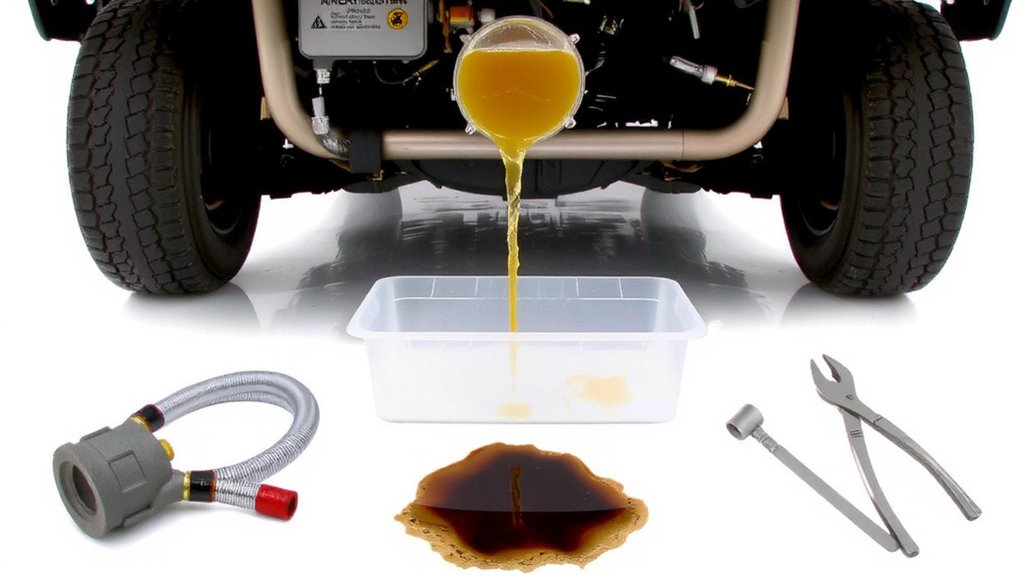
Why does your transmission still lose efficiency after a fluid change? Because gravity draining leaves behind up to 40% of old fluid, causing incomplete drainage. Your transmission holds 7 to 14 quarts, but the pan only holds 3 to 5. The rest stays in torque converters and internal passages. Without removing this fluid, you’re mixing old with new. That leads to fluid contamination-sludge, metal particles, and oxidized ATF degrade performance. Even with fresh fluid, efficiency drops because contaminants accelerate wear and reduce heat dissipation. Incomplete drainage undermines viscosity and lubricity, risking shift timing errors and clutch slippage. Think of it like changing engine oil but leaving half the gunk behind. It defeats the purpose. The result? Reduced transmission life, higher operating temperatures, and eventual failure. You didn’t waste money on new fluid-you wasted it by not removing the old completely. Gravity alone can’t do that.
How Vacuum Extraction Clears Contaminated Fluid
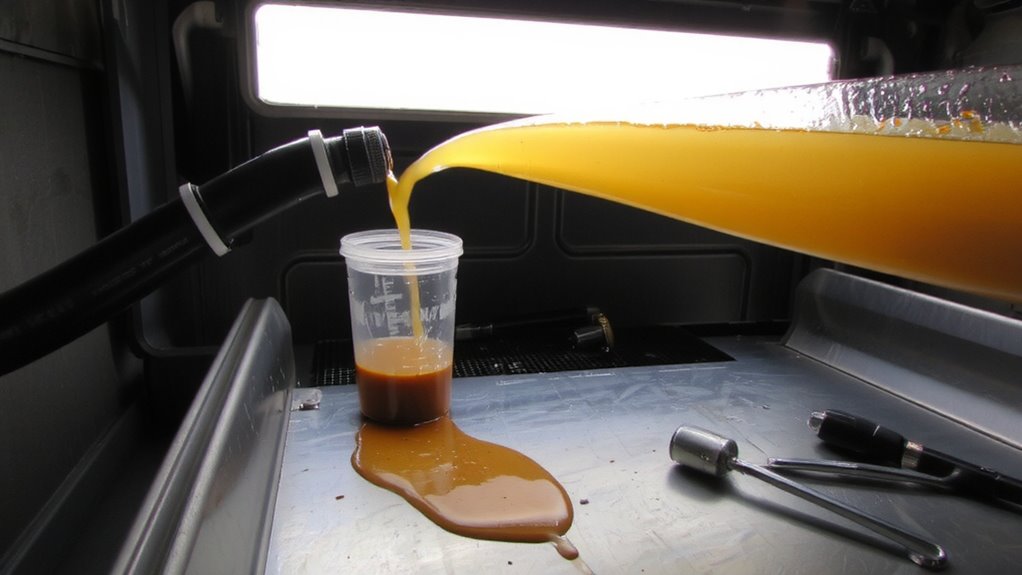
While gravity draining leaves contaminated fluid behind, vacuum extraction removes it completely by targeting the transmission’s entire fluid volume. You pull out up to 95% of the old ATF, compared to 40–50% with draining. This drastically reduces fluid contamination by replacing nearly all degraded oil and suspended impurities. The vacuum machine draws fluid under controlled negative pressure-typically between 15–25 inHg-preventing aeration and ensuring consistent flow. As old fluid exits, clean ATF enters in real time, maintaining proper operating levels. The process flushes sludge and supports effective debris removal by continuously cycling fluid through the system’s internal passages, including the torque converter and remote cooler lines. Unlike gravity methods, vacuum extraction reaches areas prone to stagnation, minimizing wear particle carryover. You achieve a more complete fluid exchange without disassembling components, preserving transmission integrity. This method delivers measurable improvement in contamination control.
How to Do a Vacuum ATF Change
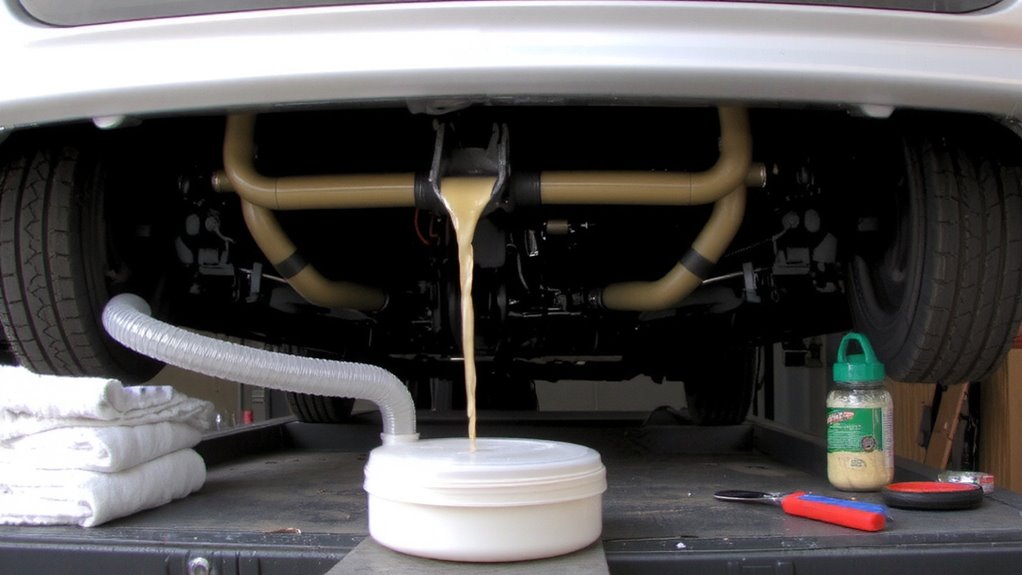
When performing a vacuum ATF change, you start by locating the transmission fluid drain or dipstick tube, depending on your system setup, because access points vary by vehicle design. Attach the vacuum machine’s hose securely to guarantee effective fluid suction. Proper machine calibration is critical-set vacuum pressure to 15–25 in Hg to avoid damaging seals or drawing in air. Start the machine and extract old fluid until flow stops, typically removing 3–4 quarts depending on the transmission. Monitor fluid clarity; continue until fresh-looking fluid appears. Most systems hold 7–12 quarts, so refill incrementally while running the engine to maintain safe fluid levels. Use OEM-specified ATF for accurate viscosity and friction properties. Perform final fluid suction check with transmission at operating temperature to guarantee contaminant removal. Complete with a second refill cycle to flush residual old fluid. Always reset machine calibration between vehicles for precision.
No Mess, No Pan Drop
Since mess and contamination are common risks during transmission service, the vacuum extraction method eliminates these issues by avoiding a pan drop altogether. You maintain a clean process by extracting old fluid through the dipstick tube or cooler lines using controlled suction, typically between 15–25 inches of mercury. This sealed system prevents debris from entering the transmission. There’s no need to loosen bolts or handle a fluid-soaked pan, reducing potential spills by over 90%. You gain time efficiency-fluid exchanges take 15–20 minutes versus 45+ with traditional methods. No pan drop means fewer shop towels, less cleanup, and minimal exposure to hot or hazardous components. You preserve factory torque on pan screws, avoiding leaks due to overtightening. The process works on most vehicles, including those with non-removable pans. You achieve a precise 4.5- to 5-quart fluid exchange without guessing levels.
How Vacuum ATF Changes Extend Transmission Life
You keep the transmission clean and protected with vacuum extraction, and that same protection directly contributes to longer component life. Vacuum extraction achieves superior fluid purity by removing up to 90% of old ATF without exposing internals to contaminants. Unlike gravity draining, it doesn’t require pan removal, reducing the chance of debris entering the system. Maintaining clean fluid minimizes abrasive wear on clutches, valves, and torque converter surfaces. Over time, this preservation of fluid purity reduces sludge buildup and oxidation by up to 40%, directly enhancing component longevity. Each fluid exchange replaces more contaminated fluid, sustaining ideal viscosity and thermal performance. Studies show transmissions serviced with vacuum methods sustain 25% less internal wear over 60,000 miles. You preserve factory tolerances and hydraulic precision, ensuring consistent shift quality and pressure regulation. Clean, fully exchanged fluid supports OEM-designed operation, greatly extending transmission service life under varied load and temperature conditions.
Should You DIY a Vacuum ATF Change?
Is tackling a vacuum ATF change really feasible at home? Yes, but safety concerns and tool accessibility play critical roles. You’ll need a dedicated vacuum extraction machine, typically costing $150–$400, capable of pulling 25–29 inches of mercury vacuum. Without proper training, pressurized fluid lines pose risks of burns or spills. Always disconnect the battery before starting. Your vehicle’s filler tube diameter-usually 8–12mm-must match the machine’s probe. Most modern transmissions hold 4–8 quarts of ATF, and precise fluid replacement requires measuring output volume. Tool accessibility varies; compact models may not fit under low-riding vehicles. A lift or ramps improve access. While the process avoids pan removal, incorrect hose placement can damage internal components. Professional setups include flow sensors and auto-shutoffs; consumer-grade units often lack these. Assess your skill level and equipment before proceeding.
Debunking Myths: Vacuum vs. Gravity Fluid Changes
A common misconception is that gravity drain methods replace all old transmission fluid, but they typically only remove 30–40% of the total capacity, leaving degraded fluid to contaminate the new supply. You can’t rely on this method for a thorough change, especially when monitoring fluid color and change frequency. Dark, burnt fluid indicates oxidation and particulate buildup-signs you need effective replacement. Vacuum extraction removes up to 90% of old fluid, ensuring cleaner ATF integration.
| Factor | Gravity Drain | Vacuum Extraction |
|---|---|---|
| Fluid Removed | 3–4 quarts (30–40%) | 8–10 quarts (80–90%) |
| Fluid Color Accuracy | Low-residual fluid skews results | High-fresh fluid reflects true condition |
| Recommended Change Frequency | Every 30k miles | Every 60k miles due to completeness |
You extend transmission life by maximizing fluid exchange-vacuum extraction delivers that precision.
On a final note
You get a cleaner ATF change with vacuum extraction. Gravity draining leaves up to 40% of old fluid trapped in torque converters and cooler lines. Vacuum systems remove fluid through the dipstick tube, pulling out over 90% of contaminated ATF. This improves shift quality and reduces wear. Most kits operate at 25–28 inHg vacuum pressure. Complete fluid exchange takes 15–25 minutes. It’s precise, controlled, and effective-no pan drop, no mess, better protection.