How to Wash a Car After Exposure to Sandstorms Without Scratching
Rinse your car immediately with at least 500 PSI water pressure to remove abrasive sand particles before washing. Use a pH-balanced shampoo (7.0–8.5) and a 300 g/m² microfiber mitt to safely lift grit. Employ the two-bucket method with grit guards to prevent redepositing contaminants. Dry with a 16” x 24” microfiber towel (300–400 GSM) folded into quarters. Apply a wax with ≥30% active ingredients for lasting protection-details on best techniques follow.
Notable Insights
- Rinse immediately with at least 500 PSI pressure, starting from the roof down to remove abrasive particles safely.
- Use a pH-balanced car wash shampoo (7.0–8.5) to protect wax and clear coat during cleaning.
- Employ the two-bucket method with grit guards and a 300–400 gsm microfiber mitt to minimize swirl marks.
- Wash from top to bottom, rinsing the mitt in clean water after each pass to avoid redepositing grit.
- Dry with a clean, large microfiber towel (300–400 GSM) folded into quarters to prevent scratches and water spots.
Rinse Your Car After a Sandstorm
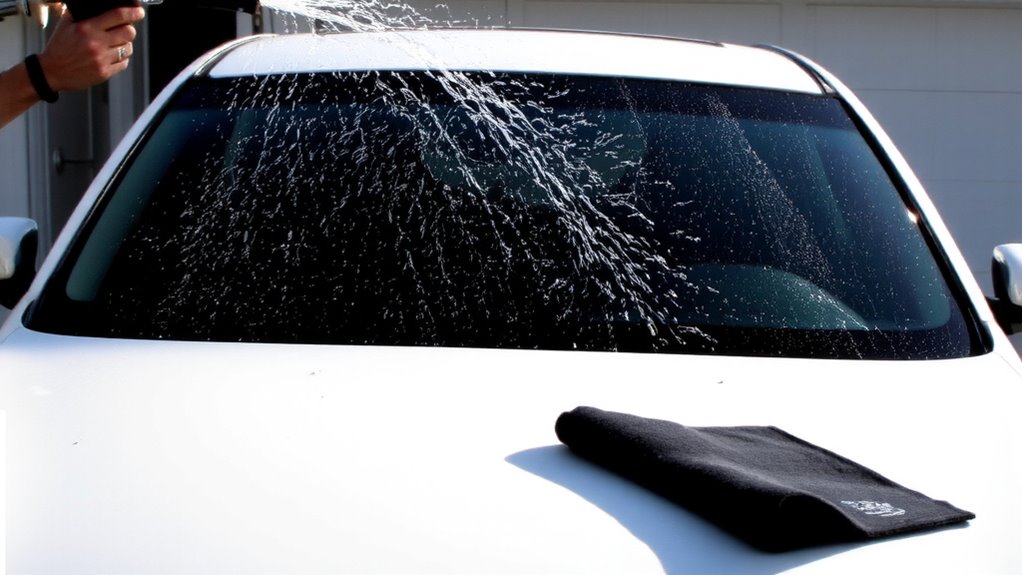
While sandstorms leave behind a fine layer of abrasive particles, the first step to preventing surface damage is rinsing your car immediately. You must remove loose contaminants before they grind into the paint during washing. Use a hose with a minimum of 500 PSI water pressure to guarantee effective dirt removal without damaging surfaces. High-pressure rinsing loosens embedded sand and grime, especially in panel gaps and wheel wells. Start from the roof and work downward to prevent redepositing debris. Maintain a 12-inch nozzle distance to avoid concentrated streams that could harm trim or seals. A fan-spray nozzle setting provides uniform coverage, improving rinsing efficiency. This initial rinse reduces particulate load by up to 80%, minimizing scratch risk during the wash phase. Proper water pressure guarantees thorough preliminary cleaning while preserving finish integrity. Neglecting this step increases abrasion potential dramatically, even with correct washing techniques later.
Get the Right Wash Supplies
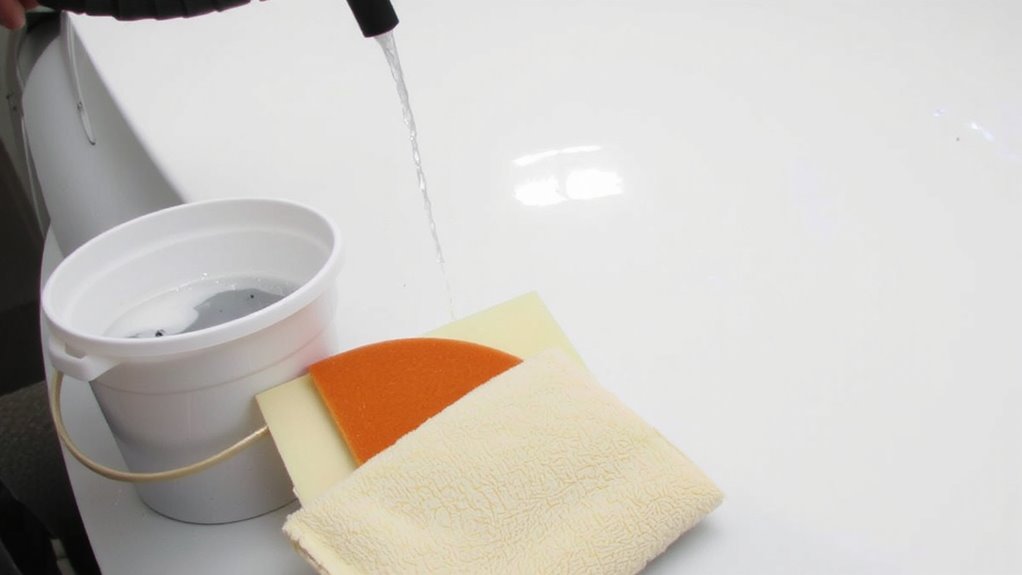
The right wash supplies make all the difference when cleaning a car after a sandstorm. Use a pH-balanced car wash shampoo with a 7.0 to 8.5 rating to safely lift contaminants without stripping wax. Microfiber wash mitts with 300 g/m² density trap grit, reducing surface contact. Pair with grit guards in wash buckets to prevent debris recirculation. A 120–150 PSI water pressure setting is ideal-high enough to rinse sand, low enough to avoid forcing particles into paint. Avoid household detergents; they contain abrasives and degreasers that compromise clear coats. For drying, use a plush microfiber towel with 500+ GSM for maximum water absorption without marring. If storing post-wash, a breathable car cover made of multi-layer polypropylene protects against airborne dust. These materials work together to limit abrasive interaction. A foam cannon pre-wash with best car foam cannons helps loosen sand and dust before contact washing, reducing the risk of marring.
Wash With the Two-Bucket Method
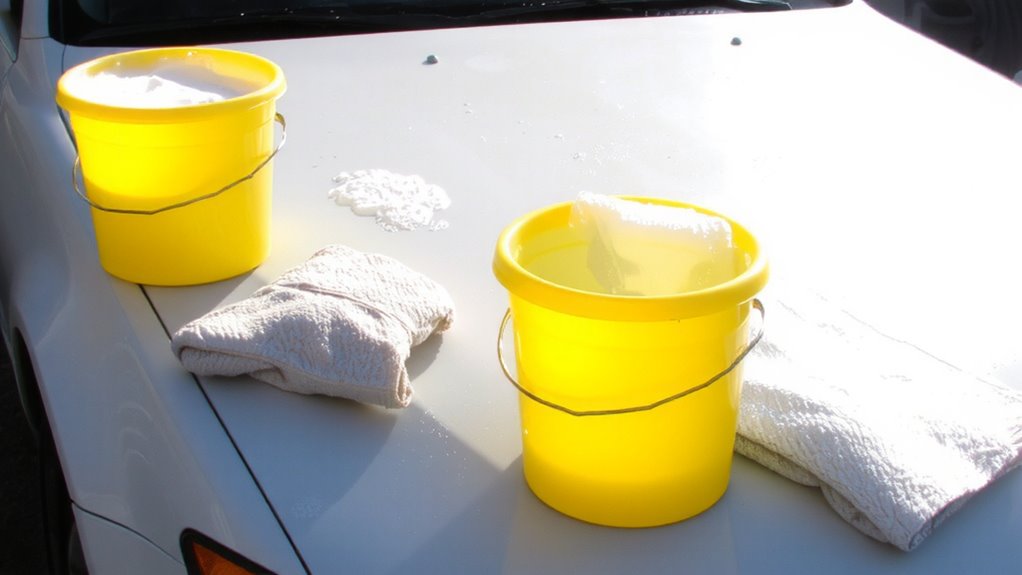
You’ve gathered the right supplies, so now it’s time to put them to work with a proven washing technique. The two-bucket method prevents abrasive grit from scratching your car’s finish. Fill one bucket with clean water and the other with car wash solution. Use a separate grit guard in each to trap contaminants. Choose a pH-balanced shampoo-typically between 7.0 and 8.5 soap pH-to protect wax and clear coat. Use the microfiber technique: a plush, 300–400 gsm wash mitt to trap particles safely. Work top to bottom, rinsing the mitt in the rinse bucket after each pass. The grit guard lifts debris into the bottom, keeping the mitt clean. This method reduces swirl marks by up to 80% compared to a single bucket. Consistent mitt cleaning maintains surface safety. Apply light pressure-microfiber relies on fiber density, not friction.
Dry With the Right Towel to Prevent Scratches
Microfiber is your safest bet for drying without scratches. Each towel contains ultra-fine fibers-typically 0.1 to 0.3 denier-designed to lift water without abrasive contact. Use a 16” x 24” or larger towel with split fibers for maximum absorbency. High towel durability guarantees long-term performance; premium microfiber lasts 300+ washes when cared for properly. Always practice microfiber care: launder after each use in warm water, no fabric softeners, which degrade fiber integrity. Tumble dry low or air dry to preserve structure. Avoid cotton or terry towels-they trap grit and scratch clear coats like sandpaper. Fold the microfiber into quarters, creating 8 clean surfaces per towel; flip as surfaces soil. This method minimizes contamination. Use plush, 300–400 GSM microfiber with edge binding to prevent fraying. Never reuse visibly dirty towels. Proper selection and maintenance prevent micro-scratches and guarantee a flawless dry. For optimal results, choose towels from the best car drying towels list to ensure superior absorbency and scratch-free performance.
Apply Wax After a Sandstorm Wash
While your car’s surface may seem clean after a post-sandstorm wash, microscopic contaminants often remain embedded in the clear coat. Applying wax creates an essential barrier against these residual particles. Wax benefits include enhanced surface smoothness and increased resistance to environmental damage. A quality synthetic wax forms durable protection layers up to 6 months when applied correctly. These layers repel water, reduce UV degradation, and minimize future scratch risks. Use a carnauba-blend wax with at least 30% active ingredients for ideal hardness and gloss. Apply in thin, even coats using a foam applicator at 60–70°F ambient temperature. Allow it to haze-typically 10–15 minutes-then buff off with a microfiber cloth. This process fills minor imperfections, sealing the finish. Regular waxing after each sandstorm maintains long-term paint health.
Avoid These 4 Washing Mistakes
Skipping proper technique during a post-sandstorm wash can undo the protection provided by a freshly applied wax layer. Using high pressure damage is common-many pressure washers exceed 2000 PSI, which can force grit into paint, causing micro-scratches. Keep pressure under 1200 PSI and maintain a 12-inch nozzle distance to reduce risk. Never start washing from the top down; always begin at the bottom where grit accumulates most. Use a two-bucket method with Grit Guards to prevent recontamination. Improper drying techniques, like air-drying or using rough towels, invite water spots and swirls. Instead, use a clean, plush microfiber drying aid with 300 GSM or higher. Fold the towel, don’t wipe-dragging motions increase scratch potential. Soft, synthetic chamois tools also reduce friction. Always work in shaded areas to prevent rapid evaporation. These steps preserve finish integrity after extreme particulate exposure. For heavy debris cleanup between washes, consider using a best shop vac for car detailing to remove sand and dust from interiors efficiently.
Why Sandstorm Dust Ruins Car Paint
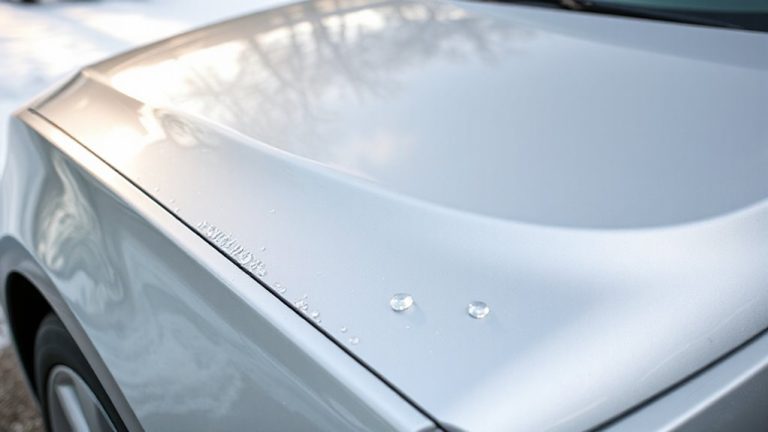
Though it may look harmless, sandstorm dust carries abrasive particles that can permanently damage your car’s paint if not removed carefully. These microscopic shards, often composed of silica and mineral fragments, act like sandpaper when rubbed against the surface. Even light wiping can cause fine scratches, accelerating paint erosion over time. Unremoved dust traps moisture against the clear coat, promoting finish oxidation-a chemical reaction that dulls the surface and weakens protective layers. Most clear coats are only 1–2 mils thick; once compromised, underlying paint degrades faster. UV exposure worsens oxidation, leading to chalkiness and color fade. Dust accumulation increases surface abrasiveness, especially when combined with improper washing techniques. Using a pH-balanced car shampoo and a two-bucket method reduces particulate grinding. Deionized water rinses minimize mineral deposits. Immediate, proper cleaning prevents long-term degradation, preserving gloss and structural integrity. Regular maintenance halts progressive damage.
On a final note
Your car needs immediate care after a sandstorm. Rinse thoroughly with 40–60 psi water pressure to remove loose particles. Use pH-neutral car wash soap at 1:200 dilution in a two-bucket method with grit guards to prevent swirls. Dry with 100% microfiber towels, 300–400 GSM weight, using flat-palm pressure. Apply synthetic wax, minimum 20% solids content, to seal pores. Avoid dry wiping, harsh detergents, reused sponges, or automatic car washes.