Replacing Crush Washers on Steel Brake Line Junctions to Ensure Leak-Free Seals
You must install a new crush washer every time you disconnect a steel brake line junction. Reused washers, especially copper or aluminum, can’t re-achieve proper cold-flow compression and develop leaks. Use the correct size-typically 6mm, 8mm, or 10mm-and match material to application: copper for standard systems, stainless steel for corrosion resistance. Always torque to 9–12 ft-lbs using a torque wrench. A compromised seal risks brake failure under 1,000 psi operating pressure-your safety depends on doing it right the first time, and getting the full details matters.
Notable Insights
- Always use a new crush washer, as reused washers fail to seal due to permanent deformation.
- Match the washer size exactly to the brake line fitting-6mm, 8mm, or 10mm-to ensure proper sealing.
- Choose copper washers for standard applications and stainless steel for corrosion-resistant performance.
- Tighten fittings to manufacturer torque specs (typically 9–12 ft-lbs) using a calibrated torque wrench.
- Replace the entire brake line if cracks, pitting, or bends are present near the junction.
Why You Should Never Reuse Crush Washers
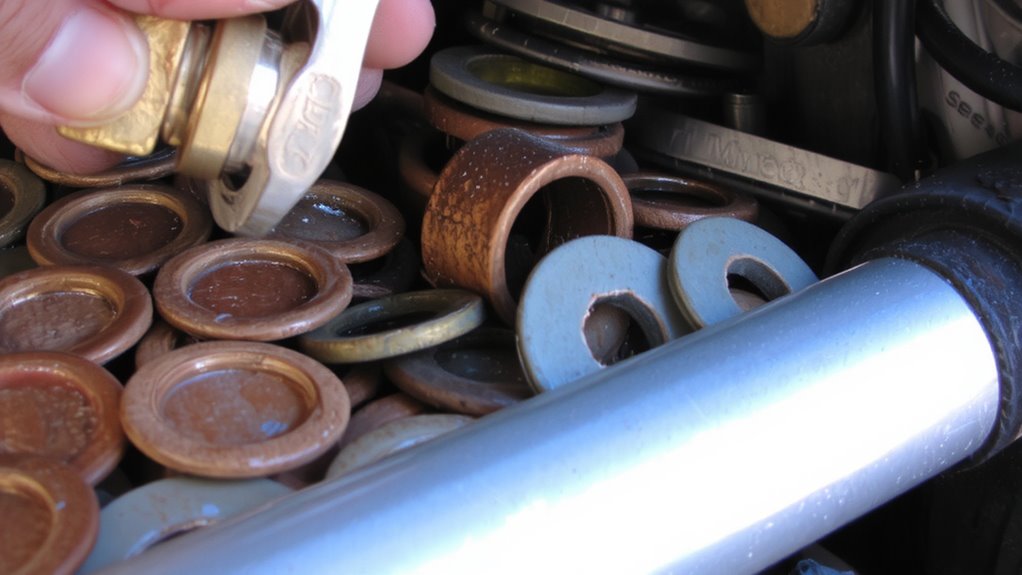
While it might seem like a small detail, reusing crush washers when working on brake lines is a mistake that can lead to serious safety risks. Once compressed, a crush washer undergoes permanent washer deformation, losing its ability to maintain proper sealing integrity. These washers are designed for single use, typically made from soft metals like copper or aluminum, which deform under torque to fill microscopic imperfections between mating surfaces. Reusing them means they can’t achieve the required cold-flow again, creating leak paths. Even slight leaks in brake systems compromise hydraulic pressure, reducing braking efficiency. A failed seal may result in complete brake failure under pressure. Factory service manuals universally specify replacement, not reuse. Always install new crush washers to guarantee consistent compression, proper fit, and long-term reliability. Your braking performance depends on it.
How to Pick the Right Crush Washer Size and Material
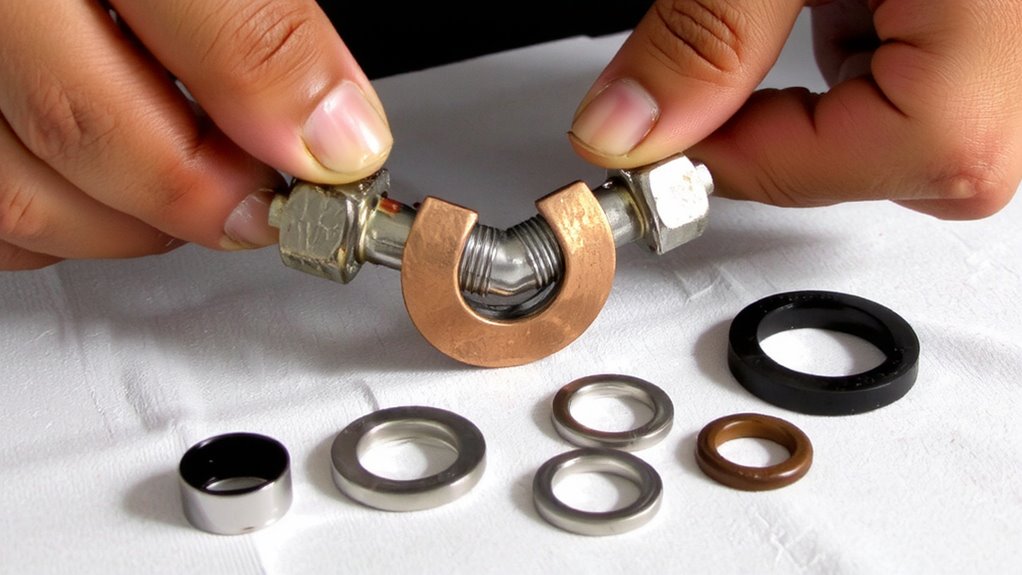
Every brake line connection relies on the correct crush washer to maintain a leak-free seal, so choosing the right size and material isn’t optional-it’s essential. You must match the washer diameter precisely to your brake line’s fitting, typically 6mm, 8mm, or 10mm. Even a 0.2mm mismatch can compromise sealing. Material compatibility matters just as much. Use copper for general applications, but stainless steel when corrosion resistance is critical. Avoid aluminum with steel lines-it can galvanically corrode.
| Washer Diameter | Material | Typical Use Case |
|---|---|---|
| 6mm | Copper | Domestic vehicles |
| 8mm | Stainless Steel | Performance or marine |
| 10mm | Brass | Heavy-duty truck systems |
Always verify manufacturer specs-never assume. Correct washer diameter and material compatibility prevent leaks and guarantee long-term reliability.
Replace a Crush Washer: Step by Step
Since brake line integrity depends on a perfect seal, replacing the crush washer correctly guarantees the system holds pressure without leaks. First, relieve brake pressure by loosening the bleeder valve slightly. Remove the fitting using a line wrench to prevent rounding. Discard the old washer-it’s a one-time-use component. Slide a new copper or stainless steel crush washer onto the tube, making certain it matches the diameter and hardness spec. Reinstall the fitting by hand, then tighten to the manufacturer’s torque specs-typically 9–12 ft-lbs for most steel lines. Over-tightening distorts the washer and damages threads; under-tightening risks leaks. A properly torqued joint maintains consistent brake pressure under system demands. Use a torque wrench for accuracy-don’t guess. Final checks include a visual inspection and a pressure test. This process guarantees reliable sealing at every junction.
Why Reusing Washers Causes Brake Fluid Leaks
If you’ve ever reused a crush washer thinking it still had life in it, you’re risking a brake fluid leak. These soft copper or aluminum washers deform under torque to seal steel brake line junctions. Once compressed, they can’t spring back-reusing them means relying on a damaged seal. Microscopic crack formation occurs when a pre-compressed washer is torqued again, creating paths for fluid escape. The uneven surface also promotes corrosion buildup, especially in humid or salty environments, further weakening the joint. Crush washers are designed for single use because their sealing integrity depends on controlled deformation. Measuring just 0.025–0.030 inches thick before installation, they compress by up to 50% to fill imperfections. Reusing one disrupts this precise function. That tiny crack or speck of corrosion might seem harmless, but under 1,000 psi line pressure, even a pinhole leak compromises braking efficiency. Always install a new washer-your safety depends on it.
Replace the Washer or the Brake Line?
You just learned why reusing crush washers leads to leaks, but now you face a more practical decision: replace the washer or the entire brake line? If the brake line is intact, undamaged, and free of corrosion, a simple washer installation suffices. Use a new, SAE-compliant copper or aluminum alloy washer rated for 3,000 PSI. Torque the fitting to manufacturer specs-typically 9–12 ft-lbs for most domestic vehicles. However, if you spot cracks, pitting, or bending near the junction, plan for full brake line replacement. Replacing compromised lines prevents future failure. Use double-flared or ISO-compliant fittings for proper sealing. Always bleed the system post-repair. A compromised line won’t seal, even with perfect washer installation. Prioritize structural integrity; a new washer can’t fix a damaged conduit.
On a final note
Always replace crush washers during brake line maintenance. Reusing them risks improper sealing due to deformation under pressure. New washers guarantee consistent clamping force and seal integrity. Use copper or stainless steel washers rated for 1,500+ psi. Match inner diameter exactly to tube size-typically 3mm or 4mm. Proper installation prevents micro-leaks that compromise braking. A small part, but critical for safety and system performance.