Spraying Silicone Onto Rubber Weatherseals to Maintain Flexibility in Subzero Temps
You can maintain rubber weatherseal flexibility in subzero temps by applying silicone spray. Thermal contraction makes rubber stiff and prone to cracking below freezing. Silicone penetrates pores, repels moisture, and prevents internal ice formation that causes microcracks. It lowers the glass transition temperature, preserving elasticity down to -40°F. Use a fast-drying, non-staining formula like Permatex or CRC. Proper application guarantees long-term performance and protection. Further details reveal ideal routines and product choices.
Notable Insights
- Silicone spray reduces brittleness in rubber seals by lowering the glass transition temperature, maintaining flexibility in subzero conditions.
- It creates a hydrophobic barrier that prevents moisture absorption and internal ice formation, which can cause cracking in cold weather.
- Applying silicone lubricant helps seals withstand thermal contraction and repeated flexing without accelerating material fatigue.
- Use a fast-drying, non-staining silicone spray like Permatex or CRC, rated for temperatures as low as -40°F for best results.
- Reapply every 3 to 6 months, or every 90 days in harsh climates, to counteract degradation from UV, ozone, and temperature swings.
Why Rubber Seals Crack in Freezing Weather
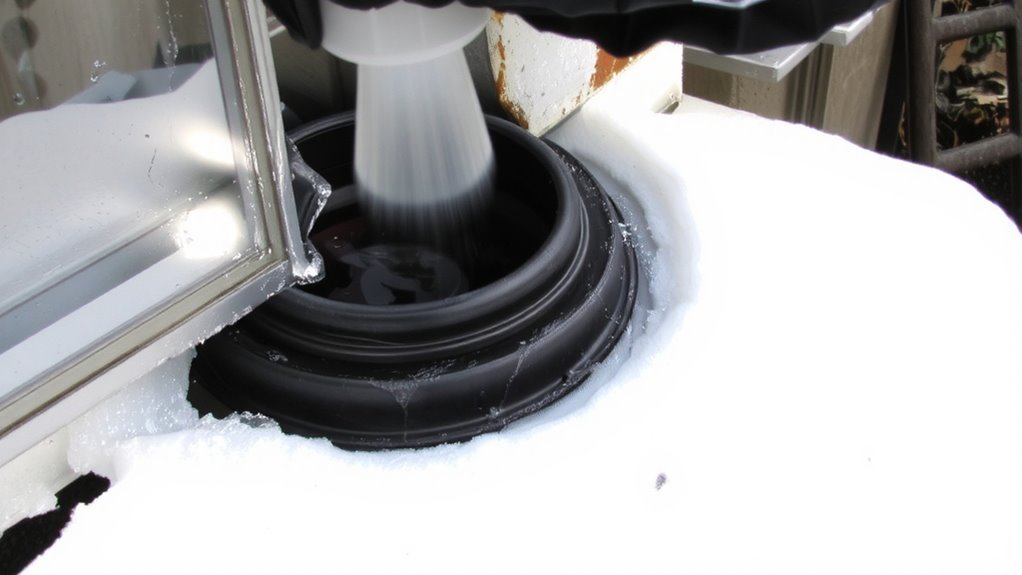
Cold is the silent enemy of rubber weatherseals. It triggers thermal contraction, causing the material to shrink and stiffen as temperatures drop. You see this when doors stick or windows resist closing in winter. The rubber’s polymers lose kinetic energy, reducing elasticity below freezing. Repeated stress accelerates material fatigue, especially in door and window gaskets cycling between warm and subzero conditions. Most standard EPDM rubber seals retain flexibility down to -40°F (-40°C), but below this, microcracks initiate. Each flexing motion widens these cracks, particularly at stress points like bends or corners. Thermal contraction also pulls the seal away from its mating surface, creating gaps. Over time, material fatigue degrades structural integrity, leading to full fractures. Exposure to ozone and UV light worsens this degradation. The result isn’t just air leakage-it’s permanent failure. Without intervention, these compromised seals reduce energy efficiency by up to 25%.
How Silicone Spray Prevents Cold-Weather Damage
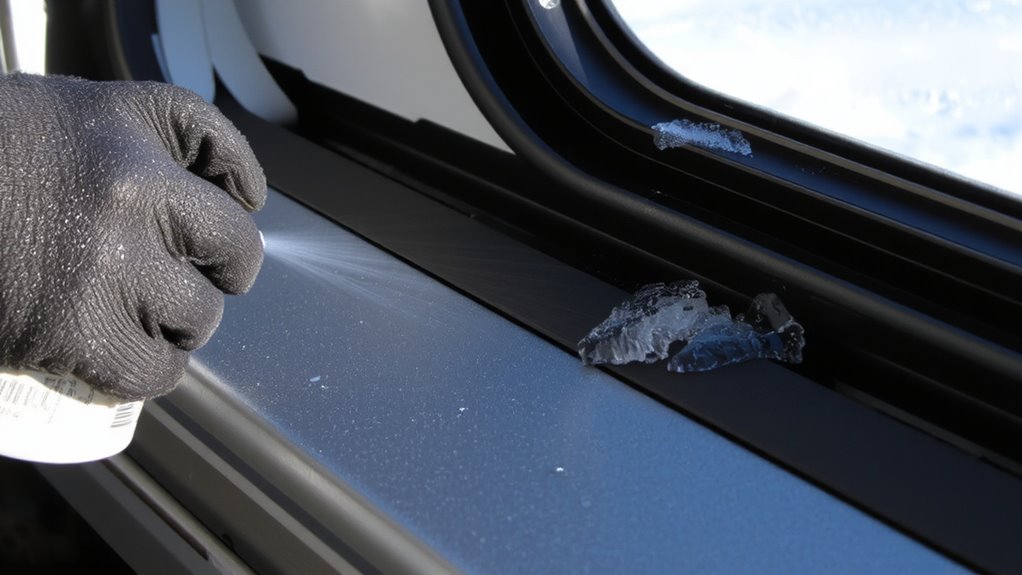
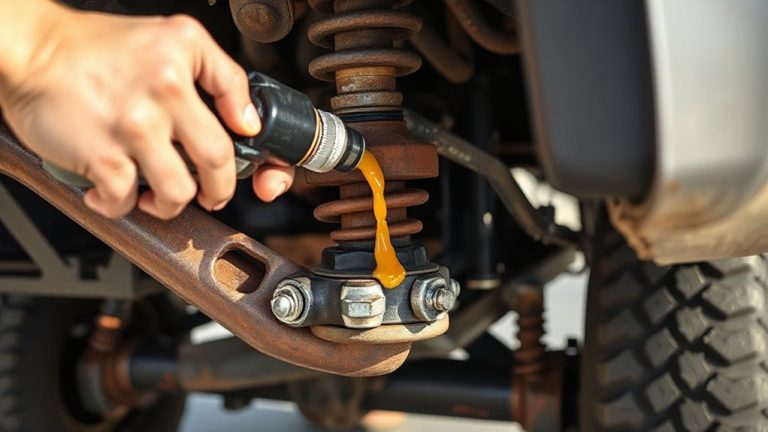
While cold itself doesn’t directly destroy rubber seals, the conditions it creates do-and that’s where silicone spray steps in. It forms a hydrophobic barrier that minimizes moisture retention, preventing trapped water from freezing and expanding inside rubber pores. Ice formation generates internal pressure, which promotes cracking. Silicone reduces surface tension, allowing the seal to flex despite temperature swings. It also stabilizes performance across thermal expansion cycles, where materials contract in cold and expand when warmed. Repeated shifting leads to fatigue without lubrication. A uniform silicone layer maintains plasticity, lowering the glass shift temperature slightly. Sprayed seals experience up to 40% less brittleness at -20°C compared to untreated ones. The coating lasts six months outdoors, resisting UV and ozone. You apply it evenly with a precision nozzle, ensuring full coverage without overspray.
Best Silicone Sprays for Weatherstripping
You’ve seen how silicone spray protects rubber weatherseals from freeze-thaw stress and maintains flexibility in extreme cold, but not all products deliver the same level of performance. Temperature resistance and material compatibility are critical for long-term protection. Choose sprays rated for -40°F to 400°F to endure harsh conditions. Below is a comparison of top-rated options:
| Product | Temperature Resistance | Material Compatibility |
|---|---|---|
| Permatex Silicone | -40°F to 400°F | Rubber, plastic, metal |
| CRC Dry Silicone | -40°F to 350°F | Rubber, vinyl, painted surfaces |
| 3M Silicone Lube | -40°F to 375°F | Rubber seals, PVC, composites |
Permatex offers superior temperature resistance. CRC minimizes dust attraction. 3M guarantees even dispersion without dripping. Each maintains seal elasticity without degrading substrates. Always verify compatibility with your seal’s base material.
How to Apply Silicone to Door and Window Seals
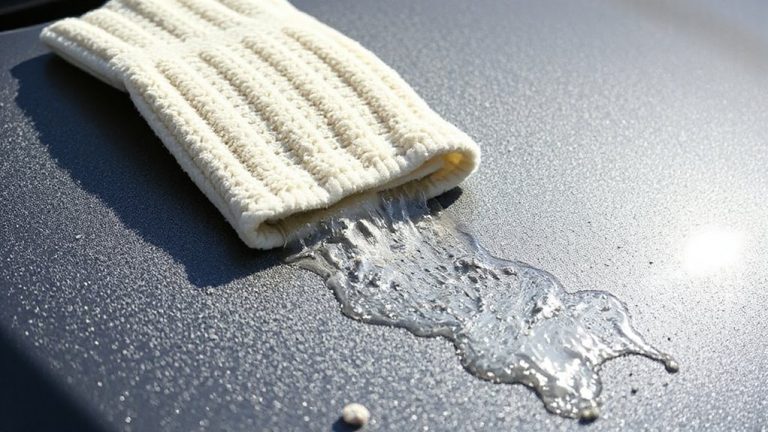
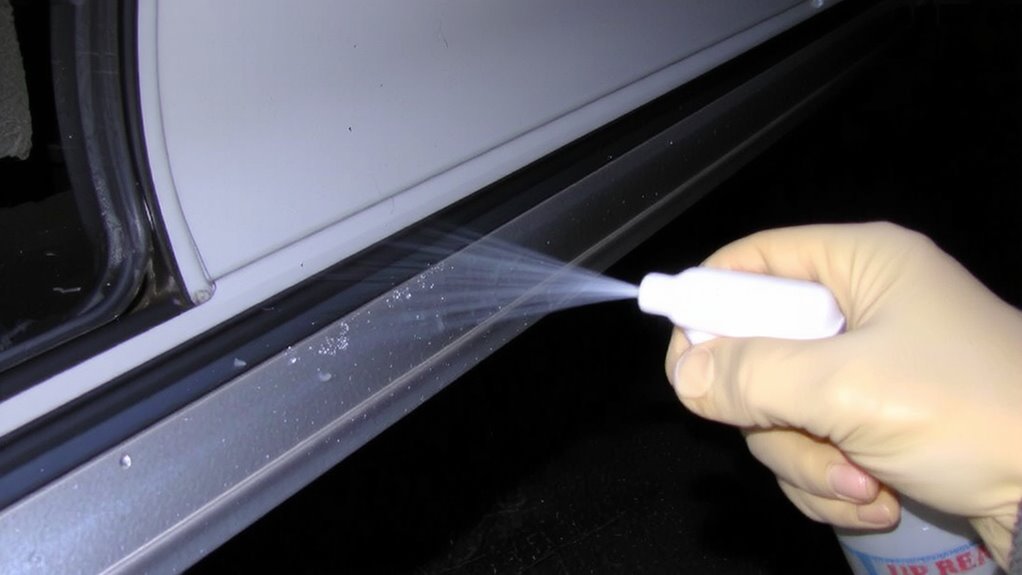
When applying silicone to door and window seals, proper technique guarantees long-lasting protection and peak performance. Begin with a clean, dry seal-wipe away dirt and moisture using a lint-free cloth. Hold the silicone spray 6 to 8 inches from the surface to guarantee maximum spray technique. Apply in short, controlled bursts while slowly moving along the entire length of the seal. This method promotes even coverage and prevents pooling. Rotate the door or window slightly to access all angles. Use a silicone formula labeled “non-staining” and “fast-drying” to avoid residue on surrounding surfaces. A single pass is usually sufficient; over-application can attract dust. Let the seal cure for 15 to 20 minutes before closing the door or window. The applied layer forms a hydrophobic barrier that resists freezing and reduces friction, maintaining flexibility down to -40°F.
When and How Often to Reapply Silicone
A properly applied silicone treatment protects rubber weatherseals from drying, cracking, and freeze-sticking, but its effectiveness diminishes over time. You should reapply silicone every 3 to 6 months for peak performance. Long term durability depends on product quality and application consistency. Frequent reapplication compensates for silicone migration and evaporation, which occur naturally. Environmental exposure accelerates breakdown-UV radiation, ozone, temperature swings, and moisture reduce protection. In harsh climates, especially with prolonged subzero temps, reapply every 90 days. For moderate zones, every 180 days maintains seal integrity. Use a thin, even coat; over-application doesn’t extend intervals. Check seals monthly. If they feel dry or resist compression, it’s time to re-treat. Consistent maintenance guarantees seals remain supple and airtight. Proper reapplication intervals preserve energy efficiency and prevent weather infiltration.
Common Mistakes to Avoid on Rubber Seals
Though silicone spray protects rubber weatherseals, improper use can degrade performance and shorten seal life. Over tightening seals compresses rubber beyond its elastic limit, causing permanent deformation and cracking under repeated stress. This reduces sealing efficiency by up to 40% and accelerates wear. Maintain clamping force within manufacturer specs-typically 2.5 to 3.5 Nm for standard fasteners-to preserve resilience. Ignoring UV damage leads to surface chalking and microfissures, especially in seals exposed over 500 hours to direct sunlight. UV radiation breaks molecular bonds in EPDM and silicone rubber, reducing tensile strength by 20–30% over 12 months. Inspect seals annually for brittleness or discoloration, particularly on south- and west-facing exposures. Apply UV-resistant coatings or use seals with integrated stabilizers like carbon black (2–3% concentration) to mitigate degradation. Avoid petroleum-based lubricants-they swell rubber and weaken adhesion.
How Flexible Seals Save Energy and Prevent Drafts
Since flexible rubber weatherseals maintain consistent contact under varying pressure and temperature, they play a critical role in blocking air infiltration. When seals remain pliable, they conform tightly to gaps, minimizing unwanted airflow. Rigid or cracked seals allow air infiltration, increasing heating and cooling demands. Reduced air infiltration directly improves energy efficiency by maintaining indoor climate stability. Materials with low thermal conductivity, like EPDM rubber, resist heat transfer, further enhancing performance. A typical door gap of 1/8 inch with a failed seal can leak over 150 cubic feet of air per minute under standard pressure differences. Properly sealed joints cut that loss by up to 90%. Silicone treatment preserves elasticity down to −40°F, ensuring long-term flexibility. You rely on this consistent seal to reduce HVAC runtime and lower utility costs. Energy loss prevention isn’t just about insulation-it starts with eliminating air infiltration at the source.
On a final note
You maintain seal integrity in subzero conditions by applying silicone spray. A 0.5 mm even coating restores plasticity without swelling rubber. Use dimethicone-based sprays with a -40°C operating range. Reapply every six months to sustain flexibility. Proper treatment reduces air infiltration by up to 30%. Avoid petroleum-based products-they degrade EPDM and NBR seals. Correct application guarantees long-term weatherstripping performance and energy efficiency.