How Water Spot Formation Chemistry Impacts Car Exterior Maintenance and Detailing
Hard water leaves spots because minerals like calcium and magnesium oxidize and deposit during evaporation. These deposits attract moisture and form crusts, especially above 8.5 pH or with over 120 ppm dissolved solids. Over time, they chemically etch paint and glass, causing permanent 0.5–2.0 micron deep marks. UV exposure accelerates damage. Safe removal requires pH-balanced, chelating agents like EDTA and 30–60 seconds dwell time. Prevention relies on deionized water rinses and microfiber towels at 300+ GSM. Lasting protection comes from nano ceramic coatings with 9H hardness and contact angles above 110°-you’ll discover how to apply them effectively.
Notable Insights
- Hard water minerals like calcium and magnesium deposit on surfaces as water evaporates, causing visible spots.
- High pH levels increase mineral solubility, leading to more residue and accelerating spot formation on car exteriors.
- Mineral deposits attract moisture and promote oxidation, worsening spotting and increasing maintenance frequency.
- Prolonged exposure to water spots can cause permanent etching in clear coats due to chemical reactions accelerated by UV.
- Using pH-balanced removers and hydrophobic coatings prevents spot adhesion and reduces long-term finish damage.
Why Does Hard Water Leave Spots on My Car?
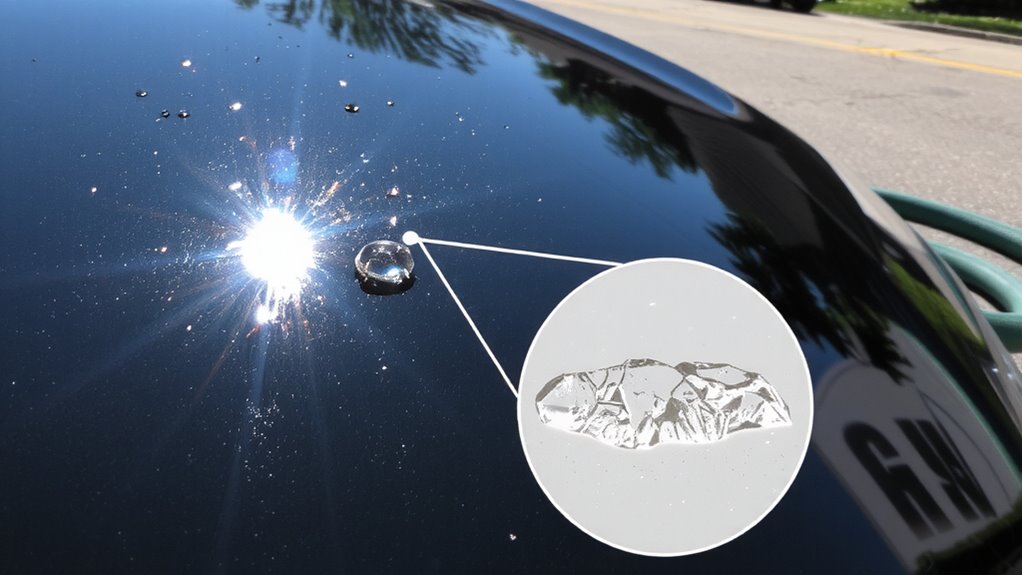
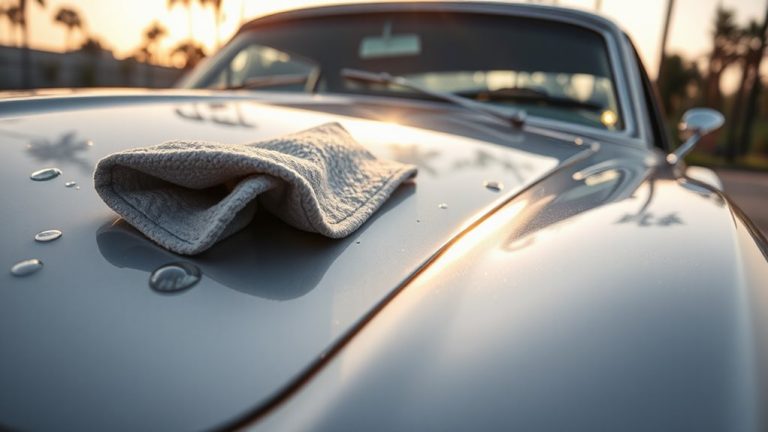
Ever wonder why your car seems to dry with annoying spots after a wash? Hard water leaves spots due to dissolved minerals like calcium and magnesium. When water evaporates, it deposits these minerals on surfaces. Mineral oxidation occurs as metals in the water react with oxygen, forming visible crusts. These residues attract moisture, worsening the spotting over time. A pH imbalance in your wash water-often above 8.5-increases mineral solubility, leaving more residue behind. Typical tap water measures 60–150 parts per million (ppm) of dissolved solids; above 120 ppm is considered hard. Deionized or distilled water, at 0–5 ppm, prevents deposits. You don’t need scrubbing-just pure water and proper drying. Using a pH-balanced rinse (6.5–7.5) minimizes chemical interaction with surfaces. Spot-free results require both low mineral content and neutral pH. Your car stays cleaner longer when water chemistry is controlled.
Can Water Spots Damage My Car’s Paint or Glass?
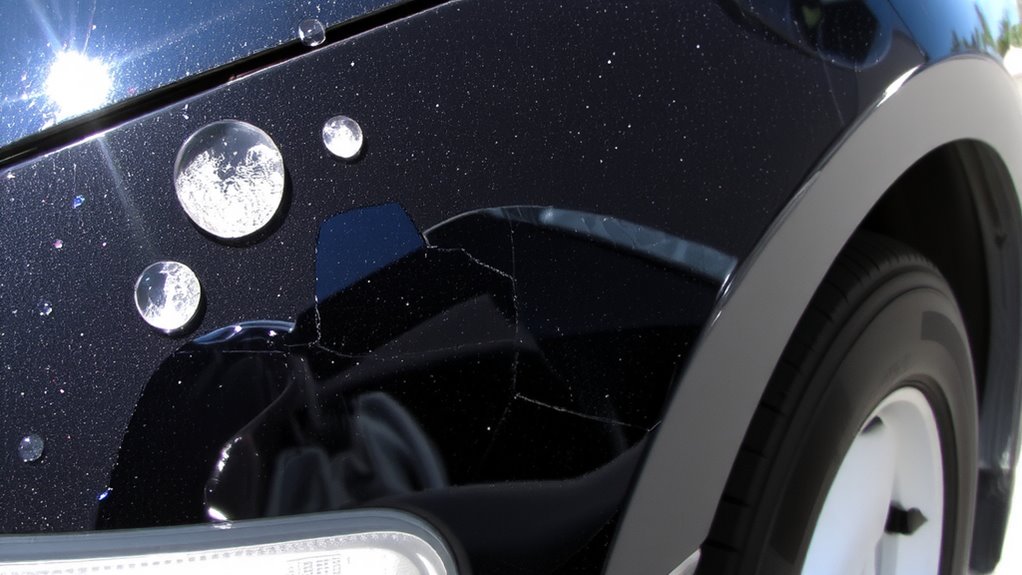
Mineral deposits from water spots aren’t just unsightly-they can harm your car’s surfaces over time. These deposits contain calcium, magnesium, and other ions left behind when water evaporates. On painted surfaces, prolonged exposure allows chemical etching to occur, especially under sunlight. UV rays accelerate the reaction, enabling minerals to bond with clear coat polymers. This etching process degrades the finish at a microscopic level, reducing gloss and protective capacity. On glass, mineral deposits create haze and can initiate fine pitting. Silica-based glass is vulnerable to alkaline mineral solutions, which slowly dissolve the surface. Once etching begins, it’s permanent without refinishing. You can measure damage depth using optical profilometry; typical etch marks reach 0.5–2.0 microns. Prevention with drying and water repellents is essential. Immediate rinsing reduces residue concentration, minimizing chemical etching risk.
How to Remove Water Spots Without Causing Damage
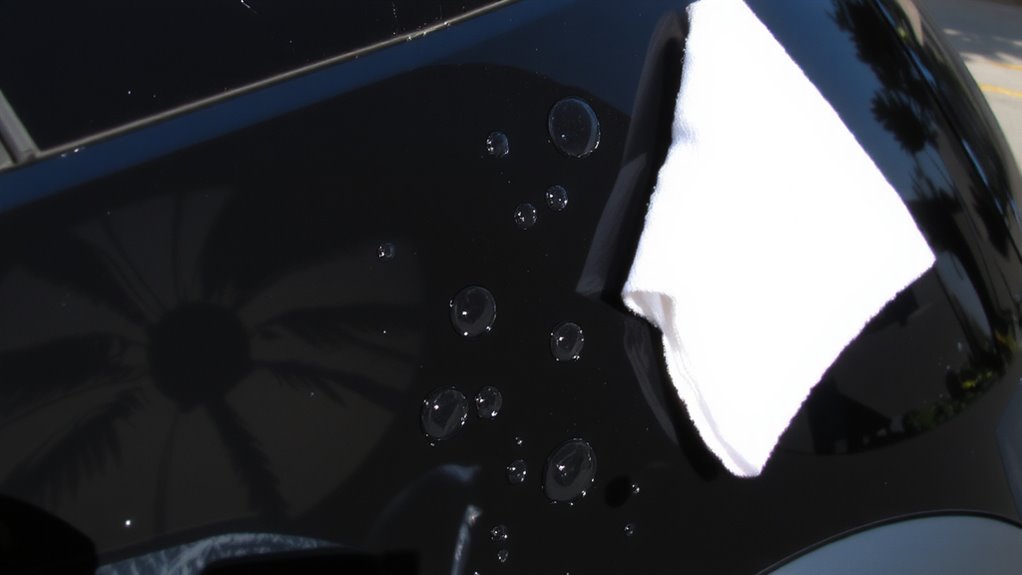
How do you safely remove water spots without compromising your vehicle’s finish? Start by identifying whether the spots are fresh or etched, as prolonged exposure accelerates chemical reactions between mineral deposits and the surface. Use a pH-balanced, non-abrasive water spot remover with chelating agents like EDTA, which bind to calcium and magnesium ions in hard water. Apply it with a microfiber towel using light pressure-typically 2–3 psi-to avoid swirl marks. For stubborn spots, allow a dwell time of 30–60 seconds to let the solvent break down silica-based deposits. Rinse thoroughly with deionized water to prevent residue. Never use vinegar or acidic cleaners on painted surfaces; they can degrade clear coats. On glass, a 5% citric acid solution works effectively but requires immediate rinsing. Always follow manufacturer guidelines for dilution ratios and compatibility.
The Right Way to Dry Your Car and Prevent Spots
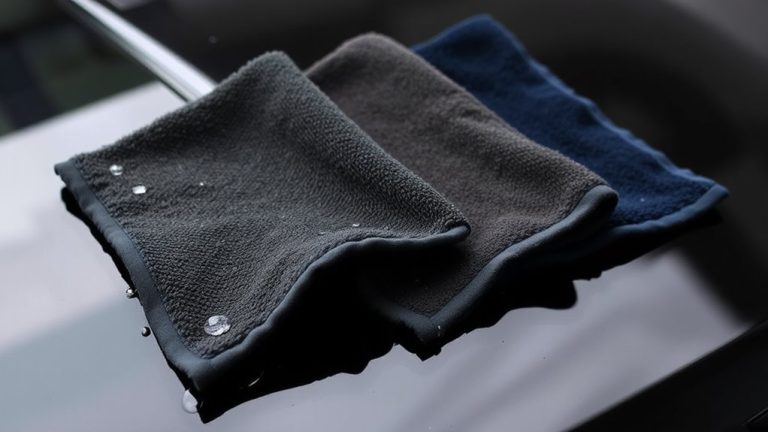
While drying may seem like the final step in a car wash, doing it correctly is critical to preventing water spots and preserving your finish. Air drying leaves mineral-laden water to evaporate, which increases spotting risk-especially in hard water areas with over 150 ppm dissolved solids. Instead, use a proper microfiber technique: select a 70/30 or 80/20 polyamide-polyester towel, at least 16” x 24”, with a minimum 300 GSM density. Fold it into quarters to maximize absorbency and reduce surface contact with trapped contaminants. Use straight-line motions, not circles, to avoid redistributing water over clean areas. Replace towels when damp or soiled, as saturation reduces wicking efficiency. A dedicated drying aid, like a blower for tight seams, complements the microfiber technique by removing standing water before towel contact. This systematic approach minimizes mineral deposition and keeps surfaces spot-free. For optimal results, choose a high-quality microfiber drying towel designed specifically for automotive use to ensure maximum absorbency and scratch-free performance.
Best Tools and Coatings to Stop Water Spots Permanently
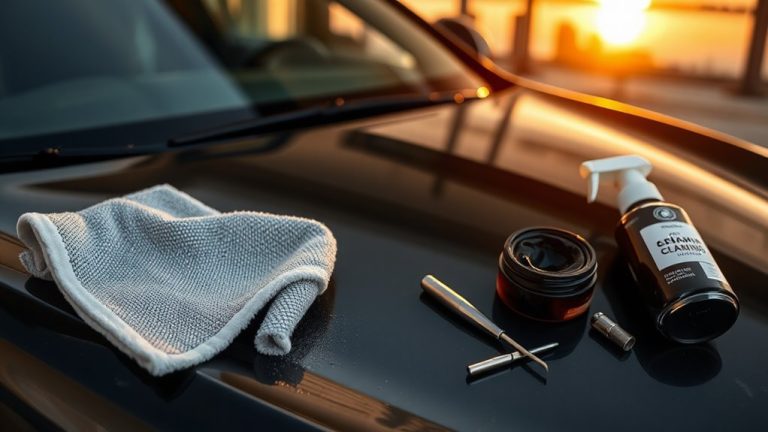
A clean, dry surface is only the beginning when it comes to long-term water spot prevention-what you apply afterward determines how well your vehicle resists mineral deposits. Hydrophobic sealants create a critical barrier, repelling water and reducing contact time for minerals to bond. These coatings use silicones or fluoropolymers to achieve water contact angles above 110°, causing droplets to bead and roll off. For superior protection, Nano ceramic coatings offer permanent solutions with hardness ratings up to 9H on the pencil hardness scale. They form covalent bonds with paint, lasting 2–5 years. Nano ceramic layers are typically 2–4 microns thick, providing chemical resistance and UV stability. Unlike waxes, which last weeks, both hydrophobic sealants and Nano ceramic options deliver measurable durability. Application requires precision: use microfiber applicators and cure under controlled humidity. With proper prep and execution, your finish won’t just shine-it’ll resist etching from waterborne contaminants for years. Best car ceramic coatings combine these protective properties with proven performance in real-world conditions.
On a final note
You can prevent water spots by drying your car immediately with a microfiber towel rated at 300–400 GSM. Hard water spots form when minerals like calcium and magnesium deposit on surfaces as water evaporates. Use pH-neutral detailing sprays to avoid etching. Apply ceramic coatings with a hardness of 9H to create a hydrophobic barrier. Regular maintenance with deionized water rinses reduces spotting risk by up to 80%.