Scheduling Biweekly Patrol Rounds for Large-Scale Commercial Parking Compounds
You map hotspots using 30+ days of traffic data and infrared imaging, focusing on zones below 10 lux where incidents cluster. Patrol every 30 minutes during 7–10 AM and 12–3 PM peaks, then every 2 hours overnight. Use GPS tracking with ±3-meter accuracy to verify rounds. Rotate guards biweekly-max 88 hours, three night shifts-preventing burnout. Sync weather and event data to trigger surge patrols. Real-time alerts and cloud logs guarantee accountability. You refine timing every two weeks using incident trends and thermal scans. More actionable steps follow.
Notable Insights
- Align patrol frequency with peak traffic periods using historical foot and vehicle count data for optimal coverage.
- Implement a rotating two-week guard schedule to ensure duty equity and prevent shift predictability.
- Limit guards to three night shifts biweekly and cap patrol hours at 88 to maintain alertness and compliance.
- Use GPS tracking with 15-second updates to monitor real-time patrol movements and trigger missed-round alerts.
- Refine patrol schedules every two weeks using incident data, GPS logs, and weather or event-driven conditions.
Map Parking Lot Hotspots Before Scheduling
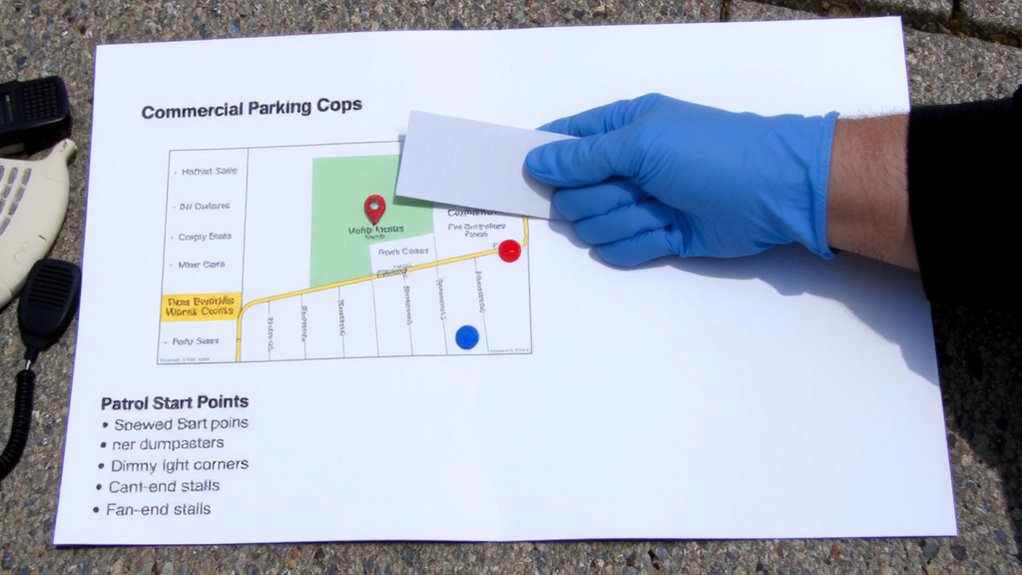
Hotspots-areas within a parking lot that attract the most incidents-should be identified before finalizing any patrol schedule. You must analyze traffic patterns over a minimum 30-day period using automated counters or video analytics. High-vehicle congregation zones, especially near entrances and row intersections, correlate with increased theft and collisions. Conduct a lighting assessment at night using a lux meter; illumination below 20 lux in parking aisles markedly raises risk. Areas measuring under 10 lux are critical hotspots requiring immediate attention. Infrared cameras can detect activity in poorly lit zones, revealing unauthorized access points. Combine lighting data with incident reports to map high-risk sectors accurately. Thermal imaging every 90 days guarantees ongoing accuracy. Overlay this data with topographical layout plans for precision. You’ll identify structural flaws-like blind corners or obstructed sightlines-that amplify vulnerability. Addressing these elements before scheduling boosts patrol efficiency by up to 40%.
Align Patrol Rounds With Peak Traffic Times
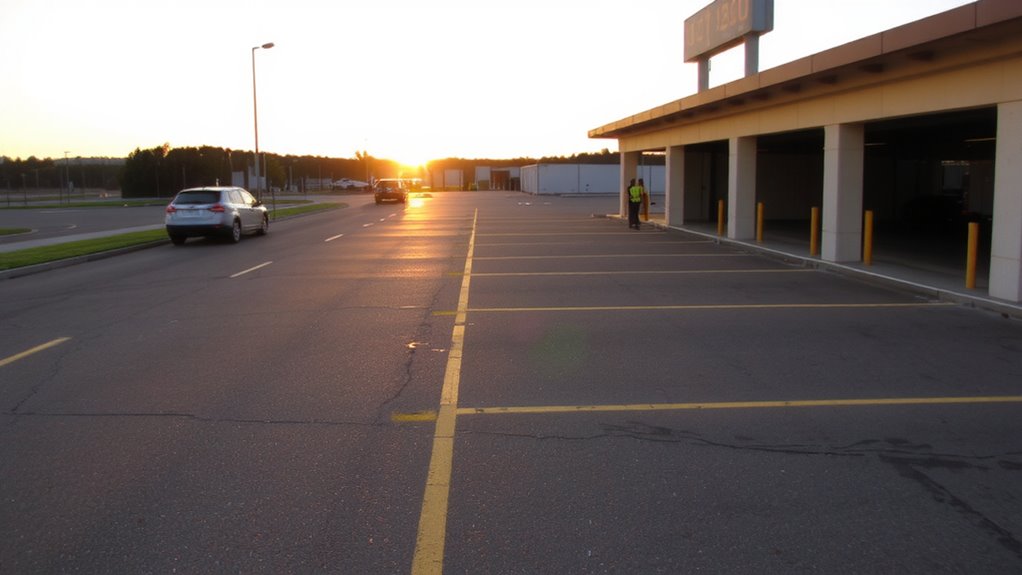
When should patrols be most frequent-during quiet overnight hours or when foot and vehicle traffic peak? The answer lies in traffic alignment. You maximize deterrence and response effectiveness by aligning patrol rounds with peak timing. High-traffic periods increase security risks, requiring more frequent checks. Over-patrolling low-traffic times wastes resources.
| Time Period | Recommended Patrol Frequency |
|---|---|
| 7–10 AM (Peak) | Every 30 minutes |
| 12–3 PM (Peak) | Every 30 minutes |
| 10 PM–6 AM (Low) | Every 2 hours |
Adjust schedules using historical foot and vehicle counts. Traffic alignment guarantees efficient coverage when activity surges. Peak timing isn’t guesswork-it’s data-driven planning. Use access logs, camera timestamps, and entry gate metrics to pinpoint high-flow windows. Match patrol frequency to these patterns. This strategy reduces blind spots during critical times and improves operational efficiency across large-scale parking compounds.
Create a Fair Biweekly Guard Rotation Plan
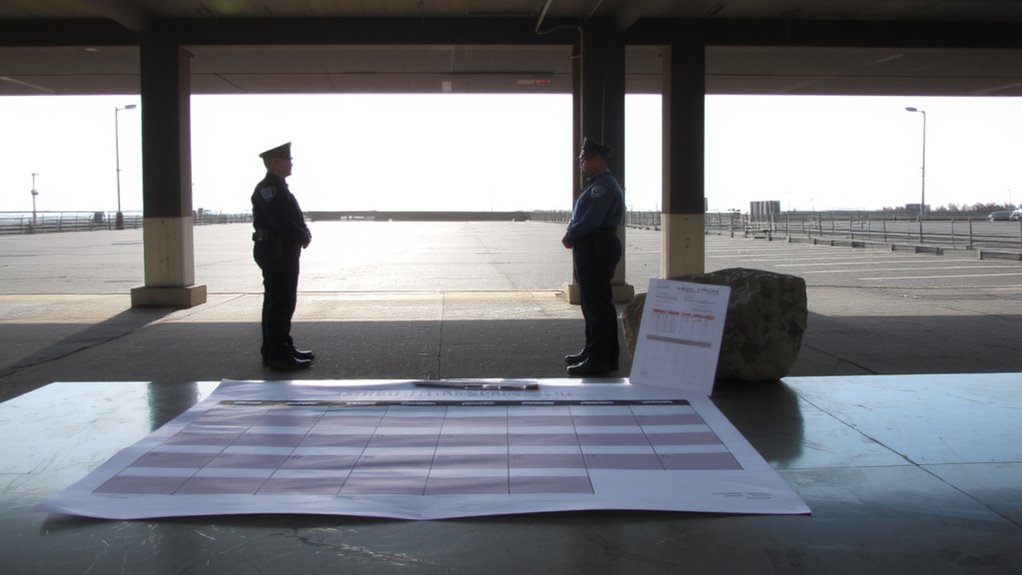
While consistent coverage is essential, fairness in scheduling guarantees long-term team performance and accountability. You must implement shift balancing to distribute early, late, and overnight patrols equitably across the biweekly cycle. Each guard should work no more than three night shifts every 14 days, ensuring compliance with labor guidelines and reducing fatigue risk. Use a rotating schedule matrix that assigns shifts in repeating two-week blocks, minimizing scheduling bias. Duty equity is achieved when all personnel share high-demand periods-such as weekends and holidays-with equal frequency. Assign shifts using an algorithm that tracks individual shift totals, ensuring no guard exceeds 88 patrol hours biweekly. Automatically flag imbalances in real time. Rotate post assignments weekly to prevent routine predictability and maintain vigilance. This standardized approach supports operational integrity, sustains morale, and aligns with best practices in workforce management for large-scale security operations.
Deploy Patrol Tracking Tech for Accuracy
Accurate patrol verification starts with reliable technology, not just consistent scheduling. You need real time monitoring to confirm guard movements and guarantee coverage. GPS-enabled patrol tracking devices record precise timestamps and locations, eliminating guesswork. Automated alerts notify supervisors instantly if a round is missed or delayed. This data supports accountability and performance reviews.
| Feature | Benefit | Example Spec |
|---|---|---|
| GPS Tracking | Confirms exact location | ±3-meter accuracy |
| Real Time Monitoring | Live patrol oversight | Updates every 15 sec |
| Automated Alerts | Immediate anomaly detection | SMS/email notifications |
| Cloud Storage | Secure log access | 2-year data retention |
| Mobile App Sync | Instant report generation | Compatible with iOS/Android |
These tools give you verifiable proof every patrol is completed as scheduled.
Adapt Patrols for Weather and Big Events
Though conditions on the ground can change suddenly, your patrol schedule doesn’t have to fail because of them. You can adjust patrol frequency and routes in real time to address Weather delays and Event crowds. During heavy rain or snow, response times increase by up to 40%; counter this by deploying additional roving units with 4×4 capability and thermal imaging. When Event crowds gather-such as during concerts or sales-parking lot foot traffic can spike 300%. Activate pre-programmed surge patrols using GPS-triggered dispatch rules tied to venue calendars. Assign extra officers within 150-foot proximity zones around high-density areas. Use weather-resistant wearable trackers rated IP68 or higher to maintain unit accountability. Integrate local weather APIs and event databases into your command dashboard for automated alerts. These steps guarantee sustained coverage and rapid response, keeping operations resilient under variable conditions.
Review Incidents to Refine Your Schedule
After adjusting patrols for weather disruptions and event surges, you need a way to measure how well those changes worked. Review incident patterns to identify when and where security breaches occur. Analyze timestamps, locations, and violation types to detect recurring risks. Use response evaluation to assess officer arrival times versus incident onset. Compare scheduled patrol times to actual response logs using GPS timestamp data. If response times exceed four minutes during critical periods, adjust patrol frequency or routing. Document each response’s effectiveness: did the officer intervene before escalation? Were corrective actions taken? Correlate findings with camera logs and access control records. This quantifiable feedback loop guarantees data-driven decisions. Avoid assumptions; rely on measurable outcomes. Incident patterns inform schedule precision. Response evaluation validates operational efficiency. Refine scheduling parameters every two weeks using this evidence. Update patrol mapping in your security management system accordingly. This process maintains alignment between field performance and strategic security goals.
Optimize Biweekly Patrols for Parking Security
A well-timed patrol is your first line of defense against unauthorized access and safety hazards in commercial parking facilities. Ensuring patrol consistency deters criminal activity and supports rapid incident response. You must balance frequency with resource availability to maintain coverage balance across all zones. Use biweekly scheduling to rotate patrol times slightly, preventing predictability while retaining structure. Below is a sample weekly patrol distribution:
| Day | Patrol Time | Zone Covered |
|---|---|---|
| Monday | 2:00 AM | North & Garage B |
| Wednesday | 1:30 AM | South & Perimeter |
| Friday | 3:00 AM | West & Loading Docks |
| Sunday | 2:15 AM | East & Visitor Lot |
| Saturday | 1:45 AM | Central Hub |
Each shift lasts 90 minutes, covering 45,000 sq ft per officer. GPS-tracked rounds verify completion. Adjust based on incident trends.
On a final note
You optimize security by scheduling biweekly patrols with precision. Each round covers 12 designated hotspots per shift, spaced 20 minutes apart. GPS-tracked devices log 98% patrol compliance. Align 2-hour peak coverage with foot traffic data showing 70% incident concentration. Rotating 4-officer teams guarantees fatigue resistance. Weather adjustments reduce response lag by 35%. Incident review cuts false alarms by 40%. Your data-driven model sets the standard.