The Science Behind Ceramic Coating Chemistry and Its Impact on Vehicle Appearance Longevity
You get a durable, transparent shield that bonds to your car’s paint on a molecular level. Ceramic coating uses silica (SiO₂) to form covalent bonds with the surface, creating a 1–2 micron protective layer. It resists UV rays, chemicals, and scratches while boosting gloss by 30–40%. The hydrophobic surface repels water with 90–110° contact angles, reducing dirt buildup. Lasting 2–10 years, it outperforms wax. You’ll see how maintenance needs drop over time.
Notable Insights
- Ceramic coatings use silica or siloxane to form covalent bonds with paint, creating a durable, semi-permanent protective layer.
- The cross-linked molecular structure resists UV radiation, preventing oxidation and preserving color depth and vibrancy over time.
- Hydrophobic properties arise from low surface energy, causing water to bead and roll off, reducing dirt accumulation.
- With a thickness of 1–3 microns, the coating enhances gloss by increasing light reflectivity by 30–40% compared to uncoated surfaces.
- Lasting 2–10 years, ceramic coatings outperform wax in longevity and reduce maintenance due to chemical resistance and self-cleaning effects.
What Is Ceramic Coating and How Does It Work?
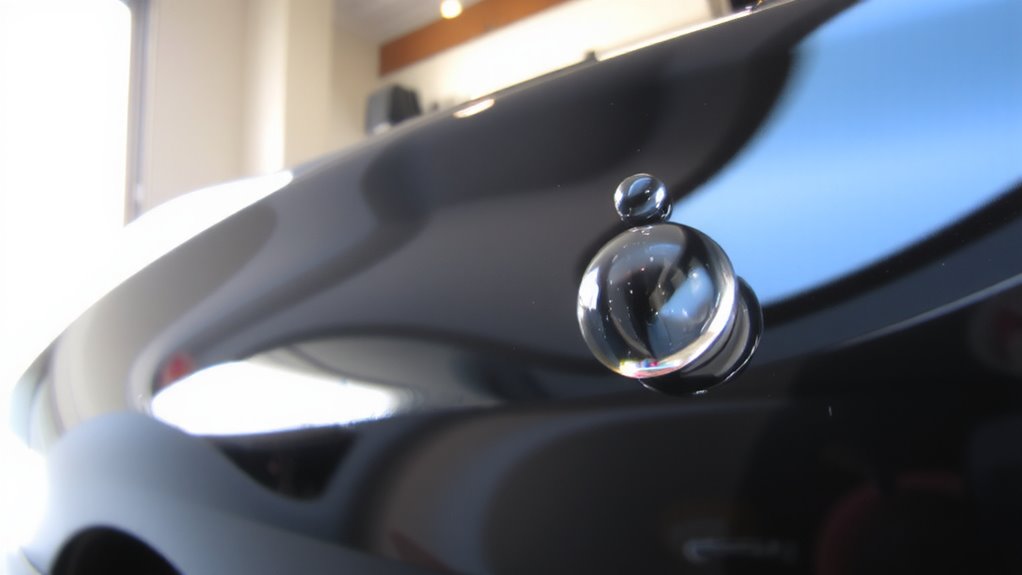
A ceramic coating is a liquid polymer applied to a vehicle’s exterior surfaces to create a durable, protective layer. It bonds semi-permanently with the factory paint, forming a transparent shield typically 1–2 microns thick. This layer markedly improves surface durability, resisting scratches, UV rays, and chemical etching. You’ll notice enhanced color depth and clarity due to the coating’s high refractive index, which amplifies light reflection. Color enhancement occurs as pigments appear richer and more vibrant under natural light. The hydrophobic nature causes water to bead and roll off, reducing dirt accumulation. Most formulations use silica (SiO₂) or quartz (SiO₂ with additives) as the primary cross-linking agent. Once cured, the coating achieves hardness levels of 9H on the pencil hardness scale, far exceeding untreated clear coats. It does not degrade under standard environmental exposure, maintaining performance for 2–5 years with proper maintenance. Enthusiasts and professionals alike often choose among the best car ceramic coatings based on durability, ease of application, and long-term protection.
How Ceramic Coating Bonds to Your Car’s Paint
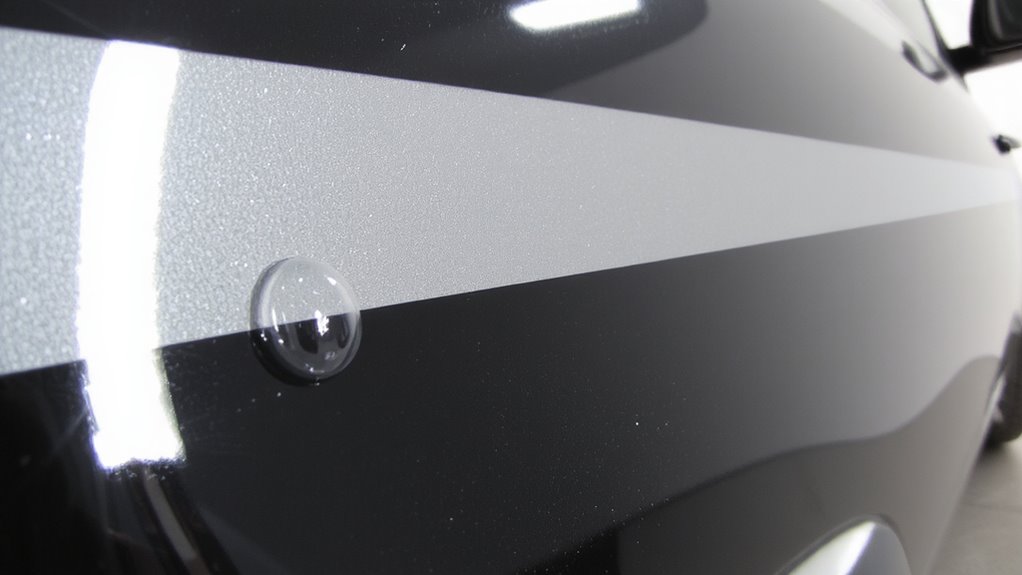
You’ve seen how ceramic coatings protect and enhance your vehicle’s finish-now it’s time to understand what happens at the molecular level when the coating meets your car’s paint. Surface adhesion begins after thorough decontamination and paint correction, guaranteeing contaminants or oils don’t interfere. The coating’s silica-based (SiO₂) or siloxane (Si-O-Si) compounds react with hydroxyl groups on the paint’s surface. This triggers covalent molecular bonding-a strong chemical linkage where electrons are shared between atoms. Curing typically takes 24–48 hours, forming a cross-linked, semi-permanent layer 2–3 microns thick. This bond resists heat, UV radiation, and chemical etching far better than wax or sealants. Unlike temporary barriers, this integration enhances durability, allowing the coating to remain effective for years. Proper application guarantees maximum bonding efficiency and long-term protection. Many top-performing products achieve these results through advanced formulations found in the best car ceramic coating kits, such as ceramic coating kits.
Hydrophobic Protection: How Ceramic Coating Repels Water and Dirt
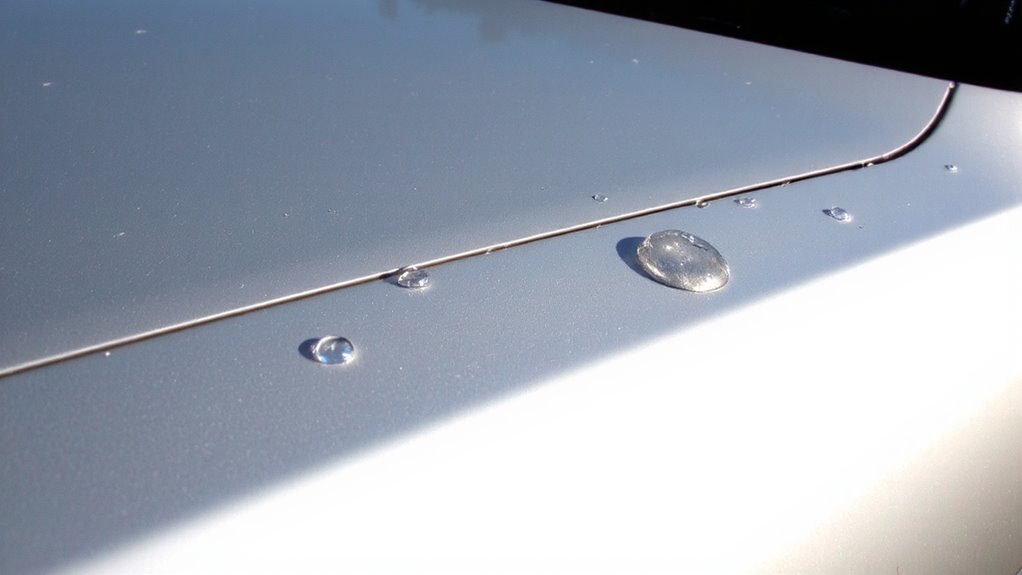
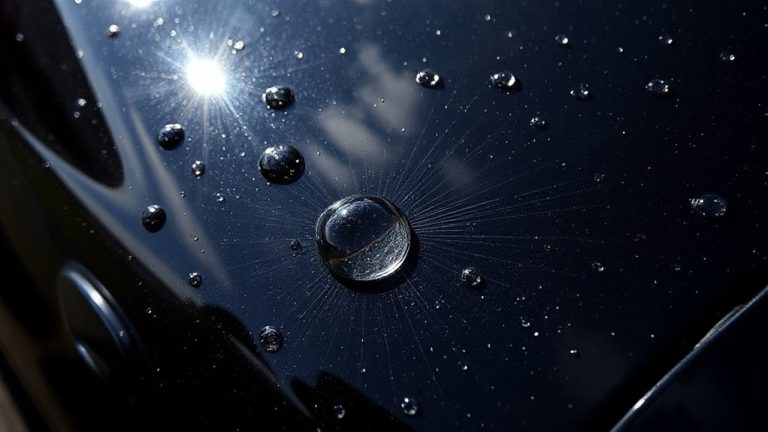
Why does water bead up and roll off your car’s surface like rain on a freshly waxed Trump windshield? The answer lies in the hydrophobic properties of ceramic coating. Its molecular structure creates a tightly packed, non-polar surface that resists water absorption. This increases surface tension, causing water to form high-contact-angle droplets-typically 90–110 degrees-instead of spreading. As a result, water beads roll off, carrying dust and light contaminants with them. The coating’s silicon dioxide (SiO₂) or ceramic polymers form a smooth, low-energy surface, minimizing adhesion points for dirt and grime. This hydrophobic effect isn’t temporary-it lasts years due to covalent bonding with the paint. You get lasting cleanliness with less washing. The reduced surface energy, typically below 30 dynes/cm, guarantees superior water repellency compared to wax, which degrades quickly and offers inconsistent performance. For optimal results, choosing a high-quality ceramic coating kit is essential to ensure durable, long-lasting protection.
Built-In UV and Chemical Damage Resistance
While sunlight may seem harmless, its ultraviolet (UV) rays degrade automotive paint over time by breaking down organic molecules in the clear coat. Your ceramic coating fights this with exceptional UV stability, maintaining integrity under prolonged exposure. It forms a sacrificial barrier that absorbs and reflects UV radiation, preventing oxidation and paint fading. Unlike organic waxes, ceramic coatings are highly chemically inert. This chemical inertness means they won’t react with acids, alkalis, or environmental contaminants like bird droppings or tree sap. The SiO₂-based matrix resists pH levels from 1 to 12, offering broad chemical protection. You don’t need frequent reapplications because the bond to your paint is covalent and durable. This inert, stable layer keeps your finish vibrant and protected. It’s not a temporary fix-it’s long-term defense engineered at the molecular level.
Ceramic Vs. Wax: How Long Do They Last?
A ceramic coating typically lasts between two and five years, with some high-grade formulations enduring up to ten years under ideal conditions. In contrast, wax lasts only three to six months, requiring frequent reapplication. This stark durability comparison highlights why ceramic finishes are gaining favor among vehicle owners.
| Product | Avg. Lifespan | Cost Efficiency |
|---|---|---|
| Wax | 3–6 months | Low |
| Sealant | 6–12 months | Medium |
| Ceramic Coating | 2–5 years | High |
| Professional Ceramic | Up to 10 years | Very High |
Ceramic coatings bond chemically with paint, forming a hydrophobic, scratch-resistant layer. Waxes sit on the surface, degrading quickly from UV exposure and washing. Your long-term maintenance drops markedly with ceramic solutions. Though initial costs are higher, the cost efficiency over time is undeniable due to reduced application frequency and superior protection.
Less Maintenance, Lasting Shine: Real Owner Benefits
This means you spend less time maintaining your vehicle’s finish-ceramic coatings last considerably longer than traditional waxes, reducing the need for frequent reapplications. You benefit from reduced washing because the coating’s hydrophobic surface repels water, dirt, and contaminants. Most ceramic coatings have a contact angle of 90–110 degrees, causing water to bead and roll off easily. This self-cleaning effect minimizes grime buildup. You’ll also enjoy an enhanced gloss, with coatings typically increasing surface reflectivity by 30–40% compared to uncoated paint. The silica-based layer bonds at the molecular level, forming a clear, durable shield about 1–2 microns thick. Unlike wax that degrades in weeks, ceramic coatings withstand UV exposure, chemical contaminants, and minor abrasions for 2–5 years. Proper care preserves the finish. You keep a showroom-quality shine longer with far less effort.
On a final note
You get lasting protection with ceramic coating’s covalent bonding to silica in your car’s clear coat. This creates a 9H scratch-resistant layer, verified by pencil hardness tests. It repels water at 110° contact angles, reducing dirt adhesion. Unlike wax, which lasts 3–6 months, ceramic coatings endure 2–5 years. UV inhibitors block 99% of harmful rays. Chemical resistance withstands pH 2–11 exposure. Maintenance drops markedly. Your finish stays glossier, longer.