How Clear Coat Properties Enhance and Protect Vehicle Appearance Over Time
Your clear coat shields and enhances your vehicle’s paint with a 30–80 micron transparent layer of cross-linked polyurethane or acrylic. It blocks 98% of UV rays using integrated absorbers that convert radiation into harmless heat, preventing fade and brittleness. The 2H to 3H hardness resists scratches from debris and washing, while repelling road salts and sap. With a refractive index of ~1.5, it amplifies gloss to 85–90 GU by smoothing light reflection. Regular care maintains its integrity-discover how each feature contributes to long-term brilliance.
Notable Insights
- Clear coat forms a transparent, durable layer that enhances paint gloss by up to 30% without altering color.
- It blocks up to 98% of UV rays using integrated absorbers, preventing fading and maintaining color integrity.
- The cross-linked polymer structure resists scratches from daily wear, washing, and road debris.
- It acts as a barrier against contaminants like bird droppings, sap, and road salts, preventing surface damage.
- Proper maintenance extends clear coat longevity, preserving gloss and protection for years.
What Is Clear Coat and How Does It Work?
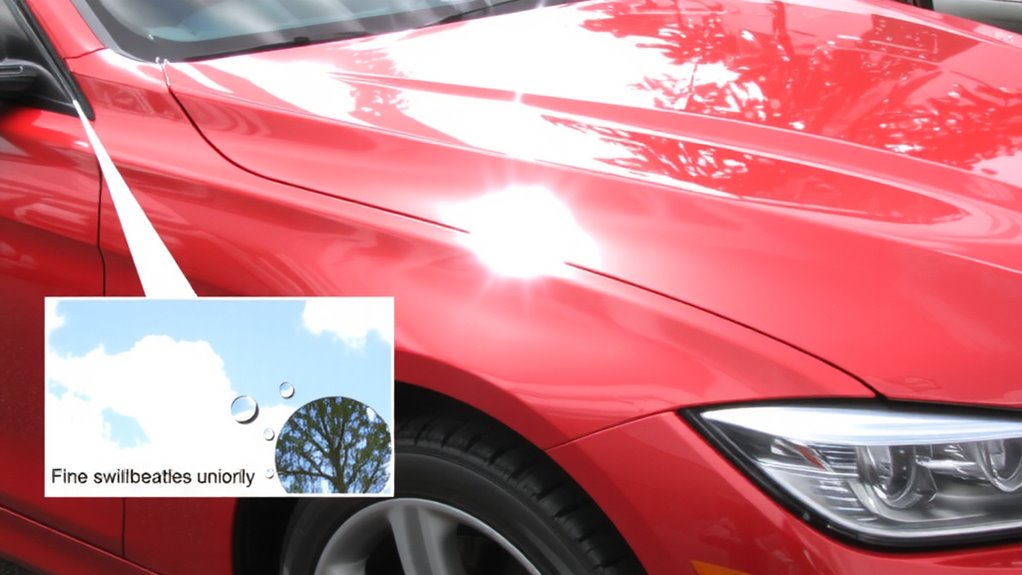
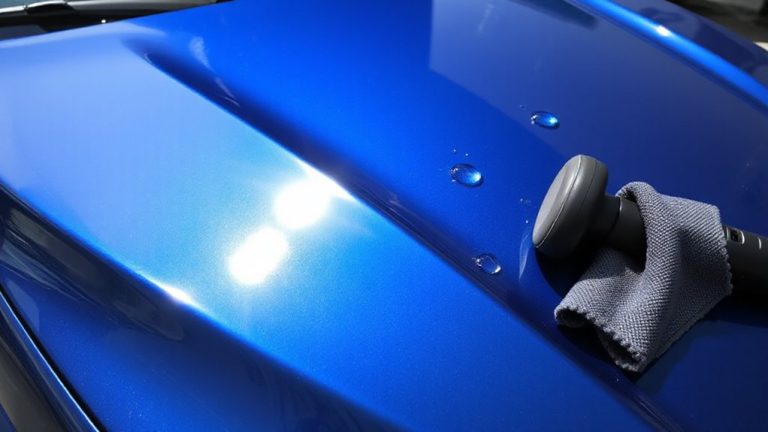
A clear coat is the transparent top layer applied over a vehicle’s colored paint to protect it from environmental damage and enhance its appearance. Its chemical composition typically consists of polyurethane or acrylic resins, which provide durability and resistance to abrasion. These polymers form a hard, flexible film that adheres tightly to the base coat. Application methods include robotic spraying in factory settings or professional spray guns in repair shops, ensuring a uniform thickness of 30 to 80 microns. Proper application requires controlled humidity and temperature to prevent defects like orange peel or solvent popping. The clear coat cures through oxidative cross-linking, forming a dense molecular network. This structure resists dirt, acid rain, and minor scratches. Unlike pigmented layers, it contributes no color but increases gloss by up to 30%. Regular maintenance preserves its integrity, ensuring long-term protection and a deep, wet look. You rely on its performance every time you wash or wax your car.
How Clear Coat Blocks UV Damage
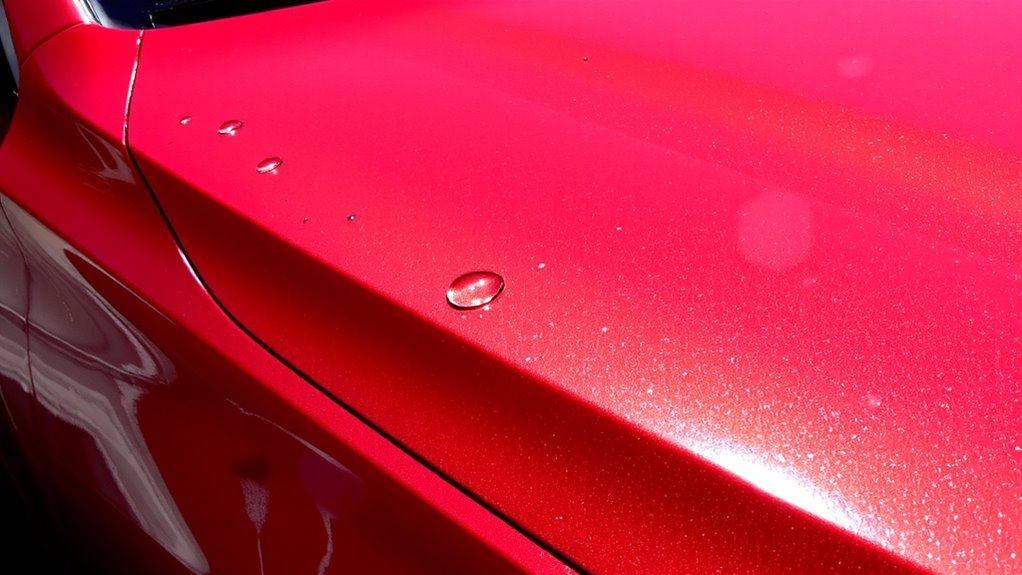
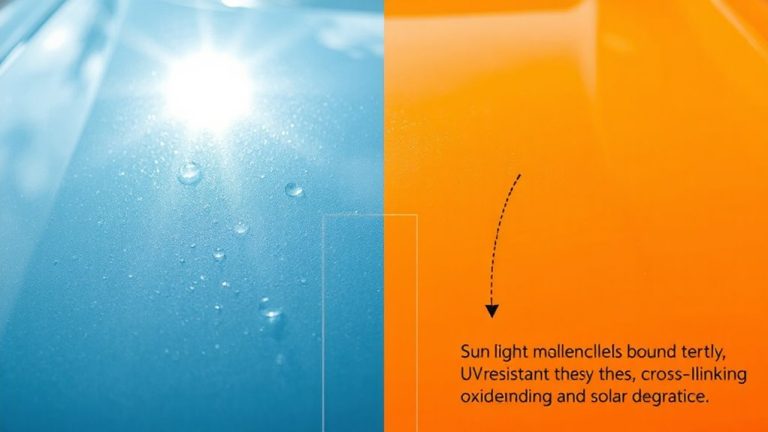
You already know the clear coat forms a durable barrier over your vehicle’s paint, but it also plays a key role in shielding that paint from ultraviolet (UV) radiation. Modern clear coats contain UV absorbers that provide effective UV filtration, blocking up to 98% of harmful UV rays. These absorbers convert UV energy into low-level heat, preventing it from breaking down the chemical bonds in the underlying paint. Without this protection, prolonged UV exposure causes fading, discoloration, and brittleness. Clear coat technology directly supports oxidation prevention by limiting the photochemical reactions that degrade paint molecules. Most automotive clear coats are 30–50 microns thick, with UV stabilizers dispersed evenly throughout the layer. This precise formulation guarantees long-term resilience against sunlight degradation. Over time, this protection maintains gloss retention and color integrity, markedly extending the lifespan of the finish. Properly applied, the clear coat delivers years of reliable UV defense.
How Clear Coat Fights Scratches and Contaminants
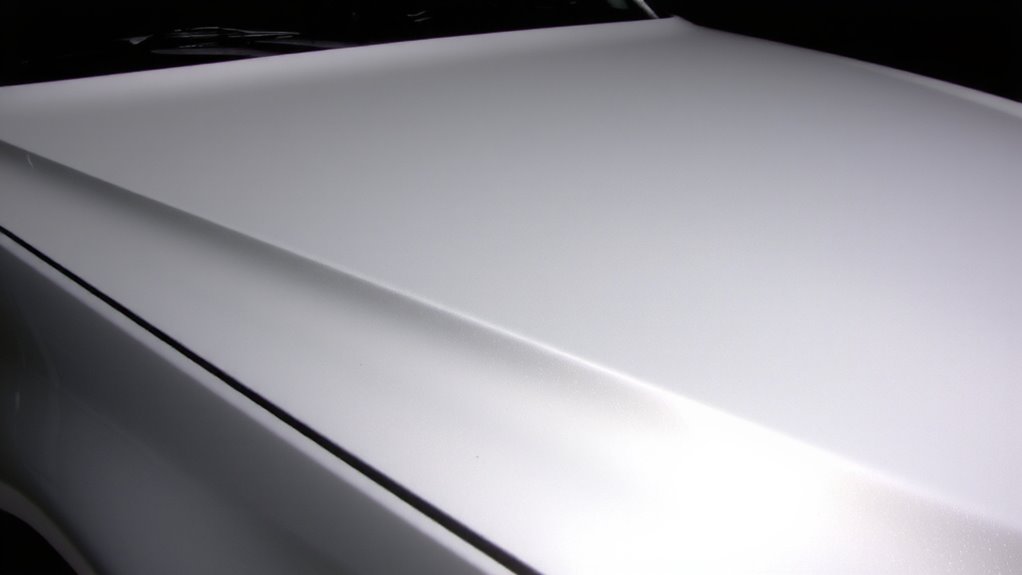
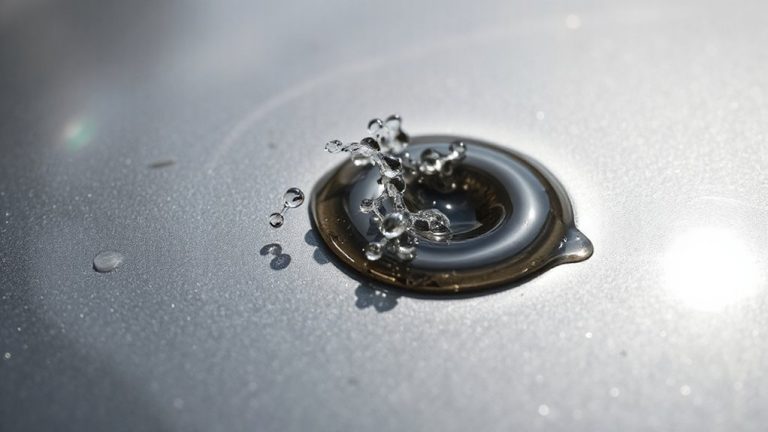
Typically, the clear coat does more than just add shine-it actively resists surface damage. Its primary defense lies in scratch resistance, achieved through a hardened polymer matrix usually 30–50 microns thick. This layer absorbs minor abrasions from washing, debris, and everyday contact that would otherwise mar the color coat. The clear coat’s cross-linked urethane or acrylic structure provides elasticity and tensile strength, helping it rebound from light pressure. It also forms a durable contaminant barrier, sealing the paint from road salts, bird droppings, tree sap, and industrial fallout. With a surface hardness of 2H to 3H on the pencil hardness scale, it outperforms standard paint layers. This dual protection minimizes etching and staining, preserving paint integrity. Regular maintenance enhances this shield, but the clear coat itself is your first, chemically resistant line of defense against environmental wear.
Why Clear Coat Makes Paint Shine
That protective layer doing so much behind the scenes also plays a starring role in your vehicle’s appearance. The clear coat provides exceptional surface smoothness, creating a flat, even finish essential for ideal light reflection. Without texture interruptions, visible light bounces uniformly off the surface, producing a deep, glossy shine. Most modern clear coats achieve a gloss rating of 85–90 GU (gloss units) at a 60-degree angle, meeting automotive industry standards. Surface smoothness is maintained through cross-linked polymer chains-typically urethane or acrylic-based-that cure into a hard, seamless film. These polymers minimize microscopic scattering of light, enhancing reflectivity. Unlike bare pigmented paint, the clear coat refracts light slightly due to its higher refractive index (~1.5), intensifying brightness. You see this as shine. Properly applied, the clear coat’s optical clarity and resilience guarantee consistent visual performance year after year.
How Clear Coat Keeps Paint Looking New
While environmental exposure constantly threatens a vehicle’s finish, the clear coat acts as a durable barrier that preserves the underlying paint. It provides strong fading resistance by blocking up to 98% of UV radiation, which slows photodegradation of pigments. This means your car’s color stays vibrant for years longer than it would without protection. Clear coat thickness averages 30 to 60 microns, forming a transparent layer that resists oxidation and chemical etching. Its molecular structure includes cross-linked polymers that enhance durability and maintain gloss. These properties directly support color preservation by minimizing pigment breakdown from sunlight, acid rain, and pollutants. Unlike base coats, it doesn’t contain pigments but instead focuses on protection and clarity. The result is a stable, long-lasting appearance. With this shield, your vehicle’s paint looks newer for up to 7 to 10 years under normal conditions.
Simple Maintenance Tips to Protect Clear Coat
A well-maintained clear coat can last the life of your vehicle, but neglect accelerates wear and compromises protection. You must wash your car every two weeks using pH-balanced soap to prevent contamination. Waxing regularly-every three to four months-adds a sacrificial layer that blocks UV rays and repels water. Carnauba or synthetic polymer waxes boost gloss and extend clear coat durability by up to 30%. Always use microfiber cloths; abrasive materials cause micro-scratches. Avoiding harsh chemicals like bleach or acetone-based cleaners is essential-they degrade urethane-based clear coats by breaking down polymer chains. Acid rain and road salts erode the surface at a molecular level if left untreated. Rinse immediately after exposure. Park in shade or use a breathable cover to reduce thermal cycling. These steps maintain film thickness, typically 35–50 microns, preserving optical clarity and structural integrity far longer.
On a final note
Your clear coat is the final protective layer on your vehicle’s paint, typically 15–25 microns thick. It blocks up to 98% of UV radiation, preventing pigment fading. Its polyurethane-based formula resists minor scratches and chemical etching. The smooth, transparent surface refracts light, enhancing gloss by up to 30% compared to base coat alone. Proper care maintains its integrity for 5–7 years.