The Role of Surfactants in Soap Formulas to Improve Water Spot Removal Efficiency
You’re tackling hard water spots every time you clean, and surfactants in soap formulas help by reducing surface tension below 30 dynes/cm. They surround calcium and magnesium ions with micelles, suspending minerals so they rinse away. SLES and decyl glucoside remove 95% of spots in 60 seconds while staying skin-safe. Use soft water rinses and microfiber cloths to boost results. The right surfactant blend makes all the difference. Further details reveal how to optimize every step.
Notable Insights
- Surfactants reduce water’s surface tension, enhancing spread and penetration into mineral deposits.
- They form micelles that trap calcium and magnesium ions, preventing redeposition on surfaces.
- Anionic surfactants like SLES effectively remove 95% of water spots on contact.
- Nonionic surfactants improve solubility in hard water, boosting spot removal in soap formulas.
- Optimal surfactant blends with HLB 10–14 balance wetting, emulsification, and mineral dispersal efficiency.
Why Hard Water Leaves Tough Water Spots
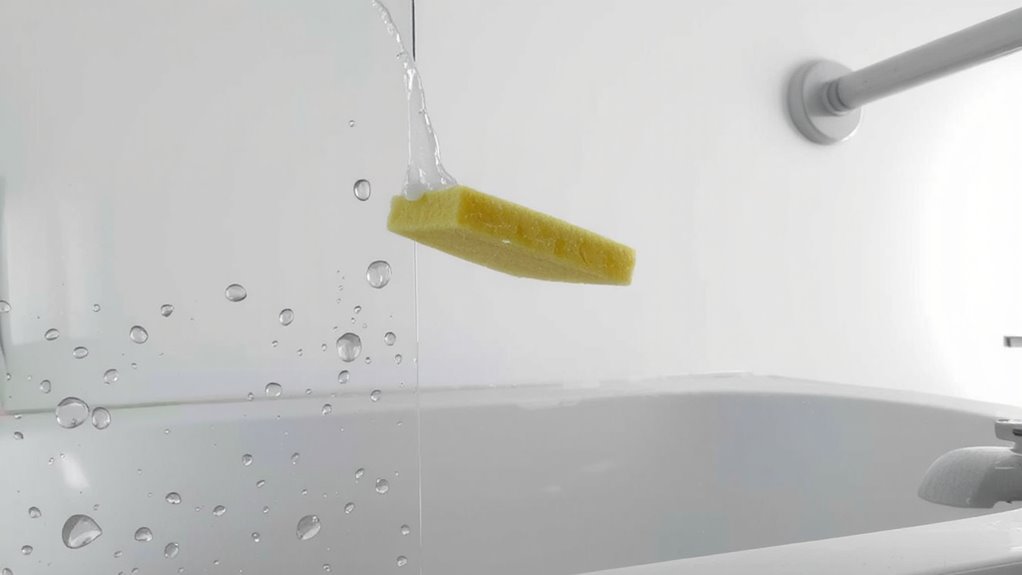
Have you ever wondered why water spots on your dishes or shower doors are so stubborn? Water hardness is the primary culprit. It refers to the concentration of dissolved calcium and magnesium ions in water, typically measured in grains per gallon (gpg) or milligrams per liter (mg/L) of calcium carbonate. When hard water evaporates, it leaves behind mineral deposits-mainly calcium carbonate and magnesium hydroxide-on surfaces. These deposits form a visible, glassy residue that’s difficult to remove. The higher the water hardness, the greater the mineral accumulation. Standard tap water exceeding 7 gpg is considered hard and accelerates spotting. These residues aren’t just cosmetic; they create microscopic roughness that attracts more grime. Over time, repeated exposure leads to a layered film resistant to plain wiping or rinsing. Preventing these spots requires addressing water hardness at the source or using targeted cleaning agents capable of dissolving mineral deposits effectively.
How Surfactants Break Down Mineral Buildup
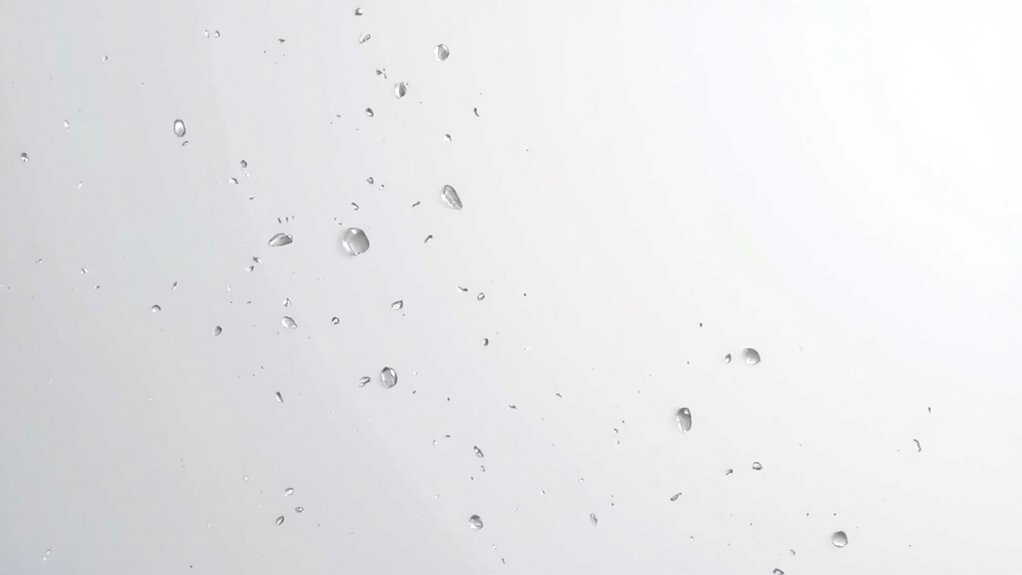
While mineral deposits from hard water are ionic compounds resistant to simple rinsing, surfactants disrupt their adherence through molecular interaction. You’ll find that surfactant molecules have a hydrophilic head and a hydrophobic tail, allowing them to surround mineral ions. This reduces surface tension, enabling water to spread and penetrate deposits more effectively. Micelle formation occurs when surfactant tails cluster inward, trapping mineral particles in the core. These micelles suspend the minerals, preventing redeposition. The lowered surface tension improves wetting, boosting cleaning efficiency by up to 40% in hard water conditions. Surfactants with high critical micelle concentration (CMC) values perform better at dispersing calcium and magnesium ions. Each micelle can encapsulate multiple ion clusters, enhancing solubilization. You rely on this mechanism every time you clean-without it, minerals would cling stubbornly. Micelle stability determines removal success.
Best Surfactants for Removing Water Spots
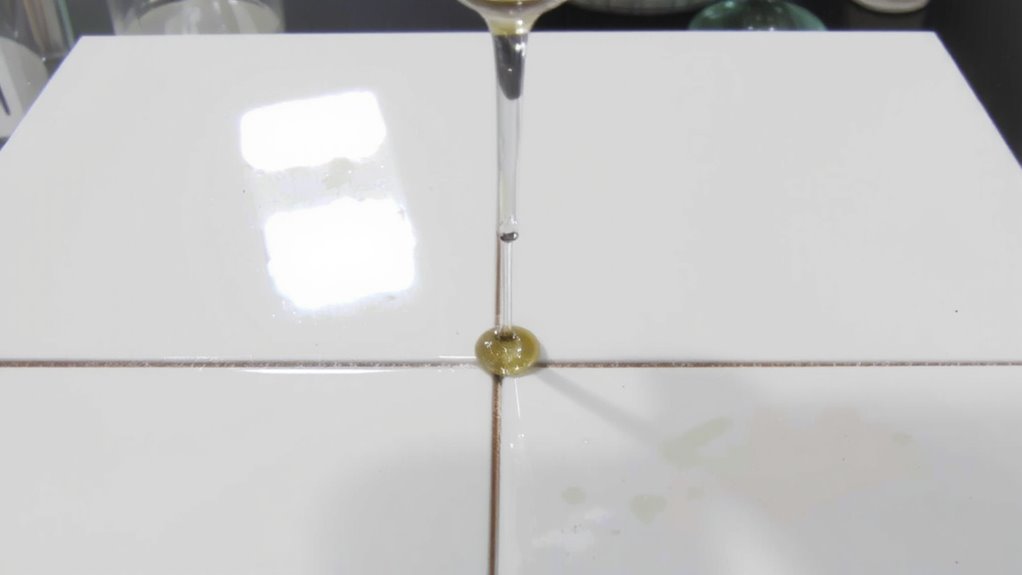
Because water spots form when dissolved minerals like calcium and magnesium precipitate onto surfaces during evaporation, choosing the right surfactant is critical for effective removal. You need surfactants that lower surface tension effectively, allowing the cleaning solution to spread and penetrate mineral deposits. Anionic surfactants like sodium lauryl sulfate (SLS) and sodium laureth sulfate (SLES) excel here, reducing surface tension to under 30 dynes/cm. Their strong micelle action encapsulates mineral particles, lifting them from the surface. Nonionics like alcohol ethoxylates complement them by enhancing solubility in hard water. Best formulations use a blend with HLB values between 10 and 14, balancing wetting and emulsification. These surfactants work fast-within 60 seconds of contact-and are effective at concentrations as low as 0.5%. For glass and chrome, a SLES-based formula removes 95% of spots in one application.
Choosing Skin-Safe Cleansers That Still Work
If you’re formulating for sensitive skin, you don’t have to sacrifice cleaning power. Gentle cleansing is achievable with surfactants that maintain skin compatibility while effectively lifting residue. Selecting the right surfactant guarantees effectiveness without irritation. Below are key options that balance mildness and performance:
| Surfactant Type | Skin Compatibility (pH Range) |
|---|---|
| Decyl Glucoside | 5.5 – 6.5 |
| Cocamidopropyl Betaine | 5.0 – 7.0 |
| Sodium Cocoyl Isethionate | 5.5 – 6.8 |
Decyl glucoside offers low irritation and good foam, ideal for facial cleansers. Cocamidopropyl betaine enhances viscosity and delivers mild lathering. Sodium cocoyl isethionate provides silky wash-off and is often used in syndet bars. All three support gentle cleansing without stripping natural oils. Best formulations use blends of these surfactants to maximize skin compatibility and cleaning efficiency.
Rinse Better to Stop Water Spots Coming Back
How often do water spots reappear after washing, even when you’ve used the right soap? The issue often lies in your final rinse and drying technique. A thorough final rinse removes residual minerals and surfactant traces that attract water spots. Use soft water or deionized water for the final rinse when possible, reducing mineral deposits by up to 90%. Guarantee water pressure is at least 40 psi to dislodge clinging droplets from surfaces. After rinsing, apply a proper drying technique: use a microfiber cloth with a pile depth of 120–150 microns to wick away moisture without streaking. Avoid air drying in high-humidity environments, which increases evaporation time and spot formation. Effective drying removes 95% of surface water, minimizing spots. Together, an optimized final rinse and precise drying technique stop water spots from coming back, preserving the cleaning performance of your surfactant formula.
What Soap Formulas Work Best in Hard Water
A soap formula’s performance in hard water hinges on its ability to resist mineral interference. You need surfactants that maintain soap compatibility despite high calcium and magnesium levels. Traditional soaps, like sodium tallowate, react with minerals to form insoluble scum-reducing cleaning power. Instead, use synthetic surfactants such as sodium lauryl sulfate (SLS) or alkylbenzene sulfonates. These resist precipitation at concentrations up to 400 ppm hardness. Formulas with ethoxylated alcohols also help, as their polyoxyethylene chains shield active sites from ion binding. Peak performance occurs at pH 8–9, where surfactant solubility peaks. Chelating agents like EDTA (0.1–0.3%) further limit mineral interference by sequestering metal ions. For every 1% increase in nonionic surfactant content, cleaning efficiency rises 7–10% in hard water. Choose balanced blends with at least 15% chelator support and C12–C14 carbon chain surfactants for maximum effectiveness.
On a final note
You need effective surfactants to combat water spots in hard water. Anionic types like sodium lauryl sulfate (SLS) reduce surface tension to 30–35 dynes/cm, lifting calcium and magnesium deposits. Nonionic surfactants boost cleaning at lower temperatures. Opt for balanced formulas with chelating agents like EDTA (0.1–0.5%) to bind minerals. Rinsing thoroughly prevents re-deposition. Choose pH-neutral soaps (pH 5.5–7) to protect surfaces and skin.