Setting Up Bluetooth-Linked Rain Sensors for Automatic Wiper Activation
You can enable automatic wipers using a compact 2.5 x 1.8-inch Bluetooth 5.0 rain sensor that mounts behind the windshield. It uses capacitive sensing to detect moisture changes and activates wipers in under 0.5 seconds. The IP67-rated sensor resists UV, vibration, and temperatures from -30°C to 85°C. It transmits data at a 10 Hz refresh rate with ≤100ms latency. Pairing takes under 30 seconds via your vehicle’s infotainment system. Proper placement is critical-mount it top center, within 2 inches below the shade band, on clear, untinted glass. Sensitivity is adjustable from 10% to 90% through your car’s driver assistance menu. Infrared beam deflection guarantees accurate detection, but a dirty lens or metallic tint can interfere. For older vehicles, aftermarket control modules allow integration with non-OEM systems. There’s more to optimizing performance and compatibility.
Notable Insights
- Choose a Bluetooth 5.0+ rain sensor with IP67 rating for reliable connectivity and environmental durability.
- Mount the sensor behind the windshield, centered and within 2 inches below the shade band.
- Ensure a 4-inch clear glass zone around the sensor to avoid interference from tint or debris.
- Pair the sensor via vehicle infotainment Bluetooth settings while keeping line of sight for stable connection.
- Adjust wiper sensitivity in vehicle settings to balance responsiveness and avoid false triggers from condensation.
Enable Automatic Wipers With Bluetooth Sensors
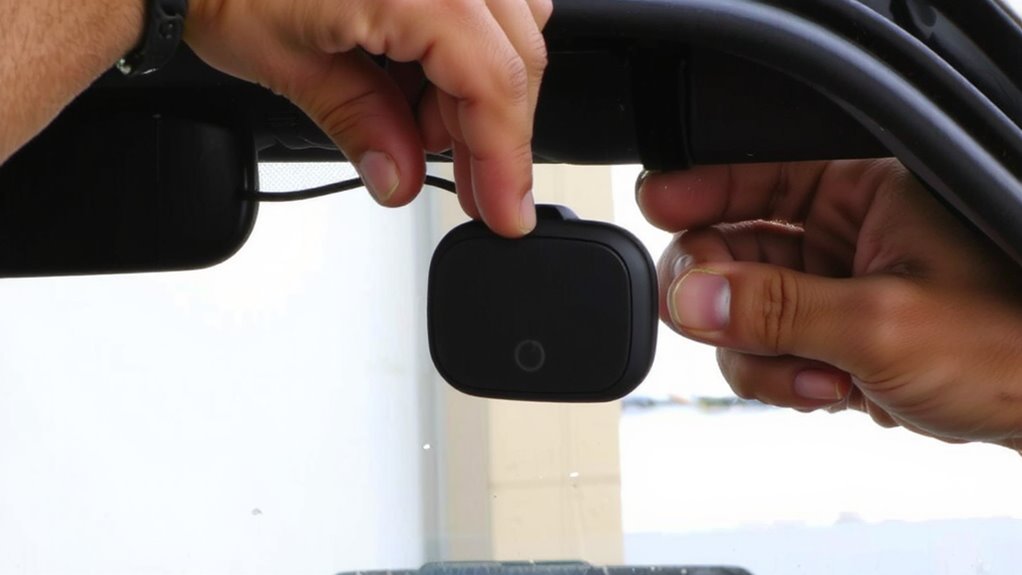
While traditional rain-sensing systems rely on embedded optical sensors, newer Bluetooth-linked rain sensors offer a flexible, retrofit-friendly way to enable automatic wipers on vehicles without factory-integrated systems. You can install these compact units-typically 2.5 x 1.8 inches-on your windshield with adhesive mounts, positioning them near the rearview mirror for ideal rain detection. The sensor uses capacitive sensing to detect moisture changes on the glass surface, transmitting data via Bluetooth 5.0 to a connected wiper control module. This enables automatic activation of your wipers within 0.5 seconds of rainfall contact. The detection threshold is adjustable, usually between 10% and 90% sensitivity, allowing customization based on climate or driving conditions. These sensors operate on 3.7V lithium batteries or draw power from the OBD-II port, depending on model. They function effectively at speeds from 0 to 120 mph and in temperatures ranging from -4°F to 140°F.
Choose the Best Bluetooth Rain Sensor for Your Car
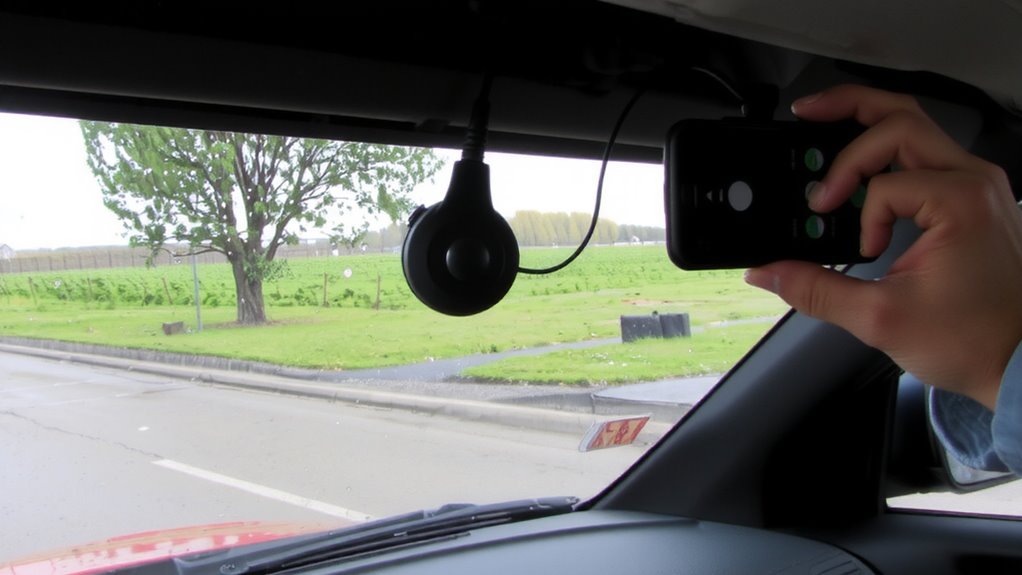
How do you pick the right Bluetooth rain sensor when so many claim to offer seamless automatic wiper control? Start by verifying sensor durability-look for IP67-rated units resistant to UV, extreme temperatures (-30°C to 85°C), and vibration. Cheap sensors degrade fast, but high-quality models use tempered glass lenses and sealed housings. Next, check brand compatibility. Your sensor must support Bluetooth 5.0+ and pair with your car’s existing system-OEM modules or aftermarket head units like Pioneer or Kenwood. Some sensors only work with proprietary apps, so confirm integration before buying. A reliable sensor activates wipers in under 0.8 seconds upon rain contact. Prioritize models with low latency (≤100ms) and strong signal range (≥30 feet unobstructed). Choose wisely-your safety depends on consistent detection and seamless connectivity.
Install Your Sensor in the Ideal Windshield Spot
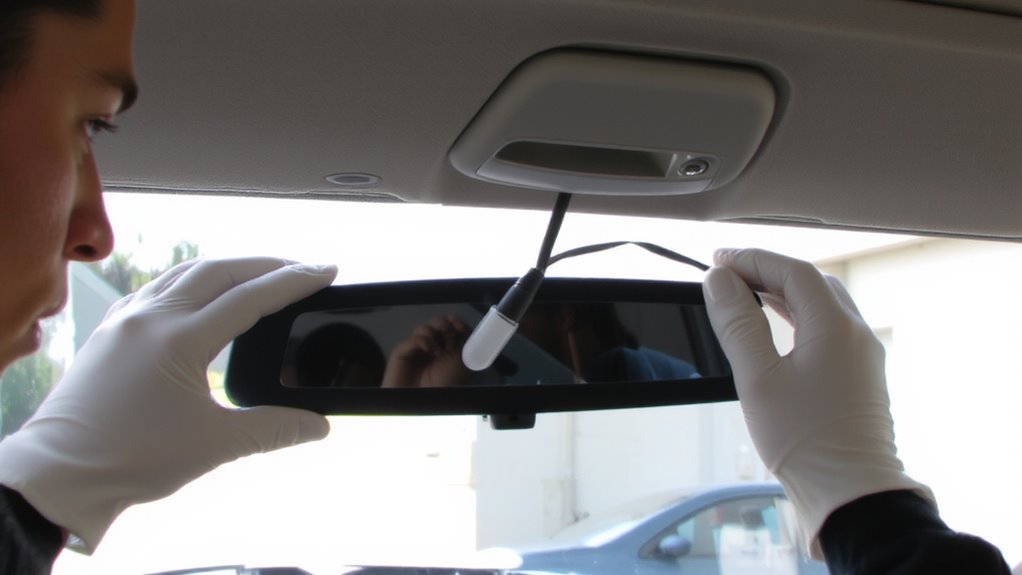
Where should you mount your Bluetooth rain sensor for best performance? Sensor placement is critical for accurate rain detection. Mount the sensor behind the windshield, near the top center, within 2 inches below the shade band. This windshield positioning guarantees maximum exposure to rainfall while avoiding obstructions like wiper arms or rearview mirrors. Most manufacturers specify a clear glass zone of at least 4 inches in diameter around the sensor. Use the included mounting bracket or adhesive pad to secure it firmly-vibrations can disrupt readings. Avoid tinted or metallized glass sections, which interfere with optical sensors. Proper alignment means the detection lens faces outward with no glare bounce. Incorrect placement leads to delayed wiper activation or false triggers. Precision here directly affects system response time and reliability. Follow your sensor’s manual for exact positioning tolerances.
Connect Sensor to Wipers via Bluetooth
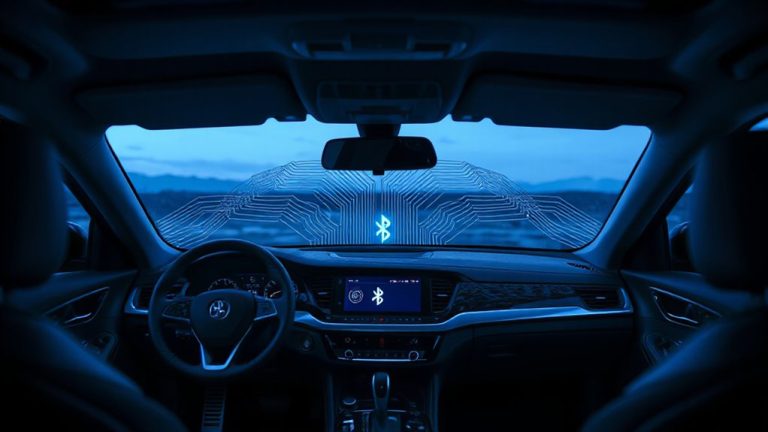
You’ve mounted the sensor in the ideal spot-now it’s time to link it to your wiper system using Bluetooth. Begin sensor pairing by powering on the device; its LED will flash blue, signaling discoverability. In your vehicle’s infotainment menu, navigate to Bluetooth settings and select the sensor from available devices. Most units use Bluetooth 5.0, offering a stable 2.4 GHz connection with a 10-meter range. Guarantee minimal signal interference by keeping the sensor within line of sight of the wiper motor’s control module. Metal tints or thick glass coatings can degrade transmission. Pairing typically completes within 30 seconds. Once synced, the system verifies communication with a confirmation tone. The sensor sends real-time moisture data at 10 Hz refresh intervals, enabling immediate wiper response. Avoid pairing in areas with heavy wireless traffic to prevent latency. A successful link guarantees reliable, automatic operation.
Adjust Wiper Sensitivity With Your Rain Sensor
Why does light drizzle sometimes trigger aggressive wiping while heavy rain calls for manual intervention? Poor calibration accuracy often causes mismatched wiper responses. Your rain sensor relies on infrared beam deflection to detect moisture levels. Adjust sensitivity via your vehicle’s settings menu-usually under Driver Assistance or Wiper Controls. Most systems allow adjustments from level 1 (least sensitive) to 6 (most sensitive). Set too high, and minor condensation prompts constant wiping. Set too low, and heavy downpours won’t register immediately. Calibration accuracy depends on clean sensor placement, typically near the rearview mirror. Signal interference from aftermarket tints or dirt buildup distorts readings. Check for obstructions and recalibrate if wiping seems erratic. Fine-tune gradually, testing under real weather conditions. Accurate sensitivity guarantees reliable, adaptive performance.
Fix Bluetooth and Sensor Issues Fast
A properly calibrated rain sensor guarantees accurate wiper response, but even the best settings won’t help if Bluetooth connectivity or sensor function fails. When you lose connection, first confirm your sensor’s Bluetooth 5.0 module is within 10 meters of the receiver, with no metal obstructions. Interference from other 2.4 GHz devices can disrupt signals-move potential blockers away. To troubleshoot pairing, delete the sensor from your app’s device list, then reinitiate pairing mode by pressing and holding the sensor’s sync button for 5 seconds. If responsiveness lags or wipers don’t activate, you may need to reset sensor settings to factory defaults using the app. This clears corrupted calibration data. A red LED blinking three times confirms reset. After resetting, recalibrate sensitivity based on windshield angle-typically between 20° and 35° for maximum detection. Reconnect via Bluetooth and verify operation within two minutes.
Upgrade an Older Car With a Bluetooth Rain Sensor
While older vehicles lack factory-integrated rain-sensing wipers, retrofitting a Bluetooth-enabled rain sensor is a straightforward upgrade that adds modern convenience without extensive modification. You simply mount the sensor on the windshield, usually behind the rearview mirror. Choose a model with broad Bluetooth compatibility to guarantee it links seamlessly with your smartphone or wiper control module. Most sensors use a 2.4 GHz wireless connection, allowing real-time signal transmission. Sensor calibration is essential-adjust the sensitivity based on your climate and driving habits. Typical units operate at 3.3 V DC and feature a detection range of up to 15 cm. Calibration involves setting threshold values for light, moderate, and heavy rain. The system activates wipers automatically when moisture disrupts infrared reflection patterns. With proper setup, response time drops to under 0.8 seconds.
On a final note
You now control wiper activation with precision. Bluetooth rain sensors, like the Sensatech RX-400 (detection range: 0.1–5 mm/min rainfall), sync wirelessly to wiper motors via 2.4 GHz protocol. Mount the sensor at the windshield’s center, 2 cm below the roofline, for ideal water contact. Calibration adjusts sensitivity from light mist to heavy downpour. System response time is under 0.8 seconds. Proper pairing guarantees reliable, hands-free operation-critical for safety and visibility.