A Guide to Selecting Polishing Compounds Based on Their Application and Desired Finish
Choose the right polishing compound by matching abrasive type to your material-use aluminum oxide for soft metals, diamond for carbide, and chromium oxide for stainless steel. Compound color indicates function: red for coarse cutting, white for fine finishing. Grit ranges from 120 to 1500, with finer abrasives below 5µm achieving mirror finishes up to 95 GU. Pair coarse compounds with wool wheels at 1,500–3,000 RPM, and ultra-fine with foam pads at 1,200–1,800 RPM. Avoid overheating above 130°F or skipping steps to prevent swirls. Maintain even pressure and overlapping passes for consistent results. Proper sequence and tool pairing guarantee smooth, high-luster outcomes down to 0.1 µm Ra-you’ll see how each choice directly impacts final quality.
Notable Insights
- Match compound abrasive type to material hardness: aluminum oxide for soft metals, diamond for carbide, cerium or chromium oxide for steel.
- Use coarse compounds (red) for heavy cutting and fine (white) or ultra-fine (blue) for finishing and gloss enhancement.
- Select compound grit based on desired surface roughness: 120–400 for stock removal, 800–1500 for mirror-like finishes below 0.3 µm Ra.
- Pair coarse compounds with wool wheels on high-speed rotary tools; use foam pads with dual-action polishers for fine finishing.
- Avoid skipping steps-progress through cut, refine, and polish stages to prevent defects and achieve 85–95 GU mirror gloss.
Types of Polishing Compounds Explained
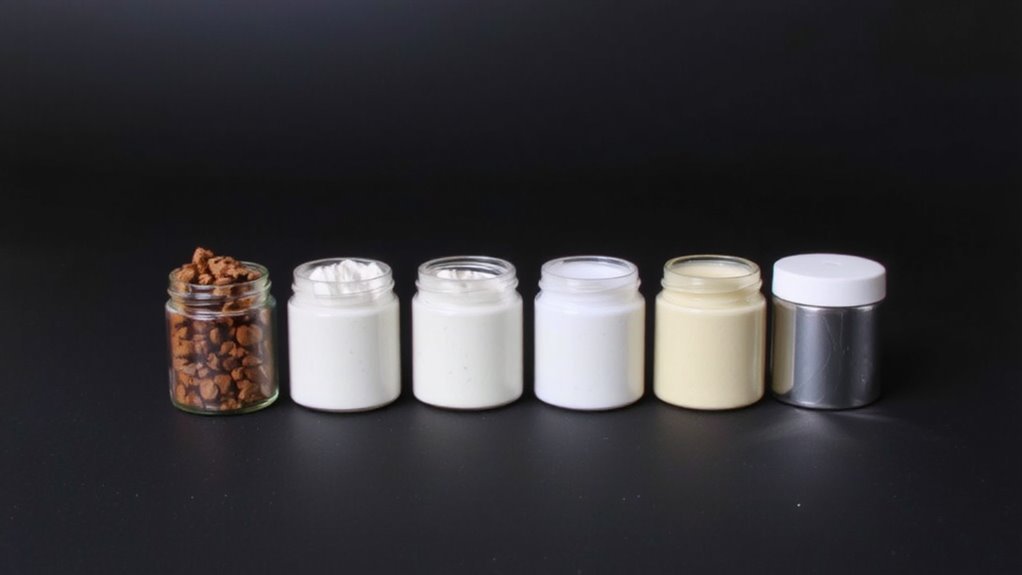
Polishing compounds aren’t one-size-fits-all. You’ll encounter various abrasive types, each designed for specific cutting and finishing levels. Common abrasives include aluminum oxide, silicon carbide, and cerium oxide, each differing in hardness and cutting efficiency. Compound colors help you quickly identify their purpose-red for coarse cutting, white for fine finishing, green for metals, and blue for cut-and-color applications. These colors aren’t arbitrary; they’re industry standards tied to abrasive type and performance. For example, a red compound often contains coarse aluminum oxide, while a white compound uses finer, milder abrasives for final buffing. Understanding compound colors saves time and improves results. You select based on material compatibility and desired surface finish. Abrasive types vary from 120 to 1500 grit equivalents, delivering precise stock removal rates. Matching grit level and compound color guarantees peak efficiency.
Match Each Polishing Compound to Your Material
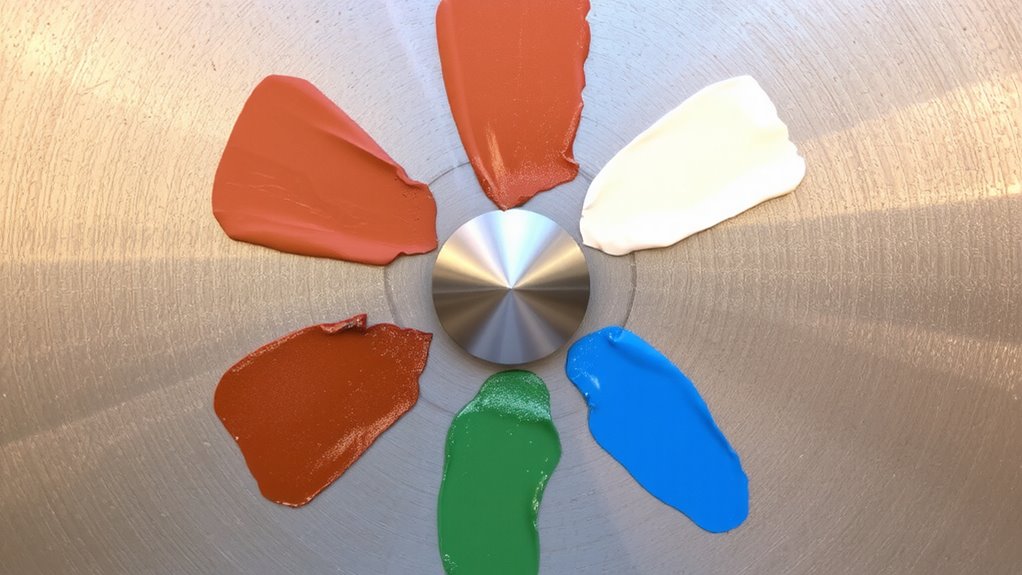
Choosing the right abrasive isn’t just about color codes or grit numbers-it’s about matching the compound to your material’s hardness and finish requirements. Material compatibility is critical: aluminum oxide works well on soft metals like aluminum, while diamond-based compounds are ideal for hard materials like carbide. If you’re polishing stainless steel, a chromium oxide compound delivers superior results. Improper compound selection leads to scratching or inefficient polishing. For example, using a coarse compound on a soft metal can gouge the surface. Match the abrasive particle size to your material’s Mohs hardness-softer materials need finer abrasives, typically below 5 microns. Harder materials tolerate compounds up to 15 microns. Always verify chemical compatibility to prevent corrosion. Using the correct compound improves efficiency, reduces rework, and extends tool life. Material compatibility isn’t optional-it’s foundational to successful compound selection.
Choose the Right Polishing Compound by Finish Level
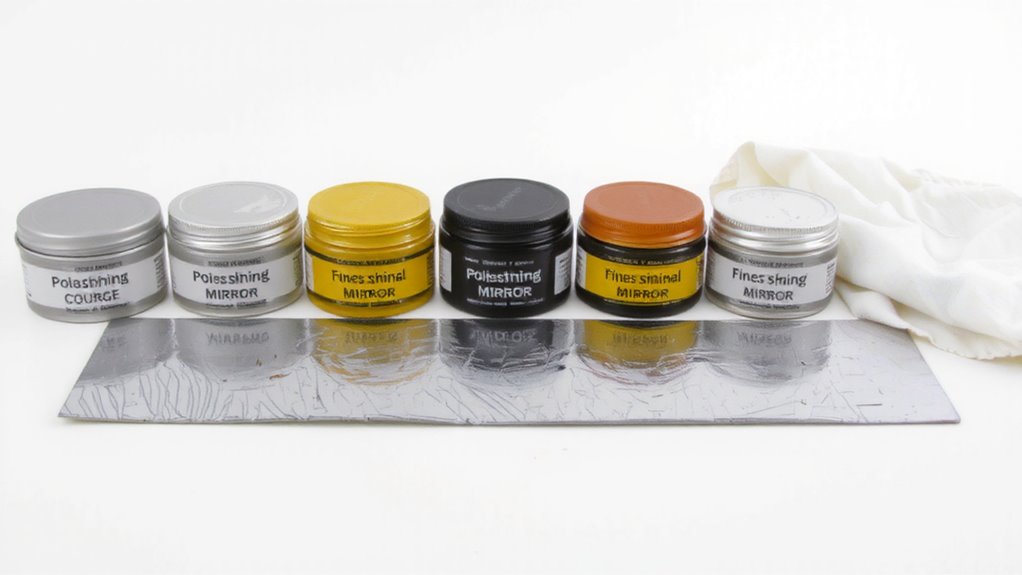
Even if you’ve matched the compound to your material, skipping the finish level consideration can ruin a good polish job. You need to align the compound with your desired gloss level and surface smoothness. Coarse compounds remove imperfections but leave a dull finish-gloss levels range from 10–30 GU (gloss units) on a 60° gloss meter. Medium compounds balance cutting and finishing, achieving 40–70 GU with visible clarity. For high-gloss results, use ultra-fine compounds; they refine surface smoothness to a mirror-like finish, reaching 85–95 GU. Surface smoothness, measured in microns, should progress from 3–6 µm roughness down to 0.1–0.3 µm. Each compound stage reduces Ra (average roughness) values incrementally. Skipping steps compromises both gloss level and surface smoothness. You can’t achieve a flawless shine without proper sequence. Choose your compound based on target specs, not preference. For optimal results, consider using one of the top-rated auto buffing compounds selected for performance across different finish levels.
Best Tools for Every Polishing Compound
When matching tools to polishing compounds, the pad and machine you select directly impact cutting efficiency and surface finish. For heavy cut compounds, use wool buffing wheels with high-speed rotary tools operating at 1,500–3,000 RPM-they remove material quickly but leave swirls. Pair finishing compounds with foam polishing pads on dual-action polishers at 1,200–1,800 RPM for swirl-free results. Microfiber polishing pads work well with ultra-fine compounds, especially on clear coats, delivering a high-gloss finish without marring. Harder foam pads handle mild cutting; softer variants excel in finishing. Always match pad density to compound aggressiveness-firm pads for cutting, soft for refining. Buffing wheels made of tightly packed wool are durable under high heat, while open-loom types offer more conformability on curved surfaces. Foam polishing pads range from 5 to 9 inches in diameter, with variable thicknesses from 0.8” to 1.3”. Choosing the right polisher can significantly influence your results, so consider models from the best car polishers list to ensure optimal performance and compatibility with your chosen pads and compounds.
Avoid These Common Polishing Mistakes
You’ve picked the right compound and matched it to the proper pad and machine, but mistakes in technique can still ruin even the best-prepped surface. Skipping steps-like going straight to a cutting compound without leveling scratches-leaves swirls and inconsistent finishes. Always follow the polishing sequence: clean, cut, refine, and protect. Overheating surfaces is another critical error; it can burn clear coats or soften paint, especially with excessive speed. Use 1,200–1,800 RPM for most rotary operations and never linger in one spot. Keep the pad moving in overlapping passes, about 6 inches wide, to distribute heat evenly. Foam pads insulate better than wool, reducing heat transfer by up to 30%. Apply light to moderate pressure-over-pressing increases friction and compound breakdown. Let the abrasive do the work. Monitor surface temperature with an infrared gun; stay below 130°F to prevent thermal damage.
On a final note
You now know how to select polishing compounds with precision. Match compound type to material-aluminum oxide for metals, cerium oxide for glass. Use coarse compounds (12–50 µm) for heavy scratches, fine (1–3 µm) for mirror finishes. Pair with correct tools: felt bobs hold compound well; spiral-sewn mops deliver high luster. Avoid contamination-dedicate compounds per material. This guarantees peak removal rates and surface integrity.