A Detailed Guide to Choosing the Right Wax for Maximum Longevity in Detailing
Choose synthetic wax for longer protection-it lasts 4–6 months, outperforming carnauba’s 6–8 weeks. Synthetic waxes form cross-linked polymer layers up to 1.5 microns thick, bonding well even at 0.5 microns per coat. Match the wax to your paint: modern clear coats need polymer-infused formulas, while softer paints shine with carnauba. In extreme climates, SiO2 or PTFE-enhanced sealants resist heat, humidity, and salt. Apply in shade at 60–80°F for ideal curing. There’s more to maximizing durability through precision application and maintenance.
Notable Insights
- Choose synthetic sealants for longer-lasting protection, as they typically last 4–6 months compared to carnauba’s 6–8 weeks.
- Match wax type to paint porosity: use polymer-based sealants for porous surfaces and carnauba blends for low-porosity OEM finishes.
- Apply wax in 0.5-micron layers to ensure optimal durability, clarity, and resistance to streaking or hazing.
- In extreme climates, select temperature-resistant synthetic waxes with SiO2 or PTFE for stability under heat, cold, or humidity.
- Maintain wax longevity by washing every two weeks with pH-neutral shampoo and avoiding abrasive automatic car washes.
Choose the Right Wax Type for Longevity
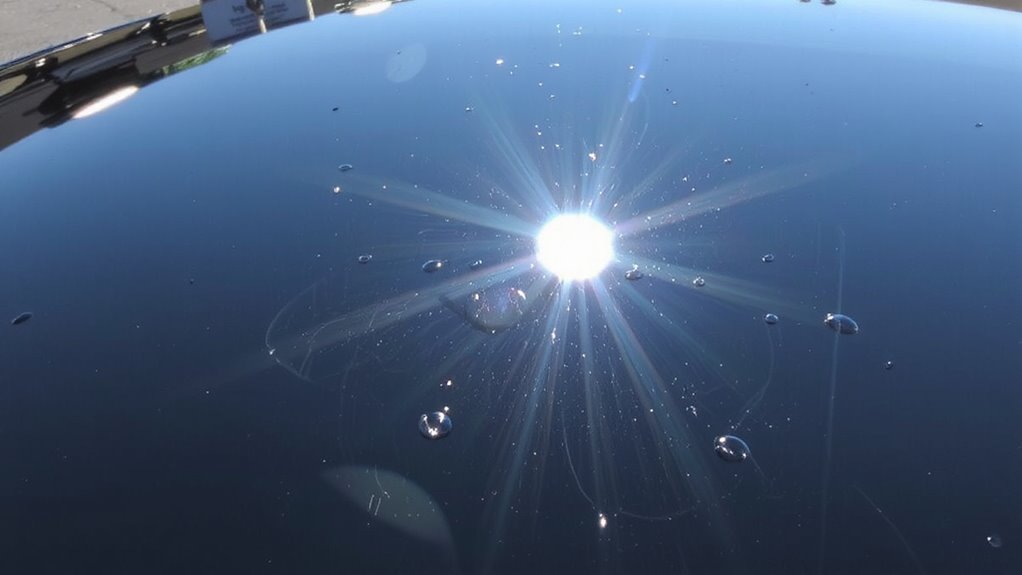
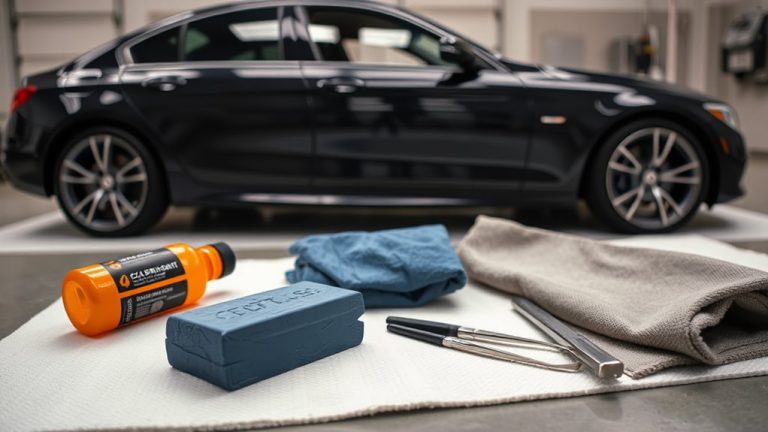
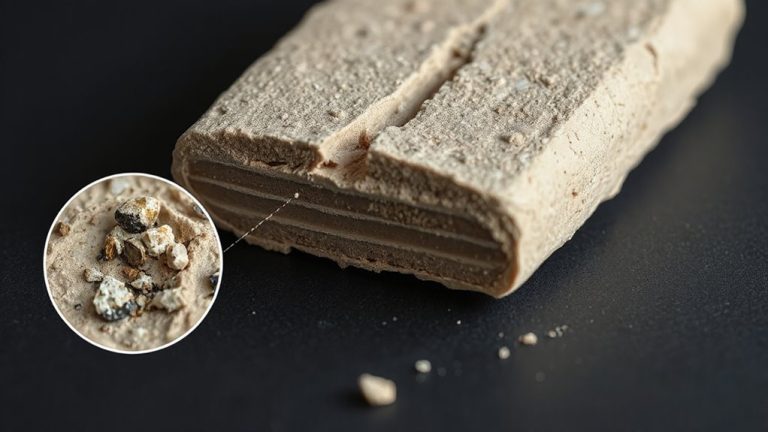
While all waxes protect paint, not every formula delivers long-term durability. You must match wax type to your vehicle’s finish for best results. Wax color compatibility matters-dark paints often show residue with white waxes, so opt for tinted or clear formulas designed for deep hues. Surface porosity affects adhesion; porous or weathered clear coats absorb wax unevenly, reducing longevity. Sealants bond better on high-porosity surfaces due to reactive polymers. For OEM finishes with low porosity (typically <5% micro-porosity), carnauba blends offer superior gloss but last only 4–6 weeks. Synthetic hybrids form cross-linked polymer layers up to 1.5 microns thick, resisting wash cycles and UV degradation. Apply in 70–80°F conditions for uniform curing. Always decontaminate paint first-clay bars remove bonded contaminants that compromise wax bonding. Proper prep guarantees 3–6 months of protection, depending on environmental exposure and maintenance frequency. For extended durability, consider best car wax picks based on performance and protection longevity.
Which Wax Lasts Longer: Synthetic or Carnauba?
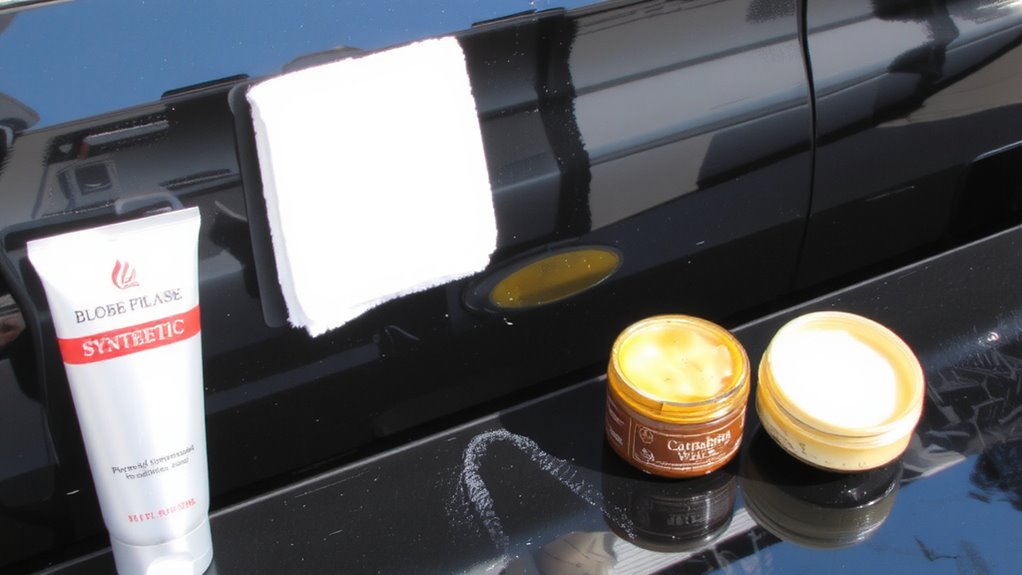
Since durability depends on chemical composition and environmental resistance, synthetic waxes typically outlast carnauba-based products. They’re engineered with polymers that resist UV degradation, heat, and chemical washout. Most synthetics last 4–6 months under normal conditions. Carnauba, though revered for depth, is organic and breaks down faster-usually lasting 6–8 weeks. Wax purity affects this gap; pure carnauba (Grade A) lasts longer than blended versions but still can’t match synthetics. Application thickness also matters. Applying too thickly traps solvents, causing hazing; too thin offers inadequate protection. Best results come from a thin, even layer-about 0.5 microns per coat. Synthetics bond better to paint at this thickness, forming a resilient sacrificial layer. While carnauba delivers unmatched visual richness, if longevity is your priority, synthetics provide superior endurance and consistency across climates.
Match Your Wax to Your Paint Finish
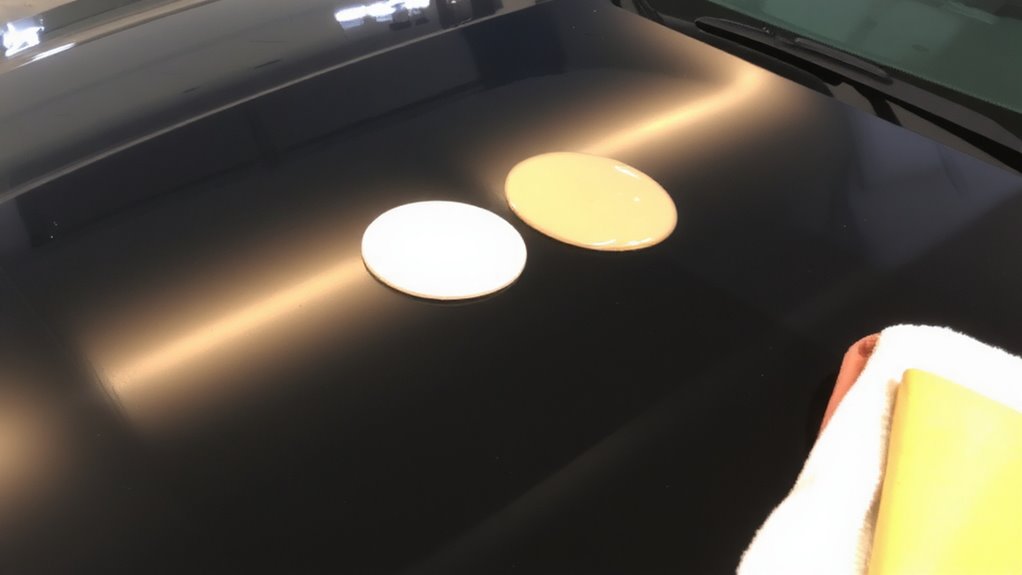
Your car’s finish type determines which wax will deliver ideal protection and shine. Modern clear coat finishes require synthetic waxes with polymers that bond to hard surfaces. These formulations enhance wax compatibility and resist UV degradation for up to six months. If your vehicle has a softer, single-stage paint, traditional carnauba wax provides deeper gloss and better absorption. Paint texture matters-smooth factory finishes accept thin, liquid waxes evenly, while orange peel or micro-ridged surfaces benefit from creamy waxes that fill imperfections. Check your paint’s microscopic profile before choosing. High-carnauba blends (up to 33% pure grade A) work best on glossy, non-metallic finishes. For metallic or mica-infused paints, opt for synthetic seals with refractive properties enhancing depth. Always verify wax compatibility with your paint’s hardness and texture. Poor pairing reduces adhesion, longevity, and clarity. Match the wax to your finish-it’s essential for lasting protection and maximum visual return.
Adapt Your Wax Choice to Your Climate
In harsh sunlight or high heat, standard waxes degrade faster-often losing effectiveness in under eight weeks. You need a product with superior temperature stability to withstand prolonged UV exposure and thermal cycling. Synthetic sealants outperform carnauba-based waxes in extreme heat, maintaining integrity above 180°F. For humid climates, prioritize humidity resistance to prevent water intrusion and hazing. Polytetrafluoroethylene (PTFE) and SiO2-infused waxes form hydrophobic barriers that repel moisture and inhibit mold growth. In coastal regions, salt-laden air accelerates oxidation, so a wax with enhanced humidity resistance and chemical bonding improves durability. Cold climates demand flexibility; rigid coatings crack under thermal contraction. Opt for hybrid waxes with elastic polymers that remain stable from -20°F to 150°F. Always verify lab-tested specs: look for at least 12 months of temperature stability and 95% humidity resistance in accelerated weathering tests.
Apply Wax for Maximum Durability
You’ve picked the right wax for your climate-now it’s time to apply it correctly to lock in that protection. Proper wax thickness and application temperature guarantee maximum durability. Apply wax in a shaded area with surface temps between 60–80°F. Low temps slow curing; high temps cause premature drying, reducing adhesion.
| Condition | Recommendation |
|---|---|
| Surface Temp | 60–80°F (15–27°C) |
| Wax Thickness | 0.5–1 micron, even layer |
| Application Tool | Foam applicator pad |
| Humidity Level | Below 70% to prevent hazing |
| Reapplication | After 2–3 washes, if needed |
Avoid direct sunlight. Use a foam applicator to spread wax in small, overlapping sections. Let it haze-typically 5–10 minutes-then remove with a clean microfiber towel. Too thick a coat causes streaking; too thin reduces protective life. Maintaining ideal wax thickness and application temperature guarantees long-term resistance to UV, water, and contaminants.
Maintain Your Wax to Extend Its Life
A single coat of quality wax typically lasts 2–3 months under regular driving conditions, but proper maintenance can extend protection up to 6 months or more. To maximize longevity, wash your car every two weeks using pH-neutral shampoo to prevent film erosion. Avoid automatic car washes with harsh detergents that degrade wax layers. Inspect your finish monthly-loss of water beading or sheeting indicates it’s time to evaluate reapplication. Reapplication frequency depends on climate, usage, and wax type; synthetic sealants may last longer than carnauba-based products. Store wax in a cool, dry place with the lid sealed tight-proper wax storage prevents solvent evaporation and consistency changes. Extreme heat or cold affects product integrity, reducing spreadability and durability. Use clean applicators and microfiber towels to maintain effectiveness. Regular upkeep preserves the protective barrier, ensuring sustained gloss and surface defense.
On a final note
You maximize wax longevity by selecting synthetic sealants for durability or carnauba for depth. Synthetic waxes last 6–12 months, resisting UV and thermal degradation. Carnauba wax, at 100% purity, lasts 4–6 weeks but enhances gloss. Choose hard waxes in hot climates; soft, silicone-based formulas in cold regions. Apply to prepared paint using crosshatch motions. Maintenance with pH-neutral washes preserves integrity. Reapply based on measured gloss retention and contact angle tests.