Why Some Bent Wheels Can Be Rolled Back Into Shape Professionally
You can have your bent wheel professionally rolled back into shape if the damage is minor-typically under 10 mm of runout-and there are no cracks or bead seat issues. Technicians use hydraulic rollers applying up to 20 tons of controlled pressure to gradually reshape the rim. The wheel spins on a precision lathe, measuring deviations as small as 0.5 mm. Alloy wheels need special care, with repairs limited to under 8 tons of force. Steel handles more stress, tolerating up to 12 tons. When conditions are right, rolling restores roundness and balance safely. Properly done, the repair meets OEM standards for radial and lateral runout, usually within 0.005 inches. This saves cost over replacement, especially with minor bends. Your wheel’s material, bend severity, and equipment capability determine success. Factors like impact angle and tire profile also influence repair feasibility.
Notable Insights
- Professional rolling uses hydraulic pressure to gradually reshape minor rim deformations without compromising structural integrity.
- Wheels with bends under 10 mm can often be corrected using precision equipment that measures runout down to 0.5 mm.
- Alloy wheels require careful handling due to brittleness, but minor bends under 3 mm are repairable with proper tools.
- Steel wheels are more malleable and tolerate higher pressure, making them easier to straighten than alloy wheels.
- The process involves realigning the rim in two planes-lateral and radial-to meet OEM tolerance standards post-repair.
What Causes a Bent Wheel?
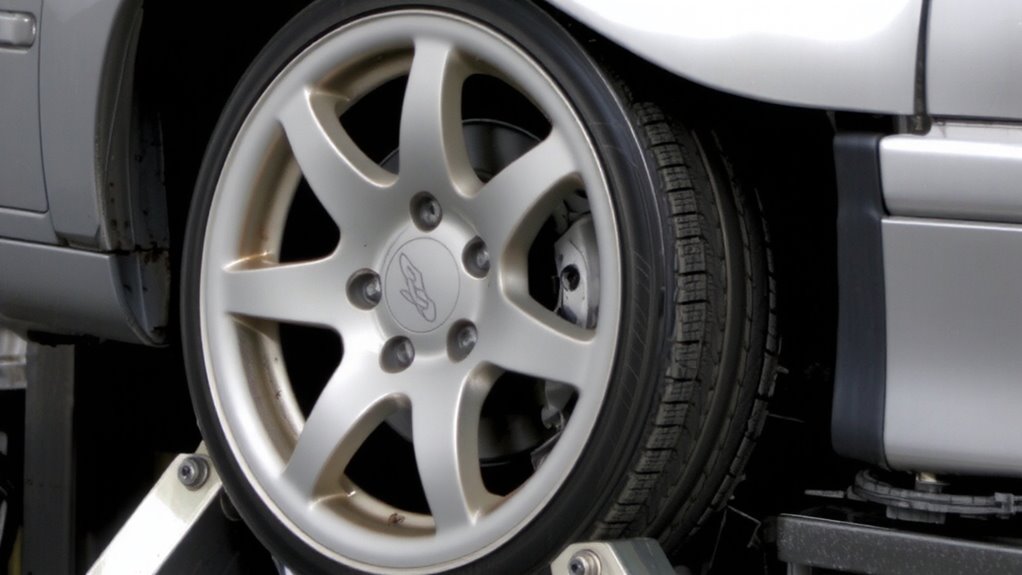
While driving over a pothole might seem like a minor annoyance, it can deliver enough force to bend your wheel. Pothole strikes generate impact damage that exceeds a wheel’s structural tolerance, especially at speeds over 30 mph. Modern alloy wheels, typically made from aluminum with a tensile strength of 24–30 ksi, are rigid but vulnerable to sudden lateral forces. When you hit a pothole at an angle, the rim collapses inward, distorting the barrel or flange. This deformation often measures 3–5 mm from true, enough to disrupt rotation. Steel wheels fare slightly better due to higher ductility but can still bend under severe impact. The severity depends on tire pressure, wheel diameter, and curb weight. Vehicles with low-profile tires (aspect ratios below 45) have less cushion, increasing the risk of impact damage. Even minor pothole strikes, repeated over time, accumulate structural stress.
Can a Bent Wheel Be Repaired by Rolling?
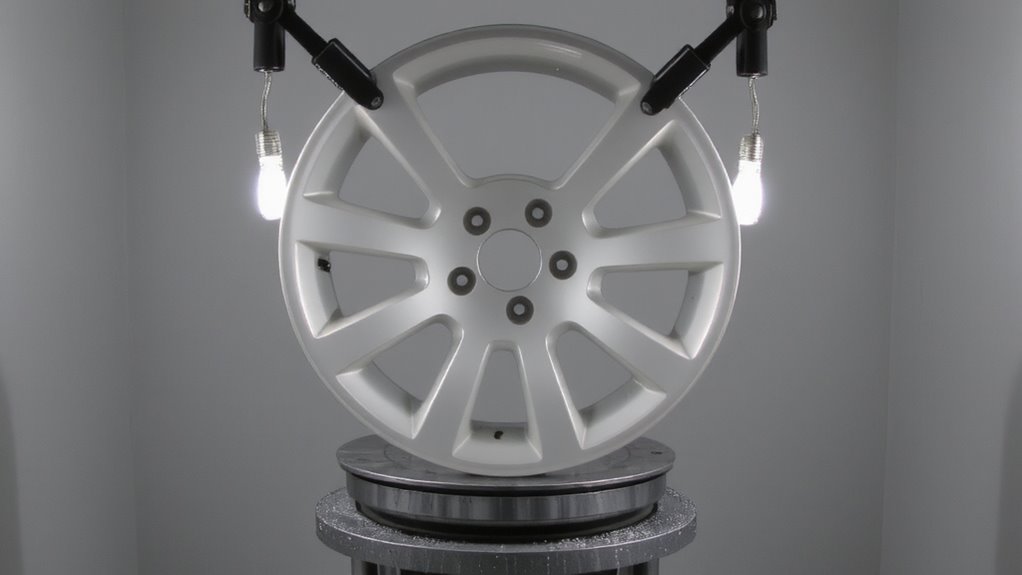
A bent wheel doesn’t always mean replacement-you can often roll it back into shape using professional equipment. This process, known as pressure realignment, corrects minor rim deformation without structural compromise. Technicians mount the wheel on a precision lathe, measuring runout to detect deviations as small as 0.5mm. Hydraulic rollers apply controlled force to gradually reshape the metal. Pressure realignment works best on bends under 10mm and excludes cracks or severe damage. The wheel spins during correction, ensuring uniform contact and symmetry. After rolling, it’s re-balanced and reinstalled. Rim deformation from potholes or curbs is typically repairable if the integrity remains intact. This method restores factory specifications, maintaining safety and performance. Not all bends qualify-assessments are essential. When performed correctly, rolling offers a cost-effective, durable fix.
Alloy Vs. Steel Wheels: Which Is Easier to Fix?
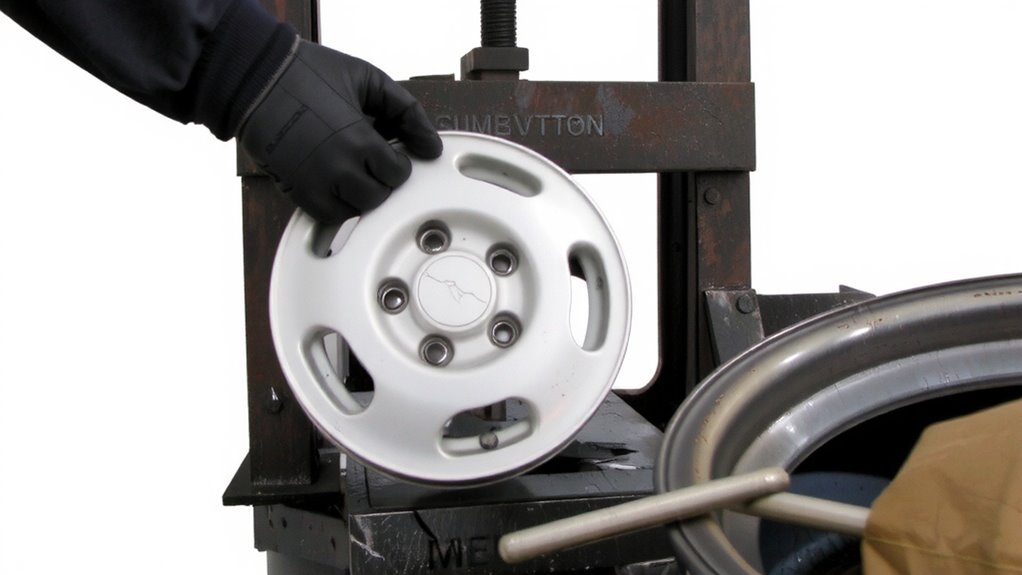
When it comes to repairing bent wheels, the material makes all the difference-alloy and steel wheels respond differently to pressure realignment. Steel wheels are generally easier to fix due to their higher malleability and material durability. They withstand repeated stress without cracking, making them forgiving during realignment. Alloy wheels, typically made from aluminum or magnesium blends, are stiffer and more brittle. While modern alloys offer improved strength-to-weight ratios, they’re prone to microfractures under excessive pressure, limiting repair precision. Technicians must apply carefully measured force, usually below 8 tons, to avoid structural compromise. Steel tolerates up to 12 tons without permanent damage. For minor bends under 3mm deviation, alloy repairs are possible-but require advanced equipment and strict adherence to OEM specs. Ultimately, steel wins in repair simplicity and resilience.
How Do Technicians Straighten a Bent Wheel?
Precision is key the moment your bent wheel hits the repair bench. Technicians mount it on a straightening machine designed for exact measurements. The wheel spins slowly while sensors detect runout-variations as small as 0.002 inches trigger correction. Using controlled hydraulic pressure, a calibrated arm applies force precisely where the rim is bent. This pressure can reach up to 20 tons, enough to reshape alloy or steel without cracking. You’ll see immediate improvement, but the process isn’t done. After each adjustment, the wheel re-spins for reassessment. Technicians repeat this until achieving perfect precision alignment. Balance and trueness are verified in two planes: lateral and radial. Once within OEM tolerances-typically under 0.005 inches deviation-the repair is complete. No welding, no patching-just physics and expertise.
When Can’t a Bent Wheel Be Rolled?
Why bother repairing a bent wheel if it’s beyond saving? You can’t. Severe structural damage makes repair impossible. Wheels bent beyond 6 mm lateral runout often can’t be safely straightened. The metal fatigue compromises integrity, especially in cast aluminum. Irreversible cracking is a definitive endpoint. Even hairline fractures compromise the wheel’s ability to hold pressure and sustain load. Cracks near spokes or the rim flange indicate stress points that won’t respond to pressure or heat correction. Alloy wheels with irreversible cracking must be scrapped-no technician can restore molecular stability. Steel wheels fare slightly better, but if the bead seat is compromised or the damage exceeds 3 mm radial distortion, replacement is mandatory. Attempting to roll a wheel with these issues risks catastrophic failure at speed. Safety outweighs cost savings every time. When structural limits are exceeded, only replacement guarantees reliability.
What’s the Step-by-Step Wheel Straightening Process?
How do you turn a damaged wheel back into a true, road-worthy component? First, mount the wheel on a precision straightening machine to measure runout. Technicians use hydraulic rams to gradually apply pressure at exact points where the rim is bent, correcting deviations down to 0.01 inches. The controlled force reshapes the metal without weakening its structural integrity. Once the wheel regains its original form, you’ll verify trueness using laser-guided diagnostics. After straightening, perform tire balancing to guarantee even weight distribution, preventing vibration at high speeds. Mount the tire and spin the assembly on a balancer, adding small counterweights as needed. Finally, confirm wheel alignment fits factory specifications, typically within ±0.5 degrees of camber and toe settings. This process restores performance, extends tire life, and guarantees safe handling. Properly straightened wheels meet OEM standards and support long-term drivability.
Why Choose Wheel Rolling Over Replacement?
You’ve just seen how a bent wheel gets restored to exact tolerances using calibrated equipment and measured force. Choosing wheel rolling over replacement offers clear advantages. Cost savings are significant-repairing a wheel costs up to 50% less than buying a new OEM or aftermarket unit. Time efficiency is another key benefit; most rolling jobs take under two hours, allowing same-day return. Modern rolling machines apply up to 20 tons of pressure, reshaping aluminum or steel without compromising structural integrity. Repaired wheels meet OEM runout specs, typically within 0.030 inches laterally and 0.020 inches radially. Unlike replacements, rolling preserves factory finishes and matching sets. The process works on rims up to 26 inches in diameter with bends under 1/2 inch deep. For minor to moderate damage, rolling is a technically viable, cost-effective solution backed by precision engineering and performance validation. It’s smart maintenance.
On a final note
You can often restore a bent wheel through professional rolling. This process uses hydraulic pressure up to 15 tons to reshape damaged rims without heat. Steel wheels respond best due to their malleability, while aluminum alloys risk cracking under stress. Technicians remount the wheel on a precision lathe, measuring runout to within 0.01 inches. When structural integrity remains intact, rolling saves cost and material versus replacement.