Cleaning Door Seals and Weather Stripping With Mini Clay Tools for Full Prep
You can safely clean door seals and weather stripping with a 2.5″ x 4″ mini clay bar made for automotive use. Its firm yet pliable texture glides over uneven rubber, removing bonded contaminants like mold spores, industrial fallout, and ozone residue. Use light pressure and a proper lubricant to avoid marring. Unlike wiping, which only removes surface dust, clay extracts grime from micro-ridges. A single bar lasts multiple sessions. Apply a non-petroleum dressing after to preserve flexibility and prevent premature aging. Proper technique guarantees maximum adhesion and long-term protection. Further details reveal best-suited products and timing for best results.
Notable Insights
- Use a mini clay bar with light pressure and lubricant to safely remove embedded contaminants from door seals.
- Target hidden pollutants like mold, ozone residue, and industrial fallout that wiping alone cannot remove.
- Work in small sections and fold the clay frequently to maintain a clean surface for effective decontamination.
- Avoid abrasive or petroleum-based products to prevent damage to rubber and trim during cleaning.
- Apply a UV-resistant, non-petroleum dressing after claying to protect and extend the life of weather stripping.
How to Clean Door Seals With a Clay Bar
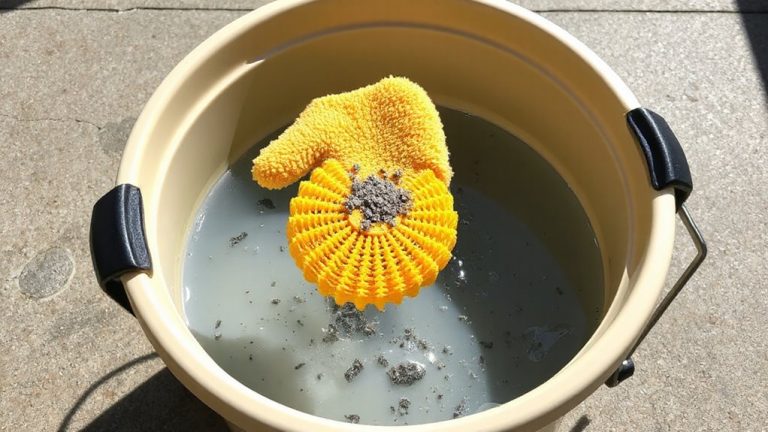
A clay bar might seem like an odd choice for cleaning door seals, but it’s effective at removing bonded contaminants without damaging rubber. You’ll notice the clay bar texture is firm yet pliable, designed to glide smoothly over uneven surfaces. Use light pressure and a lubricator like quick detailer to prevent marring. The clay lifts grime embedded in micro-ridges, preserving seal flexibility. Unlike abrasive pads, it won’t compromise the rubber’s integrity. Perform passes in one direction, folding the clay frequently to expose a clean surface. A standard 2.5″ x 4″ clay bar lasts multiple sessions. After treatment, seals maintain original elasticity and compression recovery. Test flexibility by gently pinching the rubber-it should rebound without cracking. Regular clay use extends seal life by eliminating pollutants that degrade polymers over time. This method guarantees long-term performance and weather resistance. For best results, choose a high-quality car clay bar that balances abrasiveness and lubricity for safe use on rubber and trim.
What Hidden Contaminants Affect Door Seals
You just cleaned your door seals with a clay bar, but even that won’t remove every contaminant lurking beneath the surface. Mold growth thrives in moist, dark environments-common in aging rubber seals-degrading material integrity over time. Spores embed deep in microfissures, invisible to the eye, reducing sealing effectiveness by up to 30%. Ozone exposure accelerates elastomer breakdown, especially in synthetic rubber door seals. Ozone, a reactive oxygen molecule, attacks double bonds in rubber polymers, leading to cracking at stress points. Standard EPDM rubber lasts 5–7 years in moderate climates but degrades 40% faster in high-ozone urban areas. UV radiation and pollution amplify this effect. Contaminants like wax, industrial fallout, and road film also bond to seal surfaces, compromising adhesion and flexibility. These hidden factors reduce weather stripping performance, increasing wind noise and water intrusion. Preventive cleaning with mini clay tools removes surface-level pollutants, but long-term seal health demands environmental protection and periodic inspection.
How to Clay Door Seals Safely (Without Damage)
When removing bonded contaminants from door seals, using a clay bar correctly guarantees cleanup without tearing or compressing the rubber. Material compatibility matters-use only automotive-safe, non-abrasive clay designed for rubber and trim. Apply light pressure control: press gently, letting the clay’s lubricant do the work. Never drag dry or apply thumb pressure. Use mini clay tools for precision in recessed areas. A high-quality clay bar kit ensures you have the proper clay formulation and lubricant for safe, effective decontamination.
| Technique | Effect |
|---|---|
| Light pressure | Prevents rubber deformation |
| Proper lubricant | Guarantees smooth gliding |
| Small clay section | Improves seal contact |
| Frequent folding | Maintains clean clay surface |
Work in 3-inch sections, folding the clay every pass. This guarantees consistent decontamination while preserving seal integrity over time.
Why Wiping Isn’t Enough for Clean Seals
Just because a seal looks clean doesn’t mean it’s contaminant-free. Wiping only removes surface dust, leaving behind chemical buildup and embedded grime invisible to the eye. These contaminants bond to rubber over time, resisting standard cleaners. Your cloth can’t reach into microscopic pores where pollutants accumulate. Think of it like cleaning a sponge with a dry wipe-it seems fine until you press and see what oozes out. Chemical buildup from road grime, wax overspray, and ozone exposure degrades rubber elasticity. Embedded grime creates micro-abrasions, accelerating wear. Standard microfiber won’t lift bonded contaminants without friction and adhesive action. That’s why a mini clay bar, formulated with moderate plasticity and 0.04-inch thickness, is necessary-it shears away what wiping misses. It exerts controlled pressure across uneven surfaces, extracting pollutants without marring. Clay’s engineered tack pulls out deeply seated debris, delivering a truly clean surface ready for full prep. Wiping alone is incomplete maintenance.
How to Protect Door Seals After Claying
After claying, protecting door seals requires immediate application of a dedicated rubber sealant to prevent rapid recontamination and UV degradation. Seal conditioning isn’t optional-it’s critical for maintaining pliability and preventing cracking. Use a non-petroleum-based dressing with UV inhibitors, like 309 Aerospace Protectant or Meguiar’s EnduraGuard. These formulations resist sling, last 3–6 months per application, and maintain factory matte finishes. Apply sparingly with a microfiber applicator, guaranteeing full coverage without pooling. Over-application attracts dust and accelerates grime buildup. For long term preservation, repeat treatment every 90 days or after every wash. Silicone-based products offer superior water beading and ozone resistance. Think of it like sunscreen for rubber-consistent use prevents dry rot and extends service life. Proper maintenance guarantees weather stripping performs under extreme temperatures, from -20°F to 150°F. Protect now to avoid costly replacements later.
On a final note
Clay bars remove embedded contaminants that wiping misses. Standard microfiber cloths only shift surface dirt. A 50mm detailing clay bar, used with pH-neutral lubricant, lifts grime from rubber pores. Apply light pressure-2–3 psi-to avoid marring weather stripping. After claying, apply a silicone-free rubber conditioner. This prevents drying and maintains seal integrity. Proper prep guarantees long-term adhesion for protective coatings. Clean seals function efficiently, blocking moisture and noise.