Clean a Throttle Body: Fix Rough Idle, Restore MPG (10-15%)
A dirty throttle body disrupts idle stability in modern engines, with just 0.5 mm of carbon buildup restricting airflow and causing rough idling or poor fuel economy. You need a throttle-safe cleaner, plastic brush, and microfiber cloth to clean it properly. Always disconnect the battery and avoid abrasive tools or carb cleaner. After cleaning, torque the fasteners to 7–9 Nm and perform an ECU idle relearn-this restores accurate airflow control and smooth engine operation. Next steps reveal exactly how to execute each phase safely and effectively.
Notable Insights
- Disconnect the battery before cleaning to prevent electrical issues and unintended throttle actuation.
- Use throttle body-specific cleaner to safely remove carbon without damaging sensitive components or coatings.
- Clean the throttle bore, butterfly valve, and idle air passage thoroughly to restore proper airflow and idle stability.
- Avoid abrasive tools; use a plastic brush and microfiber cloth to prevent scratching critical surfaces.
- Reassemble with correct torque (7–9 Nm) and perform an ECU idle relearn to ensure accurate idle calibration.
Symptoms of a Dirty Throttle Body
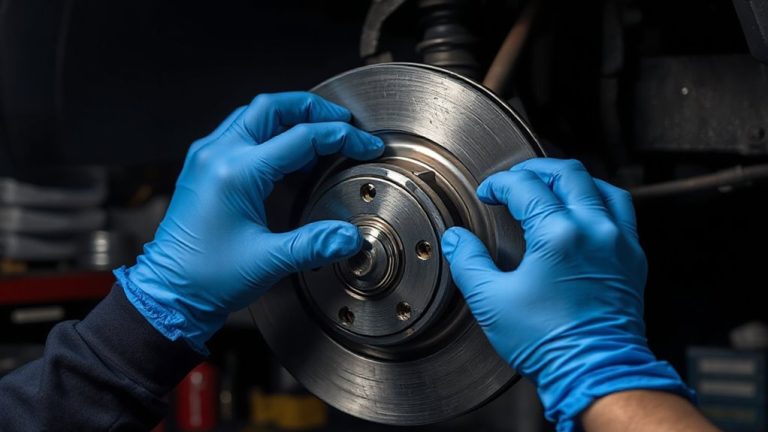
Why might your engine feel sluggish or unresponsive despite regular maintenance? A dirty throttle body is often the culprit. You may notice rough acceleration, where power delivery hesitates or stutters during throttle input. This occurs as carbon buildup restricts airflow, disrupting the air-fuel mixture. At idle, you might experience unstable RPMs-dropping below 600 or fluctuating erratically. Poor fuel economy follows, with efficiency losses up to 10–15% due to incorrect airflow sensor readings. Modern drive-by-wire systems rely on precise throttle plate positioning; even 0.5 mm of deposit accumulation can impair response. The engine control unit (ECU) attempts compensation, but it can’t overcome physical restrictions. Over time, drivability deteriorates without warning lights. Cleaning restores airflow within factory specifications: typically 0.02–0.04 inches of throttle bore clearance. Addressing this prevents long-term sensor contamination.
What a Throttle Body Does
While you press the accelerator, the throttle body acts as the gateway for air entering the engine, regulating airflow based on driver input. It’s central to airflow control, ensuring the engine gets the precise amount of air needed for combustion. Modern systems use electronic throttling, replacing old cable mechanisms with drive-by-wire technology. In electronic throttling, sensors detect pedal position and send signals to the engine control unit (ECU), which adjusts the throttle plate angle accordingly. This allows faster, more accurate responses than mechanical linkages. The throttle body mounts between the air intake and intake manifold, typically measuring 50 to 70 mm in diameter depending on engine size. Accurate airflow control maintains fuel efficiency, emissions compliance, and performance. Even slight malfunctions or buildup can disrupt this balance, affecting idle stability. It plays a critical role in engine management, integrating seamlessly with other sensors for ideal operation.
Tools for Cleaning a Throttle Body
A clean throttle body starts with the right tools. You’ll need a quality throttle body cleaning solution specifically formulated for fuel-injected systems-avoid carb cleaners, as they can damage sensitive components. Use a plastic or nylon brush, not metal, to prevent scratching the throttle bore or damaging the throttle plate. A microfiber cloth helps wipe away grime without leaving lint. Safety precautions are essential: wear nitrile gloves and safety glasses to protect against chemical exposure. Disconnect the battery before starting to prevent accidental throttle movement. Have a torque wrench on hand if your vehicle requires precise reassembly. You may also need a T20 or T25 Torx bit, depending on your make and model. Use compressed air to dry components thoroughly after applying cleaning solutions. Proper tools guarantee efficiency and prevent damage during maintenance.
Step-by-Step Throttle Body Cleaning
Now that you’ve gathered the correct tools and taken the necessary safety precautions, you can begin the actual cleaning process. Start by disconnecting the battery to prevent electrical damage during electronic actuation. Remove the intake duct to access the throttle body. Use a non-abrasive throttle cleaner to dissolve carbon deposits without harming sensitive components. Gently clean the throttle bore and butterfly valve, ensuring full range of motion. Pay special attention to the idle air passage, as clogs disrupt airflow calibration. Let the component dry before reassembly.
| Step | Action |
|---|---|
| 1 | Disable power to throttle body |
| 2 | Spray cleaner on bore and valve |
| 3 | Recheck throttle movement and reset airflow calibration |
Reconnect the battery and let the engine idle to relearn base settings.
Common Throttle Body Cleaning Mistakes
If you skip proper preparation, even careful cleaning can cause performance issues or damage. Always disconnect the battery before starting to prevent electrical faults. Using improper cleaning solutions-like carb cleaners or household degreasers-can ruin sensitive throttle bore coatings and damage the sensor components. Stick to throttle body-specific cleaners, which are safe on plastic, rubber, and electronic parts. Never use abrasives or brushes; a soft microfiber cloth is best. During reassembly, incorrect reassembly leads to air leaks or binding throttle plates. Make sure the gasket is aligned properly and torqued to manufacturer specs-typically 7–9 Nm. Reconnecting hoses or electrical connectors loosely causes idle faults. Double-check positioning of the throttle body on the intake manifold. Misalignment disrupts airflow readings, creating rough idle or stalling. Calibration after cleaning may be required depending on your vehicle’s ECU design.
When to Call a Mechanic
While most throttle body maintenance can be handled at home, there are times when professional expertise is necessary. If your engine light is on and diagnostics reveal electrical faults in the throttle body circuit, don’t attempt a DIY fix. Modern throttle bodies rely on precise voltage signals-typically 0.5 to 4.5 volts-and deviations disrupt idle control. You’ll need a scan tool capable of reading live data to detect irregularities. Sensor failures, especially in the throttle position sensor (TPS), often mimic buildup symptoms but require recalibration or replacement. The TPS must maintain signal accuracy within ±2% of expected values across the throttle sweep. If your multimeter shows erratic readings or you lack the calibration software, a mechanic has the right equipment. Ignoring electrical faults or improperly handling sensor failures can lead to limp mode or long-term drivability issues. Trust certified technicians when complexity exceeds basic cleaning. For accurate voltage checks, using one of the best multimeters is essential.
Preventing Future Throttle Body Buildup
A little prevention goes a long way in keeping your throttle body functioning efficiently. Regular maintenance and smart habits reduce carbon buildup, preserving airflow optimization. Applying a throttle coating creates a barrier against grime, making future cleanings easier and less frequent. These coatings repel oil and debris, especially in engines with recirculated exhaust gases.
| Prevention Method | Benefit |
|---|---|
| Throttle coating | Reduces carbon adhesion by up to 60% |
| Regular idle relearn | Resets ECU for smoother airflow |
| High-quality fuel | Contains detergents for cleaner combustion |
| Air filter replacement | Guarantees consistent airflow optimization |
You should inspect the throttle body every 30,000 miles. Use only OEM-specified cleaners when applying coating to avoid damaging sensitive sensors. Proper sealing and integration maintain signal accuracy from the throttle position sensor. Consistent upkeep extends component life and sustains factory-calibrated performance.
On a final note
You must clean your throttle body regularly to maintain proper idle and throttle response. A dirty throttle body disrupts airflow, causing rough idle or stalling. Use a non-residue throttle body cleaner-never carb cleaner, as it damages sensors. Inspect the bore and throttle plate for carbon buildup exceeding 0.5 mm. Clean gently with a microfiber cloth and plastic pick. Reassemble carefully, ensuring the throttle plate returns fully. Calibrate with a scan tool if needed.