Step-By-Step: Treating Steel Fenders With Rust Converter Before Storage
Clean and dry steel fenders completely to stop rust before storage. Strip to bare metal using a wire brush or 36–80 grit flap disc, then wipe with mineral spirits. Apply a tannic and phosphoric acid-based rust converter at 2–3 mils per coat using 30–50 psi spray pressure. Work in temperatures between 50°F and 90°F with under 85% humidity. Let cure 24–48 hours until uniformly dark. Prime with epoxy or urethane top coat after full cure. Store in a climate-controlled space below 50% relative humidity, elevated and protected from moisture. Proper prep and sealing guarantee long-term protection stays effective over time.
Notable Insights
- Clean and dry fender surfaces thoroughly to remove moisture and prevent rust spread before treatment.
- Strip fenders to bare metal using a wire brush or grinder, then clean with mineral spirits.
- Apply rust converter with tannic and phosphoric acids in thin, even coats at proper pressure and temperature.
- Allow 24–48 hours for full cure, ensuring the surface turns uniformly dark before priming.
- After curing, apply metal primer and top coat, then store fenders dry, elevated, and in low humidity.
Stop Rust Before Storage
Before storing your vehicle, especially in humid or coastal environments, take action to prevent existing surface rust from spreading under the fenders. Rust prevention starts with thorough cleaning and drying of affected areas. Use a wire brush or sandpaper to remove loose flakes and expose solid metal-this guarantees better adhesion for any treatment applied later. Moisture control is critical; even trapped humidity accelerates corrosion. Wipe down fender wells with a dry microfiber cloth, then apply a moisture-displacing spray like WD-40 to internal surfaces. This creates a temporary protective barrier. Store the vehicle in a dry, climate-controlled environment if possible. Ideal storage conditions maintain relative humidity below 50%. Avoid concrete floors without vapor barriers, as they wick ground moisture. Proper rust prevention now extends your fenders’ lifespan and reduces future repair costs markedly. For lasting protection, consider applying a best rust encapsulator after using a rust converter.
Get Your Rust Converter and Prep Tools
A quality rust converter is your first real defense against advanced corrosion, transforming unstable iron oxide into a stable, paintable surface. Choose a converter with tannic acid and phosphoric acid as active ingredients-these react chemically to passivate rust within 24 hours. Most brands require a minimum surface coverage of 100 square feet per gallon for full effectiveness. Apply it with a synthetic brush or low-pressure sprayer set to 30–50 psi. You’ll also need gloves, goggles, and an N95 mask-safety precautions are nonnegotiable when handling chemical agents. Guarantee your workspace setup includes a dry, well-ventilated area with temperatures between 50°F and 85°F. Lay down plastic sheeting to protect nearby surfaces from overspray. Keep paper towels and mineral spirits on hand for cleanup. Proper tools and preparation guarantee consistent application and maximum chemical adhesion. For optimal results, consider using one of the top rust removers specifically formulated for automotive use.
Prep Steel Fenders for Rust Converter
Surface readiness determines the success of your rust converter application-start by stripping the fender down to bare metal where possible. Perform a thorough surface assessment to identify compromised areas. Use a wire brush or angle grinder with a 36–80 grit flap disc to remove loose rust, paint, and debris. For precise rust detection, run your hand over the surface; any rough desperateness or flaking indicates active corrosion. Clean the metal with mineral spirits to remove grease, ensuring no contaminants interfere with the chemical bonding process. A successful treatment begins with choosing the right product, and among the most effective solutions are top-rated car rust removers that enhance conversion efficiency and long-term protection.
| Factor | Ideal Condition |
|---|---|
| Surface texture | Smooth, bare metal |
| Moisture level | Dry (0% RH at surface) |
| Contaminants | None (oil, wax, dust-free) |
| Rust extent | Identified and exposed for treatment |
This prep work enables effective converter penetration.
Apply Rust Converter in Thin, Even Coats
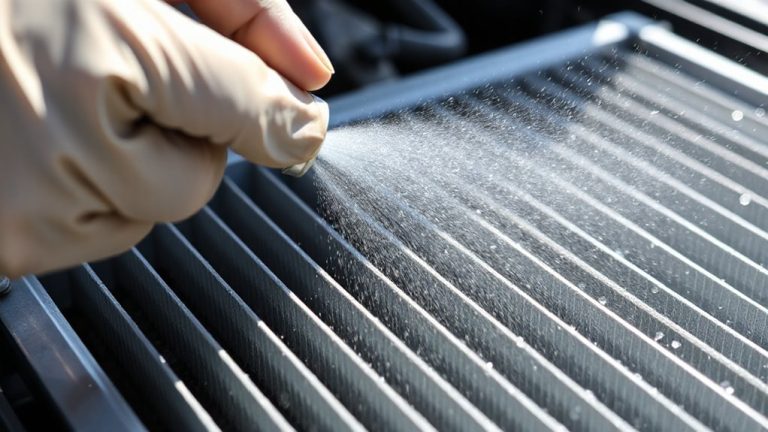
Once you’ve prepped the steel fenders properly, applying the rust converter correctly guarantees a durable, long-lasting bond. Use a synthetic brush or spray gun to apply thin, even coats-typically 2 to 3 mils wet film thickness per pass. Thick layers trap moisture and crack as they dry, compromising protection. The surface texture must remain uniformly damp but not pooling; a satin finish indicates proper coverage. Work in sections, maintaining a wet edge to prevent lap marks. Application timing is critical: apply in dry conditions with temperatures between 50°F and 90°F and relative humidity below 85%. Recoat within 2 hours if using a two-coat system, making certain of chemical activation between layers. Avoid overbrushing, which disturbs the reaction chemistry. Each coat should appear consistent, with no runs or skips, to make certain of full conversion of iron oxide into a stable, inert layer ready for priming.
Wait for the Converter to Cure Completely
After applying the rust converter, you’ll need to let it cure fully before moving on-this isn’t just a wait period, it’s a critical chemical reaction. The converter transforms iron oxide into stable tannate, halting rust progression. Full cure time typically ranges from 24 to 48 hours, depending on humidity and temperature. Avoid handling or coating prematurely-doing so interrupts the reaction and reduces effectiveness.
| Condition | Cure Time |
|---|---|
| 70°F, 50% RH | 24 hours |
| 50°F, 70% RH | 48 hours |
Cooler or damper environments slow the chemical reaction markedly. Proper ventilation accelerates curing by reducing moisture buildup. The surface should appear uniformly dark-usually purple-black-indicating complete conversion. Never assume dryness means cured; true cure requires full chemical stabilization. Wait the full recommended time to guarantee maximum protection during storage.
Top Coat Fenders After Rust Converter
You’ve given the rust converter the time it needs to transform unstable iron oxide into inert tannate, and now the surface is ready for protection. Apply a high-quality primer designed for metal, ensuring full coverage. Let it dry according to the manufacturer’s instructions-typically 2–4 hours. Once cured, follow with a durable top coat, such as two-part epoxy or urethane paint. These provide superior surface finish and long term protection against moisture and abrasion. Maintain a dry, clean work environment to avoid contamination during application. Spray application delivers a smoother, more consistent finish than brushing. Allow proper flash time between coats-as specified by the product, usually 15–30 minutes. Final cure may take 24–72 hours. A properly sealed fender resists environmental damage, preserving structural integrity and appearance throughout storage. This coating system is essential for preventing future corrosion.
Keep Fenders Dry During Storage
A dry storage environment is critical to preserving the integrity of treated steel fenders. Moisture accelerates corrosion, even after rust converter application. You must store fenders in a space with consistent climate control, maintaining relative humidity below 50%. Temperature fluctuations cause condensation, so aim for a stable range between 60–75°F. Pair climate control with effective ventilation strategies, such as passive vents or low-volume exhaust fans, to promote air circulation. Circulating air reduces localized moisture buildup, especially in stacked or enclosed setups. Use desiccants like silica gel packs when sealing fenders in plastic wraps or containers. Avoid concrete floors-elevate fenders on wooden pallets to prevent wicking. Inspect storage areas monthly for dampness or leaks. Proper ventilation strategies combined with climate control create a protective barrier, ensuring your rust-treated fenders remain in ideal condition throughout storage.
On a final note
You’ve stopped active rust using a tannic acid–based converter that transforms iron oxide into stable iron tannate. Apply a minimum of two thin coats, each no thicker than 2 mils wet film, allowing 24 hours between coats at 70°F and 50% RH. Once fully cured-verified by surface hardness and no tack-apply an epoxy primer. Store fenders indoors at 40–80°F, off concrete floors, to prevent condensation and future corrosion.