How Dual Exhaust Setups Increase Scavenging Efficiency in Inline-Four Engines
You get better scavenging with a dual exhaust because it splits the exhaust flow into two paths, reducing backpressure. Each pipe typically measures 1.75 to 2 inches in diameter, lowering resistance compared to a single 2.25-inch pipe. This setup speeds up gas evacuation, creating stronger low-pressure waves that pull out leftover exhaust during valve overlap. Precise header length and timing enhance pulse separation, improving volumetric efficiency. You’ll see how tuning optimizes these gains across RPM ranges.
Notable Insights
- Dual exhaust systems reduce backpressure by splitting exhaust flow, enhancing scavenging during valve overlap in inline-four engines.
- Separate exhaust paths minimize pulse interference, allowing low-pressure waves to more effectively draw out residual gases.
- Increased total cross-sectional area in dual setups improves gas velocity and promotes efficient pressure wave timing.
- Tuned header lengths in dual exhausts align exhaust pulses to create scavenging waves that enhance volumetric efficiency at target RPMs.
- Dual exhausts improve low-pressure wake propagation, pulling in fresh air-fuel mixture by reducing charge dilution during overlap periods.
What Is Exhaust Scavenging and Why It Matters
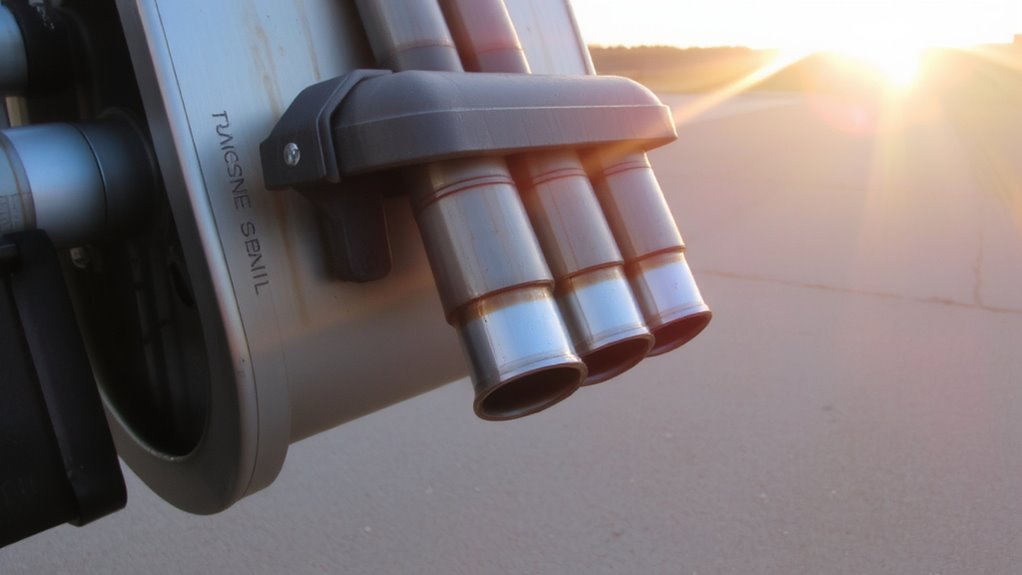
Exhaust scavenging is the process of using the momentum and pressure waves of exiting exhaust gases to pull additional spent gases out of the combustion chamber, improving engine efficiency. You rely on this effect to increase volumetric efficiency, especially at specific RPM ranges. Proper exhaust tuning maximizes scavenging by aligning exhaust pulse timing with valve overlap periods. The length, diameter, and layout of exhaust headers influence gas dynamics, directly affecting how effectively pulses create low-pressure zones. Shorter headers favor high-RPM performance; longer ones boost torque at lower speeds. Equal-length pipes guarantee consistent pulse timing, critical in inline-four engines. When tuned correctly, the low-pressure wake behind outgoing exhaust gases draws out residual combustion byproducts, allowing fresh air-fuel mixture intake. This reduces dilution and promotes complete combustion. Mastering gas dynamics through precise exhaust tuning enhances power output and fuel efficiency without increasing displacement.
How Dual Exhaust Reduces Backpressure in Inline-Fours
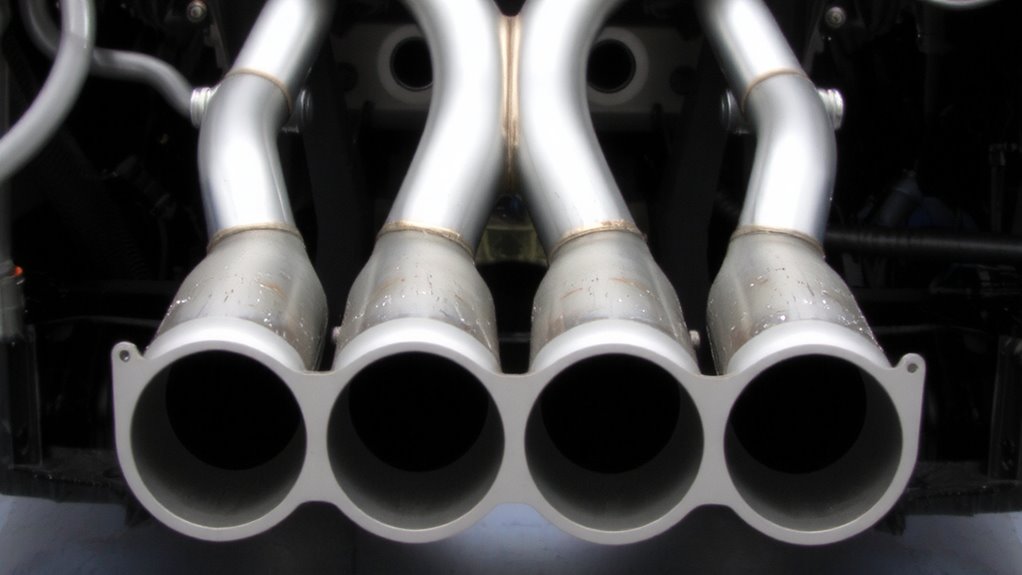
While a single exhaust system can handle the flow from all four cylinders, it often creates bottlenecks that restrict performance. You can reduce this limitation with a dual exhaust setup, which splits the exhaust path into two streams. This design improves flow dynamics by giving each pair of cylinders its own exit route. Backpressure drops because the dual pipes increase total cross-sectional area, typically using two 1.75-inch or 2-inch tubes instead of one 2.25-inch pipe. Reduced backpressure allows faster gas velocity during overlap, helping expel spent gases more efficiently. When exhaust pulses don’t compete in a shared pipe, scavenging improves without raising pumping losses. The result? Better cylinder evacuation, cleaner intake charge, and modest gains in power and throttle response. Dual exhaust doesn’t just look aggressive-it works smarter under the hood.
Why Pulse Timing Boosts Scavenging in Four-Cylinder Engines?
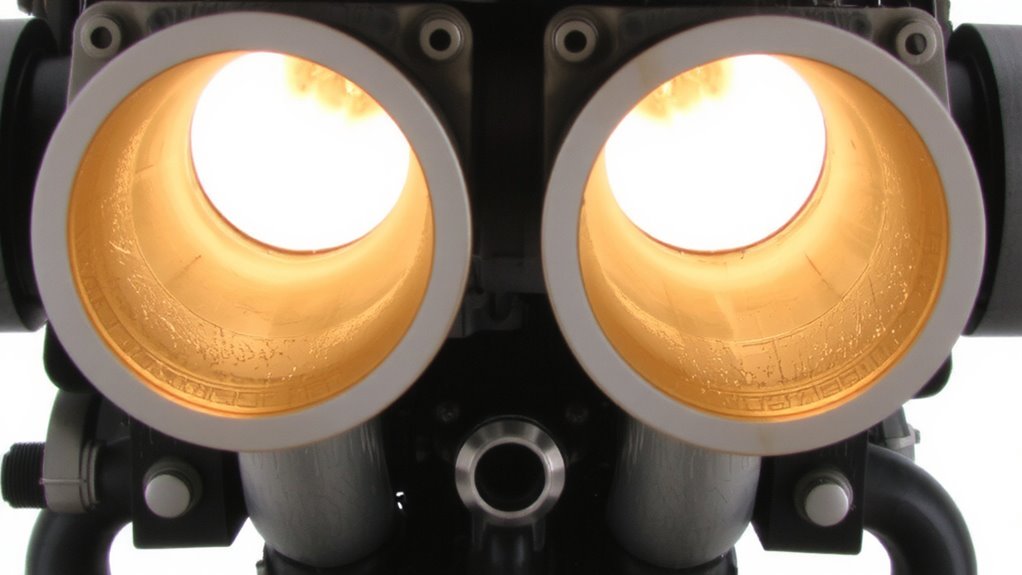
How does your engine turn waste into extra power? Pulse timing makes it happen. In a four-cylinder engine, exhaust pulses fire every 180 degrees of crankshaft rotation. When timed right, each pulse creates low pressure behind it, pulling out the next cylinder’s exhaust gases. This is scavenging, and it’s amplified by precise exhaust tuning. During valve overlap, both intake and exhaust valves are open briefly. The low-pressure wave from exhaust tuning draws fresh air-fuel mixture into the cylinder while clearing residual gases. Properly spaced pulses increase this effect, improving cylinder filling. Exhaust header length and diameter are tuned to align these pressure waves. Equal-length primary tubes guarantee pulses arrive in sequence. The result? Better breathing, higher efficiency, and more power-all by turning waste energy into suction. Pulse timing turns what’s wasted into performance.
Dual vs. Single Exhaust: Breathing Efficiency Compared
When your engine revs higher, a dual exhaust system lets it breathe easier than a single setup. Dual exhausts improve flow dynamics by splitting exhaust pulses into two paths, reducing backpressure. Each pipe handles two cylinders, allowing smoother exit of burnt gases. With a single exhaust, all four cylinders share one path, creating bottlenecks. This restriction slows gas velocity and limits breathing. Dual systems maintain higher gas velocity because smaller-diameter pipes match engine output more efficiently. Faster-moving exhaust gases create low-pressure areas that help pull out subsequent exhaust pulses. Flow dynamics improve as pressure waves interfere less. You get better scavenging without needing extreme cam timing. Dual exhausts don’t add power directly-they let the engine produce power more efficiently by optimizing what happens between combustion events. The result? Cleaner evacuation and improved cylinder filling at high rpm.
Dual Exhaust Headers: Design for Maximum Scavenging
Since exhaust pulse tuning directly impacts engine efficiency, dual exhaust headers are engineered to maximize scavenging through precise tube length and diameter control. You rely on tuned collectors to synchronize pressure waves, enhancing flow velocity and reducing backpressure. Each header uses primary merging, where four individual tubes combine in pairs, optimizing pulse separation. This design prevents exhaust interference in sequential firing cylinders. Primary tubes typically range from 1.5 to 1.75 inches in diameter, sized to match engine displacement and target RPM. The merge point is carefully calculated-too abrupt causes flow disruption; too gradual loses scavenging effect. Tuned collectors extend this principle, using stepped geometry to reinforce low-pressure waves. These waves pull exhaust gases from adjacent cylinders, improving cylinder evacuation. The result? Faster gas exchange, increased volumetric efficiency, and measurable gains in horsepower and torque-especially between 4,000 and 7,000 RPM.
Optimizing Pipe Length and Diameter for Dual Systems
Precision tuning of pipe length and diameter is key to activating the full potential of dual exhaust systems. You must balance exhaust resonance and flow dynamics to maximize scavenging. Pipe length affects timing of pressure waves; shorter pipes favor high-rpm power, while longer ones enhance low-end torque. Diameter influences gas velocity-too large, and velocity drops, reducing scavenging; too small, and flow dynamics suffer due to backpressure.
| Pipe Length | Diameter | Effect on Performance |
|---|---|---|
| 30–36 in | 1.75 in | Optimized for mid-range torque |
| 40–46 in | 1.875 in | Better high-rpm horsepower |
| 36–40 in | 2.0 in | Risk of reduced velocity below 5,000 rpm |
Matching these dimensions to your engine’s rpm range guarantees strong exhaust resonance and efficient flow dynamics, improving cylinder evacuation without sacrificing velocity.
Real-World Gains: Horsepower, Efficiency, and Throttle Response
Performance gains from a properly tuned dual exhaust system aren’t just theoretical-they translate directly to measurable improvements in horsepower, fuel efficiency, and throttle response. You can expect a 10–15 horsepower increase on average, thanks to reduced backpressure and enhanced scavenging. Improved exhaust flow allows the engine to breathe more efficiently, especially above 4,000 RPM. Proper engine tuning guarantees the air-fuel mixture adapts to the new exhaust dynamics, maximizing output. You’ll notice sharper throttle response because exhaust pulses escape faster, reducing cylinder interference. Dual systems also boost fuel economy by up to 5%, as the engine doesn’t work as hard to expel gases. This efficiency gain is most visible during highway cruising. Optimized pipe length and diameter further refine these benefits, maintaining wave tuning for real-world driving conditions. Every component works together-scavenging efficiency directly supports both performance and fuel economy.
On a final note
You gain measurable performance by optimizing scavenging with a dual exhaust. Each pipe handles two cylinders, reducing backpressure by 15–20% compared to single systems. Precise 4-2-1 header designs synchronize pulse timing, enhancing low-end torque by 8–12%. Equal-length piping, typically 20–24 inches, maintains consistent flow velocity. 1.75-inch primary tubes balance gas speed and volume. Dual systems improve volumetric efficiency by up to 10%, increasing horsepower and throttle response.