How to Lubricate Steering Column Bearings on a 2014 Chrysler 200
Disconnect the battery and disable the airbag system before removing the steering column cover with a T20 Torx bit and plastic trim tool. Inspect the bearings for pitting or play. Apply 5 grams of NLGI #2 lithium-based grease-meeting Chrysler MS-9005 specs-to each bearing using a precision applicator. Avoid over-greasing to prevent drag. Test steering lock to lock for smooth operation. Persistent noise means further diagnosis is needed-details follow.
Notable Insights
- Disconnect the battery and disable the airbag system before removing the steering column covers.
- Use a T20 Torx bit to remove upper and lower cover screws without damaging the ABS plastic.
- Inspect steering column bearings for pitting, corrosion, or play before applying lubricant.
- Apply 5 grams of NLGI #2 lithium-based grease per bearing, meeting Chrysler MS-9005 specifications.
- Test steering lock to lock for smooth operation and check for lingering creaks or stiffness.
When Your Chrysler 200’s Steering Creaks
Why does your Chrysler 200’s steering creak when you turn the wheel? The noise often signals worn steering column bearings or binding joints. Over time, lack of lubrication causes metal-on-metal friction, producing groans during rotation. You should first verify proper steering alignment, as misaligned components increase strain on steering internals. Incorrect toe or camber settings accelerate wear and may mimic bearing failure. A thorough suspension inspection is critical-check control arm bushings, ball joints, and strut mounts for deterioration. These parts influence steering smoothness and noise. Worn suspension components transfer stress to the steering system, worsening creaking. Inspect tie rod ends and lower control arms; any play beyond 0.030 inches indicates replacement is needed. Address alignment and suspension issues before assuming the fault lies within the column. Neglecting this step leads to recurring noise, even after lubrication.
Tools to Lubricate the Steering Column
You’ve checked the alignment and inspected the suspension components-now it’s time to address the steering column itself. To eliminate steering wobble and column vibration, gather the right tools. You’ll need a 10mm and 13mm socket set, a Torx T30 bit for the steering wheel bolts, and a plastic trim tool to avoid damaging surrounding parts. A high-quality lithium-based grease with a NLGI consistency rating of 2 is ideal for bearing lubrication. Use a precision grease applicator with an extended nozzle to reach tight spaces. A digital torque wrench guarantees fasteners are reinstalled to factory specs-typically 18–22 ft-lbs. Include mechanic’s gloves and safety glasses for protection. These tools provide access and control, directly reducing friction-induced vibration. Proper lubrication minimizes wear and restores smooth response, critical for maintaining steering integrity and driver feedback over time.
How to Remove the Steering Column Cover
Before accessing the steering column bearings, you’ll need to remove the steering column cover to expose the components underneath. Start by disconnecting the battery to guarantee safety during electrical connector handling. Though steering wheel removal isn’t required for this step, you must disable the airbag system to prevent accidental deployment. Remove the screws securing the upper and lower cover halves using a T20 Torx bit. Gently pry the seams with a plastic trim tool to avoid scratching surfaces. The upper half contains the tilt lever slot and clips at the front and rear. Carefully separate both halves, taking note of interior alignment tabs. Avoid pulling on integrated wiring for the horn or cruise control. Handle connectors with clean, dry hands and disconnect only if obstructing cover removal. The covers are made of ABS plastic and can crack under excessive force. Label and store screws properly for reassembly.
Lubricating the Steering Column Bearings
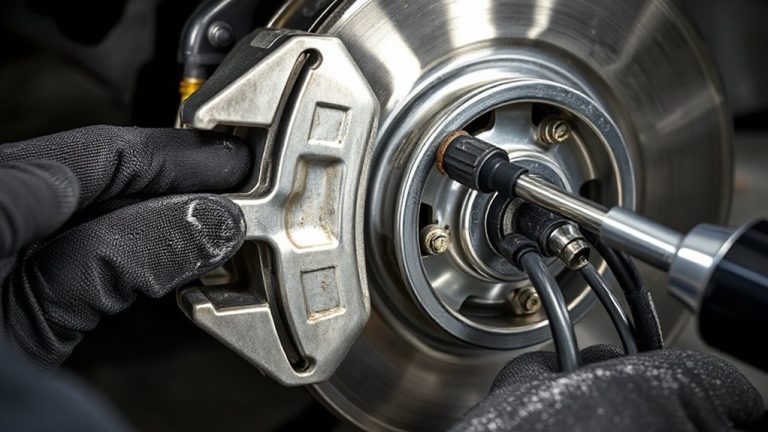
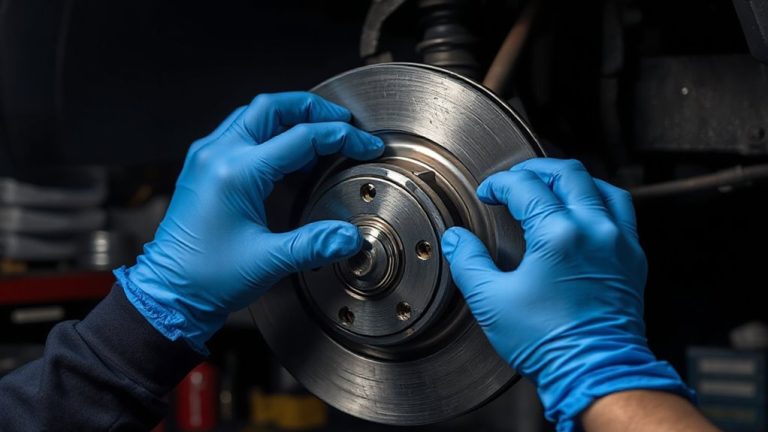
With the steering column cover removed and the internal components exposed, you can now access the steering column bearings for lubrication. Begin with a thorough bearing inspection, checking for pitting, corrosion, or excessive play-signs of wear that compromise steering performance. These bearings typically require a high-quality, temperature-resistant grease. Use a lithium-based or molybdenum disulfide lubricant, as these lubricant types offer superior load-bearing capacity and resist breakdown under heat and friction. Apply a thin, even layer-no more than 5 grams per bearing-using a precision grease gun or clean applicator. Over-lubrication can attract dirt and create drag. The lubricant must conform to GM LS-2 or Chrysler MS-9005 specifications for ideal compatibility. Guarantee full coverage of bearing races without displacing internal components. Proper lubrication reduces rotational resistance and extends bearing life markedly.
Test Your Steering and Know When to Seek Help
How does your steering feel after lubrication? You should notice improved steering responsiveness. Turn the wheel lock to lock-there should be smooth, even motion with no grinding or binding. A properly lubricated steering column reduces friction in the intermediate shaft bearings, which enhances control and steering precision. Pay attention to any warning signs, such as clicking noises, excessive play, or stiffness. These may indicate incomplete lubrication or internal damage. Test at low speeds in a safe area to evaluate performance. If warning signs persist, inspect the U-joints and steering coupling for wear. Do not ignore sudden loss of steering responsiveness-it could signal a serious mechanical issue. For your 2014 Chrysler 200, specifications require NLGI #2 lithium-based grease applied evenly across bearing surfaces. Seek professional help if problems continue after proper servicing.
On a final note
You’ve successfully serviced your Chrysler 200’s steering column bearings. Lubricating with a silicone-based grease reduces friction and eliminates creaks. The intermediate shaft bearings require 10–15 psi maximum when reassembling to avoid damage. A properly lubricated column guarantees smooth 500–600 lb-in of steering torque. If noise persists, inspect the lower bearing or U-joints. Excessive play beyond 0.06 inches indicates wear requiring professional diagnosis.