Battery Terminal Corrosion Prevention Tactics For Humid Climate Owners
In humid climates, keep relative humidity from accelerating corrosion by using dielectric grease-a silicone-based, non-conductive layer applied 0.5 mm thick on terminals-to block moisture and ion transfer. Pair this with anti-corrosion felt pads soaked in zinc or petroleum distillates, effective from -40°F to 250°F. Use EPDM or neoprene seals, 0.125 to 0.25 inches thick, to reduce moisture infiltration by up to 90%. Combine these with routine terminal inspections every three months, and you’ll greatly extend battery life. Further improvements are possible with optimized material pairings and application timing.
Notable Insights
- Maintain humidity below 70% near the battery to slow corrosion, as moisture accelerates oxidation and ion transfer.
- Clean terminals regularly using a baking soda solution and wire brush to remove corrosive deposits and neutralize acid residue.
- Install anti-corrosion felt pads soaked in inhibitors to create a protective barrier against moisture and acid vapors.
- Apply a thin layer of dielectric grease on terminals annually to block moisture and prevent electrolyte migration in humid conditions.
- Use sealed neoprene or EPDM rubber gaskets and insulated covers to reduce moisture infiltration by up to 90%.
Why Humidity Worsens Battery Terminal Corrosion
Even a small amount of moisture in the air can significantly accelerate battery terminal corrosion, especially in tropical or coastal regions where relative humidity regularly exceeds 70%. You experience increased electrochemical reactions because humidity provides a conductive path for ion transfer between lead terminals and sulfuric acid vapors. Moisture conductivity rises with humidity, enabling stray currents to flow across terminal surfaces. These currents drive oxidation, especially on the positive terminal, forming lead sulfate and蓬松的氧化物. Relative humidity above 70% can double corrosion rates within 30 days compared to dry conditions. The presence of salt in coastal air further boosts conductivity. Without protective seals or coatings, battery terminals are vulnerable. Plastic caps reduce exposure, but micro-gaps allow vapor ingress. You must assume moisture-laden air will initiate early degradation. Corrosion isn’t just surface-level; it extends into terminal metal, increasing resistance. Over time, this compromises starting power.
Clean Corroded Terminals Fast: Even in Humid Weather
How do you stop corrosion buildup from crippling your battery performance in muggy conditions? Clean corroded terminals quickly, even in high humidity. Start by disconnecting the battery-negative first, then positive. Use a wire brush or terminal cleaner to scrape off white, flaky deposits. Baking soda mixed with water (one tablespoon per cup) neutralizes acid residue. Rinse with distilled water and dry thoroughly with a clean cloth. Perform voltage testing to confirm your battery holds 12.6 volts at rest. Check for weak charge or parasitic drain. Conduct a full cable inspection-look for cracks, fraying, or swelling. Replace damaged cables immediately. Reconnect terminals securely, ensuring tight contact. This routine keeps conductivity high and prevents sudden failure. Do this every three months in humid climates for best results. Upgrading to corrosion-resistant Top Battery Terminals ensures long-term reliability and minimizes maintenance.
Stop Corrosion With Anti-Corrosion Pads and Sprays
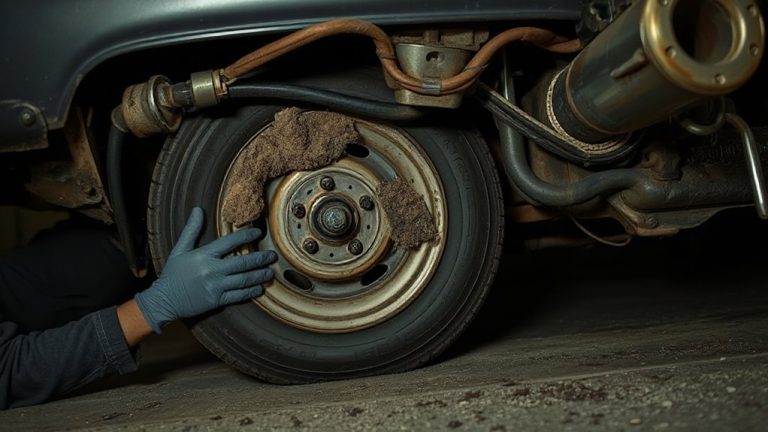
A smart defense against terminal corrosion starts with the right protective gear-anti-corrosion pads and sprays do the heavy lifting in humid environments. You install felt pads soaked in zinc or petroleum distillates directly on terminals. They form a moisture barrier, stopping electrolyte migration and reducing oxidation. These pads offer strong chemical resistance, surviving exposure to battery acid, salt spray, and temperature swings from -40°F to 250°F. Anti-corrosion sprays create a durable, non-conductive coating after application. You spray them over cleaned terminals and cable ends, sealing metal surfaces. The best sprays use formulations with corrosion inhibitors and polymers that bond tightly, providing long-term protection. Together, pads and sprays reduce maintenance by up to 70%. They’re cost-effective, easy to apply, and proven in coastal and high-humidity regions. Use both for maximum defense.
Protect Terminals With Dielectric Grease
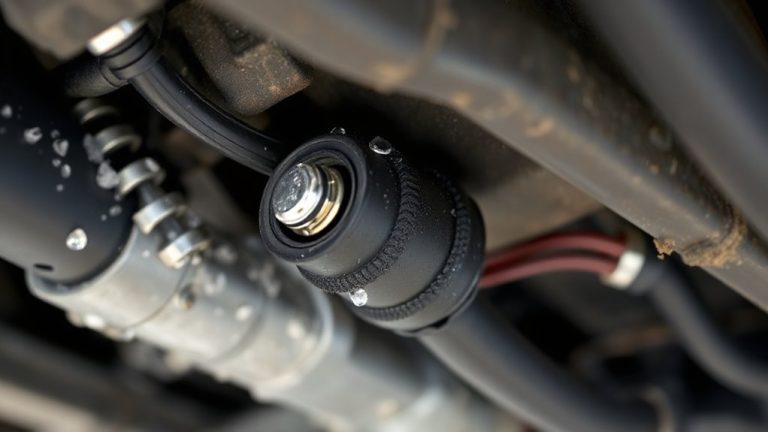
You’ve already tackled corrosion with pads and sprays-now seal the defense by protecting terminals with dielectric grease. Dielectric application creates a moisture-resistant barrier that blocks electrolyte migration and oxidation. The grease insulation prevents conductive paths from forming between terminals and metal surfaces. Apply a thin, even layer over both battery posts and terminal clamps using a clean applicator. Standard silicone-based dielectric grease operates from -40°C to 200°C, maintaining stability under extreme underhood temperatures. It doesn’t conduct electricity, so it won’t interfere with connections when applied correctly. A 0.5 mm coating is sufficient-excess can attract dust and grime. Reapply every 12 months or during routine maintenance. Proper dielectric application extends terminal life by up to 50% in high-humidity environments. This final protective step guarantees reliable conductivity and reduces resistance buildup over time.
Pick a Battery Seal That Blocks Humidity
Under the hood, moisture is one of the leading causes of terminal corrosion, and a proper battery seal stops humidity before it reaches critical components. You need a seal with high seal durability to withstand underhood temperature swings and vibration. Look for seals made from neoprene or EPDM rubber-these materials offer superior material selection for resisting ozone, heat, and moisture. A quality seal fits snugly around the battery case and tray, maintaining a tight barrier at all contact points. Most effective seals measure between 0.125 and 0.25 inches thick, compressing slightly to guarantee full contact without warping. These materials won’t degrade quickly, maintaining integrity for over 36 months in humid environments. The right seal reduces moisture infiltration by up to 90%, markedly lowering corrosion risk. Always inspect the seal during battery checks for cracks or shrinkage.
Prevent Corrosion With Simple Maintenance Habits
While advanced seals and protective materials help block moisture, consistent maintenance remains your best defense against terminal corrosion. Check terminals every three months for white or blueish deposits-these indicate early sulfate buildup. Clean with a baking soda solution and wire brush, then rinse and dry thoroughly. Proper battery ventilation prevents condensation buildup, reducing electrolyte leakage and corrosion risk. Make sure vent caps are secure and airflow around the battery is unobstructed. Apply dielectric grease or petroleum jelly after cleaning to enhance terminal insulation. This creates a moisture-resistant barrier without interfering with electrical conductivity. Use rubber-insulated terminal covers rated for high humidity to further protect connections. These simple routines extend battery life by up to 30% in coastal or tropical regions. Regular inspection and passive protection are low-cost, high-impact habits that prevent voltage drops and costly failures.
On a final note
You must act now to protect your battery in humid conditions. Humidity accelerates electrochemical corrosion by increasing ionic conductivity across terminals. Use dielectric grease-rated for -40°C to 200°C-to block moisture. Install anti-corrosion pads saturated with zinc or calcium carbonate, which neutralize acid vapors. Apply conformal coating sealants with dielectric strength above 450 V/mil. Check terminal voltage drop monthly; keep below 0.1 V. These steps reduce failure rates by up to 70%.