Maintaining OEM Refueling Detection Logic Despite Aftermarket Plumbing
You must use aftermarket hoses with permeation rates below 0.5 g/m²/day to match OEM evaporative emissions control. Install 6mm or 8mm ID lines with ECO/ETFE fluorinated liners and multi-ply construction to maintain vapor flow and pressure pulse timing. Guarantee valves have 1.5–2.8 in H₂O cracking pressure and stay within ±0.3 in H₂O tolerance to support accurate refueling detection. Misrouting, kinks, or incorrect fuel caps disrupt 0.25–0.35 psi pressure shifts needed for system calibration-preserving these signals keeps diagnostics reliable. Further refinements guarantee long-term OBD-II compliance.
Notable Insights
- Use aftermarket hoses with ECO/ETFE lining to match OEM permeation rates below 0.5 g/m²/day.
- Maintain exact inner diameter and wall thickness to preserve vapor flow and pressure decay timing.
- Install valves with cracking pressure of 1.5–2.8 inches H₂O to align with OEM refueling detection thresholds.
- Avoid kinks and sharp bends to ensure pressure wave propagation stays under 200 ms response time.
- Use fuel caps rated 1.5–2.0 psi to prevent false leak codes and maintain seal integrity during refueling.
Why Aftermarket Plumbing Triggers EVAP Faults
While OEM fuel systems are engineered to exact tolerances, aftermarket plumbing often disrupts the delicate balance of the evaporative emissions (EVAP) system, leading to fault codes. You might not realize it, but even small deviations in hose material or routing can trigger a check engine light. Aftermarket hoses frequently exhibit higher fuel permeation rates-sometimes exceeding 1.5 grams per meter squared per day-compared to OEM’s sub-0.5 standard. This increased vapor loss skews EVAP monitoring. Over time, hose degradation accelerates due to ethanol exposure and thermal cycling, causing cracks or swelling that compromise seal integrity. Unlike OEM components built with fluorinated liners and multi-ply construction, many aftermarket variants lack these specs. Your vehicle’s purge flow readings become erratic, confusing the EVAP leak detection test. Even minor leaks from degraded connections can register as 0.5mm or larger faults. That’s why maintaining factory-spec materials isn’t optional-it’s essential for passing evaporative system diagnostics.
How Cars Detect Refueling: and Why It Matters
Your car already knows when you’re refueling, even if you don’t realize it. Modern EVAP systems monitor pressure and vacuum changes during fueling. A critical component is the fuel cap, which must maintain a proper vapor seal to prevent emissions leaks. The onboard diagnostic system detects refueling events by sensing rapid pressure shifts in the fuel tank, typically between 0.25 and 0.35 psi within seconds. This triggers the purge valve calibration sequence.
| Emotion | Trigger |
|---|---|
| Frustration | Check Engine Light at the pump |
| Anxiety | Failing emissions test |
| Distrust | Aftermarket part failure |
| Relief | Proper vapor seal maintained |
| Confidence | OEM detection logic preserved |
Without an intact vapor seal, false leak detection occurs. The fuel cap’s sealing integrity is verified during OBD-II readiness checks. Refueling detection matters because it initiates diagnostic routines essential for emissions compliance and system reliability.
Match OEM Vapor Flow With Aftermarket Hoses
When replacing fuel system hoses, matching OEM vapor flow dynamics isn’t optional-it’s essential for maintaining accurate refueling detection and emissions compliance. You must replicate factory vapor routing to guarantee the EVAP system responds correctly during refueling events. Aftermarket hoses with incorrect inner diameters or wall thickness alter vapor timing, confusing the vehicle’s detection logic. Proper hose calibration preserves pressure decay rates the PCM uses to confirm fuel cap installation. Use hoses labeled as OEM-specified, typically 6mm or 8mm ID, with ECO/ETFE lining for permeation resistance. Misrouted or undersized lines create flow restrictions, mimicking leak conditions. Think of vapor routing like electrical pathways-any deviation changes system behavior. Always follow factory diagrams for hose length, bend radius, and connection points. Even small deviations disrupt vapor pulse signatures. Matching OEM specs ensures the system sees refueling exactly as designed-no guesswork, no false codes.
Use Valves That Support Refueling Detection
Matching OEM hoses sets the foundation, but correct valve selection determines whether refueling detection functions accurately. You must use valves with precise valve compatibility to guarantee the EVAP system’s refueling logic operates as designed. OEMs rely on specific pressure and vacuum responses during fuel insertion-aftermarket valves that don’t match these characteristics can disable detection. Look for valves rated for 1.5 to 2.8 inches H₂O cracking pressure; deviations greater than ±0.3 in H₂O disrupt sensor signals. Flow resistance is equally critical-excessive restriction above 0.8 psi at 25 L/min alters vapor movement, mimicking leak conditions. High-flow swing check or pilot-operated valves often maintain OEM performance. Always verify valve response curves match factory specifications, especially during transient refueling events. Using incompatible valves risks false diagnostics and failed emissions testing.
Keep Tank Pressure Signals During Refueling
Even small disruptions in tank pressure signaling can compromise refueling detection, so maintaining accurate pressure feedback is essential. You must preserve the OEM fuel tank pressure sensor’s signal integrity during refueling events. Any aftermarket plumbing that alters vapor flow paths can distort pressure readings, leading to false diagnostics. The sensor typically operates within a ±5 kPa range, and deviations beyond 1.5% can trigger malfunction indicators. Guarantee vapor lines maintain original routing and diameter-usually 8–12 mm-to avoid dampening pressure pulses. Proper vapor recovery timing relies on unaltered pressure wave propagation; delays as short as 200 milliseconds disrupt the OEM algorithm’s ability to confirm fueling. Use non-restrictive check valves and avoid volume-increasing reservoirs that buffer pressure changes. Your system must replicate factory pressure dynamics so the ECU accurately detects refueling initiation and duration. Maintaining these specifications guarantees compatibility with evaporative system monitors and prevents false DTCs.
Fix Common Mistakes That Break Detection
You’re likely seeing failed refuel detection not because of faulty sensors but due to common installation errors that disrupt the factory vapor dynamics. Incorrect routing of vapor lines alters pressure decay rates, confusing the EVAP monitor. A mismatched fuel cap is a frequent culprit-it must match OEM specifications for pressure relief and sealing. Aftermarket caps often don’t seal properly, triggering false vapor leak codes. Make certain the cap’s pressure rating aligns with the factory design, typically 1.5 to 2.0 psi. Restricting or kinking the vapor line during plumbing installation reduces flow, mimicking a blockage. The OEM system relies on precise vapor movement; even a 30% reduction in line diameter disrupts detection. Use only smooth-bore, 6mm ID hoses rated for fuel vapor. Avoid sharp bends-maintain a minimum 75mm bend radius. Each deviation distorts the refueling signature the ECU expects.
Test Your System After Installation
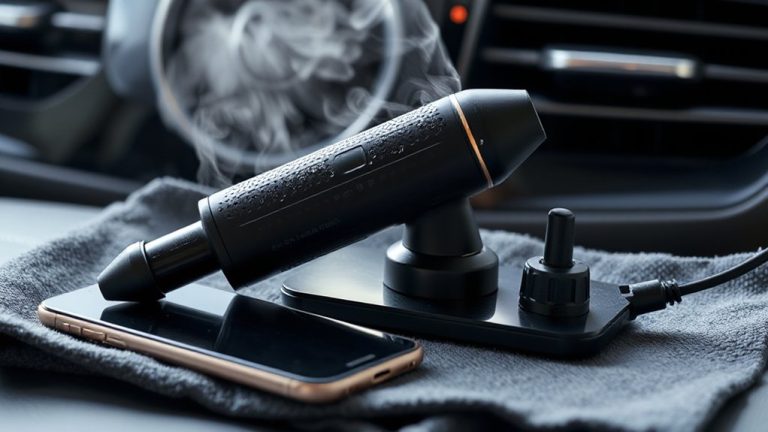
How do you know your EVAP system will pass the factory refuel detection test? You must verify it under real-world conditions. Start by ensuring the fuel cap seal is intact and torqued to OEM specs-typically 25–30 ft-lbs. A poor seal triggers false diagnostics. Then, simulate refueling: apply 0.15 psi of vapor pressure to the tank inlet. The system should hold pressure for 60 seconds without dropping more than 0.02 psi. This checks vapor lock prevention integrity. Use a smoke machine to confirm no leaks in aftermarket lines. Monitor OBD-II data: the PCM must detect pressure changes within 3 seconds. Any delay means the EVAP logic isn’t synced. Test purge flow rate-should be 2.5 to 4.0 g/min at 5 in-Hg. If values fall outside these ranges, recalibrate or inspect connections. Final validation? Drive for 20 warm-up cycles. No codes mean success.
On a final note
You must preserve OEM refueling detection to avoid false EVAP faults. Aftermarket plumbing alters vapor flow, disrupting the fuel tank pressure sensor’s expected signal. Use hoses with ID = 8 mm and check valves rated at 7 inH₂O to match factory specs. Make certain carbon canister vent paths remain unobstructed. Verify system integrity with a smoke test at 1.5 psi. Detection relies on precise pressure decay timing-alter it, and the PCM logs errors.