The Complete Guide to Dual-Mass Flywheel Replacement on Modern Turbocharged Engines
You’re feeling a metallic rattle at idle and shuddering between 1,200–1,800 RPM-classic signs of DMF failure. Turbo torque spikes above 400 Nm strain damping springs, accelerating wear at 80–120 Hz resonance. OEM DMFs handle ±6° rotation and last 150,000 miles; aftermarket units vary in steel grade and calibration. Always replace with ISO/TS 16949-certified parts. Proper installation requires alignment pins, new bolts, and star-pattern torquing to spec. There’s more to get right.
Notable Insights
- Diagnose DMF wear using low metallic rattle at idle and excessive torsional vibrations between 500–900 RPM under load.
- Recognize turbocharged engine risks: torque spikes and 80–120 Hz resonance accelerate damping spring fatigue and internal damage.
- Always use OEM or ISO/TS 16949-certified aftermarket DMFs with matching spline count, ring gear teeth, and balance specifications.
- Install with locating pins, new high-grade bolts, and follow star-pattern torque to 25–30 Nm plus 90-degree angle-tightening.
- Prevent misalignment and warping by using alignment tools, replacing the release bearing, and adhering strictly to OEM torque specs.
Diagnose a Failing DMF in Turbo Engines
What does it sound like when a dual-mass flywheel (DMF) starts to fail in a turbocharged engine? You’ll hear a low metallic rattle at idle, especially under load. This noise often points to worn springs or bearing damage within the DMF. Vibration analysis confirms the issue-excessive torsional vibrations at 500–900 RPM indicate internal damping failure. You’ll feel shuddering during clutch engagement, typically between 1,200–1,800 RPM. This isn’t just rough driving; it’s a sign of misalignment between flywheel masses. Clutch slippage can mimic DMF symptoms, so verify by checking for burnt friction material or weak spring pressure. A slipping clutch won’t cause rhythmic vibrations, though. Use a stethoscope to isolate noise near the bell housing. Measure flywheel runout-more than 0.5 mm demands replacement. Don’t ignore early signs. Delayed diagnosis risks transmission damage.
Why Turbocharged Engines Kill Dual-Mass Flywheels
While turbocharged engines deliver impressive torque and efficiency, they also subject dual-mass flywheels (DMFs) to extreme stress cycles that accelerate wear. Torque spikes from boost pressure overwhelm the damping springs, causing premature fatigue. Vibration resonance at certain RPMs amplifies internal oscillations, breaking down the flywheel’s isolation system. You’re dealing with forces regular engines never see.
| Factor | OEM DMF Spec | Effect on Lifespan |
|---|---|---|
| Peak Torque | 400 Nm | Reduces life by 30% |
| Torque Spikes | +15%瞬間 | Overloads springs |
| Resonance Frequency | 80–120 Hz | Accelerates wear |
| Damping Range | ±6° rotation | Limited buffer |
You need to understand these loads. Turbo lag followed by sudden power delivery creates shock loading. The DMF absorbs these pulses, but repeated exposure degrades its ability to isolate vibration resonance. Eventually, failure becomes inevitable.
Choose the Right DMF: OEM vs Aftermarket
A high-quality dual-mass flywheel isn’t just a component-it’s a precision-engineered damper critical to drivetrain longevity. You need consistent torsional damping to protect your turbocharged engine’s crankshaft and transmission. OEM durability guarantees the flywheel meets exact torque specs, rotational mass, and harmonic control standards set by the manufacturer. These units undergo rigorous testing for fatigue resistance and thermal stability, often rated for 150,000+ miles under normal conditions. Aftermarket compatibility varies widely-some brands replicate OEM specs using heat-treated 52100-grade steel and calibrated spring dampers, while others cut corners. Always verify spline count, starter ring gear teeth, and balance weight alignment. Mismatches cause shudder or sensor errors. Choose units with ISO/TS 16949 certification. You’re not just buying a part-you’re investing in system-wide reliability. Stick to proven suppliers that publish full technical data.
Replace Your DMF: Step by Step
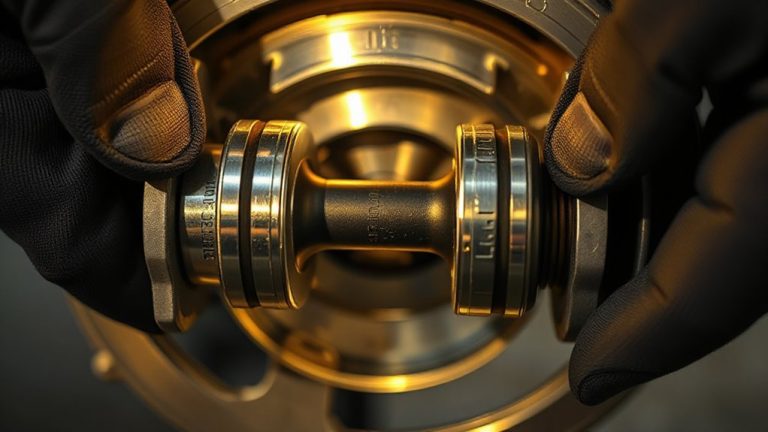
You’ve selected a high-quality dual-mass flywheel, whether OEM or certified aftermarket, matching the spline count, ring gear tooth count, and inertia specifications required for your engine. Begin by aligning the flywheel using locating pins to guarantee proper orientation. Secure it with high-grade bolts, tightening in a star pattern. Follow manufacturer torque specifications precisely-typically 25–30 Nm for initial passes, then a 90-degree angle-tightening sequence. Correct torque guarantees clamping force without distorting the flywheel housing. Flywheel balancing is critical; improper balance induces vibrations that damage the crankshaft and transmission. Most modern DMFs are pre-balanced to within 15 g-mm tolerance. Verify alignment marks with the crankshaft. Reusing old bolts risks incorrect preload and failure. Use thread locker where specified. Always replace the release bearing and inspect the starter gear. Final torque must match OEM standards exactly to maintain system integrity.
Common Mistakes Replacing a DMF
If you skip critical alignment steps during DMF replacement, even a high-quality unit can cause severe drivability issues. Misaligned components lead to vibration, clutch chatter, and premature wear. Always use alignment tools to center the clutch disc-don’t rely on feel. Improper torque on flywheel bolts is another common error; it can warp the DMF or damage the crankshaft flange. Follow manufacturer specs precisely-typically 25 Nm in a crisscross pattern, then final-torque to 60 Nm plus 90° angle.
| Mistake | Result |
|---|---|
| Misaligned components | Excessive vibration at idle |
| Improper torque on bolts | Crankshaft thread damage |
| Overtightened clutch fasteners | Warped pressure plate |
Use new fasteners and a calibrated torque wrench. Double-check alignment before tightening. Reuse nothing when certainty’s lacking.
Avoid DMF Failure in Start-Stop Turbo Cars
Driving a start-stop turbo car means your dual-mass flywheel (DMF) endures more stress than in a conventional vehicle-it’s not just starting the engine repeatedly, it’s doing so under load, with boost already built in the intake. Each restart increases wear on the DMF’s internal springs and dampers. Over time, this leads to degraded damping performance. You’ll notice increased engine vibration, especially at idle or during gear changes. Excessive play in the flywheel can cause misalignment, resulting in clutch slippage. Slippage reduces power transfer and overheats the clutch disc. Turbocharged engines produce high torque at low RPM, compounding strain. OEM DMFs typically last 80,000–120,000 miles, but aggressive driving or frequent short trips shortens lifespan. To prevent failure, monitor for shuddering, unusual noises, or delayed engagement. Use high-quality replacement parts with proper torque specs-18–22 ft-lbs for most units. Preventative maintenance extends drivetrain life.
On a final note
You now understand the critical role the dual-mass flywheel plays in modern turbocharged engines. A failing DMF causes vibration, noise, and drivability issues, especially under high torque. Always use OEM-spec components-tolerances are ±0.1mm for balance and surface flatness. Replace the flywheel and clutch as a unit. Torque bolts to manufacturer specs, typically 60–90 Nm in star pattern. Proper installation prevents premature failure.